

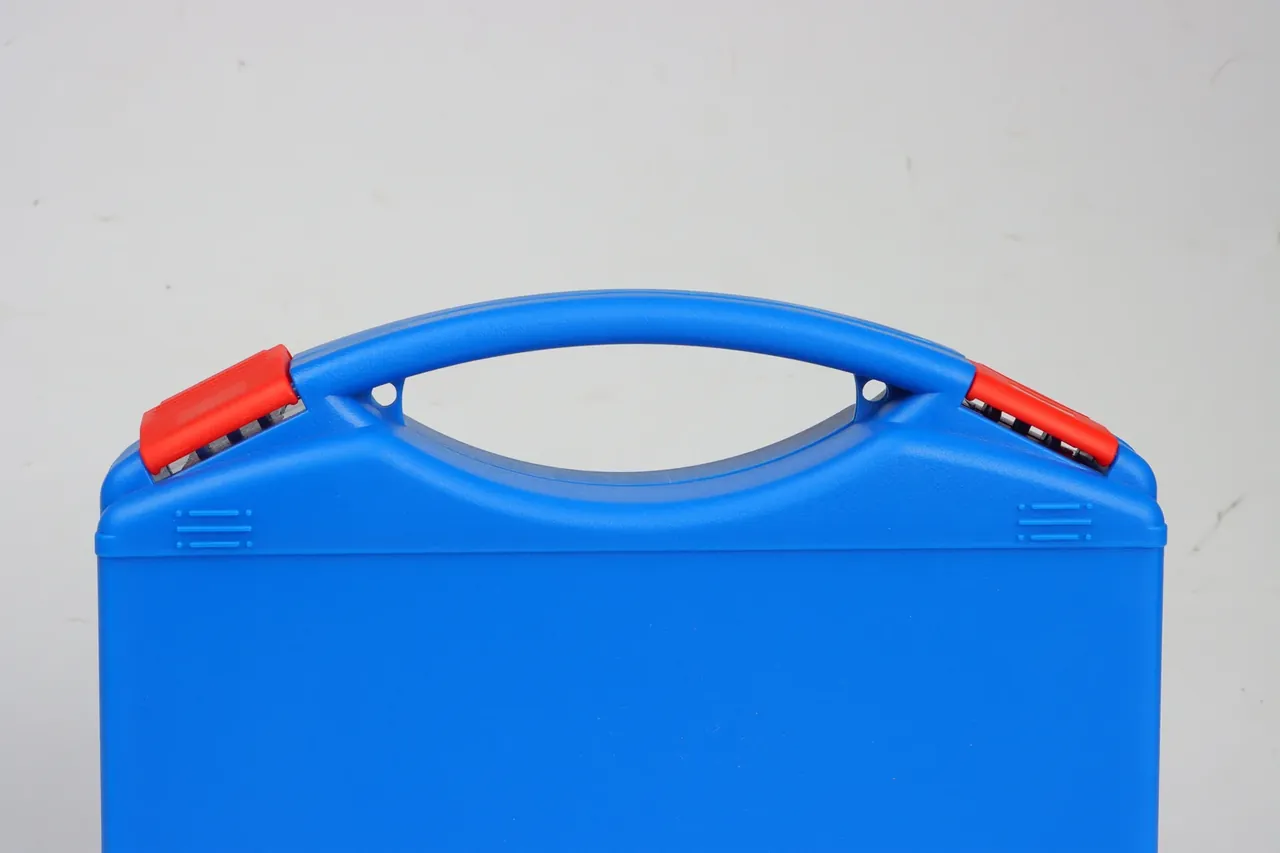
Quick answer: A Colored Protective Case is not the cheapest answer everywhere. Weigh four numbers on one scale, tare, wall, cycles, cost per trip, and three jobs fall out of the tender: one-way freight, any side past 1200 mm, and heat that softens polypropylene.
Table of contents
- Four Measures for Six Cases on One Shelf
- Against a Thin-Wall Tote: 1.6 kg Lost to 2.8 mm
- Against a Metal Case: The Salt Fog Ledger
- Against a Soft Bag: Foam Thickness and Set
- Against a Wooden Crate: 60 Trips and Cost per Trip
- Three Exit Lines: Work That Belongs Elsewhere
- FAQ
1. Four Measures for Six Cases on One Shelf
A Colored Protective Case rarely reaches a price table because it is cheap; it carries mould cost and masterbatch metering. It appears because the old packaging failed: a rusted corner, a slumped carton, a strap cut into a bag.
Four measures keep it honest: tare, side wall, cycles, cost per trip. Weight sets units per trip, wall the puncture floor, cycles the life, and cost per trip divides price by cycles to land every band on one scale.
| Measure | Colored Protective Case | Thin-wall tote | Metal case | Wooden crate |
|---|---|---|---|---|
| Tare | 4.2 kg | 2.1 kg | 6.8 kg | 9.5 kg |
| Side wall | 2.8 mm | 1.6 mm | 1.0 mm steel | 15 mm board |
| Cycles | 300 | 80 | 120 | 6 |
| Cost per trip | 0.6 | 0.9 | 2.4 | 8.0 |
2. Against a Thin-Wall Tote: 1.6 kg Lost to 2.8 mm
The tote wins on weight: 2.1 kg against 4.2 kg at the same length, two more units per trip.
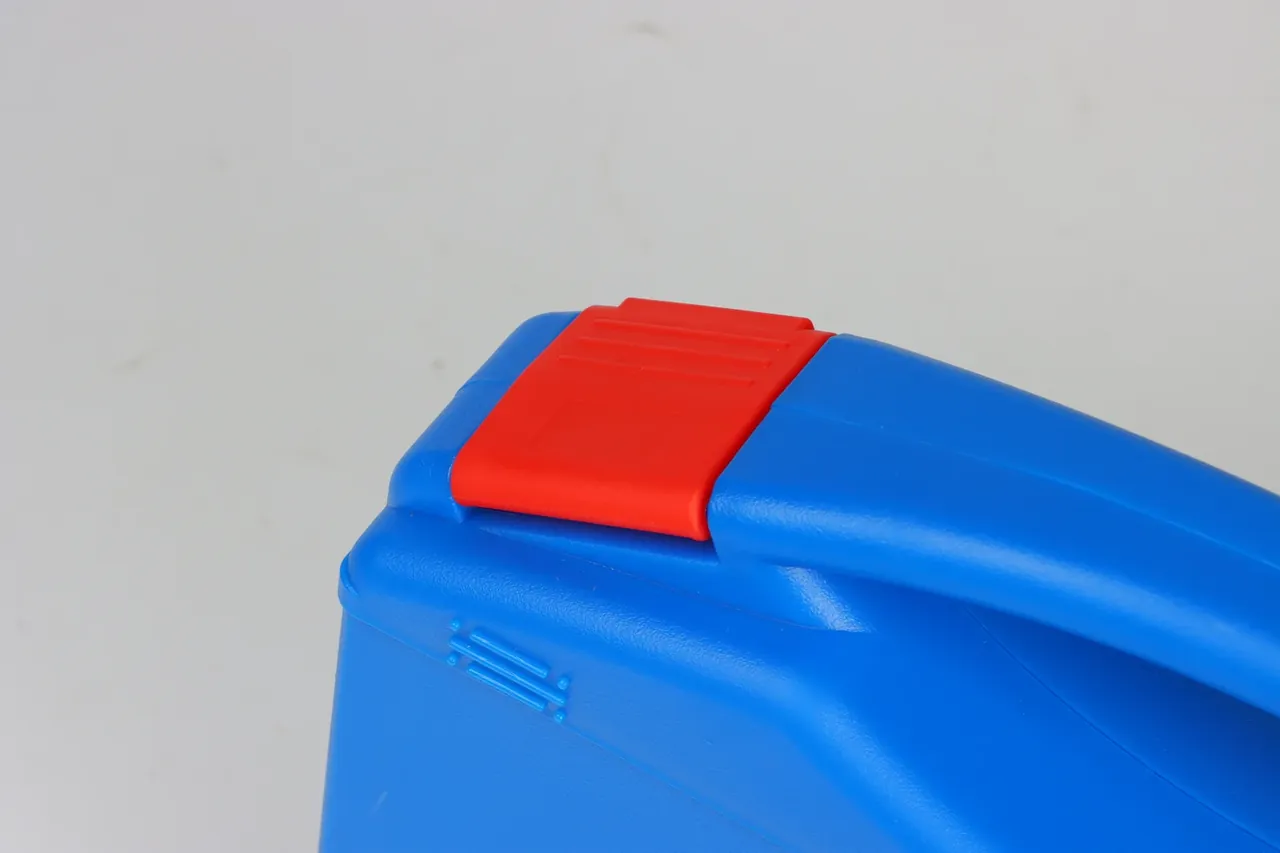
The saving is paid in the wall. At 1.6 mm an 8 kg weight from 0.8 m whitens the bottom corners and splits them on the second hit; at 2.8 mm the same drop leaves one shallow mark. A tote assumes the load supports itself, a Colored Protective Case that it takes the blow.
Under four moves a day, two tiers, indoors, a tote is enough; onto a tail lift, five tiers high, the wall earns its 2.1 kg.
3. Against a Metal Case: The Salt Fog Ledger
Stiffness is the steel argument; surface is the steel problem. At 96 hours in salt fog the galvanised edges bloom white while the moulded body carries a film of water. The gap shows in the third rainy season, not day one.
- Tare: 6.8 kg against 4.2 kg, and empty-case fatigue lands by mid-afternoon.
- Salt fog: zinc whitens at 96 hours, the moulded body is accepted at 480.
- Dents: steel needs a hammer and paint, through-colour plastic keeps its shade.
- Static and noise: steel needs an earth bond and rings on a night dock; polypropylene does neither.
- Heat: steel holds past 200 C, the body softens at 100 C.
That last line is the exit: drying lines and washdown belong to metal.
4. Against a Soft Bag: Foam Thickness and Set
A bag is cheap, folds flat and returns almost free of volume. The real comparison is foam thickness and how much of it comes back.
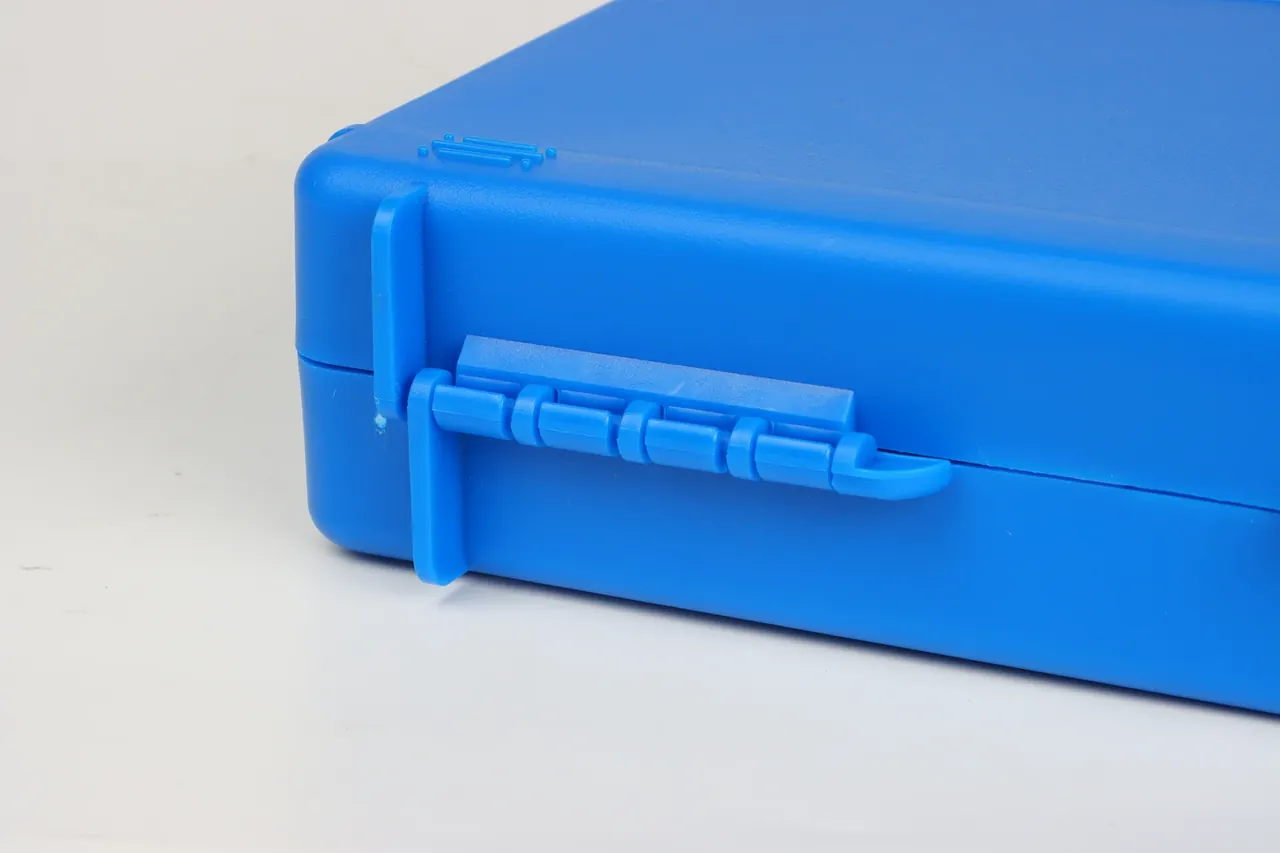
| Item | Colored Protective Case | Soft bag |
|---|---|---|
| Cushion | 20 mm die-cut foam, separate cavities | 8 mm pearl foam, one sheet |
| Set after 200 handlings | 6 percent | 22 percent |
| Puncture | carried by the wall | carried by fabric, a tear runs |
| Stacking | 5 tiers | 2 tiers |
Past 20 percent set the bag still looks serviceable while the load has gone loose: no visible damage, no cushion. A moulded insert is cut to one cavity; a new shape needs a new insert.
5. Against a Wooden Crate: 60 Trips and Cost per Trip
A crate carries about 8 per trip because it is counted over 6 cycles. A Colored Protective Case spreads 180 over 300 cycles to 0.6; the gap sits in how often it comes back.
On freight that never returns, cycles equal one and the arithmetic flips: 180 against a single trip. That is the commonest packaging error.
Past 1200 mm the crate takes over: mould cost follows projected area, and a cavity that large needs a big press.
Timber also carries an export gate: ISPM 15 treatment, a mark, a waiting period. Plastic avoids all three.
6. Three Exit Lines: Work That Belongs Elsewhere
- One-way freight, return rate under 30 percent: buy single-trip packaging.
- Any side past 1200 mm: mould and unit cost climb together; buy a frame.
- Above 100 C, or a drying tunnel: buy metal.
A quiet fourth: dimensions that change monthly. Half the value of a Colored Protective Case sits in the insert.
Conclusion
Four numbers stack the advantage: a 4.2 kg tare, a 2.8 mm wall, 300 cycles, 0.6 per trip. Where it loses is as plain: one-way freight, oversize bodies, hot processes. Remove those three and the rest is the share a Colored Protective Case wins.
This article discusses only the container (case body) side of specifications and design intent, and does not cover any handling, loading or use of the contents.
Related Reading
- Material Comparison for Firearm Protective Cases
- How a Colored Protective Case Gets Its Colour
- Shade Standards for Case Bodies
- Cartridge Box Body Material Comparison
- Tool Box Lid Material Comparison
Related Products
- 8 Series — Gun Cases; Military Equipment Cases; Camera Equipment Cases; Drone Cases; Watch Cases; Knife Cases; First Aid Cases; Electronics Equipment Cases
- WL8-2812 PP Gun Case — model WL8-2812
- All protective cases and toolboxes: 7 series, 158 models