

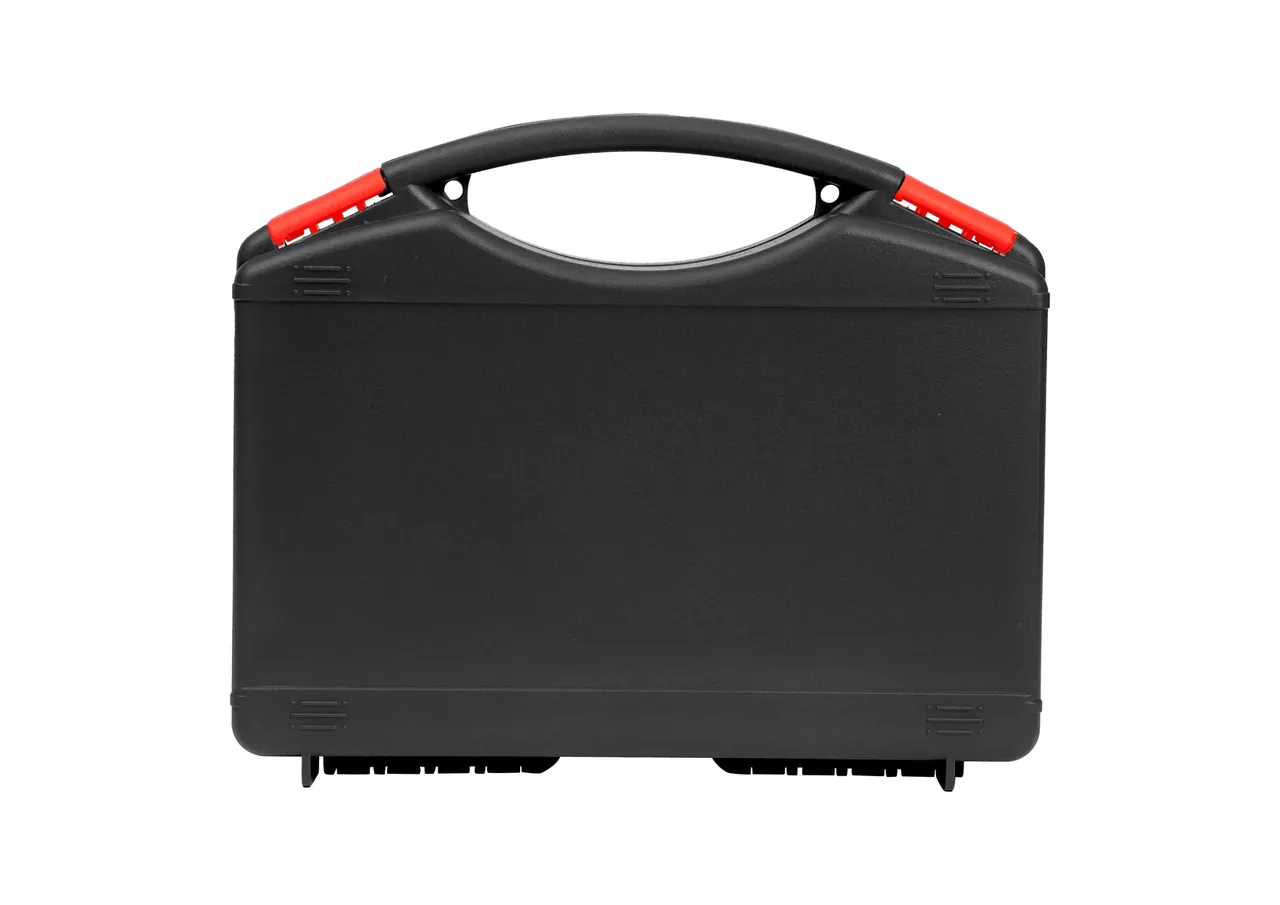
Quick answer: Acceptance cost for a Colored Protective Case sits in rework and rejection, not in inspection hours: 4.6 hours and 38 yuan per reworked unit, 24,000 yuan for a rejected batch. Fix the judgement lines in the contract and both stay small.
Table of contents
- What Acceptance Really Costs on a Colored Protective Case
- Which Document Wins: Drawing, Factory Standard or Contract
- Six Tools, Three Readings on the Line
- Appearance and Colour: Four Judgement Lines
- Rework, Concession or Rejection: Three Cost Tiers
- Sampling and Records: Closing the Escape Route
- FAQ
1. What Acceptance Really Costs on a Colored Protective Case
Buyers negotiate the unit price and meet four other bills at goods-in: rework, concession, rejection and line stoppage.
| Cost item | Trigger | Basis | This case |
|---|---|---|---|
| Rework | Weak latch, mismatch, flash | Labour per unit | 4.6 h, 38 yuan |
| Concession | Appearance only, function passes | Batch discount | 6 percent of value |
| Rejection | Wall or size out of tolerance | Full value plus freight | 24,000 yuan |
| Line stop | No stock, parts unusable | Per line per hour | 420 yuan |
Rework looks cheapest and is the easiest to undercount. A reworked Colored Protective Case needs its latch stripped, paint touched in, gasket refitted and retested, and 2.1 of the 4.6 hours go into stripping and rebuilding. At 3 percent of a 500-unit order that is 69 hours, enough to idle a line for two days.
2. Which Document Wins: Drawing, Factory Standard or Contract
Three documents disagree more often than buyers expect: the drawing holds tolerances, the factory standard holds test methods, the contract holds sampling and disposition. Where they clash, the stricter rule governs.
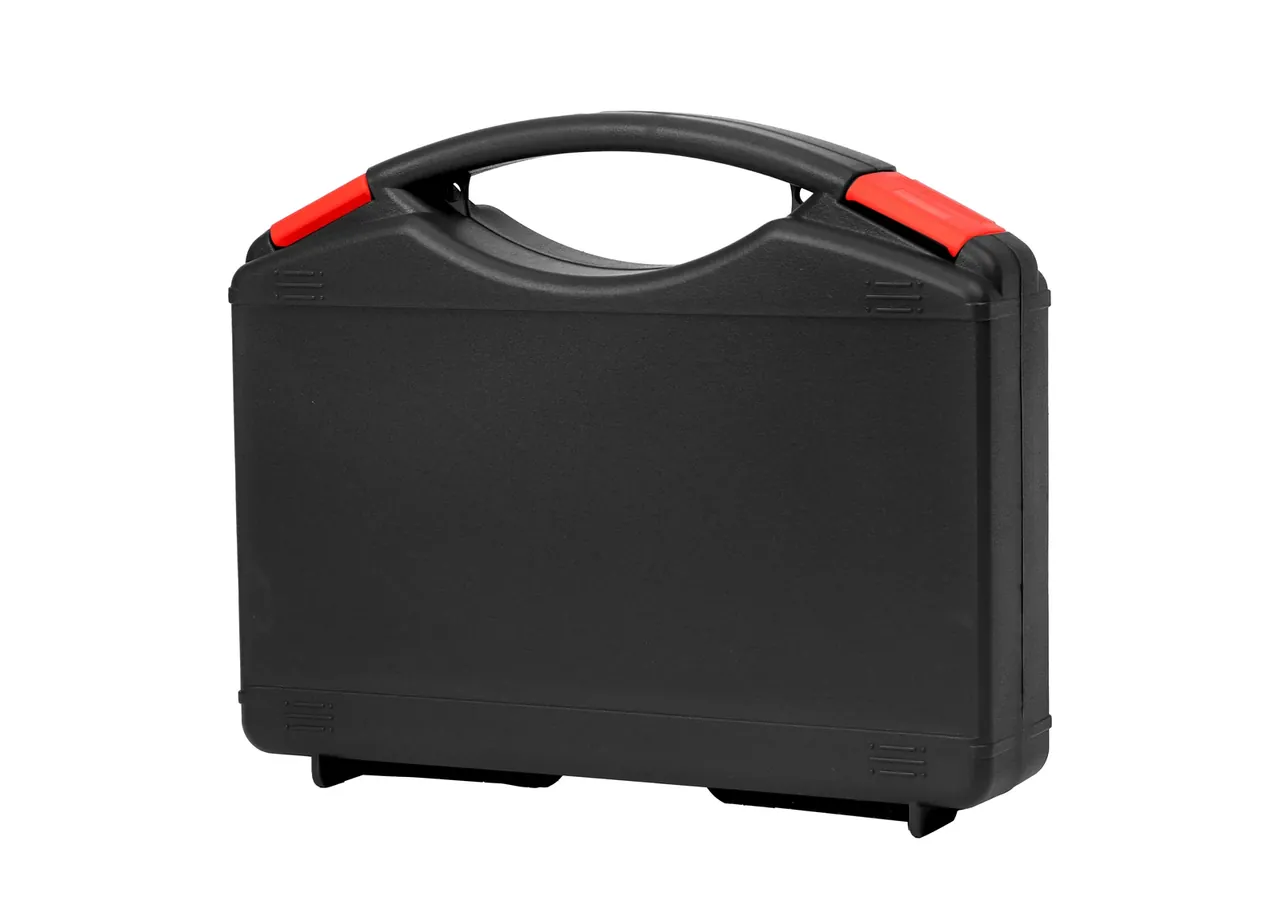
A usable drawing of a Colored Protective Case carries five numbers: cavity size, wall thickness, latch retention, gasket compression, material grade. Remove one and the inspector falls back on feel.
3. Six Tools, Three Readings on the Line
Six tools cover the schedule, if each reads a defined number at a defined point.
- Vernier caliper: wall thickness at three points per side, twelve in all, accepted between 2.85 and 3.15 mm.
- Feeler gauge: lid gap, which must not admit a 0.3 mm blade anywhere.
- Push-pull gauge: 200 N held for 10 seconds on the latch, with no release and no plastic set.
- Tape and level: outline in three directions, then 1.5 mm lid sag maximum under four-high load.
- Drop rig: 1.2 m, ten attitudes of six faces, three edges and one corner, then open and inspect.
- Salt spray cabinet: 5 percent brine at 35 C for 96 hours, with no red rust on latch or hinge.
Add a scale: a weight deviation over 3 percent usually means the wall was thinned, and weighing checks it faster than twelve caliper readings. Record each reading on the spot in three columns: measured value, judgement line, verdict.
4. Appearance and Colour: Four Judgement Lines
Appearance is where close enough creeps in. Keep four lines for a Colored Protective Case.
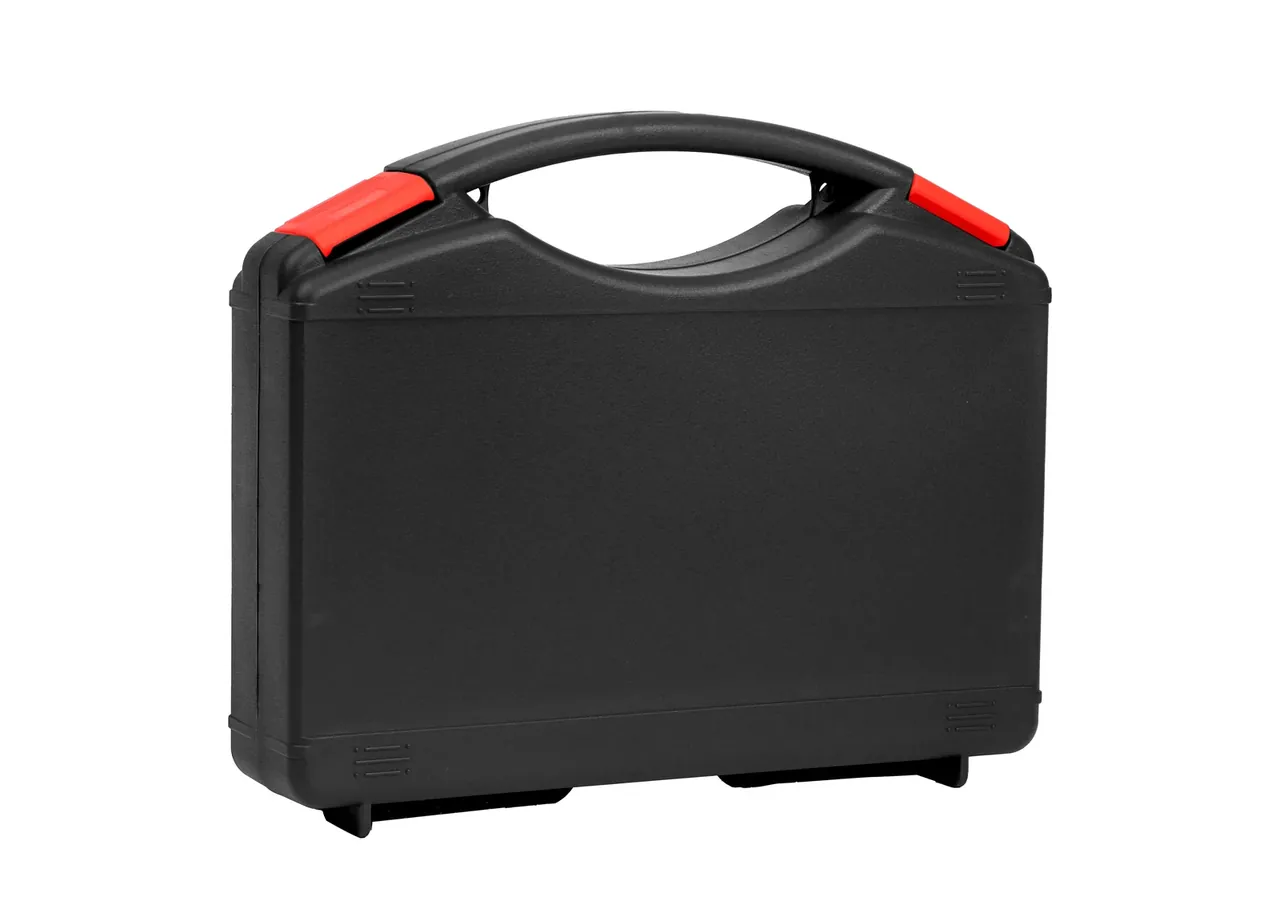
Colour: ΔE00 within 0.8 batch to batch and within 1.2 of the sealed sample, under diffuse daylight at 30 cm.
Sink: light hollows at rib roots and behind bosses, 0.05 mm maximum.
Flash: 0.2 mm maximum at the parting line, never a continuous sheet, which signals a venting fault.
Mismatch: 0.3 mm maximum between lid and body, past which gasket compression drops under 20 percent and rain enters.
5. Rework, Concession or Rejection: Three Cost Tiers
Disposition turns on one question: functional or cosmetic?
Functional defects, meaning a wall under 2.85 mm, retention below 200 N, a split after drop or rust after salt spray, are reworked or rejected, never conceded. These faults amplify in transit.
Cosmetic defects, meaning colour, sink, flash or mismatch, may go to concession at 6 percent of batch value, provided the functional result is clean.
Rejection applies when two sampled units fail functionally, or any unit shows a through crack. Price the line stop first: at 420 yuan an hour, eight hours is 3,360 yuan, above the concession gap, so rework usually beats rejection.
6. Sampling and Records: Closing the Escape Route
Sample to AQL 1.0 at general level II: a 500-unit batch means 13 pieces, accept on zero, reject on one, drawn from three pallets.
Records must trace to mould and shift: eight columns for batch, mould, machine, material grade, measured wall, colour reading, verdict, inspector.
Keep three samples for 24 months: they settle whether a complaint is a batch fault or a user fault, which a Colored Protective Case colour dispute always becomes.
Conclusion
Acceptance cost for a Colored Protective Case depends on how tightly the judgement lines are written, not on how closely an inspector looks. Rework at 38 yuan, concession at 6 percent, rejection at 24,000 yuan and a line stop at 420 yuan an hour all map to a measurable line. Five drawing numbers, six tools, four cosmetic lines and three tiers turn the argument into a reading.
This article discusses only the container (case body) side of specifications and design intent, and does not cover any handling, loading or use of the contents.
Related Reading
- Colour difference standards for a colored protective case
- How to read a protective case manufacturer's standards
- Airdrop case acceptance items and limits
- Storage and care standards for case moulds
- Inspection items for an artillery shell box body
Related Products
- 8 Series — Gun Cases; Military Equipment Cases; Camera Equipment Cases; Drone Cases; Watch Cases; Knife Cases; First Aid Cases; Electronics Equipment Cases
- WL8-2812 PP Gun Case — model WL8-2812
- All protective cases and toolboxes: 7 series, 158 models