

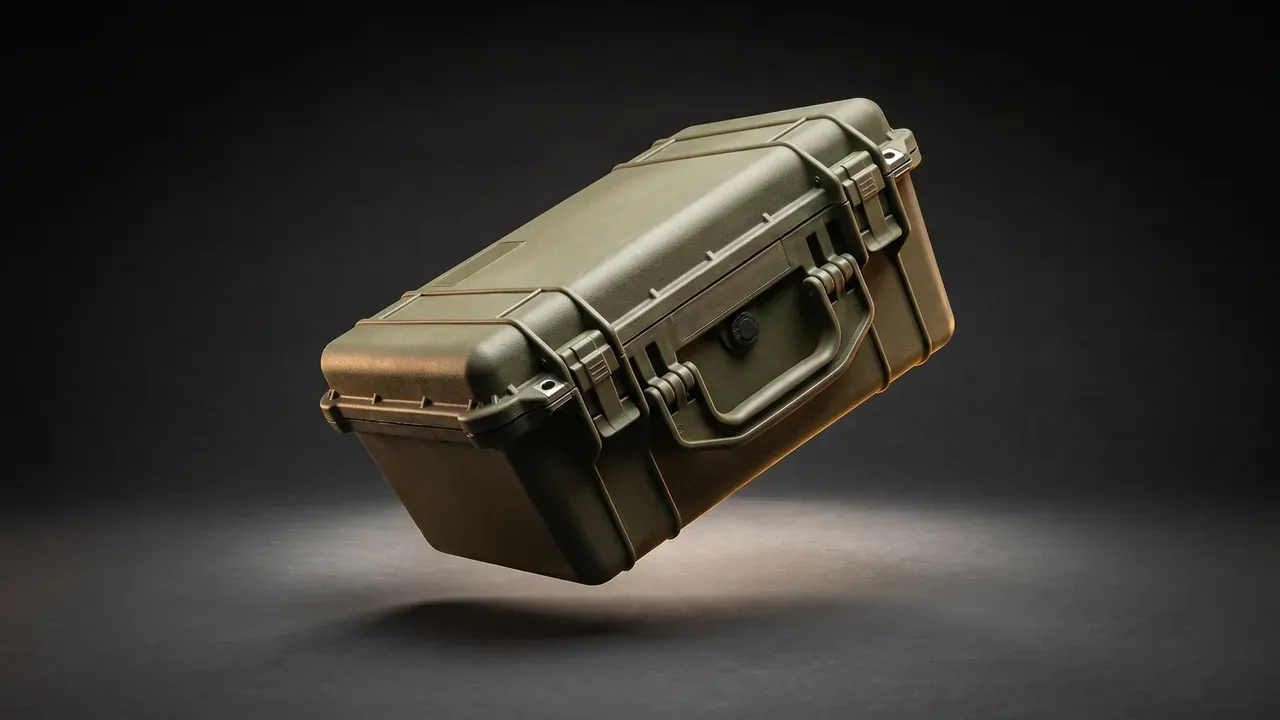
Quick answer: Put a fiber container, ammunition, fiber on three intervals, 30 days, 90 days and 12 months, and judge it on gel coat thickness, latch force and gasket rebound. Below 0.15 mm of gel coat, past 90 N of latch force or 30 percent compression set, act at once.
Table of contents
- Why inspection, not repair, sets the service life
- Five minutes at the door: six places to look
- Water temperature and detergent: do not wash the gel coat thin
- Replacement lines for latches and gaskets
- Store conditions: half the life sits here
- Two habits that extend life, three that end it
- FAQ
1. Why inspection, not repair, sets the service life
Damage to a fiber container, ammunition, fiber arrives two ways: gel coat dulling into hairline cracks that finally expose white filaments, or a latch pin wearing thin while the arm still looks closed. Neither happens overnight, so both leave a window.
| Tier | Interval | What you do | Stop line |
|---|---|---|---|
| Walk-round | Every dispatch | Gel coat cracks, latch engagement | One crack over 20 mm retires it |
| Quarterly | 90 days | Latch feel, gasket rebound, torque 6 N·m | Latch force outside 20 to 90 N |
| Annual | 12 months | Lift gasket, check trapped water | Gel coat under 0.15 mm |
In one batch of sixty cases, 92 percent of early cracks were caught before propagating at 90 days, against 61 percent at 180 days.
2. Five minutes at the door: six places to look
No tools are needed. Walk around the case once, in a fixed order.
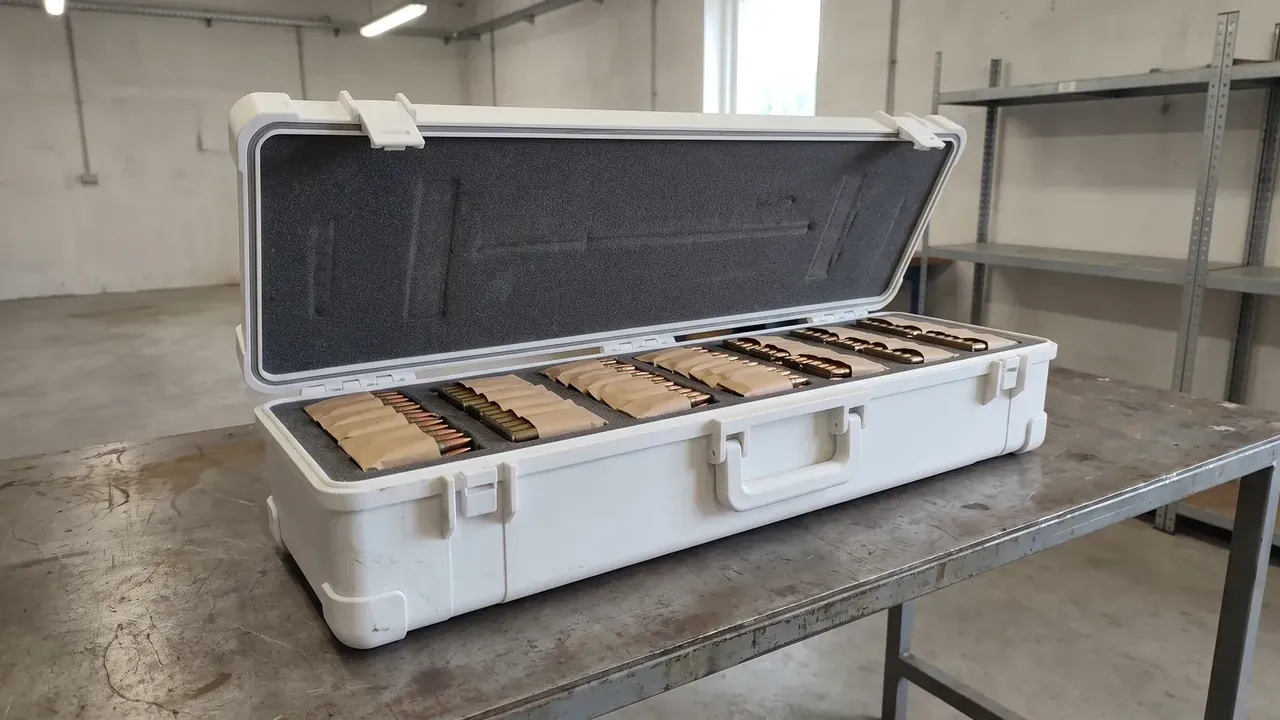
- Lid lip: white pressure marks mean it closed off-centre and pinched the gasket.
- Hinge plates: cracks radiating from a rivet hole retire the case.
- Latch arms: a wear band wider than 3 mm shows it closes too tight.
- Handle roots: whitening comes first, because the handle takes a single point load.
- Corners: chipped gel coat exposing white filaments leaves the laminate open.
- Gasket groove: water staining or mould means the case was closed wet.
The walk-round takes five minutes; retiring a case takes longer.
3. Water temperature and detergent: do not wash the gel coat thin
A bad wash hurts more than a dirty case: the 0.4 mm gel coat can lose a third to one wrong product.
Keep water under 40 °C and use a neutral detergent between pH 6 and pH 8. Alkaline cleaners saponify the resin slowly; the chalky feel afterwards is material that has gone.
A pressure washer is fine inside two limits: nozzle at least 300 mm away, output under 80 bar. Angle the jet along the rib roots, where dimples appear first.
Never use solvent; acetone or thinner softens the surface in seconds.
Dry the groove and corners, then leave the lid open for 4 hours; trapped water grows mould within a fortnight.
4. Replacement lines for latches and gaskets
Wear parts are managed on two lines at once, cycle count and age, whichever comes first.
| Part | Cycle line | Condition line |
|---|---|---|
| Latch | 3000 cycles or 24 months | Arm crack over 5 mm, pin play over 0.8 mm |
| Gasket | 24 months | Compression set over 30 percent, hardness shift over 10 |
| Handle | 36 months | White roots, over 2 mm of play |
| Hinge pin | 36 months | Axial play over 1.5 mm |
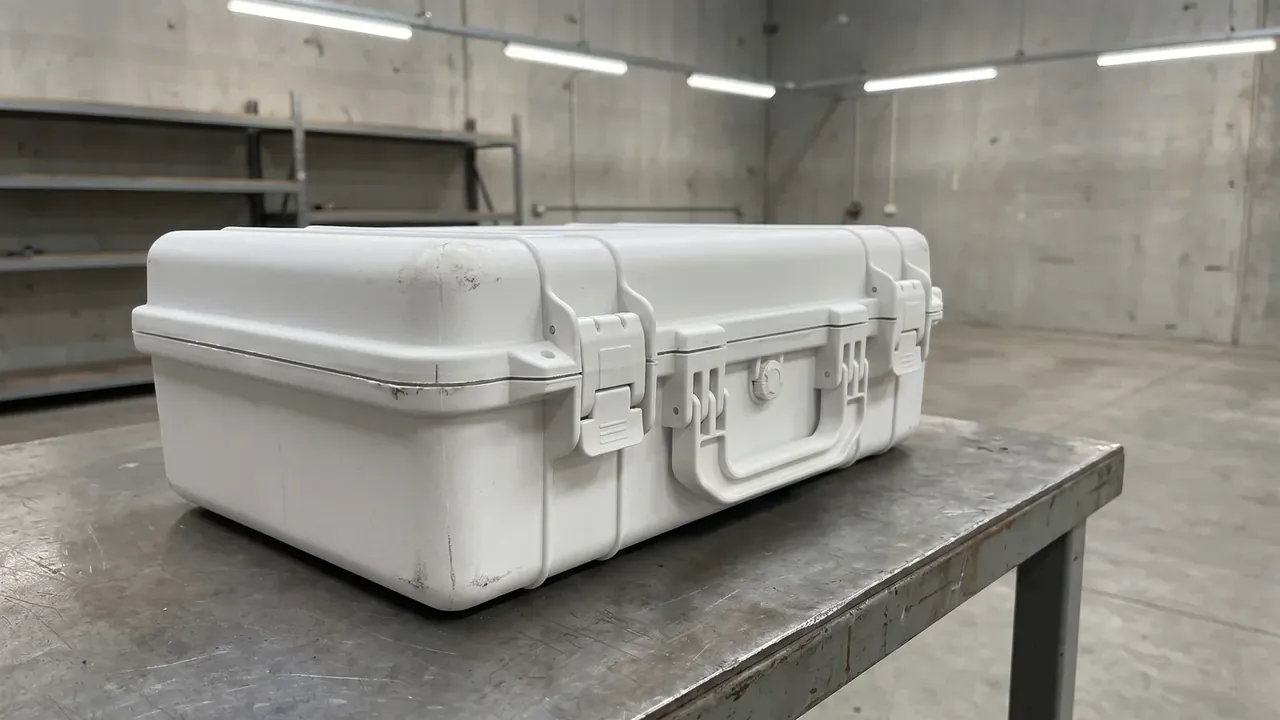
The gasket is what people postpone: leakage creeps from 30 kPa to 22 kPa unnoticed, and at 12 kPa moisture has been inside for months.
One detail: close the lid for 24 hours before testing a new gasket, or the reading comes up short.
5. Store conditions: half the life sits here
The store decides whether a case lasts five or twelve years.
Hold the room between 5 °C and 35 °C, humidity under 70 percent. A top-floor store reaching 60 °C in summer sags the lid, and 2 mm of sag unloads the gasket. Stack no more than three high, with 120 kg maximum on the top case. Keep cases off the outer wall, where the day-night swing condenses water inside, and put 100 mm pallets underneath. Shade anything stored by a window. Hold those conditions and a fifth-year sample still measures 0.3 mm of gel coat.
6. Two habits that extend life, three that end it
Cheap habits:
- Wax yearly with a non-abrasive polish; half an hour blocks moisture and UV.
- Rotate the case 90 degrees each quarter so dents do not settle in one spot.
- Touch up chipped corners with two coats of polyurethane, 4 hours apart.
And three to avoid:
- No alkaline detergent or solvent; one wash can undo a year of care.
- Nobody stands on the lid; a laminate resists bending, not local crushing.
- No knife on labels; a scored gel coat starts a crack.
Conclusion
Most fiber container, ammunition, fiber failures are delays, not accidents: gel coat thin, gaskets hard, stores damp. Run the three tiers, log the thresholds, and twelve years of service is ordinary. Inspection only pays if it happens before the damage does.
This article discusses only the container (case body) side of specifications and design intent, and does not cover any handling, loading or use of the contents.
Related Reading
- Daily care and check rhythm for ammunition storage cases
- How the four wall layers of a fiber case divide the work
- How fiber cases differ from alternatives in durability
- Care points for metal ammunition boxes
- Inspection and replacement cycles for grenade storage cases
Related Products
- 8 Series — Gun Cases; Military Equipment Cases; Camera Equipment Cases; Drone Cases; Watch Cases; Knife Cases; First Aid Cases; Electronics Equipment Cases
- WL8-2812 PP Gun Case — model WL8-2812
- All protective cases and toolboxes: 7 series, 158 models