

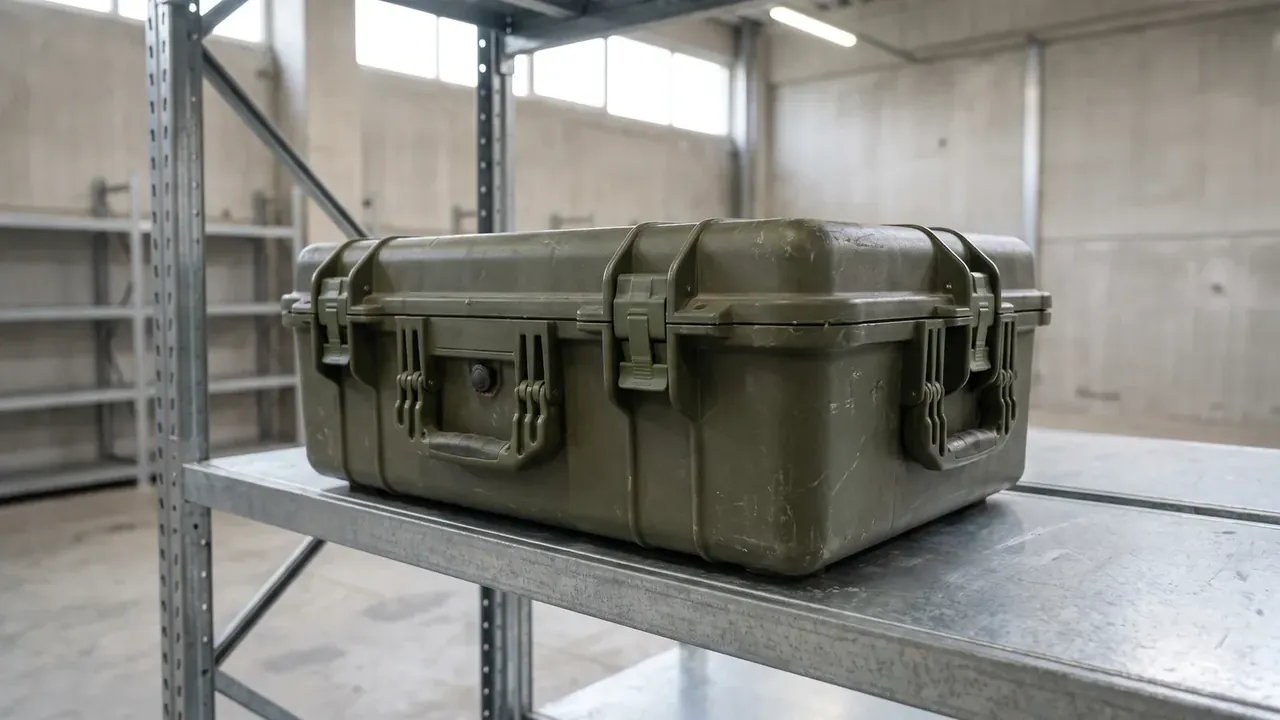
Quick answer: For the same 6 kg bench instrument, a case custom insert in EVA at 60 kg/m³ quotes 68 CNY a set against 42 CNY in EPE at 25 kg/m³, so the 26 CNY gap buys compression cycles.
Table of contents
- Where the 26 CNY gap comes from
- Reading density across three foams
- Thickness from 20 to 40 mm
- Compression and cut tolerance
- Cut die versus mould
- Mixing two materials in one insert
- FAQ
1. Where the 26 CNY gap comes from
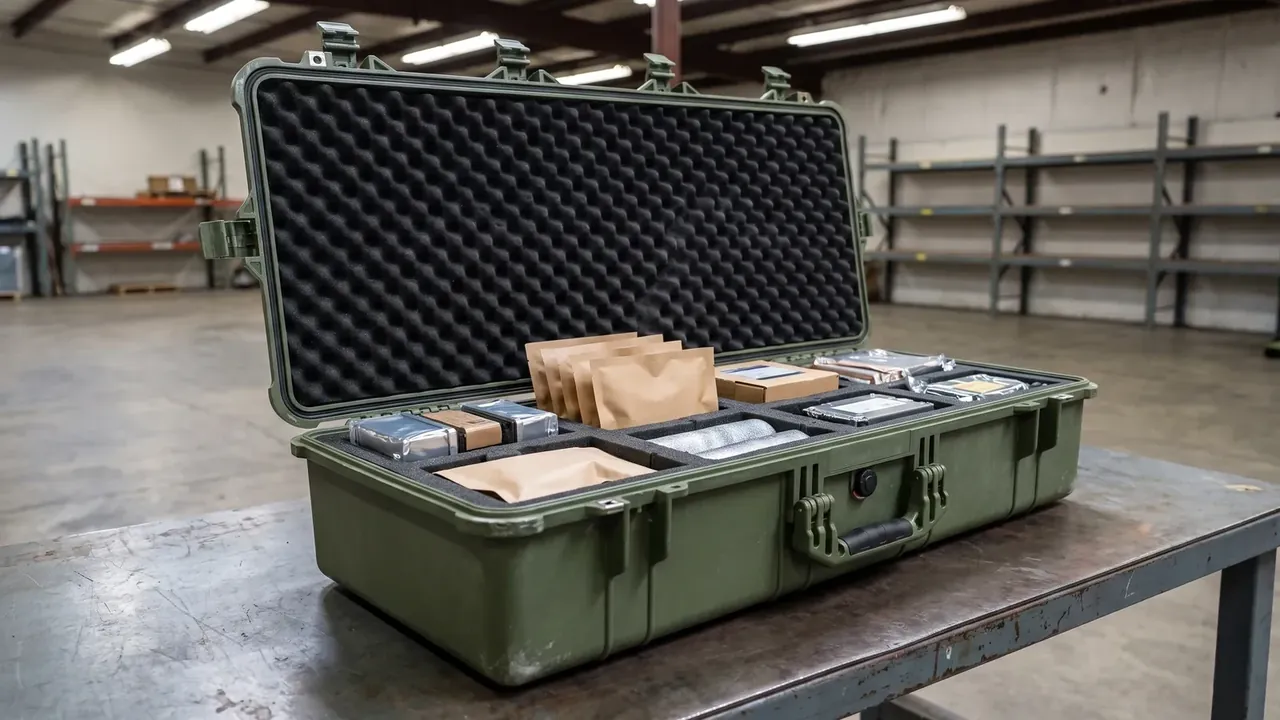
A 6 kg instrument in a 480 mm × 360 mm × 190 mm case drew three insert quotes: 68 CNY in EVA at 60 kg/m³, 55 CNY in XPE at 33 and 42 CNY in EPE at 25.
The 26 CNY buys recovery after compression: EPE cycled 200 times at 25% keeps 88% of its thickness, EVA keeps 95% after 500 cycles, XPE holds 93% after 400 with water uptake under 1%.
One cost never reaches the material line: EPE needs 30 mm to match EVA at 20 mm, uses 50% more volume, and 42 CNY becomes about 51 CNY.
XPE is usually skipped, yet its closed cells hold recovery at 80% humidity or after a wash line. Selection runs environment first, part weight second, price last.
2. Reading density across three foams
Density is the one property that goes straight onto a drawing, and the one quotations blur most: 45 against 60 kg/m³ differs by 33% in material and 12 CNY a set.
| Foam | Density (kg/m³) | Cells | Kept after cycling | Price (CNY) |
|---|---|---|---|---|
| EVA | 45 or 60 | Partly open | 95% / 500 | 68 |
| EPE | 25 | Thin walls | 88% / 200 | 42 |
| XPE | 33 | 90% closed | 93% / 400 | 55 |
EVA 45 suits parts below 3 kg and EVA 60 those above, where cavity walls must stay upright; a 30 mm pocket in the 45 grade dents under a fingernail and frays within 20 loadings.
EPE at 25 expands about 40 times and works for shallow pockets and dividers, collapsing past 40 mm of depth; its price and heat sealing keep short-haul returnable inserts on it.
XPE at 33 is crosslinked with isolated cells and a fine cut face, close to EVA 45 in hardness but steadier in damp sites.
A 100 mm × 100 mm × 20 mm coupon should weigh 12 g at 60 grade and 5 g at 25, and 8% off means the wrong grade arrived.
3. Thickness from 20 to 40 mm
Thickness converts from part weight and drop height. At 800 mm onto concrete with static stress between 0.8 and 1.2 kPa, EVA 60 absorbs about 4 kg per 10 mm, so 20 mm covers 8 kg and 40 mm covers 16 kg.
A 6 kg part given 40 mm wastes 22 CNY, while a 14 kg part given 20 mm dents after three drops and costs more to rework than three sets of thicker foam.
| Part (kg) | EVA 60 | Price (CNY) | 800 mm drop |
|---|---|---|---|
| 8 | 20 mm | 68 | No dent |
| 12 | 30 mm | 89 | No dent |
| 16 | 40 mm | 112 | 0.2 mm print |
Stocked sheet runs 20, 30 and 40 mm in 5 mm steps, and a 25 mm pocket bonded from two sheets creeps 0.3 mm in 12 months.
Ten millimetres in the lid preloads the part 2 to 3 mm, while a 30 mm lid adds 35 N at each latch.
4. Compression and cut tolerance
Grip comes from interference. A cavity 0.4 to 0.6 mm narrower than the part compresses the foam 25% for about 12 N and holds through a 1.2 m drop; under 10% the part rattles, over 40% it must be pulled out.
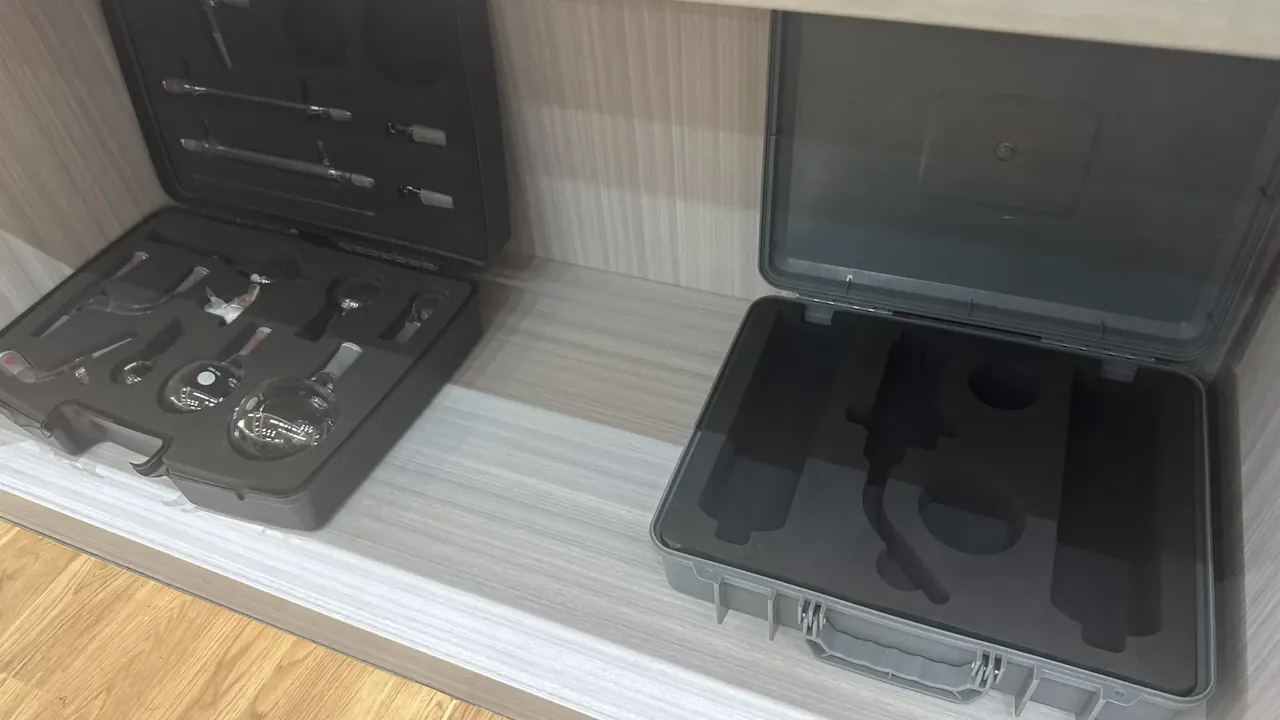
Part tolerance of ±0.2 mm plus cut tolerance of ±0.5 mm swings real interference between 0.2 and 0.8 mm, which keeps compression in the 20% to 30% band and grip within 4 N.
Routing, die cutting and hot pressing hold ±0.3, ±0.5 and ±1.0 mm: the knife suits sheet under 20 mm, the die straight cavities to 40 mm, the press curved or stepped ones.
In a 40 mm pocket, 0.5 mm of edge offset jams the part at 30 mm of travel, and a two-sided knife path holds verticality at 0.3 mm where one pass drifts past 1 mm.
5. Cut die versus mould
A steel-rule die is an 18 mm plywood board with a knife line that stamps a 2D outline for 800 to 1500 CNY in 3 days, cutting only through-slots whose walls sit square to the face.
An aluminium tool for hot pressing costs 6000 to 12000 CNY over 12 days and produces curved pockets with draft, stepped cavities and shaped edges, the walls carrying 3° so parts settle themselves.
| Item | Steel-rule die | Aluminium tool |
|---|---|---|
| One-off | 800–1500 CNY | 6000–12000 CNY |
| Lead time | 3 days | 12 days |
| Shapes | Through-slots | Curves, steps |
| Accuracy | ±0.5 mm | ±1.0 mm |
| Batch | Under 300 | Over 300 |
The 300 set line is amortisation: 9000 CNY of tooling spread over 30 CNY a set breaks even there, below which lamination wins, above which moulding undercuts it.
CNC routing fills the gap, milling 3 to 20 prototypes at 200 to 400 CNY a set, where a change only edits the program.
6. Mixing two materials in one insert
One material rarely fills a whole insert. A 30 mm EVA 60 base, a 10 mm EPE 25 lid layer and 15 mm XPE 33 side strips cost 18% less than an all-EVA build.
Bonding is the hard part. Foam adhesive needs 8 N/25 mm of peel, the EVA to EPE interface drops to 5 N/25 mm, so corona treatment comes first.
Compartments mix as well: 60 grade in heavy zones, 45 in light ones, 3 mm PVC dividers between layers, which saves 25% of material.
Each layer then does one job, and insert life runs from 12 months to 30.
Conclusion
The three foams are not ranked, they are assigned. For an instrument case around 3 kg that opens daily, a case custom insert in EVA at 60 kg/m³ with a 20 mm base and a 10 mm lid layer costs 68 CNY and survives 500 cycles; for short-haul transport on a budget, EPE at 25 kg/m³ costs 42 CNY and 30 mm restores the cushioning; for cold stores and seaside warehouses, XPE at 33 kg/m³ costs 55 CNY and closed cells outweigh the 13 CNY saved. Read thickness off part weight, hold interference at 0.4 to 0.6 mm, compress 25% and grip at 12 N, then die cut below 300 sets and mould above.
| Foam | Density | Part weight | Thickness | Price | Note |
|---|---|---|---|---|---|
| EVA | 45 or 60 | Over 3 kg uses 60 | 20 / 30 / 40 mm | 68 | Walls must stand |
| EPE | 25 | Under 3 kg | 30 mm | 42 | Cost first |
| XPE | 33 | 3–12 kg, damp | 15 / 20 mm | 55 | Closed cells |
This article discusses container-side specifications and design implications only, and does not cover any handling, loading or use of the contents.
Related Reading
- How a custom foam insert is built
- EPE against EVA foam for tool cases
- The custom process for EVA inserts
- Matching inner height to foam thickness
- Writing an EVA insert specification
Related Products
- 8 Series — Gun Cases; Military Equipment Cases; Camera Equipment Cases; Drone Cases; Watch Cases; Knife Cases; First Aid Cases; Electronics Equipment Cases
- WL8-2812 PP Gun Case — model WL8-2812
- All protective cases and toolboxes: 7 series, 158 models