

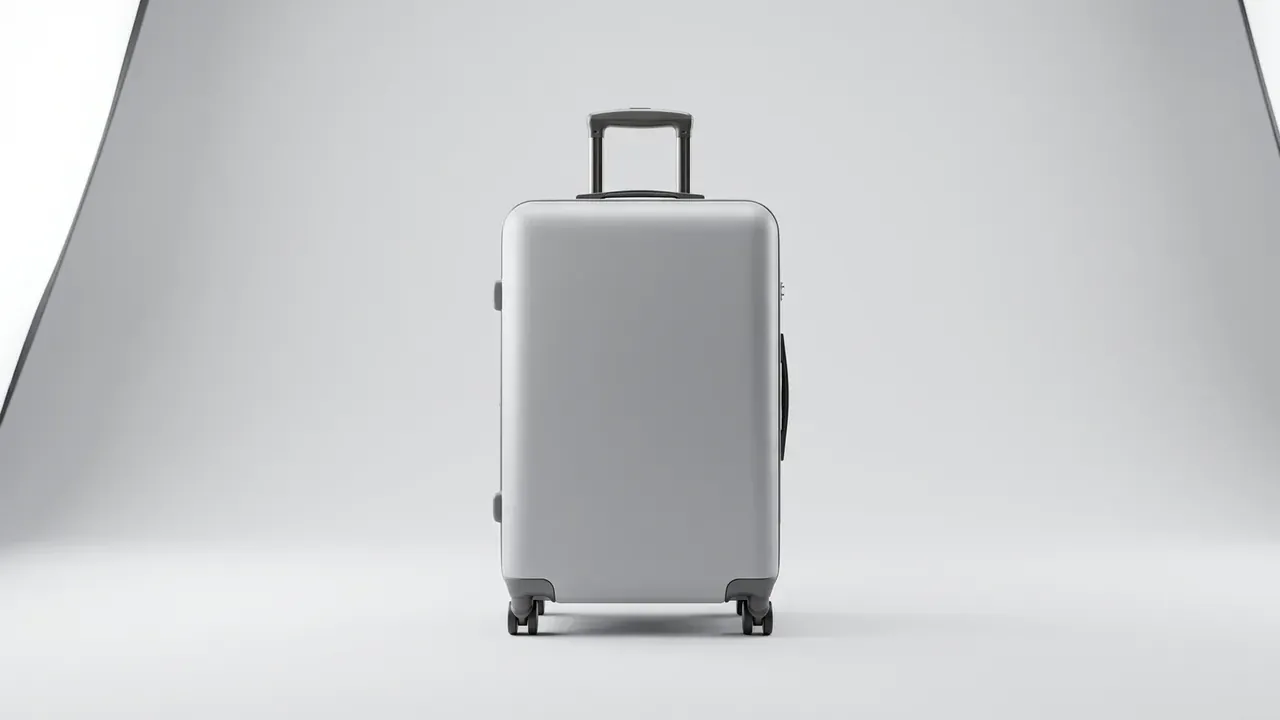
Quick answer: A custom plastic case manufacturer should quote shell, hardware, seal and packing as four lines with tooling outside them. Check the ISO 9001 scope before the price, verify sealing and drop claims against IEC 60529 and MIL-STD-810H reports, and expect 300 units minimum on a 300 litre body.
Table of contents
- What a Custom Plastic Case Manufacturer Must Show First
- Tonnage, Cavities and Tooling Ownership at 300 Litres
- Splitting the Quote into Four Lines
- Test Clauses, First Article and Batch Traceability
- Three Quantity Steps, Lead Time and Payment
- Quote Traps and Certificate Checks
- FAQ
1. What a Custom Plastic Case Manufacturer Must Show First
Ask a custom plastic case manufacturer for three things before a price: production address, the ISO 9001 certificate with annex, and shipment records for similar bodies. A scope reading trading rather than moulding means a broker.
The annex matters more than the paper. Clause 8.5.1 without first-piece confirmation drops first-article inspection, 8.5.4 without preservation leaves transport damage unassigned, and 7.1.5 leaves wall gauges uncalibrated.
| Check | Document | Pass criterion |
|---|---|---|
| System scope | ISO 9001 certificate and annex | Covers moulding and assembly, not trading |
| Sealing | IEC 60529 report | IP67, 1 m for 30 min, sample ID shown |
| Drop | MIL-STD-810H 516.8 procedure IV | 1.2 m, six faces three edges one corner |
| First article | FAI dimensional report | 12 dimensions, flange flatness 0.8 mm |
| Traceability | Batch card, material cross-reference | Resin grade, mould, shift traceable 24 months |
2. Tonnage, Cavities and Tooling Ownership at 300 Litres
For a custom plastic case manufacturer, a 300 litre cavity needs a press above 2,000 tonnes, or a rock-and-roll frame with a 3.5 mm steel mould. The routes differ by 30 percent on unit cost and 20 days on lead time.
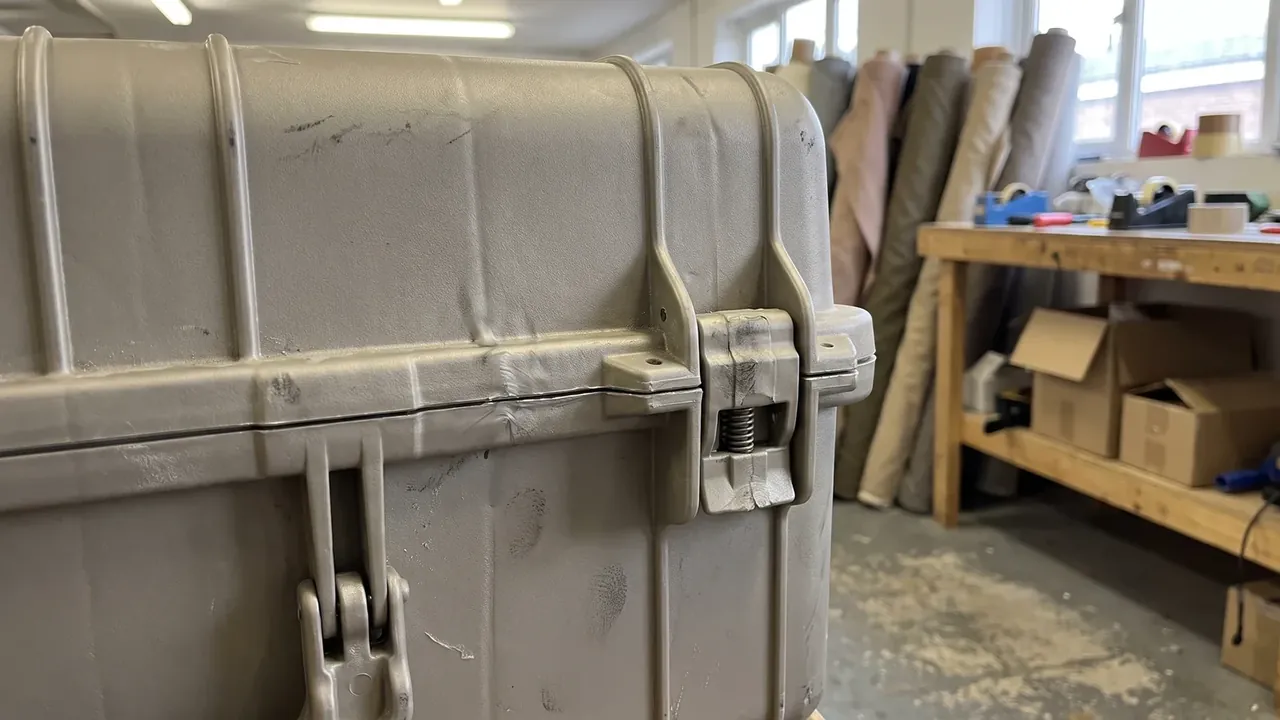
Tooling ownership belongs in the contract body. Plants usually call the tool free and plant-owned, then bill moulding again; write buyer ownership, the mould number on the frame, and a custody duty.
Cavity count tests the price. A single-cavity tool runs nine minutes, about 50 bodies a shift, so 300 units take three days. A two-cavity price on a 1,200 tonne press means subcontracting.
3. Splitting the Quote into Four Lines
A custom plastic case manufacturer prices the shell per unit but pins it to resin grade, weight cap and wall tolerance. At 18.5 kg and 11 CNY per kg of HDPE, a 1 CNY resin move shifts unit cost by 18.5 CNY.
| Quote line | Unit | Share | Fix in the contract |
|---|---|---|---|
| Shell | Per unit, material and energy in | 50 to 58% | Resin grade, 3.5 mm wall, 19 kg cap |
| Hardware | Latches, hinges, handle per set | 18 to 24% | Stainless grade, 96 h salt spray, 2.5 N·m |
| Seal | Gasket per metre, valve per piece | 6 to 9% | 25 to 30% compression, shore hardness |
| Packing | Bag, guard, carton per set | 5 to 8% | Board grade, 5 layer stack, 1.2 m drop |
The seal hides the widest spread. Recycled EPDM drops the gasket from 6 to 2.4 CNY per metre while compression set climbs from 15 to 35 percent; the body weeps after two weeks at 40 °C.
4. Test Clauses, First Article and Batch Traceability
Inspection clauses need items, frequency and limits: incoming melt index and regrind ratio, above 20 percent the body cracks in a cold drop; in-process wall and flatness; outgoing seal one in fifty.
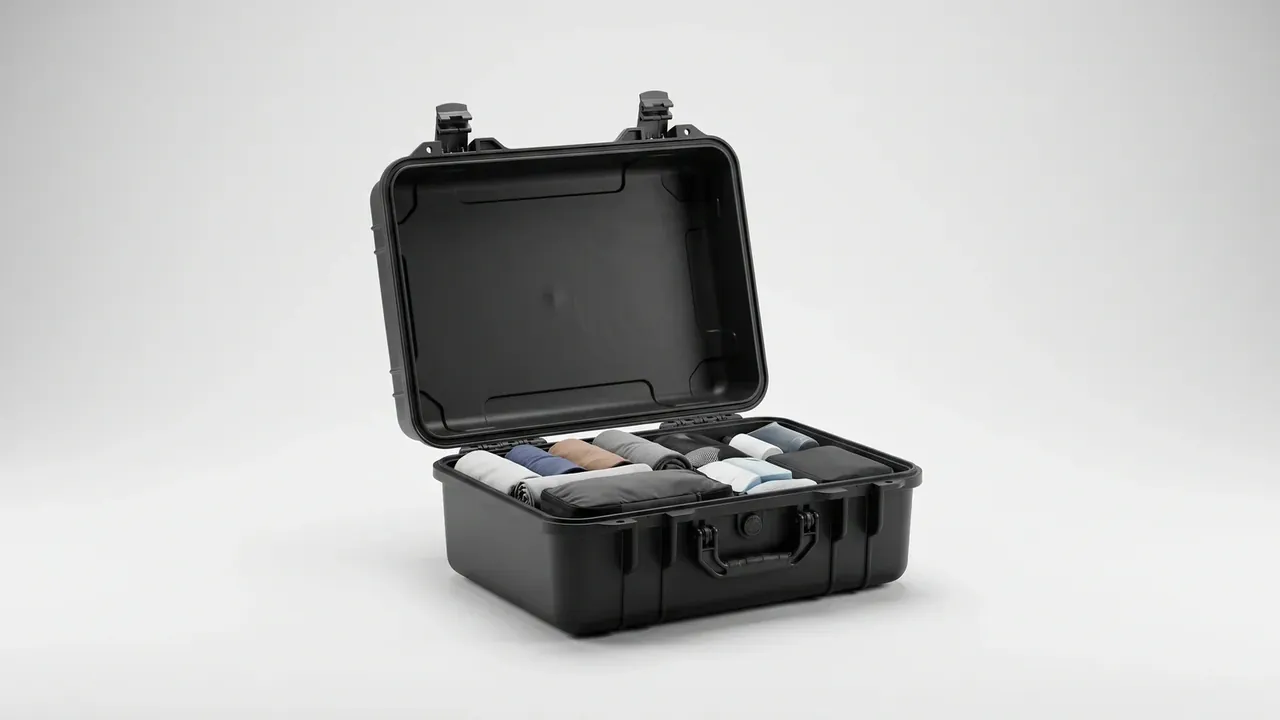
A sealing test needs 1 m immersion, 30 minutes, and a water-to-body difference under 5 °C. Skip the third and negative pressure pulls water through the thinnest face while the sample still passes.
Drop testing follows MIL-STD-810H method 516.8 procedure IV at 1.2 m, ten attitudes, weighted to 1.1 times loaded mass. The pass line: no cracking, no latch release, no seal displacement.
First article inspection covers 12 dimensions, including cavity depth, overall height, flange flatness and latch holes, with signed samples kept by both sides. Traceability runs 24 months on a mould number stamped inside the wall.
5. Three Quantity Steps, Lead Time and Payment
- 300 units: index 100, tooling billed in full, 45 days.
- 1,000 units: index 93, half the tooling absorbed, 50 days.
- 3,000 units: index 86, a 120,000 CNY tool absorbed at 40 CNY each, 60 days.
- Payment: 30 percent deposit, 70 percent against the bill of lading copy.
- Loading: 18.5 kg per body, 180 units in a 20 foot container.
Payment terms beat unit price. At an 8 percent cost of money, 30 to 60 days is a 0.7 percent cut; 3 percent off the price returns as a thinner wall.
6. Quote Traps and Certificate Checks
Three traps repeat. A nominal 3.5 mm wall measured at 2.8 mm saves 1.7 kg and lands 12 percent under the honest quote. Dropping the valve holds on road freight and bows the lid once airframe pressure moves. Pulp corner guards save 1.1 CNY and lift damage to 6 percent.
Certificate checks are four: does the report number resolve on the laboratory site, does the sample ID match the submission, is the date within two years, and does the lab hold CNAS accreditation. Capacity gets the same scrutiny: one 2,000 tonne press tops out near 2,600 units a month.
Conclusion
Order matters more than price: scope, then tonnage and tooling ownership, then price and terms. Split the quote into four lines and write the IP67 and 1.2 m drop limits into the contract. Choosing a custom plastic case manufacturer is choosing a document trail you can re-verify.
This article discusses only the container (case body) side of specifications and design intent, and does not cover any handling, loading or use of the contents.
Related Reading
- How a supplier scorecard is scored
- What a production audit looks at
- Rotomoulded bodies and wall distribution
- A factory tour route with records
- Mould storage and maintenance standards
Related Products
- 8 Series — Gun Cases; Military Equipment Cases; Camera Equipment Cases; Drone Cases; Watch Cases; Knife Cases; First Aid Cases; Electronics Equipment Cases
- WL8-2812 PP Gun Case — model WL8-2812
- All protective cases and toolboxes: 7 series, 158 models