

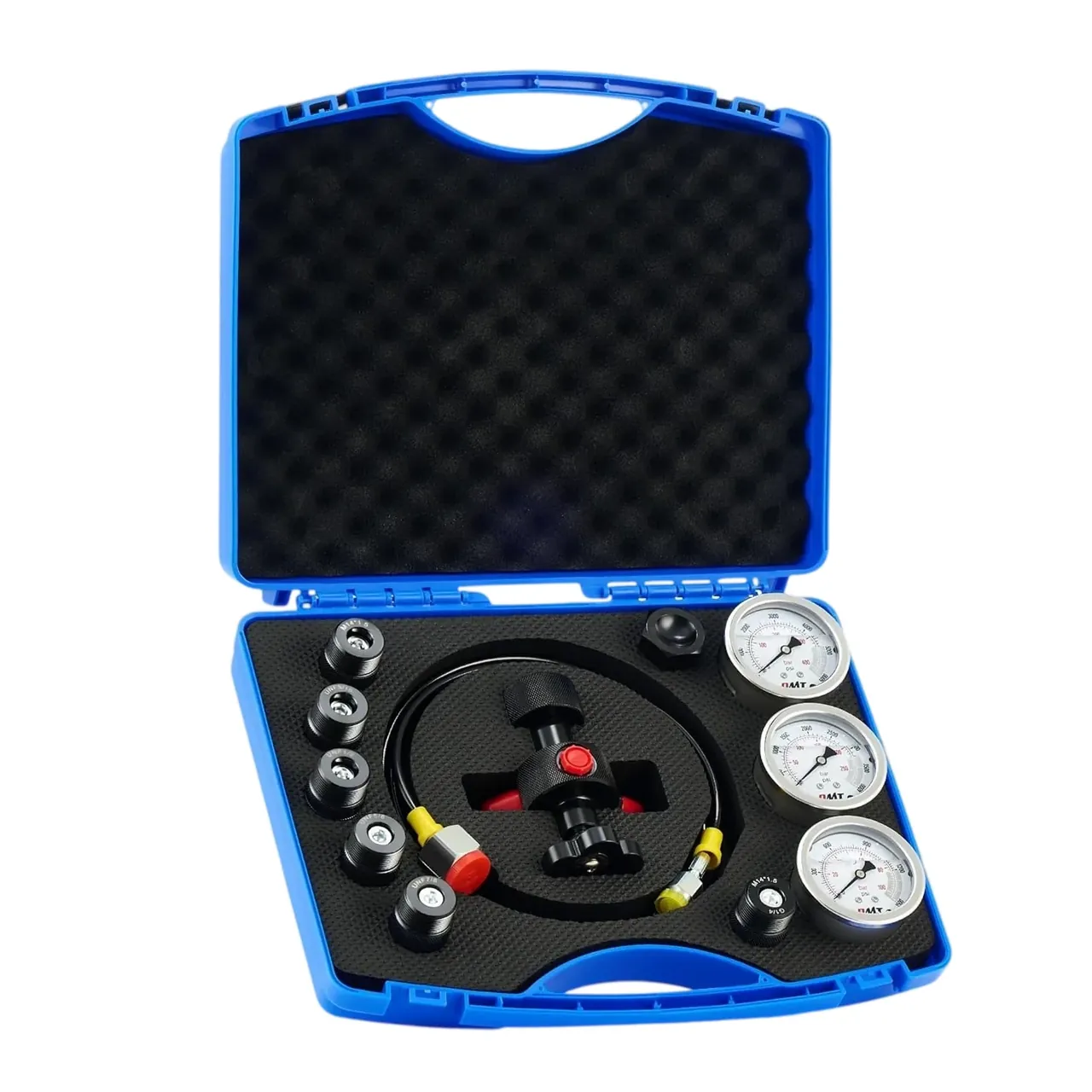
Quick answer: An Equipment Companion Tool Case ships on 18 numbered pockets, a 230 x 160 mm document pocket and a 30 g weight spread on every case.
Table of contents
- Item Numbering and Checklist Mapping in an Equipment Companion Tool Case
- Document Pouch Position and Fixing in an Equipment Companion Tool Case
- Weight Split and Carry Balance in an Equipment Companion Tool Case
- Insert Tolerance and Part Clearance in an Equipment Companion Tool Case
- Packing Re-Check and Shortage Interception in an Equipment Companion Tool Case
- FAQ
1. Item Numbering and Checklist Mapping in an Equipment Companion Tool Case
The first test of a companion case is not shell strength, it is whether the checklist maps onto the pockets without a gap. At unboxing the user holds one sheet and 18 cavities, and any mismatch reads as a missing part.
An Equipment Companion Tool Case runs 18 pockets, numbered 1 to 18 and moulded into the cavity rims rather than printed on stickers. The numbers follow assembly order, so a technician reaching pocket 7 knows to stop. Change the sheet without the insert and the two run a step apart.
| Item numbering | What the mapping shows | Action |
|---|---|---|
| Item numbering aligned | Line matches the moulded number | Pass to next check |
| Item numbering displaced | Part sits in the next cavity | Re-seat, recount |
| Item numbering vacant | Empty cavity, count differs | Hold, check issuing |
A displaced part is harder to catch than a vacant one: the cavity looks full, the count passes, and the error surfaces at number 12 with one part left in hand. So counting follows the numbers, not the parts.
Version control matters in an Equipment Companion Tool Case too. Checklists are commonly revised three times for one machine, and the drawing number sits on the same sheet as the revision. When sheet and case label disagree, the batch is not packed.
2. Document Pouch Position and Fixing in an Equipment Companion Tool Case
The pouch does not go wherever there is bare space. In an Equipment Companion Tool Case it sits inside the lid at the handle end, clear of the hinge sweep and latch travel, opening facing down.
The pouch is a 230 x 160 mm clear wallet, heat-sealed on four sides, held by two retainer strips clipped between lid ribs. No adhesive: glue lets go in a cold store.
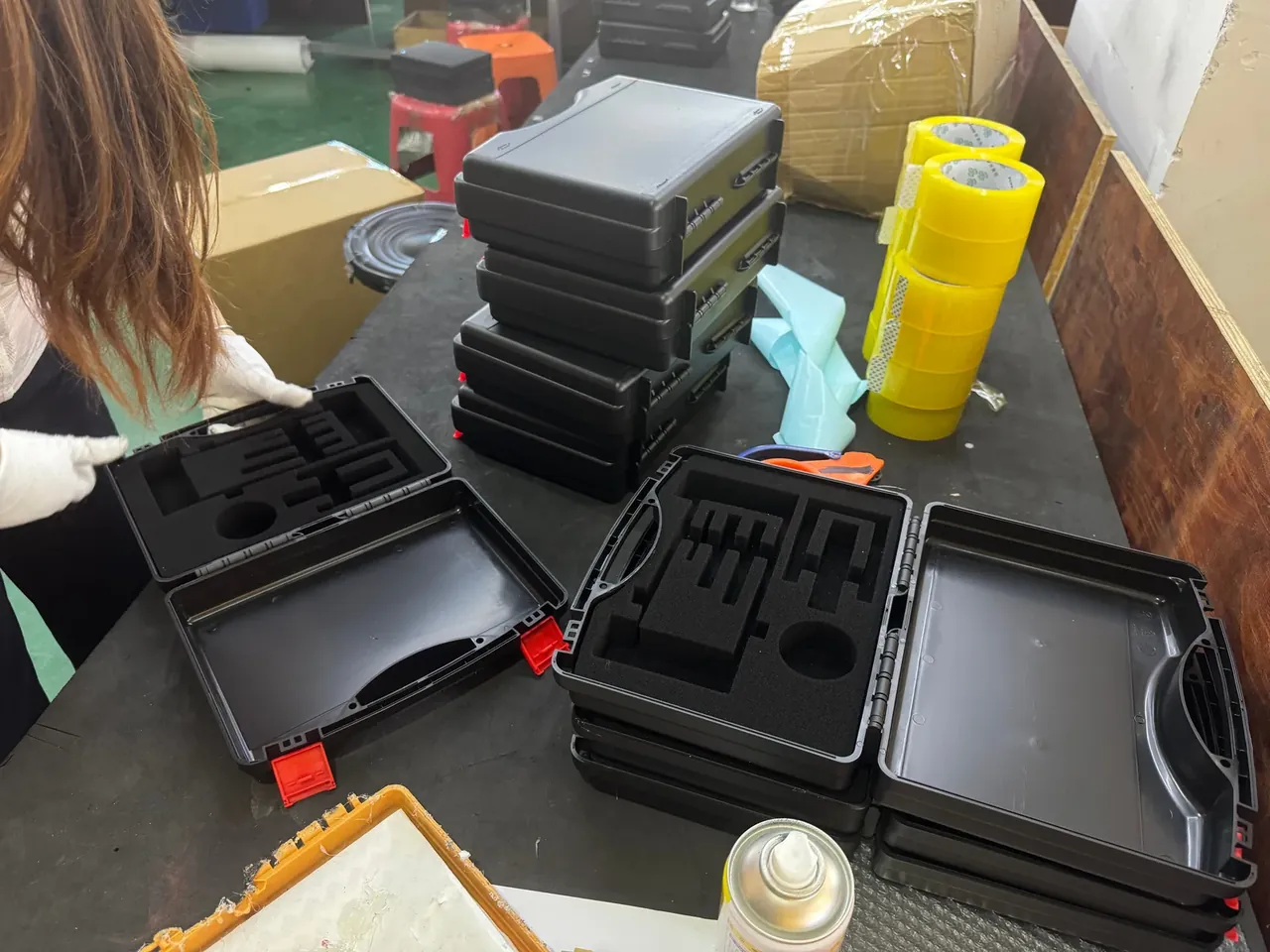
A bulging pouch brings its own trouble. An A5 booklet folded three times stands about 3 mm proud, presses the insert rim at closing and rolls the cavity lip outward. The fix is a relief slot in the insert.
| Document pocket | Position and fixing | What goes wrong |
|---|---|---|
| Document pocket on the lid | Handle end, strips on ribs | Visible, no pressure |
| Document pocket over the insert | Spans cavity lips, glued | Closing crushes lips |
| Document pocket at the base | Mixed with parts | Parts crush it |
A pouch at the bottom of an Equipment Companion Tool Case turns the booklet into padding: one metal part splits the seam.
3. Weight Split and Carry Balance in an Equipment Companion Tool Case
Balance in an Equipment Companion Tool Case is not solved by putting heavy parts in the middle. This case is carried one-handed, and the further the centre of gravity sits from the handle line, the more torque the wrist corrects; a couple of hundred metres and the hand changes sides.
The three heaviest pockets sit nearest the handle, numbered consecutively, with both rows laid out symmetrically by weight. Each packed case is weighed once and held within 30 g of nominal. That figure is not scale resolution but batch consistency: too wide a spread and the technician assumes a part is missing.
| Weight spread | Measured difference | Action |
|---|---|---|
| Weight spread under 30 g | Matches nominal | Seal the case |
| Weight spread 30 to 80 g | One side heavy | Re-pack pockets |
| Weight spread beyond 80 g | Missing or extra | Strip and recount |
A 30 to 80 g spread usually means a pocket was loaded the wrong way round: move a heavy part to the hinge side and total weight barely changes, yet the centre shifts past 20 mm and the latch side takes the load.
The grip takes four gloved fingers, with grip centre about 35 mm from the lid face.
4. Insert Tolerance and Part Clearance in an Equipment Companion Tool Case
The insert is the only part of the case cut for specific items: loose and parts rattle, tight and they will not come out. It is EVA at 0.04 g/cm³, Shore 45 to 55 A, recovering at 85 percent or better.
The tolerance chain has three links: insert outline to shell cavity, cavity wall to part body, and cavity depth. Single-side gap runs 0.5 to 1 mm with insert tolerance ±0.5 mm, leaving almost no room to shift once fitted; open it to ±1 mm and the insert rides with the shell.
Cavity to part clearance is 1.2 mm, wider than common grit and narrower than a finger. Depth runs 2 mm over part height so a fingertip can press.

Tighten to ±0.3 mm and the insert becomes a press fit, which forces the shell cavity to tighten with it; open to ±1 mm and the insert moves in the case and scuffs the part.
Whether a cavity wall collapses is a question of cycles: judged at 200 insert-and-remove cycles with wall deformation under 3 percent, material recovering below 80 percent never gets there.
5. Packing Re-Check and Shortage Interception in an Equipment Companion Tool Case
The last two minutes decide whether the case ships: a pocket-by-pocket count, then a full-case weight comparison.
The count is manual, reading numbers and ticking 18 pockets in about 90 s. The weight check compares the sealed case against nominal and sends anything past 30 g back. They stay separate, so a single oversight cannot confirm itself.
Interception runs at 100 percent with no sampling, because the cost is asymmetric: an extra part wastes one component, a missing part leaves a machine idle on site. A photograph before sealing records insert, numbers and label.
Conclusion
An Equipment Companion Tool Case is judged on delivery completeness, not shell toughness: 18 pockets mapped one for one, a pouch that stays fixed, and a packed weight inside a 30 g band. Tolerance of ±0.5 mm and 1.2 mm of part clearance set how the case feels.
Related Reading
- inspection tool briefcase setup
- maintenance tool case for workshops
- combine harvester parts case
- custom foam inserts
Related Products
- 8 Series — Gun Cases; Military Equipment Cases; Camera Equipment Cases; Drone Cases; Watch Cases; Knife Cases; First Aid Cases; Electronics Equipment Cases
- WL8-2812 PP Gun Case — model WL8-2812
- All protective cases and toolboxes: 7 series, 158 models