

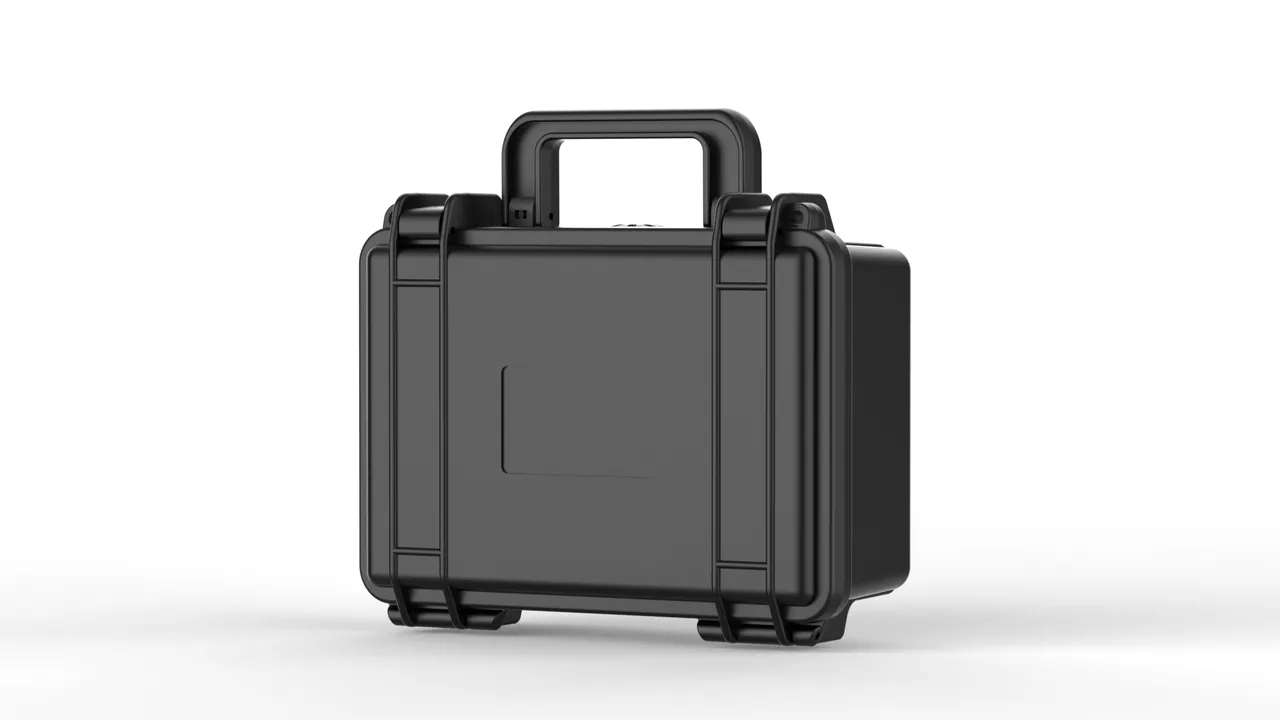
The combine harvester is the centerpiece of modern grain harvesting, a large and intricate machine built from many high-value, precision-sensitive components. Whether a manufacturer is shipping matched spare parts, a dealer is redistributing inventory, or a cross-regional contract crew is moving a mobile repair kit, a long list of parts—headers, threshing drums, concaves, hydraulic lines, and sensors—must survive long-distance transport and warehouse handling without damage. Too often these parts are sent loose, in wooden crates, or in plastic bags, only for the receiver to discover on arrival that the header reel is bent, the rasp-bar teeth are chipped, the concave clearance has drifted, or the hydraulic couplers have rusted solid. From the manufacturer's perspective, JUNZHIJIA designs purpose-built protective cases that address the real transport risks of these parts through compartmentalisation, cushioned liners, IP67 sealing, VCI rust control, and shock absorption.
Why Combine Harvester Parts Need Dedicated Protective Cases
Combine harvester components face three characteristic risks during the logistics chain. The first is mechanical deformation and impact: protruding parts such as header dividers, reels, and cutter bars are easily squeezed by forklifts or slings during loading, or knocked against each other inside a loose container. The second is environmental attack: field transport means rain, mud splash, and high humidity, and cast-iron or steel parts exposed to moist air can begin to rust within days, while hydraulic couplers that corrode will leak the moment they are reconnected. The third is precision drift: the clearance between the concave and the threshing drum is measured in millimetres, and sustained vibration or impact during shipping can shift adjustable parts, forcing a costly recalibration on site and delaying the harvest window.
Generic packaging cannot handle all three at once. A wooden crate carries weight but seals poorly, offers no water protection, and cannot be reused efficiently. A plastic bag resists moisture yet provides zero crush resistance. Loose shipping hands every risk to the carrier. The engineered-plastic protective case, paired with a targeted liner and rust-prevention scheme, is the option that balances protection, reusability, and cost. If you manage other agricultural machinery spares, the broader framework in our agricultural machinery parts case guide is a useful reference.
It is worth stressing that combine operation is highly seasonal. Spares are often stored idle for half the year and then dispatched intensively in peak season, a rhythm that raises the bar for packaging: it must survive repeated turnover wear yet keep rusting away during long sealed storage. Single-use wooden crates must be remade every cycle, consume material, and offer no traceability, whereas a reusable engineering-plastic case with a replaceable liner matches this cyclic use and proves more economical across the full lifecycle.
Transport Deformation Risks of Header Reels and Cutter Bars
The header is the front feeding assembly of the combine, where dividers, reels, and the cutter bar work together to guide crops into the threshing system. The divider snouts are typically thin-walled bent steel tubes with high elasticity but limited lateral bend resistance. When stacked loosely for transport, each upper part presses on the one below, and by destination a visible arc deformation appears, causing uneven dividing and missed swaths at installation. The cutter bar is a long, slender member several metres in length; its mid-span, unsupported between end points, develops deflection under bump loads, and repeated alternating stress can produce permanent bending.
For these long, thin, and easily bent parts, JUNZHIJIA cases integrate a dedicated long-part cradle inside the shell. Two or more EVA or PE support rails run along the case length, and the part rests in the cradle grooves so that it touches only at support points while the middle section floats free, avoiding multi-point compression. The cradle spacing is calculated from the bar length to keep deflection within tolerance. For irregular divider snouts, layered partitions with locating slots give each piece its own cavity, eliminating stacking pressure. The heavy-load thinking behind this mirrors the tractor implement transport case approach to mounted implements.
Impact Damage to Threshing-Drum Rasp Bars
The threshing drum is the heart of the combine, and its rasp bars and teeth rotate at speed to thresh grain from the ear. These tooth parts are usually made of high-hardness alloy steel with strong intrinsic strength, yet the tooth tips and roots are stress-concentration zones. Under rough handling, mutual collision, or impact with a hard object, chipping, curling, or cracking can occur. Once tooth heights become inconsistent or a section is lost, threshing efficiency drops, producing incomplete threshing or a higher broken-grain rate that directly affects both yield and grain quality.
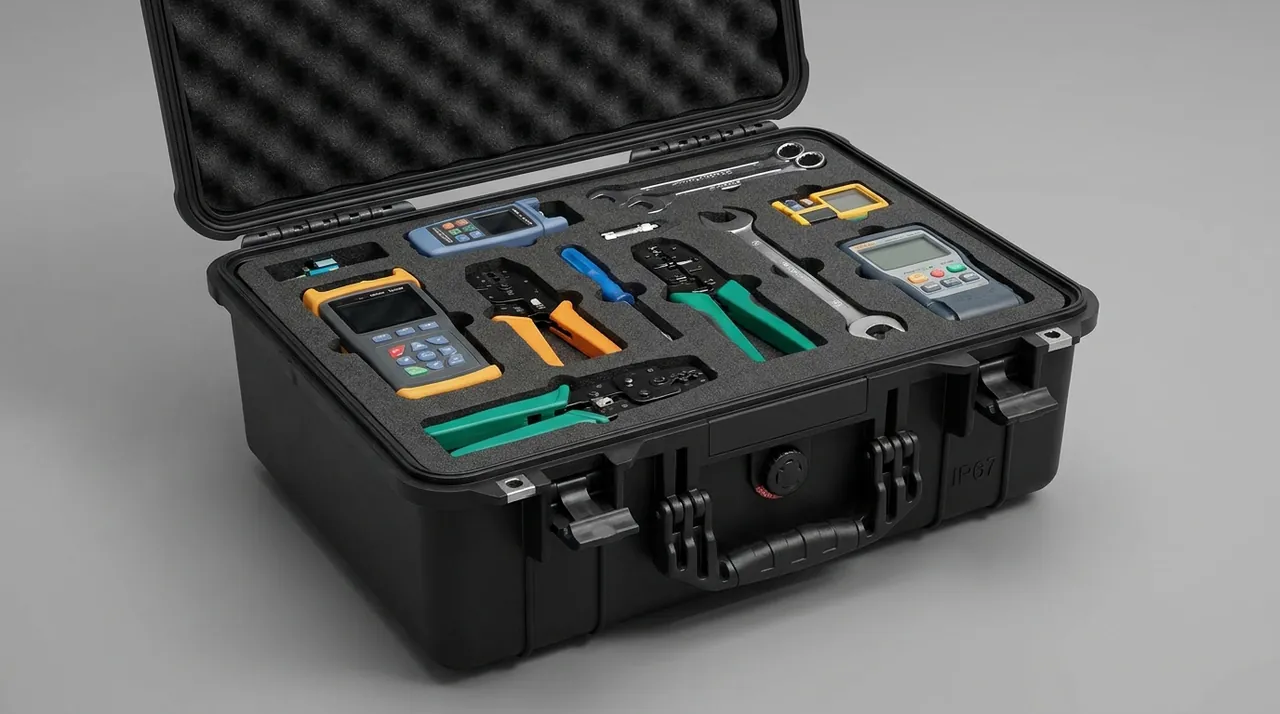
The priority for this class of parts is separation and cushioning. JUNZHIJIA uses a compartmentalised liner in which each rasp-bar drum or single bar occupies its own chamber, the walls formed from high-density EVA foam thick enough to absorb normal drops and handling shocks. When tooth tips face the case wall, an extra hard backing pad prevents penetration. For multiple parts shipped together, the liner is moulded with evenly spaced cells equal to the part count, so parts never touch each other. This precision-separation logic is similar to the anti-collision treatment applied to rotary tiller blades in our rotary tiller parts case, where blade edges are kept in isolated pockets to avoid chipping in transit.
Why Concave Clearance Accuracy Must Be Preserved
The concave sits opposite the threshing drum, and the gap between them is a key parameter that decides threshing quality; different crops and moisture levels call for different recommended clearances. The concave is built from several curved grating bars welded or riveted into a curved surface. Once that curved profile or the bar spacing is deformed under transport compression, the clearance deviates from design. At best, on-site re-alignment wastes time; at worst, the bars rub against the drum, create abnormal noise, or even destroy components.
Because the concave is a curved, hollow, compression-sensitive part, JUNZHIJIA assigns it a dedicated rigid-support zone: the case bottom in that location is thickened and fitted with a PP or ABS support skeleton, the concave is nested against the curve, and the surrounding space is filled with pick-and-pluck foam for fine tuning—fixing it in place while relieving load. Even if the shell is squeezed externally during transit, the support skeleton carries the pressure and the concave itself receives no point load. The protection logic for precision-clearance parts resembles the chamber-plate protection described in our baler parts case, where wall plates are held against designed geometry throughout the journey.
Corrosion and Impact Damage to Hydraulic Lines
Modern combines use hydraulics extensively to drive header lift, reel speed, steering, and more, so a major category of spares consists of hydraulic lines, cylinders, couplers, and valve blocks. These parts have two vulnerable points. First, the pipe mouth and coupler threads, which if nicked will seal poorly and leak when reconnected. Second, the steel tubes and cast-iron valve bodies, which rust readily in humid conditions; the rust layer then contaminates hydraulic oil and jams the spools.
JUNZHIJIA treats hydraulic parts with a three-step approach: block, isolate, and inhibit corrosion. Pipe mouths are sealed with dedicated plastic caps before packing to keep contaminants out; each line is given its own tube cradle inside the case to prevent mutual collision; couplers are individually wrapped in VCI vapour-corrosion-inhibition bags or inhibitor paper. The case as a whole reaches IP67, so even a short stay in muddy field conditions keeps the interior dry and clean. The underlying logic for protecting steel parts is expanded in our metal toolbox rust prevention discussion, which covers why exposed threads and valve faces fail first in humid storage.
Long-Part Cradles for Headers and Shafts
Many combine spares are extra-long members: the whole header frame, the threshing-drum main shaft, drive shafts, and auger housings often range from one to several metres. If such parts lie unsupported across a normal case, their own weight creates a continuous bending moment at mid-span, and the vibration of long-haul transport amplifies that bend until a permanent deflection arrives with the shipment.
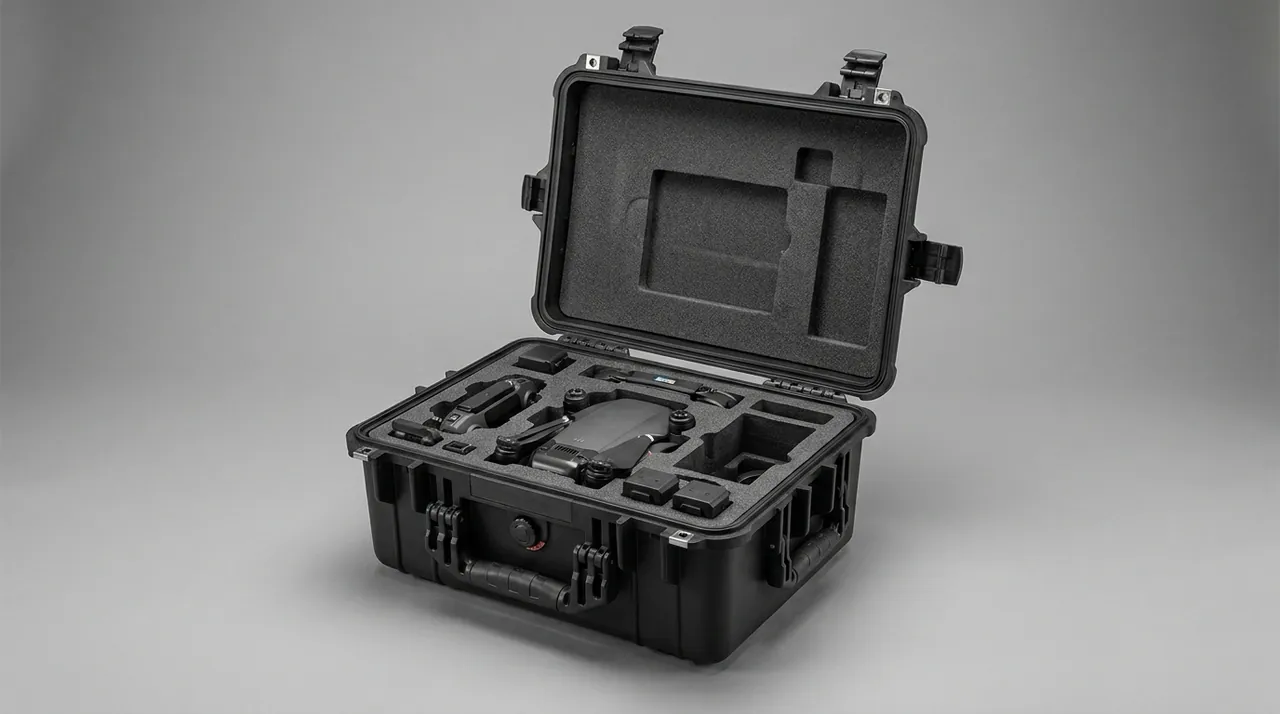
JUNZHIJIA designs removable cradles for long parts in custom projects. The cradle body is light aluminium or glass-fibre-reinforced plastic profile, with multiple V-shaped or curved support points along the axis; the part is supported evenly at each point while the middle floats free and takes no bending. The cradle locks to the case floor with quick fasteners and can be removed when long parts are not being shipped, freeing space for standard compartments of other parts. This one-case-multiple-configuration modularity lets dealers use the case efficiently as spare-part mixes fluctuate. The support practice for heavy long members is also relevant to the rod protection in our potato harvester parts case, where separation-web distortion is managed with similar support thinking.
Compartment Layout and Cushioned Liner Design
A single combine spare kit can contain dozens of parts differing in size, shape, material, and precision. Packing them all into one shared space inevitably causes interference. The core of a JUNZHIJIA case is compartmentalisation: based on the part list and dimensions, the interior is planned into several independent chambers, each with its own liner.
The liner material is mainly EVA foam because its closed-cell structure combines cushioning, light weight, and some oil resistance, suiting the greasy environment of farm machinery. Heavy parts get a hardened backing board to transfer load; precision parts get precisely cut locating pockets; fragile instruments or sensors get an added sponge and anti-static layer. Every liner is moulded or CNC-engraved from the actual part so it fits, locks, and releases correctly. This compartment logic also applies to the zoned protection of snapping rolls and husking units in our corn harvester parts case, where each subassembly is given a dedicated, clearly labelled cavity.
In planning compartments, JUNZHIJIA also considers access frequency and weight distribution. Frequently replaced small items—blades, seals, sensors—sit in upper or lid-side easy-reach chambers; heavy and large items sit at the bottom to lower the centre of gravity and prevent the case from tipping during handling. Each chamber is labelled with the part name and number so field staff can return items without consulting a list. Random tools and bolt kits get their own pouch to avoid scratching precision parts, creating an order of main-part compartments and consolidated consumables that speeds every field intervention.
The Role of IP67 Waterproofing in Field Transport
Combine spares are moved through highly outdoor interactions: harvest season brings rain, field paths turn muddy, and cross-regional transfers use highways or even dirt roads. If spare parts ride in an open truck bed and get rained on or splashed with mud, cast-iron rust, water ingress into electrical connectors, and damp paper seals are all common failures. The IP67 rating means the case is dust-tight—fully protected against external solids—and can survive temporary immersion, one metre deep for thirty minutes, without water entry, which is exactly the right specification for this environment.
JUNZHIJIA achieves IP67 through three elements: a resilient sealing gasket around the lid, a precision-mating shell structure, and reliable latch compression. The gasket uses weather-resistant TPE or silicone that stays elastic from minus twenty to sixty degrees Celsius without hardening or cracking; when the latches close, the gasket compresses evenly into a continuous seal line. Even if the transport truck drives through rain, the interior stays dry. For selection and validation of IP67, see our IP67 protective case explainer, which details how the rating is tested and what it means for field equipment.
VCI Vapor Corrosion Inhibition for Steel Parts
The header, drum, concave, and hydraulic valve bodies of a combine are overwhelmingly cast iron and carbon steel. During ocean freight, cross-season storage, or storage in humid regions, their surfaces quickly form an oxide layer. Traditional oil coating works but must be laboriously cleaned before installation, and the oil film readily attracts dust and grit that then causes wear when the part is mounted—especially harmful to precision-clearance components.
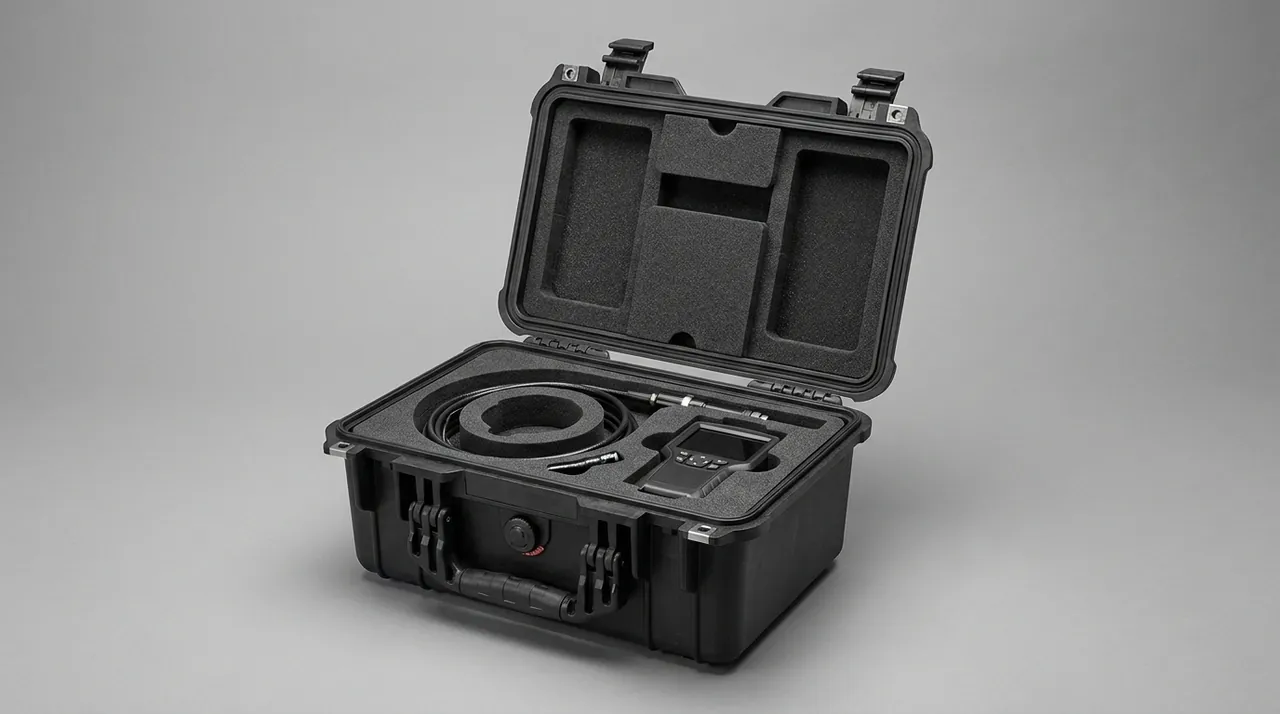
JUNZHIJIA recommends VCI corrosion control: VCI tablets, inhibitor paper, or inhibitor bubble film placed in the chamber volatilise within the sealed space and form a monomolecular protective film on the metal surface, suppressing electrochemical corrosion without contacting the metal, without greasiness, and without any pre-installation cleaning. For already surface-treated parts, VCI also extends the protection period. Combined with the dry environment of an IP67 case, VCI service life is further extended, making it ideal for contract crews storing spares across seasons. The systematic corrosion-resistant packaging view is covered in our corrosion-resistant enclosure article, which compares VCI with coatings and oils for long sealed storage.
Shock Absorption for Rough Roads
Highway bumps, drops during handling, and severe vibration on field paths are sources of hidden damage. Sustained vibration loosens adjustable parts, drifts precision clearances, and causes fretting wear on threaded connections. A case that is merely a hard shell with soft foam still transmits energy to the interior under strong impact.
JUNZHIJIA builds three layers of damping into the structure. Elastic reinforcing ribs inside the four corners absorb corner-drop shocks; a buffer gap between the liner and the shell wall lets the foam absorb impact before it reaches the shell; and for very heavy parts, rubber dampers under the support zone isolate road-frequency vibration. The whole structure is verified by drop and vibration testing to ensure that, under typical transport conditions, the peak acceleration inside the case stays within what the parts can tolerate. The related test method is detailed in our transport vibration testing cases piece, which explains how acceleration limits are derived for fragile cargo.
It should be noted that softer is not always better. An overly soft liner creeps under sustained vibration, letting the part loosen inside its chamber and causing secondary collisions. JUNZHIJIA uses a foam-density gradient: medium-density foam at the contact face for locating stiffness, high-density foam on the impact side for energy absorption, keeping both positioning rigidity and cushioning margin. For spares containing electronic control modules, an air gap is left around the module with buffer strips attached, attenuating high-frequency micro-vibration below the threshold the chips can withstand, so the electronics arrive fully functional.
Integrated Moisture Control and Rust Prevention
Moisture control and rust prevention are two sides of one coin: high humidity catalyses rust, and rust usually begins with dampness. For combine spares, JUNZHIJIA advocates a combined strategy of sealing isolation, internal drying, and vapour protection. Sealing is provided by the IP67 case; internal drying is achieved with desiccant packs or silica gel, especially for electrical connectors and sensors; vapour protection is handled by VCI covering all exposed metal faces.
In actual configuration, the plan is differentiated by the material list: pure mechanical steel parts rely mainly on VCI with desiccant as a supplement; parts containing electronic components get extra desiccant and an anti-static bag; rubber seals are stored separately away from light to avoid prolonged direct contact with VCI. This layered strategy guarantees protection while avoiding the cost waste of over-packaging. More on liner benefits is in our EVA foam advantages article, which explains why closed-cell foam suits greasy, damp farm environments better than open-cell alternatives.
For cross-ocean or export scenarios, humidity and salt spray are a double challenge. JUNZHIJIA adds an optional salt-spray-resistant outer coating and equips the interior with both VCI and sufficient desiccant so relative humidity stays below the threshold where steel rusts. After the container reaches port, even if the outer packaging is damp, the internal parts remain in a stable micro-environment. This combination has been adopted by several farm-machinery exporters and markedly lowers the defect rate found when boxes are opened at destination, reducing returns and claims caused by corrosion during the long sea voyage.
Selection Guide by Part Type
Building on the risks above, JUNZHIJIA offers the following selection advice for combine spares. For long thin parts such as header dividers and cutter bars, choose a heavy-duty engineering-plastic case with a long-part cradle and EVA support inside. For tooth parts such as threshing drums and rasp bars, choose a precision-compartment liner case with an independent chamber per tooth. For concaves, choose a curved-fit case with a rigid support skeleton. For hydraulic lines, choose an IP67 plus VCI plus tube-cradle rust-resistant case. Electronic control modules and sensors get their own anti-static moisture-proof small case, which is then placed in a designated chamber of the large case.
Selection should rest on three elements: part list, transport mode, and storage period. Ocean freight with cross-season storage emphasises VCI and desiccant; short road haul can be simplified. When the spare mix is large and frequently changing, prioritise modular reconfigurable liners. If you manage several types of farm machinery spares, the anti-bend and clean-handling combined scheme in our sprayer boom component case is also worth reviewing, since boom trusses face the same distortion risks as cutter bars.
Packing and Field Operation Procedures
Even the best case depends on correct packing and handling. JUNZHIJIA recommends the following rules. Before packing, check the part list against chamber numbers so each item has its place. For long parts, fit the cradle first, then place the part, confirming no floating pressure points. Point tooth tips toward the reserved cushion side, never against the shell wall. Hydraulic pipe mouths must be capped and couplers individually wrapped for corrosion. Place VCI and desiccant per chamber and never omit them. When closing the lid, apply force evenly, confirm the gasket is fully compressed, and ensure latches are engaged.
On site, remove parts one by one and log them to avoid rummaging that dislocates the liner; after removal, reset the liner and desiccant promptly to keep the case reusable. For contract crews, colour-label the exterior by "header parts," "threshing parts," and "hydraulic parts" to improve field efficiency. Proper loading matters too, and the related points are in our case shipping loading precautions, which covers how to secure cases so they do not slide and collide during transit.
Warehouse Stacking and Long-Haul Transport
How spare cases are stacked in the warehouse and on the truck directly affects the load on bottom cases. JUNZHIJIA shells are designed as stackable structures, but stacking should respect a few rules: align same-size cases on their corner columns to avoid eccentric loading; do not exceed the rated stacking layers, and place a pallet under the bottom layer for long storage; put heavy-part cases at the bottom and light-part cases on top; for ocean freight, wrap the cases in stretch film and moisture-proof paper and band the whole pallet to prevent sliding during the voyage.
During long-haul transport, secure the cases to the truck wall or pallet to reduce lateral sliding; in rainy transport keep the cargo bay covered, and even with an IP67 case avoid prolonged soaking. For spares stored across seasons, inspect desiccant condition and VCI remaining each quarter and replace promptly if dampness appears. The general stacking and storage rules are in our warehouse stacking moisture cases, which explains load limits and moisture control for long sealed storage of metal parts.
In addition, a simple ledger should be kept as cases circulate, recording each packing's parts, dispatch and return times, and liner condition. This allows quick tracing when a part is missing and gives statistics on case turnover to justify liner replacement and retirement. For large service networks, JUNZHIJIA can print a QR code on the case so a scan shows the part list and maintenance record, moving spare management from experience-based to traceable and further lowering the chance of mis-installation, omission, or loss during high-pressure harvest-season repairs.
JUNZHIJIA Custom Manufacturing Capability
As a professional protective-case manufacturer, JUNZHIJIA is produced by Kexin New Materials (Guangdong) Co., Ltd. and offers a complete capability from requirement research, structural design, and liner tooling to batch delivery. For complex farm machinery like the combine, we provide a service customised to the part list: the customer supplies part dimensions, materials, and accuracy requirements, our engineering team plans the compartment layout, cradle structure, and rust-prevention scheme, and after a sample is confirmed we move to batch production.
Our shells are injection-moulded or thermoformed from engineering plastics and support optional IP67 sealing, removable cradles, modular liners, external labels, and QR-code asset management. Liners are mainly EVA and support both CNC engraving and pick-and-pluck processes. Whether for OEM matching, dealer spares, or a contract crew's mobile repair station, a fitting solution can be found. For similar needs across other farm machines, a serialised agricultural machinery parts case plan can be arranged together, giving a unified protection standard across an entire machinery fleet.
FAQ
Q: Why do combine header dividers deform in transport, and how does the case solve it? A: Header divider snouts are typically thin-walled bent steel tubes with high elasticity but limited lateral bend resistance. When stacked loosely, the upper parts press an arc into the lower ones, causing uneven dividing and missed swaths at installation. JUNZHIJIA cases integrate a dedicated long-part cradle with several support points along the axis so the part touches only at those points while the mid-section floats free, avoiding the multi-point compression that creates deflection. Irregular dividers use layered partitions with locating slots, giving each piece its own cavity and eliminating stacking pressure. Combined with an EVA cushion layer, even transport bumps will not produce permanent bending, so the part installs directly on site without re-shaping. This cradle approach is the core of our long-part protection design and has been validated on many slender farm-machine members shipped across bumpy field access roads. Field trials with regional service teams confirmed that divider snouts returned from transport showed no measurable bend against the supplied tolerance chart, eliminating rework at the worst possible moment.
Q: How do threshing-drum rasp-bar teeth avoid chipping during handling? A: Rasp-bar teeth are high-hardness alloy steel whose tips and roots are stress-concentration zones; rough handling or impact with hard objects causes chipping, curling, or cracking, and inconsistent tooth height directly lowers threshing quality and raises the broken-grain rate. JUNZHIJIA uses a compartmentalised liner where each drum or single bar occupies its own chamber with high-density EVA walls that absorb normal drops and handling shocks. When tooth tips face the wall, an extra hard backing pad prevents penetration. Multiple parts shipped together get evenly spaced cells equal to the count, so parts never touch, eliminating the mutual collision that causes chipping at the root. The result is that every tooth arrives at designed height and profile, so threshing performance is preserved and the operator avoids the hidden loss of grain quality that bent or chipped rasp bars would otherwise cause during the season. Field service reports show that drums arriving in these cases need no bench rework, a meaningful saving when a breakdown strikes inside the short weather windows that govern the harvest schedule.
Q: What happens if the concave curvature is compressed out of shape in transit? A: The concave gap with the drum is measured in millimetres and decides threshing quality; if its curved grating bars deform under compression, the clearance drifts from design, forcing on-site re-alignment or, worse, letting bars rub the drum and damage components. JUNZHIJIA assigns the concave a rigid-support zone: the case bottom is thickened with a PP or ABS skeleton, the concave nests against the curve, and pick-and-pluck foam fills around it for fixing and load relief. External squeeze during transit is carried by the skeleton, so the concave body receives no point load and its curve and bar spacing stay at design values throughout the journey. Because the support is shaped to the actual curvature, the part cannot twist or flatten even under stacked loads, giving the service team a concave that drops straight into tolerance without the tedious shimming that deformed concaves otherwise require. Service managers value this because a correctly shaped concave protects both grain quality and the surrounding drum from the accelerated wear that a distorted part would otherwise impose during a long season.
Q: How are hydraulic line couplers prevented from rusting and being nicked? A: Hydraulic pipe threads, if nicked, seal poorly and leak when reconnected, while cast-iron valve bodies rust in humidity and contaminate oil or jam spools. JUNZHIJIA uses three steps: block, isolate, inhibit. Pipe mouths are capped before packing to keep contaminants out; each line gets its own cradle to avoid mutual collision; couplers are individually wrapped in VCI bags or paper. The case reaches IP67, so even a muddy field stop keeps the interior dry and clean. This removes both coupler corrosion and thread nicking at the source, letting the lines connect quickly on site without leakage or contamination from rust particles in the system. The dry sealed micro-environment also protects soft seals and o-rings from swelling, so the whole hydraulic loop returns to service faster after a long storage period between seasons of intensive harvesting work. The capped mouths also stop grit entering the line, so the flush time before commissioning is cut to a minimum and the crew avoids contaminating a freshly rebuilt system with field debris.
Q: Why recommend VCI vapour inhibition instead of oil coating? A: Traditional oil coating works but must be cleaned off laboriously before installation, and the film attracts dust and grit that then causes wear when mounted—especially harmful to precision-clearance parts. VCI volatilises inside the sealed case and forms a monomolecular film on metal that suppresses electrochemical corrosion without contacting the part, without greasiness, and without pre-installation cleaning. Paired with the dry IP67 interior, VCI service life extends further, ideal for crews storing spares across seasons. It saves the cleaning step and avoids the secondary wear that oil contamination would otherwise cause on tight-tolerance components during assembly. Because the inhibitor reaches every hidden cavity and blind thread, even internal bore surfaces stay protected, which is something a surface oil film alone cannot guarantee for long sealed storage in humid climates near paddy or lowland fields. Crews therefore avoid the messy degreasing step entirely and can fit protected parts straight from the case into the machine without delaying the repair with cleaning.
Q: Is an IP67 case really necessary for farm-machinery transport? A: Combine spares move through highly outdoor conditions: rainy harvest seasons, muddy field paths, and dirt-road transfers mean rain and mud splash that commonly cause cast-iron rust, water ingress into connectors, and damp paper seals. IP67 means dust-tight and short-time immersion survival, exactly matching this environment. JUNZHIJIA achieves it with weather-resistant gaskets, precision shell mating, and firm latch compression; the gasket stays elastic from minus twenty to sixty degrees, so even a rain-driven truck keeps the interior dry. This is critical for spares containing electronic control modules and sensors that fail quickly with moisture exposure. Beyond electronics, the dry interior also keeps paper gaskets, labels, and lubricant films intact, so the whole spare kit arrives in a condition that lets a crew fit it and return the machine to work within the narrow weather windows that harvest schedules demand. In practice the case also shields paper gaskets and lubricant films from damp, so the entire kit is fit to fit the moment the lid is opened rather than after a drying session.
Q: Can the long-part cradle be removed, and can one case hold mixed parts? A: Yes. JUNZHIJIA cradles for extra-long members such as header frames, threshing-drum shafts, and drive shafts use a removable design of light aluminium or glass-fibre profile locked to the floor with quick fasteners. When long parts are absent, the cradle is removed to free space for standard compartments of other parts, realising one-case-multiple-configuration modularity so dealers use the case efficiently as spare mixes change. The long part is supported evenly at multiple axial points with the middle floating free, solving deflection while preserving the case's compatibility with other spares in the same kit. The support spacing itself is calculated from the member's section stiffness, so a three-metre cutter bar and a shorter auger shaft can share the same shell once the rail positions are re-set. This flexibility matters because a dealer's demand shifts through the season; the same shell serves header repairs in one dispatch and drum or hydraulic work in the next, lowering the total number of dedicated cases a branch must stock and maintain year round. The quick-release cradle therefore turns one shell into a flexible asset that pays back across many dispatch cycles instead of sitting idle between specialised jobs.
Q: How long does a case last, and what if the liner wears out? A: JUNZHIJIA shells are engineering-plastic moulded; with normal use and correct stacking, designed service life reaches several years with repeated turns, and latches and gaskets are consumables with spare parts available. Liners are mainly EVA; if local collapse appears from long use or the part list changes, the liner can be remade alone without replacing the shell, and we support re-tooling and local repair. Daily care is simply cleaning the shell, checking the gasket, and replacing desiccant and VCI on schedule, which sustains protection and keeps total ownership cost below that of single-use wooden crates over the lifecycle. The shell itself resists impact and UV far better than timber, so even after many field seasons it remains a serviceable asset rather than disposal waste, supporting both cost control and the sustainability goals of modern agricultural equipment service networks. A concave support skeleton or long-part cradle that takes the heaviest point loads can be renewed independently, so an abrasion hotspot never condemns the whole case. Spare liners can be stocked cheaply, so a worn insert is swapped rather than the whole case scrapped, extending the usable life of the shell far beyond a single campaign.
Q: Can you fully customise compartments and liners to our own part list? A: Yes, this is the core of our service. The customer supplies part dimensions, materials, accuracy needs, and transport mode; our engineering team plans compartment layout, long-part cradles, rigid supports, and rust-prevention, then produces a sample for confirmation before batch manufacturing. Shells support IP67 sealing, removable cradles, modular liners, external colour labels, and QR asset management, while liners support both CNC engraving and pick-and-pluck so each item has its place and locks securely. Whether for OEM matching, dealer spares, or a contract crew's mobile repair station, a tailored case plan is delivered. Because the header divider, threshing drum, concave, and hydraulic line each carry a different failure mode, the same shell can be partitioned so that a long cradle serves the bar while a rigid skeleton carries the concave and a sealed pocket holds capped couplers. This makes the case a true system rather than a generic box, matched precisely to how your combine spares are actually used in the field and reducing the risk of costly fitting errors. Related reading: agricultural machinery parts case, agriculture spray equipment case, IP67 protective case.