

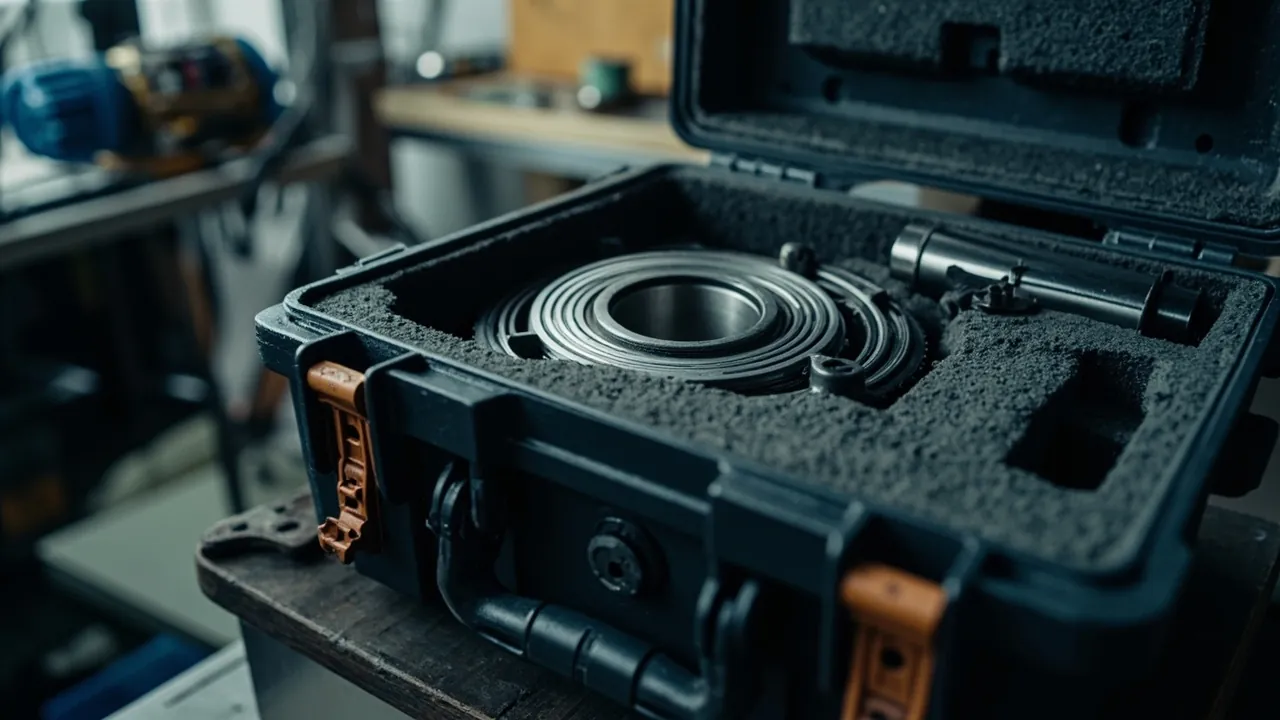
Spare-parts warehouses, equipment manufacturers, and overseas shippers move bearings, gearboxes, and precision transmission parts every day, and these metal components fail in three quiet ways: a precision fit surface gets scratched or dented, packed grease is contaminated by dust and moisture, and the steel body rusts in humid transit. A bearing and gearbox case must protect the fit surface from any contact, keep the as-packed grease in a clean, sealed environment, and prevent corrosion of bare and coated steel, using lint-free zero-contact packing and a rated seal. This article specifies cases for these three risk classes, with references to IEC 60529, GB/T 4208, ISTA procedures, UL 94, and the environmental-test logic of MIL-STD-810H used only as a test basis (not a military certification), so the choices survive both a pothole and an auditor.
The core error in this category is shipping bare parts in a crate or carton, because stacking pressure dents the raceway, dust falls into the grease, and sea-air condensation rusts the body, and the failure appears later as hum, heat, and early bearing death after assembly. The right case is a lint-free, zero-contact, rust-proofable unit, and the difference shows up as a component that fits and runs as designed. For a transmission builder, that fit is the product.
We cover the two failure modes, fit-surface protection, grease cleanliness, corrosion control, cradle and bore packing, sealing and chemical resistance, shock and vibration, hardware, rust-proofing and handling, sizing and mobility, transit testing, customization, and the cost and service-life picture. Use the Table of Contents to reach the section that matches the part you ship most.
Table of Contents
- 1. Why Bearings and Gearboxes Need a Specialist Case
- 2. Precision Fit Surface and Grease: Two Failure Modes
- 3. Protecting the Precision Fit Surface from Damage
- 4. Grease Contamination and Cleanliness Control
- 5. Corrosion Protection for Bare and Coated Surfaces
- 6. Cradles, Bores and Zero-Contact Packing
- 7. Ingress Protection to IEC 60529 and GB/T 4208
- 8. Chemical Resistance and UL 94 Shell Rating
- 9. Shock and Vibration Management
- 10. Hinges, Latches and Seals for Industrial Use
- 11. Cleaning, Rust-Proofing and Handling
- 12. Sizing, Weight and Field Mobility
- 13. Stacking, Transit and ISTA Testing
- 14. Custom Foam and OEM/ODM Options
- 15. Service Life, Cost and Common Mistakes
1. Why Bearings and Gearboxes Need a Specialist Case
Bearings and gearboxes carry value in tolerances the eye cannot see. A raceway that is dented by a few microns will sing and heat under load; a shaft seat that is scratched will never seat a mating part true; grease that picks up dust becomes lapping compound. Transport that damages any of these destroys the value before the part is even installed, and the failure shows up later as noise, heat, and premature failure rather than as a broken box.
A specialist case treats the fit surface, the grease, and the steel body as three separate protection targets. Generic crates fail all three: parts shift and dent, the environment is open, and humidity reaches bare steel. The result is rework, scrap, and warranty claims that cost far more than the case. The case is the only thing standing between the part as-made and the part as-installed.
Specifying this case is also a quality activity. ISO-minded plants document cleanliness and corrosion prevention, and a case that cannot be kept lint-free, sealed, and traceable becomes a gap in that system. The cases described here are built so a plant can demonstrate clean, protected, traceable transit, which is part of compliant operation rather than an extra.
2. Precision Fit Surface and Grease: Two Failure Modes
These two failure modes dominate and must be designed against separately. The fit surface, meaning raceways, shaft seats, and gear teeth, fails by dent, scratch, or fretting when it contacts anything hard or shifts under load. The grease fails by contamination when dust, fiber, or moisture reaches the as-packed lubricant, turning protection into abrasion. A case that solves only one of the two still ships a damaged part.
| Risk class | What fails | Priority case feature |
|---|---|---|
| --- | --- | --- |
| Fit surface | Raceway dent, seat scratch, tooth fretting | Zero-contact cradle, lint-free |
| Grease | Dust, fiber, moisture in lubricant | Sealed, clean interior, desiccant |
| Corrosion | Rust on bare or coated steel | Dry sealed interior, VCI option |
The fit surface wants a cradle that touches only non-critical faces and leaves the raceway and seat clear, so nothing ever presses on the working surface. The grease wants a sealed, lint-free interior that excludes particulates and moisture, often with a desiccant to hold the micro-climate dry. The steel body wants a dry, sealed environment and, for long or harsh transit, a vapor-corrosion-inhibitor option. Because a shipment usually carries all three concerns, the practical case zones the part so each concern is met without compromising another.
When you brief a supplier, lead with the part geometry and the as-packed state, because the interior architecture follows the tolerance and the grease, not the outer dimensions. A standardized insert drawn from the actual part list is what removes the two failure modes at once.
3. Protecting the Precision Fit Surface from Damage
The fit surface must never contact a hard object or another part in transit, so the design rule is zero contact on the working faces: raceways, shaft seats, and gear teeth are held clear by a cradle that supports only the non-critical outer diameters and flanges. A bearing sits in a pocket that grips its outer ring, never its raceway; a gearbox sits on locating pads that miss the shaft seat and the teeth.
Lint-free packing is part of this, because a fiber pressed onto a raceway during transit becomes an embedded contaminant that later scores the rolling elements. Use a clean, non-shedding foam and handle the part with clean gloves, and specify the cleanliness class on the purchase order if your plant works to one. The case makes the clean path the only easy path, for example by pockets shaped so the part can only seat one way, with the working face against a protected wall.
After loading, the shake test applies: close the case and shake it; if the part moves or rings against the shell, the cradle is wrong regardless of the spec sheet, because a moving part is a part that will dent or frett. The fit surface is protected only when the part is immobilized and clear, and that is a layout result, not a cushioning claim.
4. Grease Contamination and Cleanliness Control
As-packed grease is a controlled environment, and transit is the enemy of that control. Dust, fiber, and moisture that reach the grease turn a protective film into an abrasive slurry, so the case must exclude particulates and water while the part is sealed inside. The interior should be clean and lint-free, the lid should seal, and the closure should not pump outside air through the gasket during handling.
Practical cleanliness control uses a sealed interior plus a desiccant pack sized to the case volume, so the micro-climate stays dry even across a humid or sea-air leg. Some operations add a humidity indicator card for high-value shipments, which is cheap insurance that the grease arrived clean. The key point is that the case manages the environment of the grease rather than merely enclosing the part, which is the opposite of a vented crate.
For cases that cross altitude or temperature swings, a pressure equalization valve helps avoid moisture being drawn in through the gasket when the case equalizes, because a valve reduces the pumping of humid air in and out and keeps the interior stable. Used with a desiccant, it protects the grease across a long, varied trip without opening the seal to the outside.
5. Corrosion Protection for Bare and Coated Surfaces
Bare steel rusts fast in humid or sea-air transit, and even coated surfaces can creep corrosion at a chip, so the case must keep the interior dry and, for harsh routes, add active protection. The first line is a sealed, dry interior that excludes the moisture driving rust; the second is a vapor-corrosion-inhibitor, or VCI, option where a VCI emitter or paper protects exposed steel without coating it.
VCI is a complement, not a substitute, for a dry seal: it protects the part during the transit window, while the seal keeps the bulk moisture out. Specify the expected exposure when you brief the supplier, because a short dry inland hop needs less than a long ocean leg, and over-specifying VCI adds cost without benefit. The corrosion plan should be documented, because a receiver asking how the part was protected wants an answer backed by the case design, not a hope.
Dryness also protects the grease interface, because moisture that reaches a coated surface can migrate to a seat and cause hidden corrosion that shows up only after assembly. Keep the interior dry, add VCI for harsh routes, and you remove the corrosion mode without compromising the fit-surface or grease modes, because all three share the same sealed, clean interior.
6. Cradles, Bores and Zero-Contact Packing
The cradle is where zero-contact becomes physical. A bearing gets a pocket that grips its outer ring and leaves the raceway and bore clear; a gearbox gets locating pads that support the housing and miss the shaft seat and the teeth; a shaft gets a saddle that supports the journal and leaves the mating diameter free. The geometry is drawn from the part, so the cradle is specific, not generic.
A removable divider system lets you re-zone the case for different part families without buying a new insert, which matters because transmission lines run mixed sizes by order. For divider options and clearance rules, our removable divider system guide covers fixed versus adjustable walls and the standoff that prevents rub. The discipline of a pocket per part is what turns a case from a box into a standardized, auditable unit.
The foam should be lint-free and should have clearance on all sides with a soft standoff from the lid, so closing the case never presses a working face against the shell. After loading, the shake test reveals cradle quality faster than any sheet: if you hear the part move when the closed case is handled roughly, the pocket is wrong and the fit surface is at risk.
7. Ingress Protection to IEC 60529 and GB/T 4208
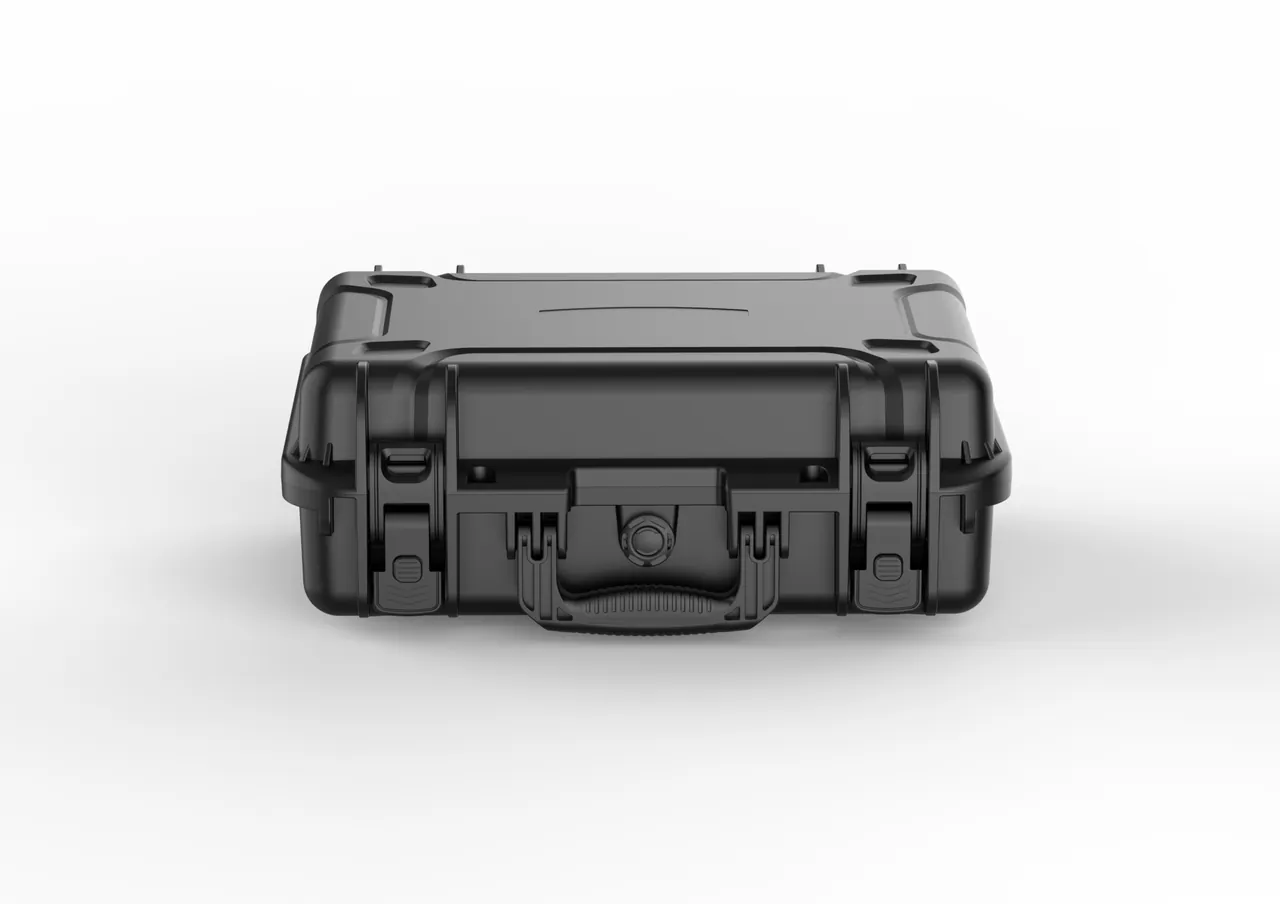
Ingress protection codes from IEC 60529, with the aligned Chinese national standard GB/T 4208, describe how well a case keeps solids and water out, and for bearings and gearboxes the rating protects the grease and the steel. IP65 keeps out dust and low-pressure water jets, which covers wash-down and rainy loadouts; IP67 adds short immersion protection useful when a case is dropped or left on a wet dock.
You rarely need more than IP67 for transmission parts, and chasing IP68 without a real use case just adds cost. Ask the supplier for the test report that names the standard and the exact code, because the rating applies to the assembled case with its gasket and latch, not to the bare shell. A stamped code without a report is a claim, not evidence, and the report is what your quality file should hold.
Sealing is only as good as the gasket and the latch compression. A gasket pinched or a latch that does not pull the lid tight will leak regardless of the stamped rating. The relationship between sealing and latch design is covered in our waterproof case and IP guide, which is worth reading before you compare quotes, because the seal is what keeps dust and moisture off the as-packed grease.
8. Chemical Resistance and UL 94 Shell Rating
Industrial cases sit next to solvents, cutting fluids, and cleaners, so the shell and liner must resist the chemicals you actually use without swelling or softening. Most closed-cell foams and copolymer shells handle typical industrial solvents well, but aggressive agents can attack some adhesives, so tell your supplier which chemicals you use and ask for a chemical-resistance statement rather than assuming compatibility.
Flammability is the other material question. UL 94 is the widely used flammability classification for plastic materials, and a case stored in a plant or a vehicle benefits from a rated, slow-burning or self-extinguishing grade such as UL 94 HB or V-0 depending on thickness. This is about reducing the chance that a case near a heater or a battery bank becomes fuel in an already bad situation, not about passing a fire test in the field. Request the UL 94 grade on the material certificate and keep it with your compliance file.
A vague "flame retardant" claim is not the same as a stated UL 94 classification, and for an industrial case that distinction is worth a line on the purchase order. The shell, the liner, and the adhesive should each be named, because contamination and fire risk both live in the details the supplier is willing to document.
9. Shock and Vibration Management
Bearings and gearboxes fail on shock when a drop drives one part into another or into the shell, and on vibration when sustained road input fret the fit surfaces or works grease out of a seal. The case manages this with a rigid shell that distributes load and an interior foam that decouples each part, so the impact travels through foam instead of through the raceway.
Density matters. Too soft and the part bottoms out on impact and meets the shell; too hard and it transmits shock. For housings a medium-density cross-linked foam with a precision cradle is usual, while delicate shafts want a softer saddle with more standoff. The shake test in the showroom reveals foam quality faster than any specification, because a rattling case is a case that will dent a raceway on the first pothole.
The proof of drop survival is a test standard, not a claim. An ISTA sequence subjects the packed case to drops and compression that approximate real handling, and a case that passes gives confidence for daily industrial transit. Environmental stress can also be framed against MIL-STD-810H as a test basis only; note this is a test reference, not a military certification, and the relevant proof for shipping is the ISTA result plus the IP and corrosion design.
10. Hinges, Latches and Seals for Industrial Use
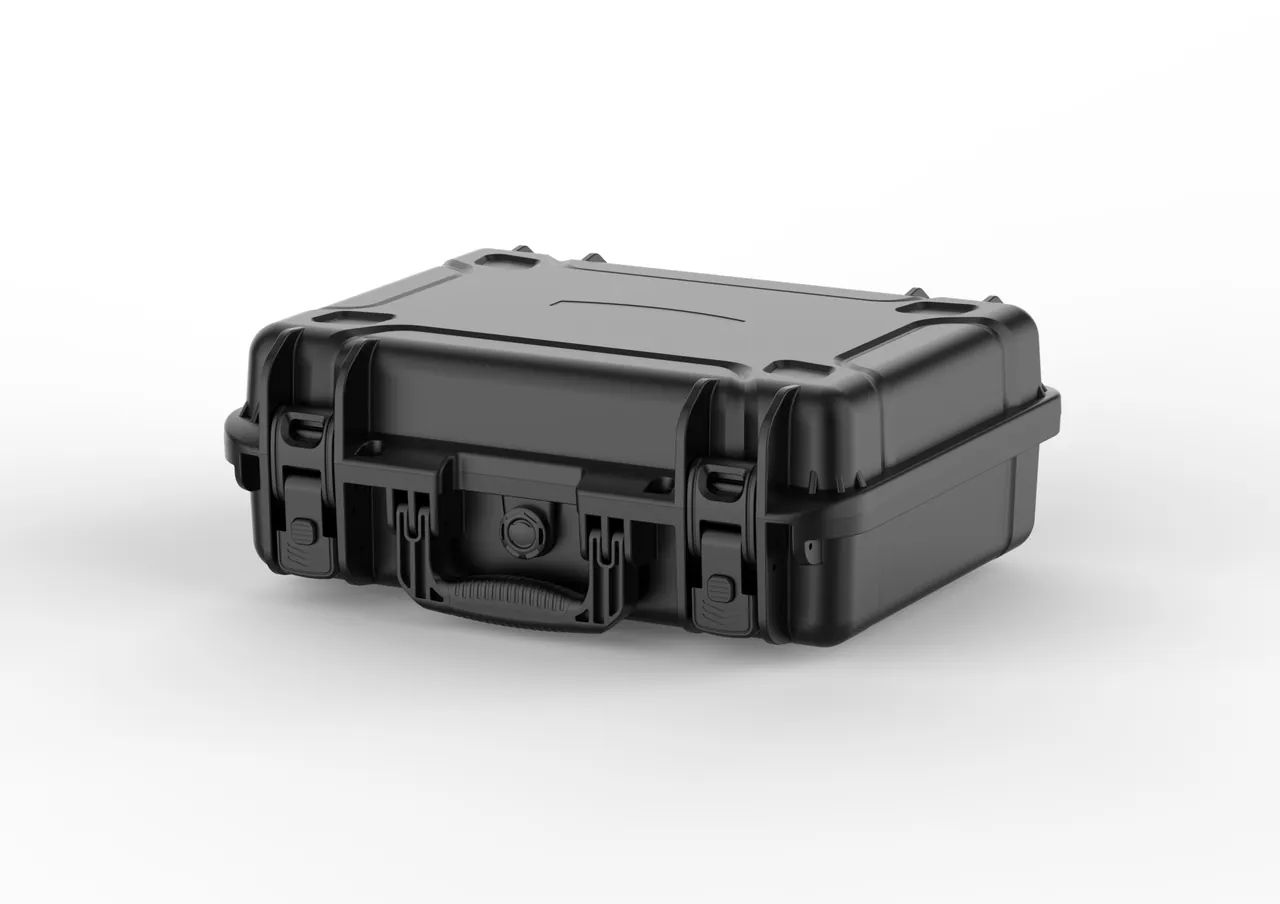
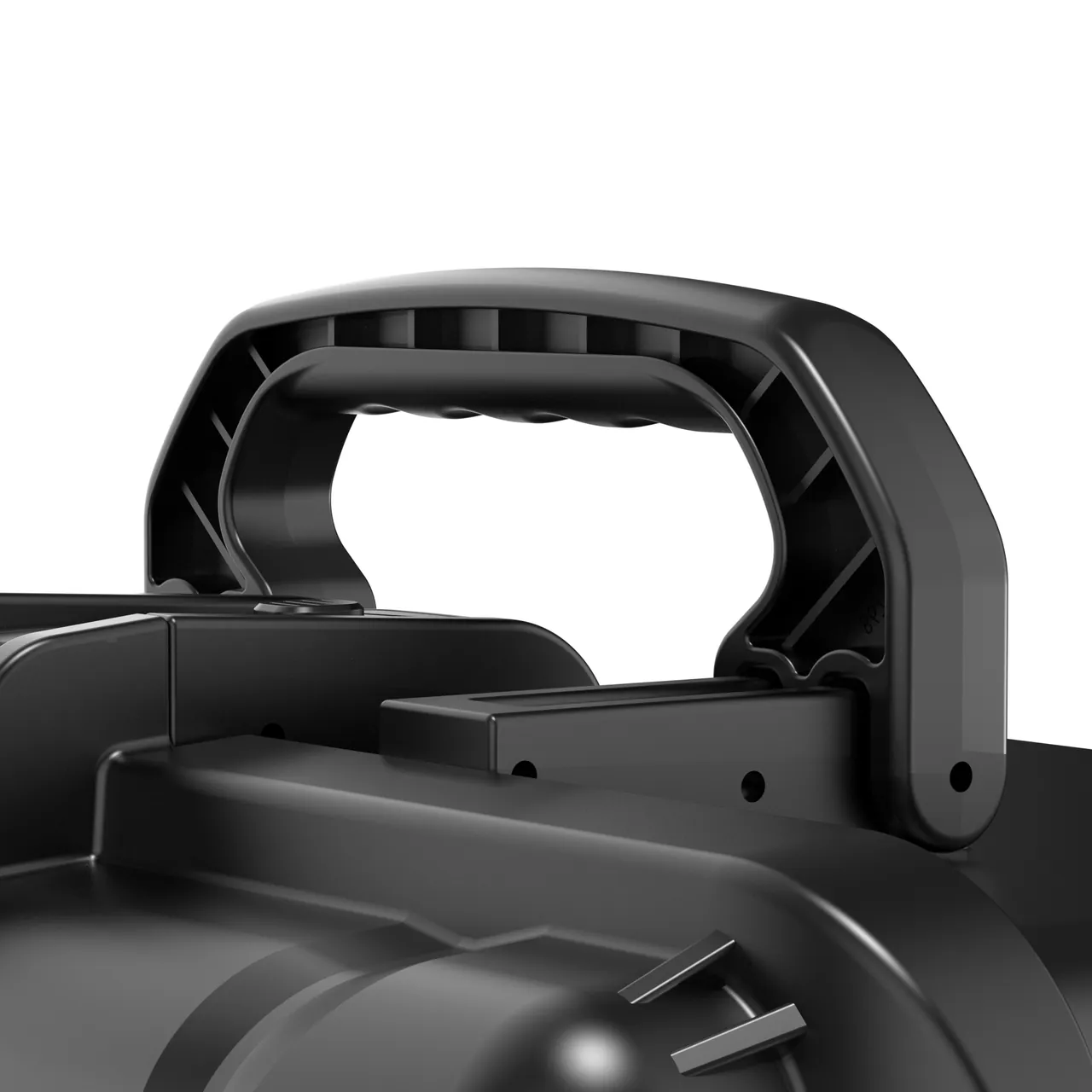
Industrial cases open and close repeatedly, often in a dirty plant with gloved hands, so hardware is where they live or die. The hinge must be pinned and reinforced, not a living plastic tab that fatigues; the latch must draw the lid down with enough force to compress the gasket and seat the divider, and it must work one-handed with gloves.
This is where a validated toolbox hinge, latch and seal assembly earns its place: a reinforced pivot, a positive-locking latch, and a continuous gasket channel delivered as one coordinated, serviceable package, instead of three parts hoped to fit. For daily industrial use the integration matters more than any single rating, because the seal only works if the latch pulls the lid tight every time, and the latch only survives if the hinge does not fail first.
Specify stainless or coated hardware because plants are wet, oily, and corrosive, and confirm the latch can be operated with gloves. Replaceable latches are a plus; a case whose only fault is a worn latch should not be scrapped. Ask whether the hinge and latch are serviceable before purchase, because serviceability is the difference between a case that lasts and one discarded over a small part.
11. Cleaning, Rust-Proofing and Handling
Cleanability and rust-proofing are quality requirements for transmission cases. After a return or before a long store, the case may carry residue, so the routine is: remove the divider and liner, wipe and decontaminate per your plant protocol, dry fully, re-pack with fresh VCI if used, label the case and the part, and reload. A case designed for fast teardown makes this routine realistic rather than theoretical.
Our how to clean a protective case article gives the step-by-step and the chemical cautions that keep liners intact, and most of it applies to industrial cases because the soiling can be oily or reactive. The points that matter most are to use a cleaner the liner tolerates, to avoid soaking a closed-cell foam past its seam, and to dry completely before closure so you do not trap moisture that later rusts the part.
Keep a log of cleanings and of what each case carried, because audits ask for cleanliness and corrosion-prevention evidence. A case that tears down in minutes and accepts a label makes that cadence documentable, and the small discipline protects both the part and your ability to show a clean, protected history from maker to installer.
12. Sizing, Weight and Field Mobility
Transmission cases get heavy with steel, so sizing is a weight decision as much as a volume one. Weigh the loaded case, not the empty one, and keep a margin under the handler limit, because a case too heavy to lift safely becomes a two-person job that slows every transfer. For field service a mid-size case that carries a bearing set and a small gearbox in one layer is usually right.
Size the case to the part plus a small buffer. Too small and parts wedge and contact; too large and the divider must be built up with filler that migrates. A modular insert that re-zones for the order avoids both. For walks from vehicle to line, wheels and a trolley handle turn a heavy case into a rollable one, and our case wheels and trolley handle notes help you choose wheel quality that survives plant and yard ground rather than failing on the first trip.
Remember the lid standoff from section 3 when sizing, because a gearbox height, not just its footprint, often sets the case depth. A case sized only to the base will press a shaft seat when closed, so size to the tallest element plus clearance.
13. Stacking, Transit and ISTA Testing
Transmission cases stack in stores and on pallets, and steel on steel is unforgiving, so stack stability is safety. Look for cases with interlocking corners that keep a stack from sliding, and never stack a heavy case on a case holding precision shafts, because the weight will bear on the most delicate seat. The proof of transit survival is a drop-test standard rather than a claim of toughness.
ISTA procedures are the practical benchmark. An ISTA 1A or 3A sequence subjects a packed case to drops, vibration, and compression that approximate parcel and mixed-mode shipping, and a case that passes gives confidence for daily industrial transit even though the cart is gentler than a parcel network. Ask for the ISTA report and the drop height used, because drop height scales with case weight and a light case tested low is not comparable to a heavy loaded case tested higher.
For how these tests are run and what the results mean, see our ISTA transport testing procedure write-up. Pair the transit rating with the shock and vibration guidance above, and you have a case validated for the route rather than the showroom, which is what a plant paying for a part that fits and runs actually needs.
14. Custom Foam and OEM/ODM Options
A plant that ships the same part families repeatedly benefits from a standardized insert. When your cradle map, bore saddle, and pad layout match your actual inventory, every handler loads faster and every part is held the same way, which reduces dent, fretting, and contamination and speeds training. A coordinated build from a manufacturer such as JUNZHJIA specifies the shell, the lint-free liner grade, the zero-contact cradle map, and the latch hardware as one package rather than parts sourced separately and hoped to fit.
The value is consistency across lines and sites. Every case in the fleet holds the same part the same way, which simplifies spares and audit, and a manufacturer such as JUNZHJIA can supply the material certificates and test files you need for quality evidence, including the IP, UL 94, and ISTA reports that prove the design. For what to verify before you commit, our how to choose a case OEM factory guide covers the questions that separate a capable builder from a box mover.
Custom does not mean costly by default. A custom insert for a known part set is often cheaper than buying generic cases that hold the same items poorly, and it protects the steel better. The rule is the same as for any case: if your parts are stable and repeated, standardize them with a custom lint-free insert; if they change weekly by order, stay modular with a removable divider you can re-zone without new foam. For acceptance of custom batches, our custom case acceptance and AQL guide explains how to inspect incoming units objectively.
15. Service Life, Cost and Common Mistakes
Price is the wrong number to optimize; fit integrity and reuse are the right ones. A cheaper case that sheds fiber, lets parts contact, or cannot be sealed costs more in scrap and warranty than a specified case that lasts years. Track the case fleet by wear indicators: gasket gaps, hinge play, divider warp, and liner shedding are the signals to retire or repair before they damage a shipment.
| Cost factor | Cheap case outcome | Specified case outcome |
|---|---|---|
| --- | --- | --- |
| Fit-surface damage | Frequent dent, fretting | Rare, zero-contact |
| Grease contamination | Dust, moisture ingress | Sealed, clean |
| Corrosion | Rust on long transit | Dry, VCI option |
| Service life | 1 to 2 years | Multiple years |
The common mistakes are predictable. Shipping bare parts in a crate lets stacking dent the raceway. Using fibrous packing sheds lint onto the grease. Accepting a vague "sealed" claim instead of a stamped IP code removes your only proof. Forgetting the UL 94 grade and the ISTA report leaves you unable to defend the spec later. For help spotting low-grade construction before you pay, our identify genuine versus fake case guide lists the tells, and our protective case service life article gives the retire-on-wear rule that turns replacement into a budgeted line instead of a surprise.
Frequently Asked Questions
Q: How do I keep the bearing raceway from being damaged in transit? A: The raceway must never contact a hard object or another part, so the rule is zero contact on the working face: the bearing sits in a pocket that grips only its outer ring and leaves the raceway and bore clear, and the cradle is drawn from the actual part geometry rather than guessed. Use a lint-free, non-shedding foam so no fiber is pressed onto the raceway during transit, because an embedded fiber later scores the rolling elements, and handle the part with clean gloves. After loading, run the shake test: close the case and shake it, because if the part moves or rings against the shell the cradle is wrong and the fit surface is at risk regardless of the spec sheet. The raceway is protected only when the part is immobilized and clear, which is a layout result, not a cushioning claim, so specify the pocket per part and verify it physically before you approve the case.
Q: How do I stop grease from being contaminated during shipping? A: As-packed grease is a controlled environment, so the case must exclude dust, fiber, and moisture by sealing a clean, lint-free interior and holding it dry across the leg, typically with a desiccant pack sized to the case volume. Keep the closure from pumping outside air through the gasket during handling, and for routes that cross altitude or temperature swings use a pressure equalization valve so humidity is not drawn in through the gasket when the case equalizes. The goal is to manage the micro-climate of the grease rather than merely enclose the part, which is the opposite of a vented crate, and for high-value shipments a humidity indicator card confirms the grease arrived clean. Specify the cleanliness expectation on the purchase order, because a vague "clean" claim is not the same as a documented lint-free interior that actually protects the lubricant. Match the pocket to the actual part and verify it physically with the shake test before approval. Q: What IP rating should a bearing or gearbox case have? A: For transmission parts, IP65 is the practical minimum because it keeps out dust and low-pressure water jets, which covers wash-down and rainy loadouts and protects both the grease and the steel. IP67 is the better choice when cases face immersion risk such as a drop or a case left on a wet dock, since it adds protection against temporary submersion to one meter. You rarely need IP68 for industrial transit, and chasing it only raises cost without a real-world benefit. Always ask for the test report that cites IEC 60529 and, for Chinese-sourced supply, GB/T 4208, because the rating must apply to the fully assembled case with its gasket and latch, not to the bare shell. A stamped code without a report is a claim, not evidence, and the report is what your quality file should contain, because the seal is what keeps dust and moisture off the as-packed grease. Specify the cleanliness expectation on the purchase order so the claim is documented, not merely vague. Q: Should I use VCI for corrosion protection? A: VCI, or vapor-corrosion-inhibitor, is a useful complement for harsh or long transit, such as ocean legs, where a dry seal alone may not be enough, because a VCI emitter or paper protects exposed steel without coating it and buys protection during the window. It is a complement, not a substitute, for a dry sealed interior: the seal keeps the bulk moisture out and the VCI handles the residual risk on bare or chipped coated surfaces. Specify the expected exposure when you brief the supplier, because a short dry inland hop needs less than a long sea-air route, and over-specifying VCI adds cost without benefit. Document the corrosion plan, because a receiver asking how the part was protected wants an answer backed by the case design, and the combination of dry seal plus VCI for harsh routes is what removes the corrosion mode without compromising the fit-surface or grease modes. Specify the exposure when briefing the supplier so the VCI level matches the actual transit route. Q: What does ISTA testing prove for a transmission case? A: ISTA procedures subject a packed case to drops, vibration, and compression that approximate parcel and mixed-mode shipping, so a pass gives confidence the case survives the shocks and stacking of daily industrial transit even though a plant cart is gentler than a parcel network. Ask for the ISTA report and the drop height used, because drop height scales with case weight and a light case tested at a low height is not comparable to a heavy loaded case tested higher, so the report only matters if the tested weight matches your real part. Pair the transit rating with the base-cushioning and zero-contact cradle so impacts travel through foam instead of through the raceway, and you have evidence the case is validated for the route rather than the showroom. Environmental stress can also be referenced against MIL-STD-810H as a test basis only; note this is a test reference, not a military certification, and the shipping proof remains the ISTA result plus the IP and corrosion design.
Q: How should a transmission case be cleaned and handled? A: Clean and re-pack it between returns or before long storage, because industrial cases can carry oily or reactive residue that later contaminates the next part, and a case that cannot be torn down and wiped is a gap in your quality system. The routine is to remove the divider and liner, wipe and decontaminate per your plant protocol, dry fully, re-pack with fresh VCI if used, label the case and part, and reload, and a case designed for fast teardown makes this realistic rather than theoretical. Use a cleaner the liner tolerates, avoid soaking a closed-cell foam past its seam, and dry completely before closure so you do not trap moisture that later rusts the part. Keep a log of cleanings and of what each case carried, because audits ask for cleanliness and corrosion-prevention evidence, and a case that accepts a label and tears down in minutes makes that cadence documentable. Document the corrosion plan because a receiver will ask how the part was protected in transit. Q: What materials resist industrial solvents and meet flammability rules? A: The liner and divider should be a closed-cell, lint-free, non-shedding foam such as cross-linked polyethylene that wipes clean and tolerates the solvents, cutting fluids, and cleaners your plant uses, because open-cell or unspecified foam can wick and shed and become a contamination source on the grease. The shell should be a copolymer rated for repeated industrial and vehicle use, and the hardware should be stainless or coated because plants are wet, oily, and corrosive, with replaceable latches so a worn part does not scrap the whole case. On flammability, request the UL 94 grade of the shell material so you have a stated classification rather than a vague flame-retardant claim, which matters for a case stored near heaters or battery banks. The material certificate and the UL 94 grade belong in your compliance file alongside the IP and ISTA reports, because both contamination and fire risk live in the details the supplier is willing to document.
Q: When should a bearing case be replaced? A: Replace or repair on wear indicators rather than a calendar: retire a case when the gasket shows gaps at the corners, the hinge develops play, the divider warps so the part no longer seats, or the liner begins to shed or lose its lint-free integrity. Any of these lets moisture, fiber, or impact reach a precision fit surface you cannot afford to damage, and the cheap time to act is before a dent or a rust spot ruins a part, not after. Track the fleet so replacement is a budgeted line instead of a surprise, and keep a first-article reference unit to compare against incoming batches during acceptance. For the retire-on-wear rule and the cost picture, our service-life article gives the indicators and the total-cost view that shows a specified case costing less per year than a cheap one that sheds, contacts, and cannot be sealed, once fit integrity and reuse are counted against the cost of scrap and warranty.
Q: When does custom foam make sense for transmission parts? A: Custom foam makes sense when your part families are stable and repeated, because a cradle map, bore saddle, and pad layout matched to your actual inventory remove guesswork for every handler and speed the open-reload cycle while reducing dent, fretting, and contamination. The value is consistency across lines and sites: every case holds the same part the same way, which simplifies spares, audit, and training, and a manufacturer can supply the material certificates and test files you need for quality evidence, including the IP, UL 94, and ISTA reports. Custom does not mean expensive by default; a custom insert for a known part set is often cheaper than buying generic cases that hold the same items poorly, and it protects the steel better. The decision rule is simple: if your parts are stable and repeated across orders, standardize them with a custom lint-free insert; if they change weekly by order, stay modular with a removable divider you can re-zone without new foam.
Conclusion & Related Reading
A bearing and gearbox case is a lint-free, zero-contact, rust-proofable unit, not a crate that lets parts shift and rust. It protects the precision fit surface by holding raceways, seats, and teeth clear in a cradle that touches only non-critical faces, keeps as-packed grease in a sealed, dry, lint-free interior with desiccant and a pressure-equalization valve, prevents corrosion with a dry seal and a VCI option for harsh routes, and seals to IEC 60529 and GB/T 4208 while carrying a UL 94 shell grade and surviving an ISTA drop sequence. Working with a supplier such as JUNZHJIA that can deliver the shell, lint-free liner, and test files as one coordinated package further simplifies fleet standardization and the quality evidence auditors ask for. For most spare-parts, manufacturing, and shipping operations the total cost of a specified case is lower than a cheap one once scrap, warranty, and reuse are counted, because the case is what protects the tolerances the part was made to.
Related Reading