

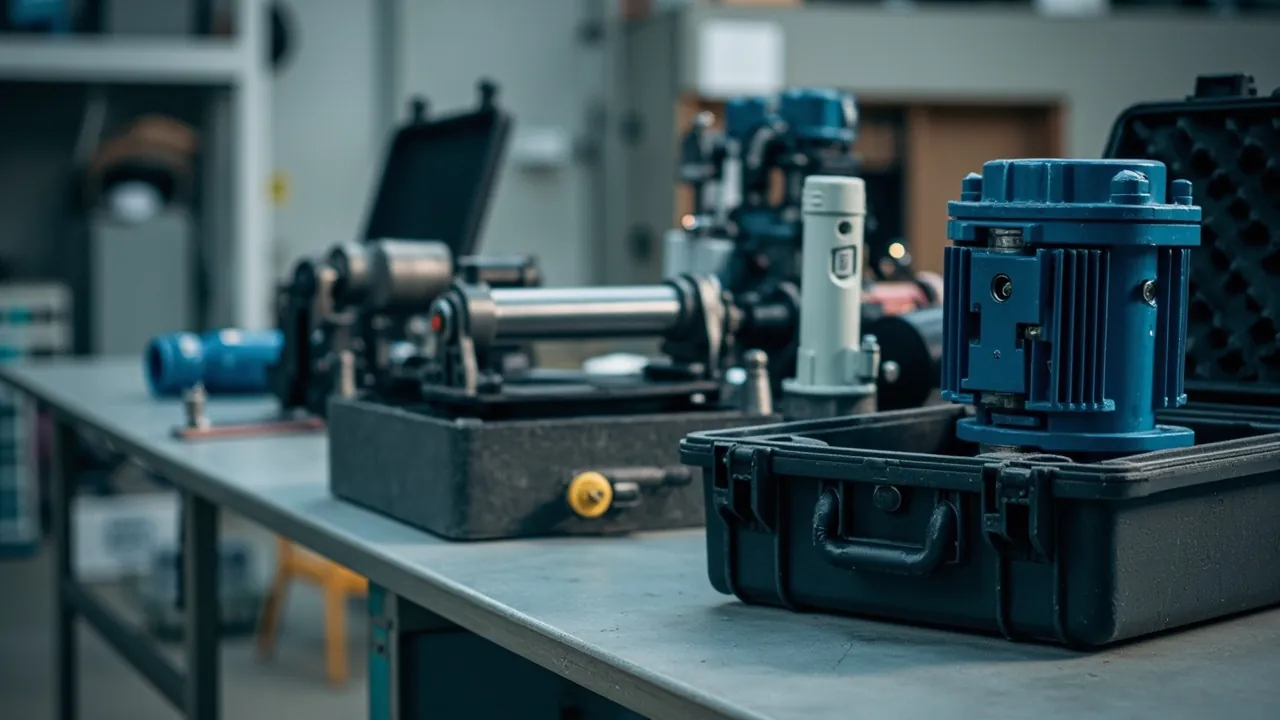
Most transit damage to hydraulic and pneumatic components is not a case that collapses. It is three hidden failure types that are hard to see on arrival: loss of fluid cleanliness, extrusion or bruising of seals, and dented ports. These defects are invisible to the eye yet cause internal leakage, sticking and premature failure once the component is installed. Hydraulic cylinders, valve packs and pneumatic actuators are classic precision-fit, contamination-sensitive parts. The clearance between cylinder tube and rod is measured in micrometres, and a single hard particle entering a spool-and-bore interface can score the sealing surface. Pneumatic exhaust ports and push-to-connect fittings are equally sensitive to dust and fibres. Specifying a case for these parts is therefore not about impact resistance. The core objectives are control cleanliness, protect seals, guard ports and manage compartments. Any scheme that leaves ports open, lets chrome rods knock against each other, or puts threads under direct load is simply wrong.
This article is written for procurement, packaging and quality engineers at hydraulic system manufacturers, pneumatic component plants, construction-machinery makers and automation equipment factories. It provides a selection and acceptance method that can be applied directly: damage-mode analysis, lining design for the three component families, cleanliness control, sealing and ingress protection, transport-test standards, a packing SOP and supplier evaluation criteria. All figures quoted are typical industry values or empirical ranges; the governing inputs are always the component drawing, its weight and centre of gravity, and the customer's acceptance specification. JUNZHJIA supplies custom-moulded inserts, OEM and ODM programmes, and supporting test documentation for hydraulic and pneumatic component cases.
Table of Contents
- 1. Why Hydraulic and Pneumatic Components Are Extremely Sensitive to Cleanliness
- 2. Five Typical Transit Damage Modes
- 3. Cylinder Cases: Tube, Rod and Port Protection
- 4. Hydraulic Valve-Pack Cases: Block, Solenoid and Fitting Compartments
- 5. Pneumatic Actuator Cases: Rod Plating and Cushion Protection
- 6. Component-to-Case Selection Matrix
- 7. Lining and Barrier Materials Compared: EVA, PE Foam, XPE and Structural Foam
- 8. Sealing and Ingress Protection: IEC 60529 and GB/T 4208
- 9. Cleanliness Control: ISO 4406, NAS 1638 and Port Plugging
- 10. Transport Test Basis: ISTA, GB/T 4857, ASTM D4169 and MIL-STD-810H
- 11. Standard Packing Workflow (SOP)
- 12. OEM/ODM Customisation and Supplier Evaluation
- Frequently Asked Questions
- Conclusion and Further Reading
1. Why Hydraulic and Pneumatic Components Are Extremely Sensitive to Cleanliness
The reliability of a hydraulic or pneumatic system depends heavily on fluid cleanliness. A widely quoted rule of thumb states that roughly 70 to 80 percent of hydraulic system failures are related to fluid contamination. For an OEM, a cylinder that passed final inspection at the factory can, if metal swarf or sand enters an open port during transit, grind the spool and bore repeatedly after installation, causing internal leakage, insufficient pressure and sluggish actuation. Worse still, particles that score a sealing surface generate heat and degrade the seal continuously, creating a contamination-wear-recontamination loop.
From an engineering standpoint, the risks for these components split into four chains.
- Contamination chain: open ports, detached plugs, lining debris, residual swarf before packing. Hard particles entering a mating surface are the most hidden and most lethal damage source.
- Seal chain: rod plating, O-rings, wiper seals and buffer seals. Point contact and lateral compression in transit can extrude the wiper or dent the rod; a dent then scores the main seal on every stroke and causes external leakage.
- Port chain: threaded ports, flange faces, push-to-connect fittings and sensor interfaces. Impacts deform threads and score sealing faces, causing difficult assembly at best and immediate leakage at worst.
- Management chain: mixing models, lost plugs, missing documents and labels. When the right plug cannot be found on site, operators often improvise with tape, which introduces fibres and adhesive residue.
A core understanding: the acceptance criterion for a hydraulic or pneumatic component case is first whether it preserves the cleanliness and seal integrity present before shipment, not whether the case itself is dented. Shell strength is only the baseline. Cleanliness and seals are where the value lies.
A competent case must therefore answer four questions at once. Are all ports plugged throughout transit with plugs that cannot fall off? Does the lining shed debris or let components collide metal-to-metal? Are the seals protected from compression and impact? Can people pack by model without error and without mixing? The sections below work through these four questions.
2. Five Typical Transit Damage Modes
In after-sales and installation feedback, transit damage to hydraulic and pneumatic components clusters tightly into five modes. Understanding them is the first step in selection because each dictates where the lining must apply force and where the shell must be reinforced.
| Damage mode | Typical components | Trigger | Priority countermeasure |
|---|---|---|---|
| --- | --- | --- | --- |
| Contamination causing internal leakage | Spool, bore, cylinder tube mating surface | Open port, detached plug, lining debris | Port plug plus isolated cavity plus dust-free lining |
| Seal extrusion or bruising | Rod plating, wiper, O-ring | Point contact, lateral compression, impact | Dedicated rod cradle plus soft facing |
| Port denting and deformation | Threaded port, flange face, push-to-connect | Metal-to-metal impact after displacement | Independent port protector plus retaining ring |
| Coating scuffing and rust | Cylinder tube exterior, valve-block edges | Rubbing plus humidity plus salt fog | Conforming pad plus desiccant plus barrier film |
| Loose accessory loss | Plugs, bolts, shipping documents | No compartments, no checklist discipline | Compartmented box plus packing-list label |
All five share a property: the damage occurs in transit but is usually discovered only at installation. Discovering a scored spool or a rod dent at assembly means responsibility is hard to assign, the line stops, and customer confidence suffers. Leading hydraulic manufacturers therefore adopt a pre-shipment cleanliness-sealing strategy. The transit case is not merely a container; it is a barrier that preserves cleanliness.
It is worth noting that the ranking of damage modes depends strongly on the transport mode. Domestic short-haul road transport is dominated by handling shock and stacking. Export sea freight is dominated by cumulative vibration, humidity and salt fog. The same valve pack should use a different case and lining specification for domestic distribution than for export by sea, which is why hot, humid and cold-weather case design deserves its own treatment.
3. Cylinder Cases: Tube, Rod and Port Protection
A hydraulic cylinder is the representative of high weight, long stroke and high precision among hydraulic components. It comprises a tube, piston rod, head, trunnion or clevis, and ports. The protruding rod is usually hard-chrome plated or ceramic-sprayed, with very low surface roughness and very high hardness, yet a single dent becomes a permanent killer of the seal. Cylinder case design must solve four things: zero rod displacement, zero contact on the plated surface, fully plugged ports, and a stable centre-of-gravity restraint.
Rod protection. The protruding rod end and its body are the highest-risk zones. Two methods are common. The first is a dedicated rod cradle, an engineering-plastic or aluminium V-block matched to the rod diameter with a retaining ring, so the entire rod is suspended without touching the floor or wall. The second is a soft rod sleeve, a felt or EVA tube that wraps the rod and is fixed so it cannot contact the shell or other components. Either way, the principle is "zero point contact along the whole rod". A groove or depression of even 0.1 mm on the plating will score the main seal on every stroke.
Tube and trunnion. The tube exterior may rest on a soft pad, but the pin bore of the trunnion or clevis needs an independent protector to prevent bore-wall damage that would make the pin stick at assembly. When multiple cylinders sit side by side, separate them with partitions; never let rod touch rod or trunnion touch trunnion. Following cushion lining and case floor interaction, the load path should be component to rigid block to case floor to pallet, not weight pressed onto soft foam that sinks and shifts.
Port plugging. This is the first line of defence. Every threaded or flange port must be sealed with a dedicated plug, blind flange or screw cap, and spares should travel with the case. Clean the port threads with a clean cloth before plugging and confirm no looseness. For high-precision servo cylinders, add a dust cover over the plug and a "plugged, do not open" label.
Centre of gravity and restraint. The cylinder centre of gravity often sits toward the head end, so a reinforced support belongs there and a top locating block forms an "support below, press above" three-dimensional restraint. Straps are auxiliary only; they relax under long-haul vibration. For rental or service cylinders that survive many cycles, print the centre-of-gravity and lifting-point diagram on the inside of the lid. JUNZHJIA typically builds these heavy-component cases with a composite structural-foam and EVA insert, balancing load bearing with low rebound, and issues an insert drawing for approval against the specific cylinder model before tooling.
4. Hydraulic Valve-Pack Cases: Block, Solenoid and Fitting Compartments
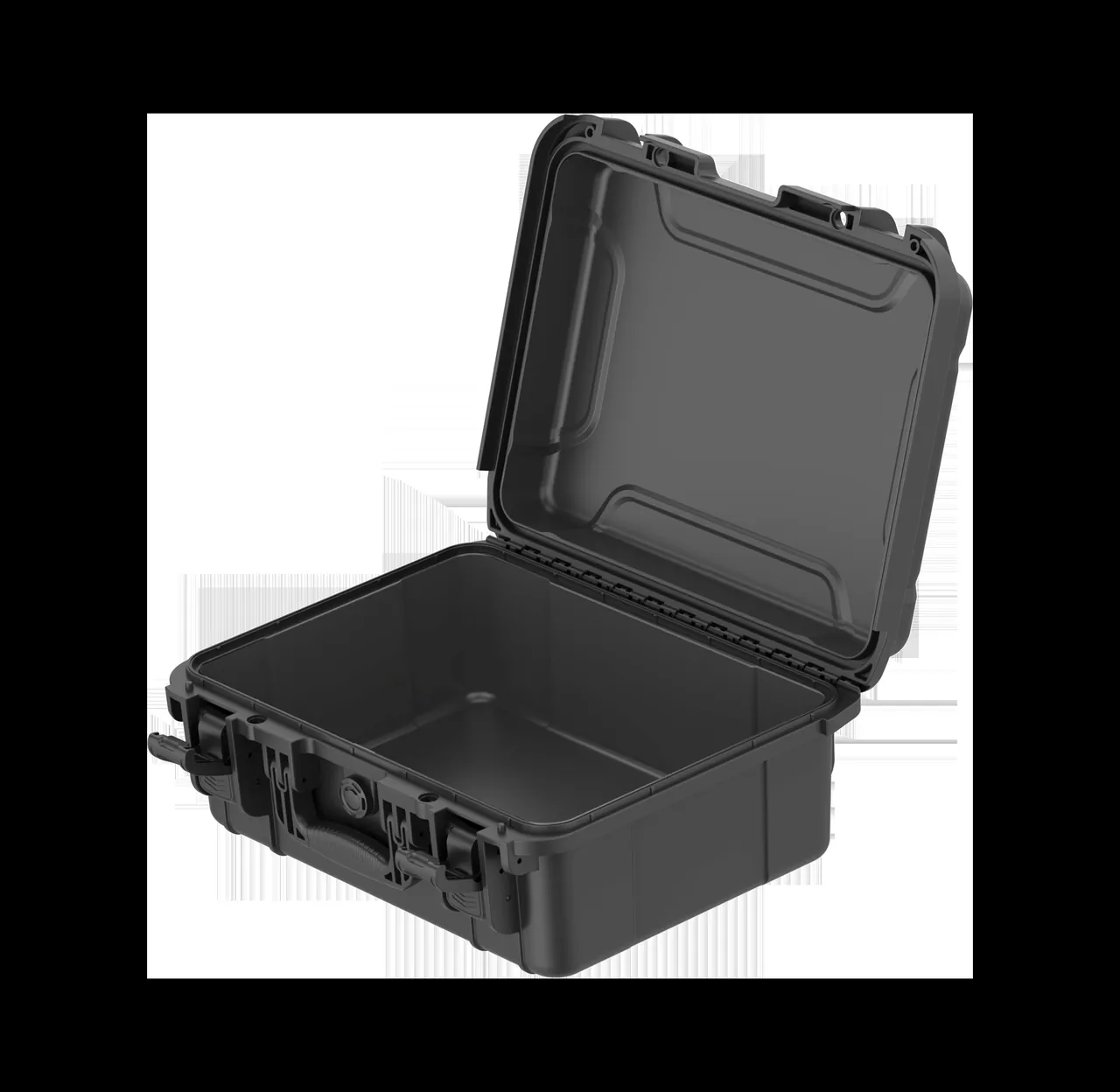
A hydraulic valve pack, including integrated blocks, solenoids, sandwich valves, proportional valves and assorted fittings, is difficult to pack because it is numerous, loose, precise and contamination-averse. A single block may carry six to twenty ports, solenoid coils fear impact and moisture, proportional-valve spools are extremely particle-sensitive, and fitting threads deform into instant leaks. The design logic of a valve-pack case is entirely different from a cylinder case; it centres on compartment isolation.
Compartment isolation. Valve packs should not be piled in one cavity. Two methods dominate. The first is a multi-hole partition that places blocks, solenoids and fittings in separate cells, each independently located. The second is a tray-style slot where blocks stand vertically in custom slots, coils up and ports inward. Isolation eliminates both "blocks knocking each other" and "fitting threads compressed". The compartment thinking is developed in removable divider systems.
Solenoid coil protection. Coils are electrical parts that fear mechanical impact and moisture. Place them in a separate cell with soft lining, coil facing up, lead interface capped. For long sea voyages, add desiccant inside the case and consider a pressure equalisation valve to reduce condensation.
Ports and fittings. Every open port must be plugged; threaded ports get plastic caps. Micro fittings such as ferrule and quick-coupler types are easily lost and should be consolidated into a numbered compartmented box, avoiding "one missing fitting stops the whole batch on site".
Cleanliness sealing. High-precision proportional and servo valves demand the highest cleanliness. It is good practice to load the whole valve pack into a clean plastic or anti-static bag before casing, seal the bag and add desiccant. This double encapsulation is a mature hydraulic-plant practice for controlling installation cleanliness.
5. Pneumatic Actuator Cases: Rod Plating and Cushion Protection
Pneumatic actuators, including cylinders, rodless cylinders and rotary actuators, resemble hydraulic cylinders in structure but are lighter, more moisture-sensitive and more dust-sensitive. The rod is usually hard-chrome or nickel plated, and the cushion seal and wiper are thinner and softer, so slight transit compression can disable the cushion. Pneumatic cases share the cylinder priorities of rod care, port sealing and moisture control, but emphasise moisture and dust control more strongly.
Cushion mechanism protection. A pneumatic cylinder with an end cushion has a precise cushion sleeve and throttle structure; transit vibration can displace the cushion seal. Provide independent end support so the cushion end is never compressed. The rod needs the same whole-length zero-contact support.
Dust and moisture. The exhaust port and push-to-connect fitting are the main dust entry paths. All air ports must be plugged and fittings capped. For export sea freight or rainy regions, specify a case rated to IP67 protection with efficient desiccant and a humidity indicator card inside. Where the environment is dry and the case opens often, consider ESD shielding case construction to protect electrical parts.
Slender-part support. Long-stroke pneumatic cylinders carry the same mid-span bending risk; support spacing should follow the part's stiffness with a mandatory mid-span block, never leaving the part suspended. Related anti-compression design appears in seal and shock case studies.
6. Component-to-Case Selection Matrix
The matrix below gives selection guidance for common hydraulic and pneumatic components so procurement and packaging engineers can locate an answer quickly. The values are typical recommendations; the component's measured weight, centre of gravity and actual route always govern.
| Component category | Typical weight | Insert scheme | Case format | Sealing guidance | Critical constraints |
|---|---|---|---|---|---|
| --- | --- | --- | --- | --- | --- |
| Cylinder, short stroke | 20-200 kg | Structural foam load block with EVA facing | Heavy pallet or frame case | IP65 | Zero rod contact, port plug |
| Cylinder, long stroke | 100-800 kg | Multi-point support with rod sleeve | Long frame case | IP65 | Mid-span support, lifting marks |
| Integrated valve block | 5-80 kg | Compartmented lining with soft facing | Carry or small case | IP65/IP67 | Port plug, compartment isolation |
| Solenoid valve group | 2-40 kg | Separate cells | Carry case | IP67 | Coil moisture and impact |
| Pneumatic cylinder | 1-60 kg | Multi-point support with soft facing | Long case | IP65/IP67 | Dust and moisture, cushion end |
| Fittings and plugs | Under 5 kg | Compartmented box | Internal | IP65 | List label, loss prevention |
One empirical rule governs selection: any component with a precision mating surface or threaded port must be assumed to require the same installed cleanliness after unpacking as before. Therefore the lining must be non-shedding, dust-free and prevent inter-component contact. This single rule eliminates most installation leakage and sticking incidents.
7. Lining and Barrier Materials Compared: EVA, PE Foam, XPE and Structural Foam
The lining is the soul of a hydraulic or pneumatic component case. The same shell with a different lining can differ by an order of magnitude in protection. Four material families are commonly used.
| Material | Typical density | Rebound behaviour | Processing | Best-fit components | Cautions |
|---|---|---|---|---|---|
| --- | --- | --- | --- | --- | --- |
| EVA | 40-120 kg/m3 | Low rebound, good damping | CNC cutting, lamination | Valve packs, pneumatic cylinders, general | Softens when hot; verify temperature rating |
| PE foam | 20-50 kg/m3 | Medium-low rebound | Die cutting, cutting | Light valves, fittings | Limited load capacity; use in composite |
| XPE/IXPE | 30-80 kg/m3 | Medium rebound, good weatherability | Lamination, cutting | Pneumatic cylinders, tube exterior | Limited load capacity |
| Structural foam (cross-linked PVC/PE) | 60-300 kg/m3 | High rigidity, low deformation | CNC milling | Heavy cylinders | Requires CNC machining; higher cost |
The selection logic reduces to three steps. Define the load first, meaning pressure per unit area on the pad. Then define the vibration environment, meaning road, sea or air excitation. Finally define handling frequency, since one-way shipment can favour rigidity while repeated cycles favour toughness. For hydraulic and pneumatic parts there is an extra dimension, cleanliness: the lining must be low-dust and non-shedding, so closed-cell, surface-laminated EVA or XPE is preferred over open-cell foam that generates debris.
The full route from 3D data to finished insert is covered in EVA insert customisation process and custom foam insert design guide. JUNZHJIA normally issues an insert proposal drawing for approval against the component's 3D data before tooling. Flammability requirements for lining materials can be clarified at enquiry stage following UL94 flame-rating thinking.
8. Sealing and Ingress Protection: IEC 60529 and GB/T 4208
Hydraulic and pneumatic components face widely varying transport environments. Domestic distribution is mostly dry overland freight, while export sea freight faces high humidity, salt fog and temperature swing. The goal of sealing design is a match to the environment, not maximum tightness.
What the IP code means. IEC 60529 uses two digits: the first for solids (0-6) and the second for water (0-9K). The equivalent Chinese standard is GB/T 4208. Typical configurations are as follows.
- IP54: limited dust protection, splash resistant. Suitable for short domestic routes with covered transport.
- IP65: dust tight, water-jet resistant. Suitable for the large majority of hydraulic and pneumatic parts on domestic and near-sea routes.
- IP67: dust tight, short-term immersion, typically 1 m for 30 minutes. Suitable for sea freight, open-air storage and high-humidity regions.
- IP68: continuous immersion. Needed only for vessel decks or long-term outdoor storage.
Important note: an IP rating verifies that external water does not enter. It says nothing about internal condensation. A sealed case can still condense internally across a day-night temperature cycle, so high-value valve packs and pneumatic cylinders should also carry desiccant and a humidity indicator, with a pressure equalisation valve where the differential is large.
Seal selection. Case sealing relies on gasket profiles, commonly silicone, EPDM or foamed TPE. Silicone offers the best temperature and weathering resistance but costs more. EPDM balances ageing and weatherability for outdoor duty. Foamed TPE has low compression set and suits cases that open frequently. The cross-section must match the case groove, as set out in hinge, latch and seal selection. Seals are wear items and belong on the spare-parts list; replacement interval follows open-close count and storage environment, which is one of the drivers of overall protective case service life.
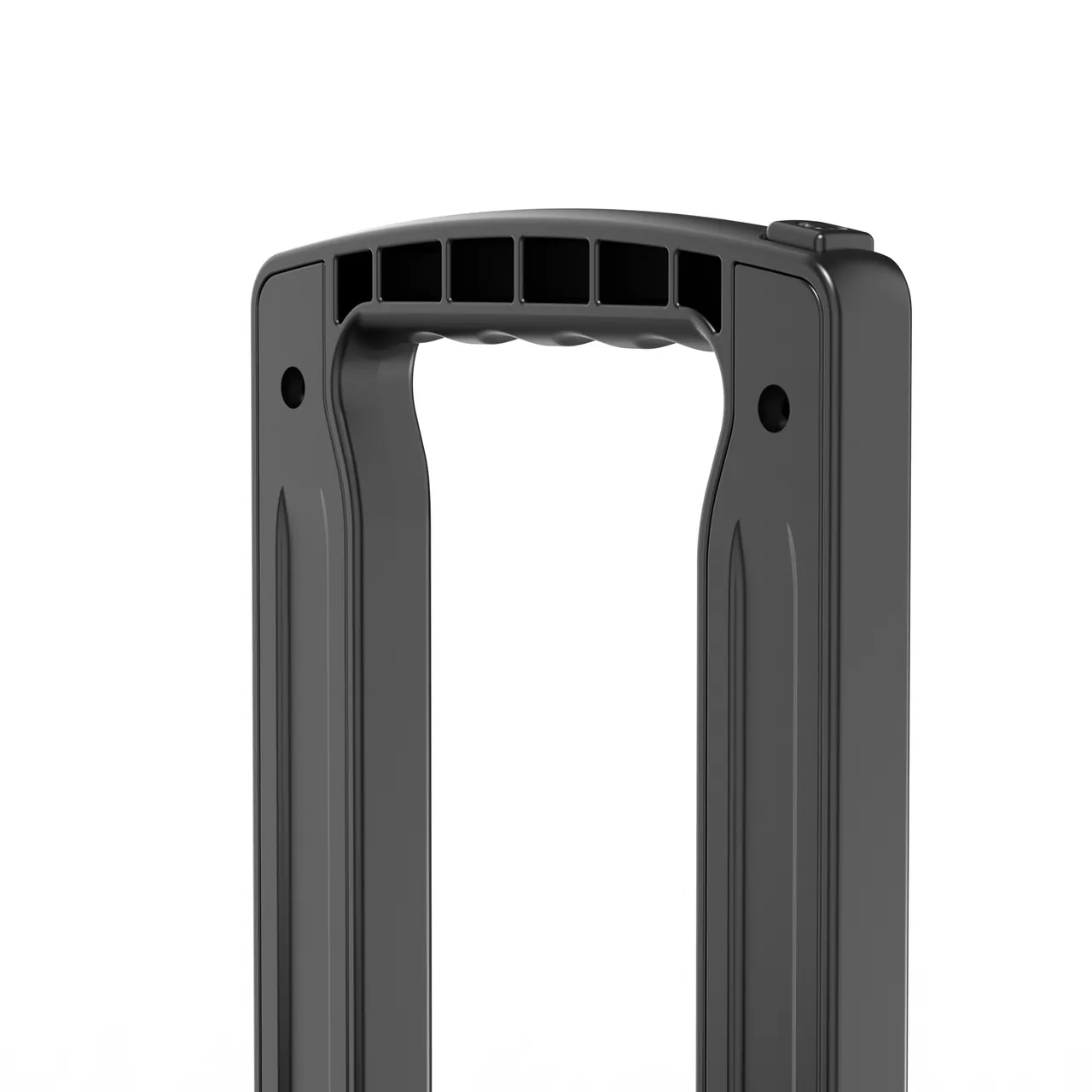
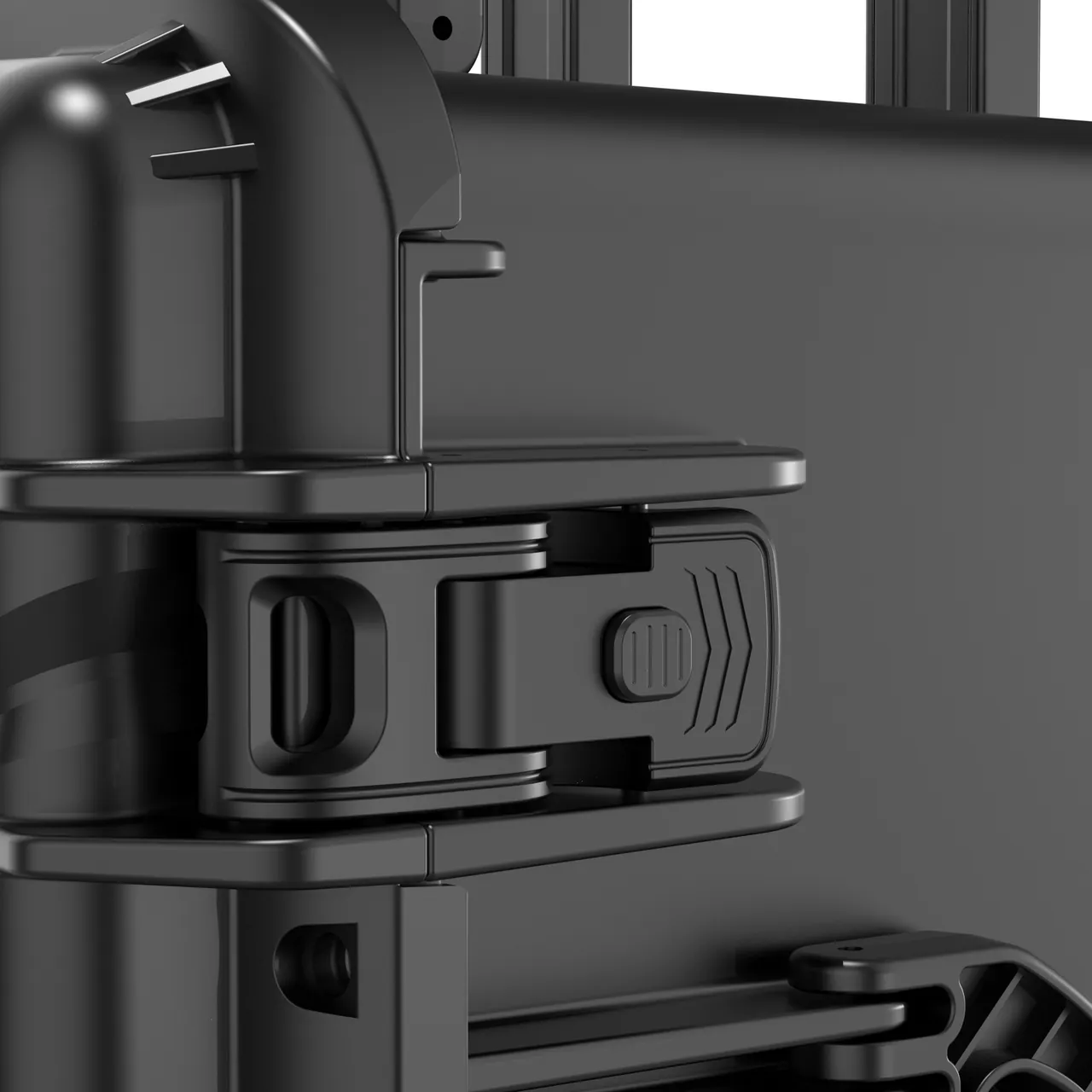
Latches and hinges. Valve-pack and pneumatic cases often open frequently for inspection, so latches should be convenient and reliable. Heavy cylinder cases have heavy lids, so latch count must match lid stiffness; when lid length exceeds 800 mm, three or more latches are advisable to prevent mid-lid lift and seal failure.
9. Cleanliness Control: ISO 4406, NAS 1638 and Port Plugging
Cleanliness is the defining subject for hydraulic and pneumatic cases; standards and actions must be written into the SOP, not left to "looks clean".
International cleanliness standards. Hydraulic fluid cleanliness is commonly rated by ISO 4406, which expresses particle counts per millilitre at given sizes as a code such as 18/16/13, and by NAS 1638, which grades by particle counts per 100 mL in size bands. Although NAS 1638 is usually applied to the fluid itself, its particle-control philosophy applies equally to managing the cleanliness of component internal cavities before installation. In practice, block and cylinder cavities are cleaned, blown dry and particle-sampled before sealing, with the target cleanliness set by system pressure and precision grade.
Mandatory port-plugging actions. Three rules must hold. First, every open port is plugged with a size-matched plug. Second, spare plugs travel with the case, recorded on the packing list. Third, a "plugged" label is applied and checked item by item by the receiver before removal. A detached plug is the primary source of transit contamination, so use tethered plugs or fix spares to the lining.
Lining cleanliness. Lining material must be low-shedding. Open-cell foam and felt shed debris and should not contact mating surfaces; prefer closed-cell, surface-laminated EVA or XPE. Before packing, clean the lining cavity with clean compressed air or a tack cloth to remove cutting debris. For higher grades, sleeve the lining surface in a clean bag.
Double encapsulation. High-precision proportional and servo valves should be loaded into a clean bag with a small desiccant and the bag sealed. This mature hydraulic-plant practice markedly lowers installation cleanliness risk. Related sealing and cushioning ideas appear in seal and shock case solutions.
10. Transport Test Basis: ISTA, GB/T 4857, ASTM D4169 and MIL-STD-810H
"Our cases are strong" is not an acceptable statement. An acceptable statement is that the case passed a specific test sequence under a named standard. Four families of standards are commonly used.
The ISTA series. The International Safe Transit Association grades procedures by package format and weight. Components above 68 kg shipped as unitised loads or large cases typically reference ISTA 3E for unitised loads or ISTA 3B for less-than-truckload distribution; single small cases suit ISTA 2A or 2B. The value of ISTA lies in sequencing: conditioning, then shock or drop, then vibration, then inspection, as explained in ISTA transport testing procedures.
The GB/T 4857 series. These Chinese standards cover vibration, shock, stacking and drop for transport packages. Domestic acceptance documents reference them heavily; practical application is set out in GB/T 4857 transport packaging.
ASTM D4169. This ASTM standard assigns test intensity by distribution cycle and is widely used for North American market validation, covered in ASTM D4169 distribution cycle testing.
MIL-STD-810H. Its environmental test methods, covering vibration, shock, temperature, humidity and salt fog, are frequently cited. This must be stated clearly: MIL-STD-810H is used here as a source of environmental test methodology and does not imply that any product has obtained military certification. See MIL-STD-810H environmental test compliance.
| Test type | Common standard | Example parameters | Relevance to hydraulic and pneumatic parts |
|---|---|---|---|
| --- | --- | --- | --- |
| Random vibration | ISTA 3E, ASTM D4169 | Power spectral density, duration | Verifies damping and displacement control |
| Shock and drop | GB/T 4857, ISTA | Drop height, peak acceleration | Verifies rod and port protection |
| Stacking | GB/T 4857.3 | Load, duration, temperature and humidity | Verifies long-term compressive strength |
| Temperature and humidity cycling | MIL-STD-810H Method 507 | Temperature range, cycle count | Verifies sealing and condensation risk |
| Salt fog | ISO 9227, ASTM B117 | Concentration, duration | Verifies metal parts and coating protection |
Where UL94 applies. UL94 is a flammability classification for plastics, used to rate case plastic parts, insert materials and gaskets. Some customers specify flame-retardant packaging, so clarify at enquiry. On test documentation: write test items, standard numbers, sample quantities, acceptance criteria and report issuer into the contract annex so responsibility boundaries stay clear if a dispute arises.
11. Standard Packing Workflow (SOP)
The same materials produce different outcomes depending on who packs them. Writing the packing process as an SOP and confirming a first article is the most economical investment for reducing transit loss. The workflow below applies to cylinders, valve packs and pneumatic actuators.
- Verify and clean. Confirm model, quantity and accessory list. Remove swarf and chips from tube, block and port threads with a clean cloth and compressed air. Swarf inside a lining becomes an abrasive under vibration.
- Plug ports. Fit size-matched plugs to every threaded, flange and air port and confirm no looseness. Tether or fix spare plugs to the case. Apply a "plugged" label.
- Pre-fit the lining. Place load blocks, locating blocks and partitions per position markings; confirm nothing is loose or misplaced. Trial-fit and record the first article.
- Position the component. Lower with a lifting device or fixture in the designed attitude. Never drag or lift from a single point. After positioning, visually confirm full contact with padding and no metal-to-metal contact.
- Restrain and locate. Install the top locating block. Straps are auxiliary only, tightened just short of marking the surface. Confirm no perceptible movement when pushed by hand; an empirical criterion is displacement under 2 mm.
- Encapsulate and dry. Load high-precision valves into a clean bag with desiccant and seal. Place desiccant and a humidity indicator card in pneumatic and valve cases.
- Accessories and documents. Place plugs, bolts and fittings in the compartmented box. Put packing list, certificate and manual into a pouch fixed inside the lid.
- Seal and record. Check the gasket for damage or debris. Close latches with uniform perimeter load. Apply centre-of-gravity, lifting and this-way-up labels. Photograph the packed case and archive.
Field experience: packing photographs are among the most effective evidence for arrival-damage disputes. Take four fixed-angle images: empty lined case, component in position, restraint completed, closed case exterior.
People and tools. Heavy cylinders require lifting equipment, never brute force. During trial fitting, keep a rubber mallet, marker and feeler gauges to confirm fit.
12. OEM/ODM Customisation and Supplier Evaluation
Hydraulic and pneumatic component cases are a high-variation, fragmented-batch category. A hydraulic plant may hold dozens of cylinder sizes and over a hundred valve blocks, each in modest quantity but subject to the same requirement. This structure means the procurement strategy should be built around reusable tooling and variable linings.
Standardise the case, customise the lining. Start with a few standard case sizes graded by volume and load capacity to cover most components, then adapt specific models through custom linings. The tooling-amortisation logic is worked through in custom case mould cost analysis.
Five dimensions for supplier evaluation.
- Engineering capability: can the supplier issue an insert drawing from 3D data, run a trial fit, and support a cleanliness-control process?
- Materials and process: batch consistency of EVA and structural-foam density, gasket cross-section and hardness, and lining cleanliness control.
- Test capability: can the supplier provide vibration, drop, stacking and IP water test records, or work with a third party?
- Delivery and capacity: peak-season flexibility and lead-time reliability.
- Quality system: batch inspection rules, appearance criteria and non-conforming material handling, using the sampling practice in custom case acceptance and AQL.
On OEM and ODM. Hydraulic plants often want their own brand on the packaging. Cooperation must clarify appearance marking, tooling ownership and cost sharing, minimum order quantity, exclusivity and drawing confidentiality. Drawings and 3D data are core assets; sign a non-disclosure agreement and define return and destruction obligations if the project ends.
Enquiry checklist. A practical enquiry should include model and 3D data, weight and centre of gravity, transport mode and route, re-use cycles, storage environment, target IP rating, cleanliness requirement, test requirements, marking requirements and annual volume. The more complete the input, the closer the proposal is to production-ready, as discussed in how to choose a protective case OEM factory.
JUNZHJIA normally works in this sequence for hydraulic and pneumatic cases: accept 3D data or take a physical impression, issue an insert drawing and case configuration proposal, confirm the first article by trial fitting, then move to volume production with batch inspection and supporting test documentation. For long-term customers, a model archive is maintained so repeat orders reuse the approved design. Case castors and trolley handles are covered in case castors and trolley handle options and latch customisation in case lock customisation options.
Frequently Asked Questions
Q: A cylinder rod is so easy to dent. How should it be secured safely in transit?
A: The primary principle for rod securing is zero point contact along the entire rod. It must not touch the case wall, other components, or hard lining objects at any single point. The most robust engineering approach is a dedicated rod cradle with a retaining ring: a V-block matched to the rod diameter suspends the whole rod so the plated surface never bears any local pressure. For short-stroke or returnable parts, a felt or EVA sleeve can wrap the entire rod, fixed by a retaining ring. Never press the rod directly onto foam or let two cylinders sit side by side with rods touching, because a 0.1 mm depression on the plating will score the main seal on every stroke after installation, causing external leakage. Also reserve clearance at the protruding end so the lining does not push against the rod tip, and treat straps as auxiliary only, with the main restraint formed by the lining. Do not overlook the centre of gravity: cylinders are head-heavy, so apply the same support-below, press-above three-dimensional restraint used for valve packs. When JUNZHJIA customises the case, an insert drawing confirming support points is issued before tooling, preventing support-position errors that leave the rod suspended under load.
Q: A valve pack has so many ports. What if a plug falls off in transit?
A: A detached plug is the primary source of installation contamination, so the countermeasure is redundancy rather than trusting a single seal. First, choose plugs that match the thread and use tethered or clip types so they cannot fully drop off when loosened by vibration. Second, fix spare plugs to the component or lining with a tether or clip so they never get lost, and record the quantity on the packing list. Third, apply a plugged label and have the receiver verify each plug item by item before removal; if one is missing, re-seal immediately rather than improvising with tape. A more robust approach is double encapsulation for high-precision proportional and servo valves: load the whole valve into a clean bag with desiccant and seal it, so even if one plug loosens, particles stay inside the bag rather than entering the valve cavity. The packing SOP must list port plugging as an independent step with photographic evidence. If a missing plug is found on site, never install directly; clean, blow dry and sample for particles, and re-test cleanliness to ISO 4406 if necessary.
Q: How much should the protection rating differ between domestic short-haul and export sea freight for a valve pack?
A: The difference comes from the exposure environment rather than the part itself, and chasing the highest IP number blindly brings both cost and condensation problems. For domestic road transport with covered storage, IP54 to IP65 is usually enough, with compartment isolation and port plugging as the main priorities. For export sea freight, open-air storage or rainy, high-salt-fog regions, IP67 is advisable because the container day-night temperature swing drives marked condensation and deck carriage adds salt fog. Two points deserve emphasis. First, IP67 only guarantees that external water does not enter; it does not prevent internal condensation, so desiccant and a humidity indicator card are nearly mandatory. Second, the tighter the seal, the larger the internal-external pressure differential during temperature change, making the case harder to open and possibly sucking the gasket out of shape; a pressure equalisation valve is then more effective than a higher IP number. The correct approach is a combination of sealing, desiccant and pressure equalisation rather than a single figure. If the tender specifies an IP rating, follow the document and require the supplier to provide the corresponding test record.
Q: EVA or structural foam for the lining of hydraulic parts, what is the special consideration?
A: Hydraulic and pneumatic parts add a cleanliness dimension, so material choice cannot look only at cushioning. The decision still follows load density, vibration level and handling frequency. Where weight concentrates on a small projected area, such as a cylinder trunnion or valve-block base, structural foam or high-density EVA is preferable because deformation under compression is small and location is retained. Light valves and pneumatic cylinders fear vibration rather than compression, so low-rebound EVA or PE foam dissipates energy better. The key is that the material must be low-shedding and non-dusting: open-cell foam and felt shed debris and should not touch mating surfaces; prefer closed-cell, surface-laminated EVA or XPE. For high-frequency returnable cases, choose a tough material with low compression set and add felt or film facing at critical contact faces. A composite lining is common: structural foam in load zones and EVA or felt in contact and cushioning zones. Run a trial fit and short-route transport check before volume production and let the measured result decide.
Q: Which transport tests should a hydraulic or pneumatic case pass, and who performs them?
A: The common verification set is random vibration, shock and drop, stacking, and temperature-humidity cycling, with particle cleanliness sampling added for high-precision valves and salt fog for sea freight. Candidate standards include the ISTA series, GB/T 4857, ASTM D4169, or the environmental test methods referenced from MIL-STD-810H, noting that referencing its methods does not imply military certification. Three types of organisation can perform the work: third-party laboratories, the supplier's own laboratory, and joint verification. When choosing, look at three things: does the sequence cover the real route including conditioning; are the samples in production-representative condition rather than hand-built prototypes; were the acceptance criteria confirmed in writing before testing. Write the test items, standard numbers, sample quantities and criteria into the contract annex and assign remediation and retest responsibility for failures. For the hydraulic industry, the greatest value of testing is not the report itself but exposing hidden contamination and seal risk inside the factory rather than at the installation site.
Q: Are pneumatic and hydraulic cylinders protected the same way, and can they share a case type?
A: The structure is similar but the emphasis differs, and whether they can share depends on whether dimensions and protection grades match. Both need rod care, port sealing and displacement control, but pneumatic cylinders are lighter, more moisture-sensitive and more dust-sensitive, especially at exhaust ports and push-to-connect fittings, which are the main dust paths and must be plugged with stronger case moisture protection, usually desiccant and a humidity indicator card. Hydraulic cylinders are heavier and emphasise zero rod-plating damage and the cleanliness of port plugging. If a hydraulic cylinder and a pneumatic cylinder have similar stroke and diameter, both need IP65 and both use compartmented linings, they can theoretically share a standard case with only the lining and plug configuration changed. But if dimensions differ greatly, or one needs IP67 while the other needs only IP54, forcing a share leads to wasted space or insufficient protection. A more practical approach is standardised cases with customised linings: a few standard sizes cover most models and the lining changes per component, amortising tooling while preserving protection. Never, for convenience, pack an open-port cylinder and an unplugged pneumatic cylinder in the same cavity.
Q: Is a case scrap after one trip, and how do I decide whether a returnable case can continue in service?
A: No, but you need explicit re-use criteria rather than a subjective judgement. Check at least five items. First, inspect the shell for cracks, deformation and through-damage, especially the floor and corners. Second, check whether the gasket has hardened, cracked, debonded or taken a permanent set, using feel and cross-section recovery. Third, verify that latches and hinges close reliably and carry load without looseness, corrosion or binding. Fourth, check the lining for collapse, fracture, dusting or missing locating blocks, because collapse directly defeats location on the next trip and dusting contaminates precision surfaces. Fifth, review desiccant failure and humidity-indicator colour change. If any item fails, replace that part before reuse. In practice the gasket, desiccant and lining dusting are the highest-frequency problems on returnable hydraulic and pneumatic cases, and linings carrying heavy cylinders need close inspection after two or three cycles. A log of case number, cycle count and inspection records is the lowest-cost, most direct management tool available, and the replacement criteria are detailed in protective case service life assessment.
Q: We have dozens of cylinder sizes and over a hundred valve blocks, each in small quantity. How can we control packaging cost?
A: The core idea is standardised cases, customised linings and numbered management. First, group cases into three to five standard sizes by volume and load capacity to cover most models, spreading tooling and fixture cost across many models instead of dedicating one case design to one model. Second, customise linings per model, but because the case cavity is standard the linings remain interchangeable, reducing inventory and changeover cost. Third, create a packaging record for each model containing 3D data, lining drawing number, packing photographs and test records, so a repeat order reuses the approved design instead of re-engineering it. Fourth, for very low-volume prototypes use a standard case with a temporary lining as an interim measure and tool a formal lining once the model stabilises. Fifth, bring cycle count into the cost model: single-use packaging is compared on unit price, while returnable packaging should be compared on unit price divided by cycle count plus maintenance cost, and plastic returnable cases often come out cheaper. Hydraulic plants can also place annual framework purchases for consumables such as port plugs and desiccant to lower cost further. For external cooperation, evaluate suppliers following how to choose a protective case OEM factory.
Q: How do we confirm that a supplier's lining genuinely fits our cylinder or valve block rather than merely looking close?
A: Replace visual judgement with quantifiable acceptance. Specify four items in the technical annex. First, first-article trial fitting, in which the supplier issues an insert drawing, the customer confirms fit using the physical part or 3D data, and trial-fit photographs are retained. Second, location accuracy, defining the permissible gap at critical features such as rod support, valve-block location and port orientation, generally judged by the absence of visible displacement. Third, an inspection rule using AQL sampling to define which appearance, dimensional and assembly characteristics are checked and what the acceptance limits are. Fourth, transport verification, running a short-route or standard test for important models and using the result to confirm lining effectiveness. Also require the supplier to provide an assembly process record at the first-article stage, noting how much force is required and whether interference occurs. Any lining that needs significant force to load is over-designed in interference and will damage the component surface and the insert over time, so it should be sent back for revision at the first-article stage rather than reworked after volume production. For cleanliness-sensitive parts, also specify lining cleanliness, such as a tack-cloth wipe leaving no residue, and double-encapsulation requirements, with on-site particle sampling where necessary.
Conclusion and Further Reading
Protecting hydraulic and pneumatic components in transit is fundamentally about using engineering method to preserve cleanliness and seal integrity. Cylinders suffer rod-plating damage and port contamination. Valve packs suffer compartment failure and particle ingress. Pneumatic actuators suffer moisture, dust and cushion displacement. The failure mechanisms differ, so the case and lining logic must differ too. The effective answer is not to buy the thickest case available. It is to decompose the transport route properly, then map shell strength, lining structure, sealing grade and restraint method onto specific loads and specific risks.
For procurement and packaging engineers, the route to implementation compresses into four steps: define the route, determine load and environment, select case and lining, then close the loop with testing and first-article verification. Do those four steps properly and most installation-leakage and arrival-sticking problems will surface inside the factory rather than at the installation site. Where an insert drawing and case configuration proposal are needed for a specific cylinder, valve pack or pneumatic actuator, provide the 3D data, weight, centre of gravity, port specification and transport mode to JUNZHJIA, which will issue drawings against the model and arrange first-article trial fitting.
Further Reading