

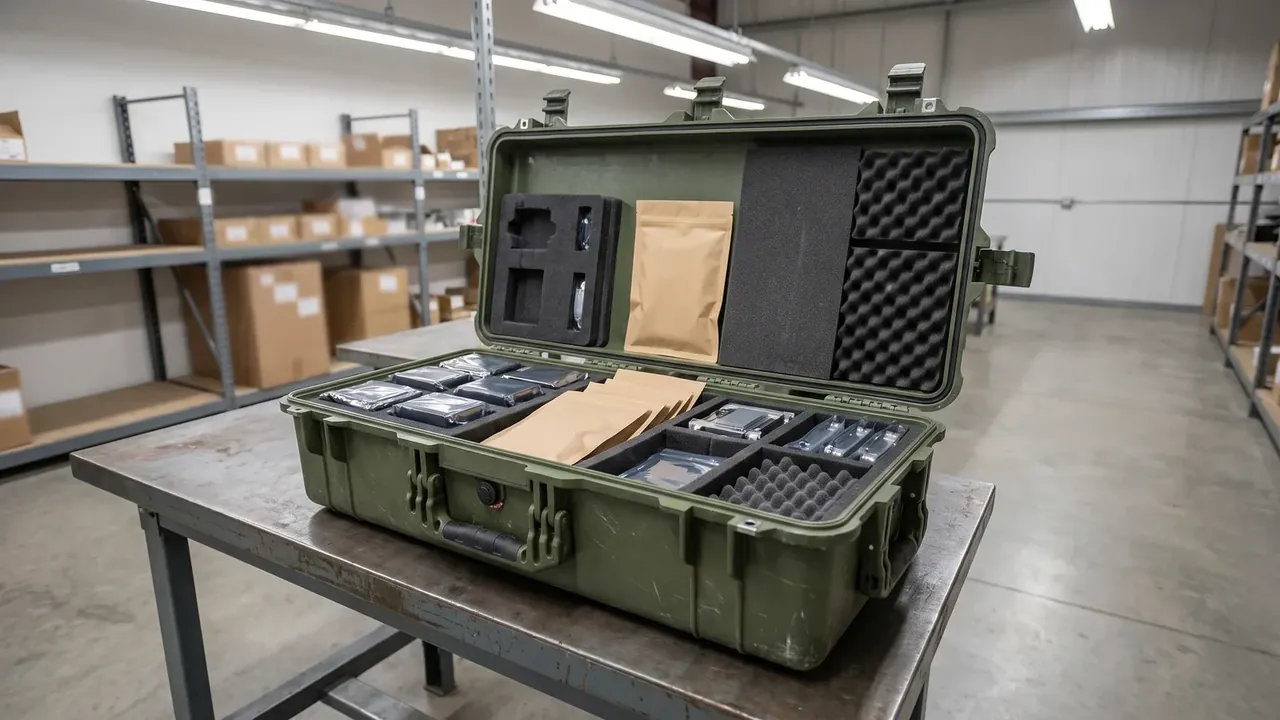
Quick answer: On a wind farm service vessel an inspection kit meets salt fog, a 62 °C deck and three-high stacking. Size the equipment protection case from those three: 316 hardware, silicone gasket, ribbed base, with 480 hours, -35 °C and 96 kg on the sheet.
Table of contents
- Working Conditions for a Deck Inspection Equipment Protection Case
- Salt Fog, Humidity and the Parts That Corrode First
- At Minus 35 the Gasket Fails Before the Shell
- Three High Stacking: Load Lands on the Lid Corners
- Opening and Resetting in Four Steps
- Six Numbers to Hand the Factory
- FAQ
1. Working Conditions for a Deck Inspection Equipment Protection Case
The kit rides in the deck store and sails fourteen days at a time, arriving by quay crane, deck forklift and hand carry.
Tenders say salt fog resistant and stop there. Add fog hours, stack height and the coldest night, and quotes for the same box spread 30 percent.
| Condition | On site | What the case must do |
|---|---|---|
| Sunlit shell | 62 °C | No softening, no collapsed foam |
| Store humidity | 95% | Valve plus desiccant |
| Neutral salt spray | 480 hours | No pitting on hardware |
| Coldest night | -35 °C | Gasket still compresses |
| Stacking | 3 high, 32 kg each | 96 kg on the bottom unit |
| Moves per trip | 1 crane, 2 forklift, 1 carry | Handle roots survive knocks |
The last row is the one dropped: cranes damage handle roots and corners, not shells.
2. Salt Fog, Humidity and the Parts That Corrode First
Salt fog arrives where hardware meets shell, not through the broad faces.
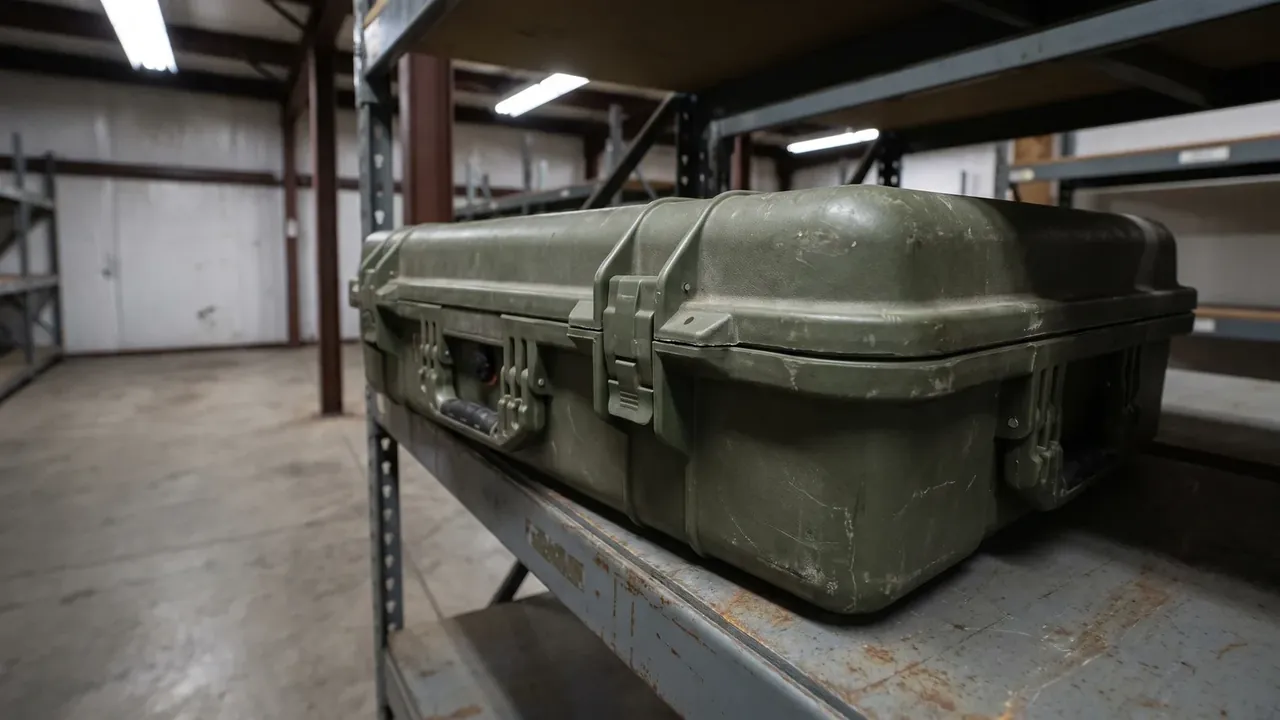
A sample run to 480 hours pitted its 304 hinge pin at hour 210 and showed white rust on the zinc latch at hour 96. Passivated 316 and a nylon over-moulded latch came through dulled. Crevices at pins and hooks hold two metals, so the couple eats inward: hardware is no place to save on an equipment protection case.
EPDM takes a compression set and leaves a gap on the second closing; silicone costs 40 percent more and holds rebound from -55 to 200 °C.
A breather valve routes pressure through an ePTFE membrane, fitted face down.
3. At Minus 35 the Gasket Fails Before the Shell
Shell impact strength drops, but four parts decide whether the box opens.
- Gasket: silicone recovers a 3 mm compression in 2 seconds at -35 °C, EPDM in 9.
- Latches: nylon 66 embrittles near -40 °C and splits at the hook root.
- Foam: EVA stiffens and loses contact; cross-linked PE stays soft.
- Handle: an unribbed PC root fails on the first drop.
These grades set the cold limit of an equipment protection case, not shell thickness.
4. Three High Stacking: Load Lands on the Lid Corners
Each unit carries the two above it. At 32 kg the bottom takes 96 kg, landing on the lid because upper corners rest on lower lid corners.
| Position | Load above | Part taking it | Limit |
|---|---|---|---|
| Top | 0 | Lid ribs | Two empty units, no collapse |
| Middle | 32 kg | Lid corners | Deflection under 1.5 mm |
| Bottom | 96 kg | Base and corner feet | Deflection under 2 mm |
Lashing is 25 mm polyester webbing in a four-point cross; at 15 degrees of roll the case slides under 5 mm.
5. Opening and Resetting in Four Steps
Gloved hands on a moving deck cause most errors here.
Crack the valve half a turn first: sun heats the interior and a forced latch drags the gasket lip. Release four latches diagonally, away from the hinges. Stop the lid at 95 degrees or the case tips back. Press the foam home, since a lifted corner frees the instrument.
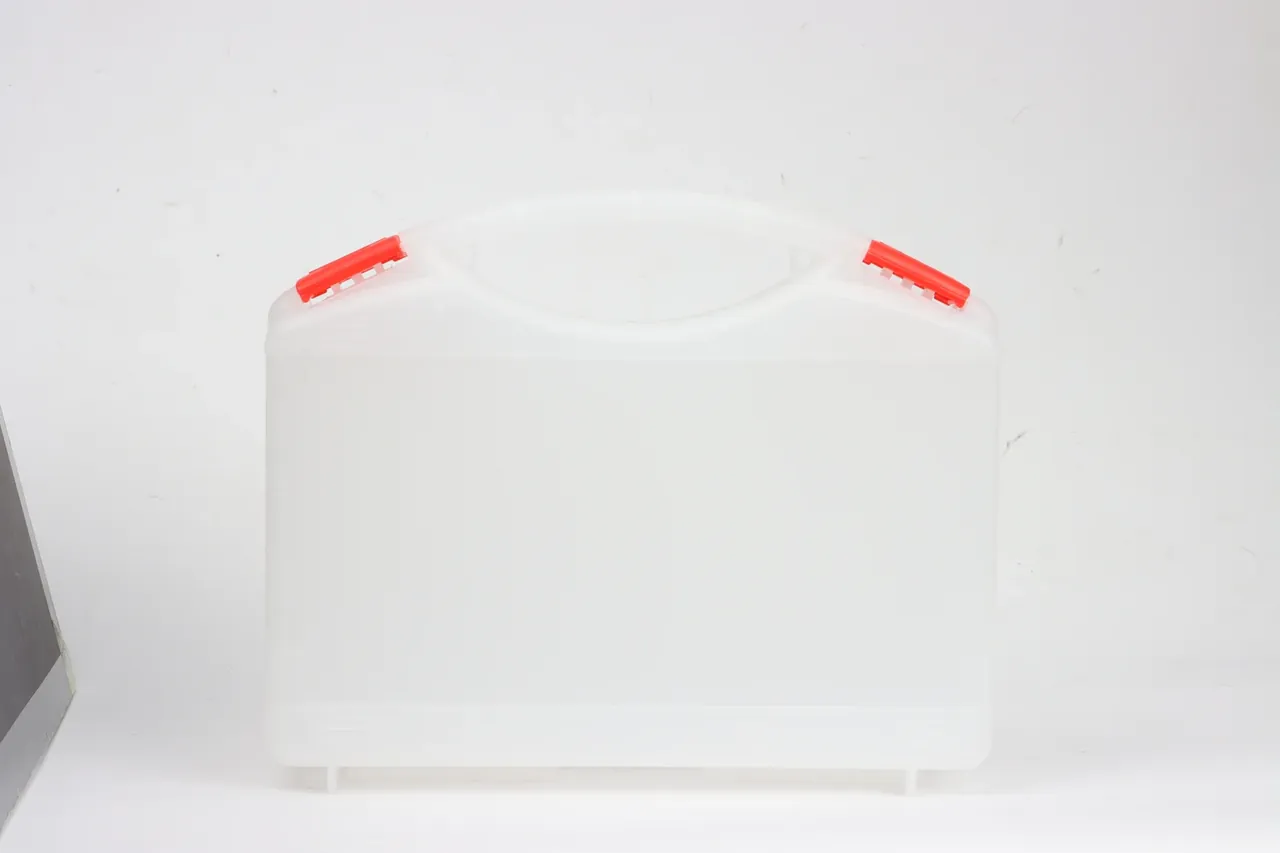
Light bays use a translucent white case with an oval opening and two red latches: sealed by one lip, fine for clean rooms. Deck use keeps four latches and a valve.
Check the lip for grit; a 0.5 mm grain cuts a permanent groove.
6. Six Numbers to Hand the Factory
Internal length from the longest item plus 15 mm of foam per side; loaded weight, which sets base ribs and handle mounts; stack height; a low and high temperature; salt spray hours; opening frequency, which sets latch grade.
Six numbers and a factory can quote shell, hardware and foam in one pass.
Conclusion
A deck store presses on an equipment protection case from three sides: salt fog eats hardware, cold stiffens the gasket, stacking loads the lid corners. Fix hardware and gasket first, base and corners next, opening sequence last. With 480 hours, -35 °C and 96 kg on the sheet, an equipment protection case survives its second voyage.
This article discusses only the container (case body) side of specifications and design intent, and does not cover any handling, loading or use of the contents.
Related Reading
- What an equipment protection case has to stop
- Selection criteria for equipment protection cases
- Camera cases for remote field stations
- Electronic equipment cases for clean bays
- How fire equipment cases open on site
Related Products
- 8 Series — Gun Cases; Military Equipment Cases; Camera Equipment Cases; Drone Cases; Watch Cases; Knife Cases; First Aid Cases; Electronics Equipment Cases
- WL8-2812 PP Gun Case — model WL8-2812
- All protective cases and toolboxes: 7 series, 158 models