

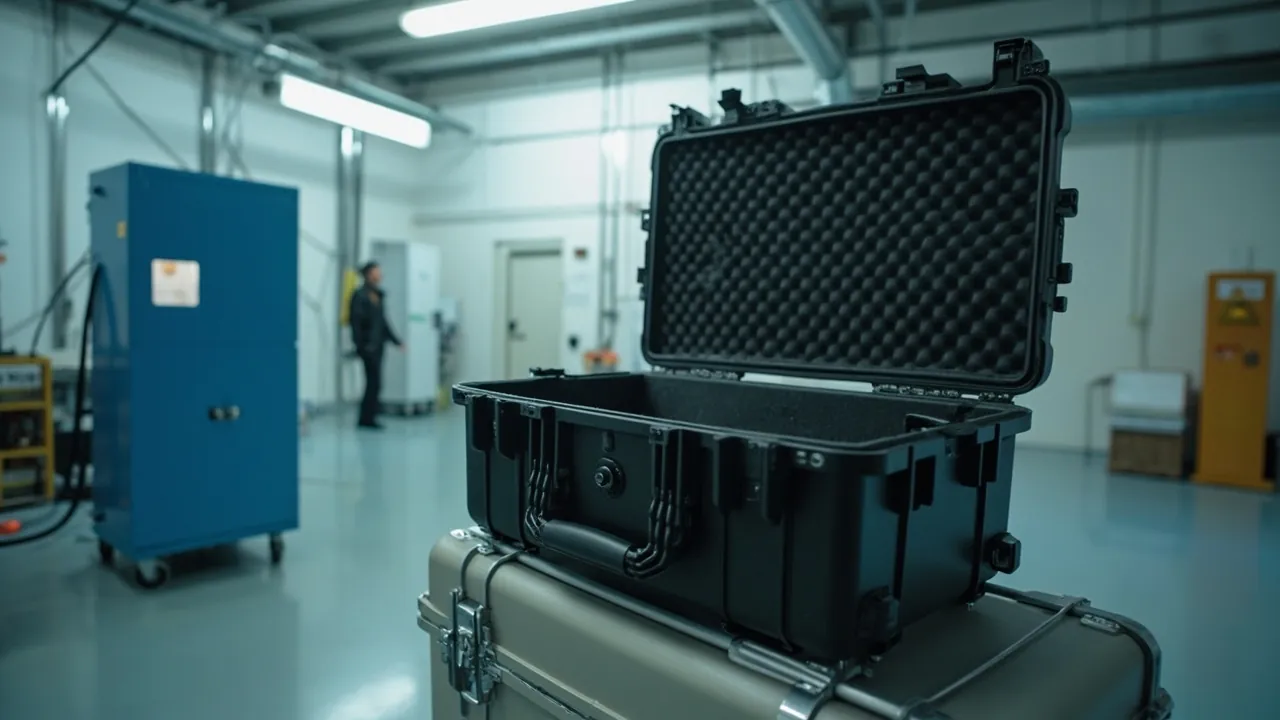
An EV charger module maintenance case is protective equipment built specifically for carrying, transporting, and servicing charging modules, power units, and related electronic parts in the field. The bottom line up front: a charging module is a high-value, vibration-sensitive, moisture-sensitive precision electrical component that also carries residual high-voltage energy, so its maintenance case must simultaneously provide vibration damping, moisture protection, anti-static control, and insulation—only when "protection rating + custom liner + safety marking" work together will module return rates truly fall under frequent inspection. Carrying modules in an ordinary toolbox usually costs more than it saves.
From a total-cost-of-ownership view, the case is a small fraction of the module's value, yet a single transit failure can wipe out the benefit of many successful repairs. A module that costs a few thousand dollars to replace, plus downtime at a charging site and a dissatisfied customer, dwarfs the price difference between a proper case and a cheap one. Operators who track it usually find that the case pays for itself the first time it prevents one moisture-damaged or drop-damaged module. Treat the case as insurance on a high-value asset, not as a consumable to be bought at the lowest bid.
This article covers the maintenance scenario of charging stations, charging stacks, and superchargers, from protection ratings, vibration design, and custom liners to electrical safety and a selection checklist, helping O&M units and charging operators build a practical carry-protection standard. For power and new-energy site instrument carrying, refer to the site solution in our PV inspection equipment cases and wind-turbine maintenance toolkits article; for general carry forms, compare the structural design in handheld, shoulder-strap and wheeled transport boxes.
Table of Contents
- Core Value and Use Cases of EV Charger Module Maintenance Cases
- Maintenance Pain Points of Charging Modules and Power Units
- Protection Rating and Electrical Safety Requirements
- Vibration and Transport Design
- Liner and Custom Module Slots
- Material Choice and Flame Retardancy
- Sealing, Dust and Moisture Protection
- Capacity and Stacking of Charging Stack Maintenance Cases
- Tool and Spare Organization of EV Charger Repair Cases
- Field Service Workflow and Case Coordination
- Safety Codes and Work Protection
- Size Module and Transport Tool Matching
- Selection Checklist and Procurement Advice
- Industry Application Cases
- FAQ
- Conclusion and Related Reading
Core Value and Use Cases of EV Charger Module Maintenance Cases
A charging module is the core power-conversion unit of a DC charger; each unit is expensive and contains power devices and capacitors, making it highly sensitive to vibration, moisture, and static. In O&M, modules often move between stations, return to the factory for repair, or are swapped on site. Without reliable carry protection, vibration and humidity during transport can cause secondary damage, making "repaired then broken again" a common outcome.
The value of an EV charger module maintenance case lies exactly here: it turns "bare-part handling" into "controlled handling," fixing the module's geometric position with a custom liner, absorbing vibration with a buffer layer, isolating moisture and dust with a seal, and securing operation with insulation. Typical uses include urban patrol by charging operators, batch return of charging-stack power units, multi-station work by third-party O&M firms, and on-site after-sales service by equipment makers.
It must be stressed that charging-infrastructure O&M differs from ordinary tool carry in that it adds the dimension of high-voltage safety. A module may retain residual charge, so the case's insulation and marking and the liner's anti-static performance directly affect personal safety. The selection order should therefore be "safety first, protection second, convenience third," not price first. For scenarios also involving power-test instruments, compare the electrical-protection thinking in power-line patrol cases and substation maintenance toolkits.
Maintenance Pain Points of Charging Modules and Power Units
Charging module maintenance pain points cluster in four areas: vibration damage, moisture ingress, electrostatic damage, and handling safety.
Vibration damage: the module contains power devices, transformers, and capacitors, and long vibration causes solder fatigue and connector loosening. If transport vibration is not buffered, such hidden failure accelerates.
Moisture ingress: internal circuits are humidity-sensitive; condensation lowers insulation and can cause short circuits. Southern plum rains, coastal salt spray, and regions with large day-night temperature swings are especially affected.
Electrostatic damage: MOSFETs, IGBTs, and similar devices are ESD-sensitive; a charged human or liner touching them can cause breakdown, and such damage often appears only after installation.
Handling safety: modules are heavy and carry high-voltage storage risk, so manual handling is prone to drops that damage the module and may injure the worker. These four pain points mean the maintenance case cannot be an ordinary container but must be a targeted protection system.
Beyond physical damage, a "data and traceability" pain point is often overlooked: module repair needs fault codes, test records, and work-order info; if paper documents get damp or lost in handling, the factory cannot reproduce the problem and the repair cycle lengthens. Modern maintenance cases therefore add a waterproof card slot or QR-code bay inside the lid to keep module number, fault symptom, and test data together, achieving "part—order—person" mapping and accumulating data for later quality analysis.
When JUNZHJIA takes such OEM/ODM work, it usually first collects the module's 3D shape, weight, center of gravity, and electrical parameters, then designs liner slots and case structure accordingly, avoiding the "case arrives but module will not sit firm" problem.
Different transport modes need differentiated adaptation. Air freight uses a pressure-equalization valve to handle pressure change; sea freight wraps the case in anti-rust film with desiccant against condensation; vehicle transit uses straps so the case does not slide under hard braking; palletized stacking respects each case's rated load so a fragile top unit is never crushed. A packing list and serial number inside the case ease cross-region transfer and after-sales traceability. Matching the case to the journey, not just the module, is what stops avoidable transit failures.
Protection Rating and Electrical Safety Requirements
The protection rating of an EV charger module maintenance case should follow the IP code of IEC 60529 (mirroring GB/T 4208). Outdoor patrol and rainy loading recommend no lower than IP65; wading or pressure-wash scenarios recommend IP67. Impact references the IK code (IEC 62262), IK08 or above being safer.
| IP Code | Dust Meaning | Water Meaning | Suitable O&M Scenario |
|---|---|---|---|
| --- | --- | --- | --- |
| IP54 | Limited dust | Splash water | Indoor charging station patrol |
| IP65 | Fully dust tight | Low-pressure water jet | Outdoor patrol, rainy loading |
| IP67 | Dust tight | 1 m depth, 30 min | Wading, water wash, emergency |
| IP68 | Dust tight | Maker-agreed depth/time | Long submersion and extremes |
On electrical safety, the case should provide both insulation and anti-static design: the shell uses insulating engineering plastic so a metal shell does not form a conductive path if accidentally energized; the liner and case can be an anti-static version with surface resistance in the anti-static band to protect ESD-sensitive devices. Relevant standards and structures are in anti-static boxes and EMI shielded cases.
The case should also have clear high-voltage warning markings and a module info card slot for on-site identification and traceability. For scenarios needing equipotential grounding, reserve a grounding terminal. JUNZHJIA can provide marking and grounding schemes per the user's electrical code. To satisfy tendering and system audits, request the corresponding test documents for IEC 60529 (IP), MIL-STD-810H (drop and vibration), and UL94 (flame retardancy) at the same time.
Vibration and Transport Design
Vibration design for an EV charger module maintenance case has two layers: external isolation and internal buffering. External isolation reduces rigid contact between the case and the transport tool; internal buffering absorbs the energy transmitted to the module through the liner.
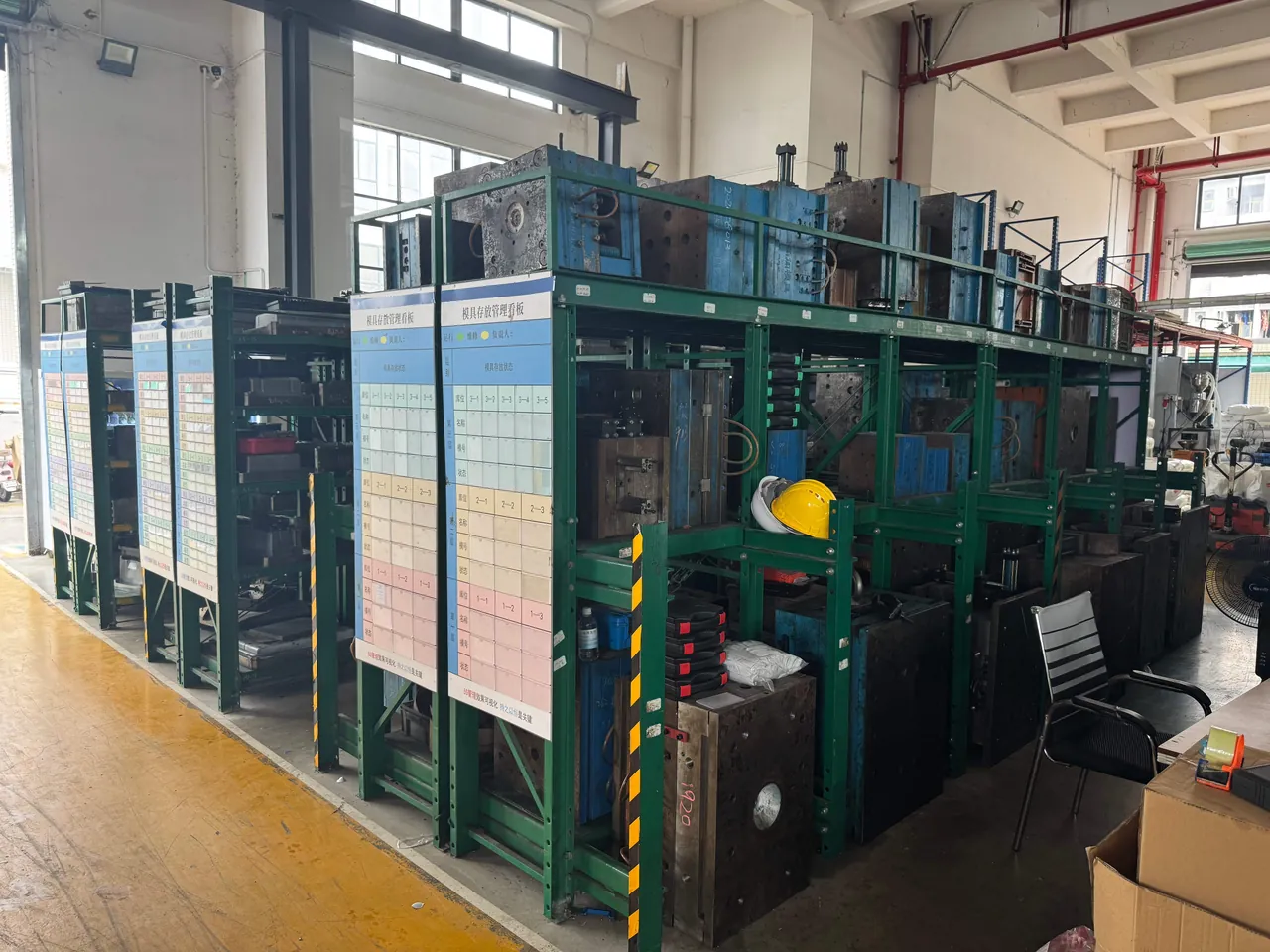
Common liner materials are EVA, PU foam, and pearl cotton, custom-cut to the module shape so it is constrained in six directions with even buffer. For heavier modules, use a "hard base + soft top" combination: the base provides support and positioning, the top absorbs impact. For irregular modules, 3D scan the shape then CNC route for fit, markedly improving conformance.
Drop and vibration validation can reference the procedures of MIL-STD-810H method 516.8 (shock) and 514.7 (vibration), with drop grade set per actual handling height. Transport should also consider stacking and fixation: the case should strap to the vehicle's fixation points to prevent shifting on hard braking. Related stacking and transport design is in plastic protective boxes and plastic toolboxes.
JUNZHJIA supports custom buffer liners from module drawings or physical samples, with optional silk-screen model labels or zone colors on the liner to improve field pick/place efficiency. Before transport, confirm rail and lock fixation are engaged; on arrival, let the case settle to balance temperature before powering up, avoiding condensation from sudden temperature change.
Liner and Custom Module Slots
The liner is the soul of the maintenance case. For charging modules, slot design must meet three points: precise positioning, anti-static, and easy pick/place.
Precise positioning: slots follow the module shape and center of gravity so the module does not move in transport; for multi-module packing, leave divider walls between slots to avoid collision. Anti-static: liner material must be anti-static, avoiding the "case anti-static, liner insulating" gap. Easy pick/place: slot openings should suit one-hand access, with finger pulls or straps if needed.
| Liner Material | Cushioning | Anti-Static Option | Suitable Scenario |
|---|---|---|---|
| --- | --- | --- | --- |
| EVA | Excellent | Yes | Precision, heavy modules |
| PU foam | Good | Yes | General buffer |
| EPE pearl cotton | Medium | Yes | Light, low cost |
Values and configurations are experience-oriented; follow the supplier's notes. For humidity-controlled needs, place desiccant or a humidity indicator card inside the liner cavity. JUNZHJIA can deliver liner and seal as one solution with joint verification documents.
Material Choice and Flame Retardancy
Case material decides strength, weight, and electrical safety. EV charger module maintenance cases prefer insulating, high-toughness engineering plastics such as PC, modified PP/ABS blend, and ABS; for very heavy modules with high mechanical needs, metal inserts can reinforce key load points while the shell stays insulating. A typical structure is modified PP or PP+glass-fiber one-shot molding, wall 3 to 5 mm, thickened corners with ribs.
Flame retardancy is an extra requirement in charging infrastructure. Charging stations involve electrical and thermal risk, so the case should use flame-retardant material reaching UL94 V-0 or V-2 to reduce spread risk in an accidental fire. Outdoor patrol cases with high weathering needs add UV masterbatch to prevent yellowing and embrittlement; coastal salt-spray environments choose corrosion-resistant material and stainless metal parts.
Note these grades and values are common industry orientations; follow the material TDS and third-party test reports, and request the corresponding documents for archiving at purchase.
Compliance also matters at the material level. For products exported to the EU, watch REACH and RoHS restrictions on specific substances and state a banned-substance list in the procurement technical agreement; require material and gasket to meet the food or medical contact grades if the case is used near those environments. Recyclability favors single-material designs, since boxes with many additives are harder to sort at end of life. Building these requirements into the specification early avoids the costly situation where a compliant physical product is rejected on documentation grounds after arrival.
Sealing, Dust and Moisture Protection
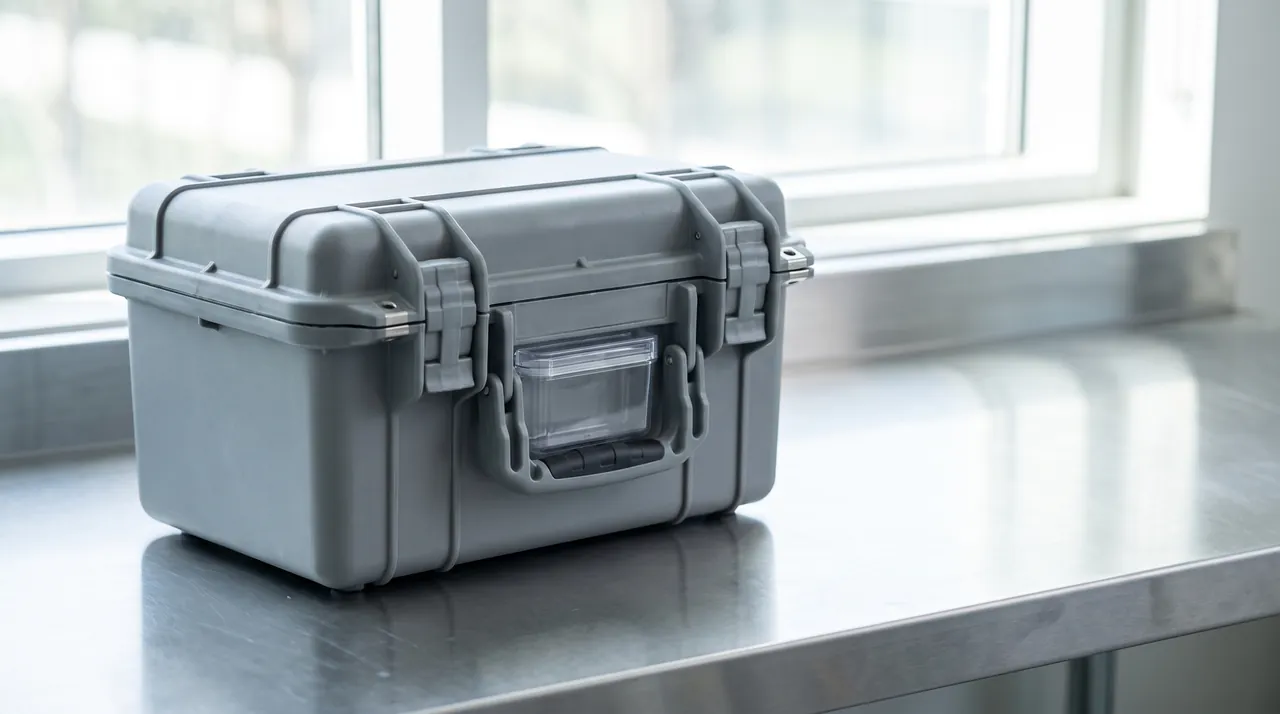
Sealing is the key to moisture and dust protection. The sealing system of an EV charger module maintenance case comprises an elastomer gasket, compression face, and latch pressure. Gasket materials commonly include EPDM (excellent weathering), silicone (wide temperature, food/medical grade available), and FKM (oil and chemical resistant). The lid compression face should be flat and burr-free, with latches providing even continuous pressure.
| Gasket Material | Temp Range (typical) | Weathering | Suitable Scenario |
|---|---|---|---|
| --- | --- | --- | --- |
| EPDM | -40°C to 120°C | Excellent | Outdoor, salt spray, waterproof |
| Silicone | -60°C to 200°C | Excellent | Wide temp, clean |
| FKM | -20°C to 200°C | Excellent | Oil, chemical |
Sealing reliability also depends on latch layout and compression ratio (typically 15%–30%). For transport with large altitude or temperature swings, fit a pressure-equalization valve (breathable, water-blocking membrane) to avoid hard opening or drawing in moisture. Latches should accept a padlock or lead seal to prevent accidental opening and asset loss in transit. These structural principles match sealed protective boxes and latch-sealed cases. JUNZHJIA can provide model-matched seal kits with compression verification notes.
Capacity and Stacking of Charging Stack Maintenance Cases
Charging stack maintenance cases target the multi-module scenario of high-power charging stacks, where capacity and stacking are core. Compared with a single-charger maintenance case, a charging stack case often carries several power units or a full spare set at once, so it emphasizes divided capacity, total-weight control, stacking stability, and wheeled transport.
Capacity design should follow "modules needed per task," avoiding too-small multiple trips or too-large overweight. Total weight should stay within single-person handling or wheeled range; beyond the manual threshold, fit wheels and a pull handle, and heavy-duty versions prefer an aluminum frame or reinforced structure with forklift slots. On stacking, locator bosses should have clear guidance, sufficient contact area, and no outward expansion; after arrival sample-match to verify even gaps.
For vehicle loading, the case should strap to the vehicle's fixation points, following "heavy bottom, light top, centered gravity." Related stacking and transport details are in the stacking transport box design notes. JUNZHJIA can advise on division and wheeled schemes per module count and weight.
Tool and Spare Organization of EV Charger Repair Cases
Besides carrying modules, an EV charger repair case must organize service tools and spares. A typical kit includes insulated tools (insulated screwdrivers, wrenches), test instruments (multimeter, insulation resistance tester), connectors and harnesses, fasteners and seals, and consumables and cleaning supplies.
Organization principle: place high-frequency items outside and low-frequency inside; zone tools and spares to avoid tools bumping and damaging modules; add protective covers to sharp tools; zone high-voltage-related tools separately with an insulating mat. See the classification thinking in hardware toolboxes and power/manual/repair tool boxes.
For field module-swap work, the repair case should also reserve a temporary module position so the removed old module and the new module stay separated in the same case, avoiding mix-up. This "pick-place closed loop" design markedly lowers field error rates.
A labeling discipline pays for itself here. Give each zone and each tool a fixed home and label it by name and quantity, then photograph the standard layout and post it inside the lid. Any technician opening the case can confirm at a glance that nothing is missing before leaving the depot and that all removed parts are accounted for before leaving the site. This turns the repair case from a passive box into a self-checking workflow aid that reduces both comeback visits and lost-tool costs.
Field Service Workflow and Case Coordination
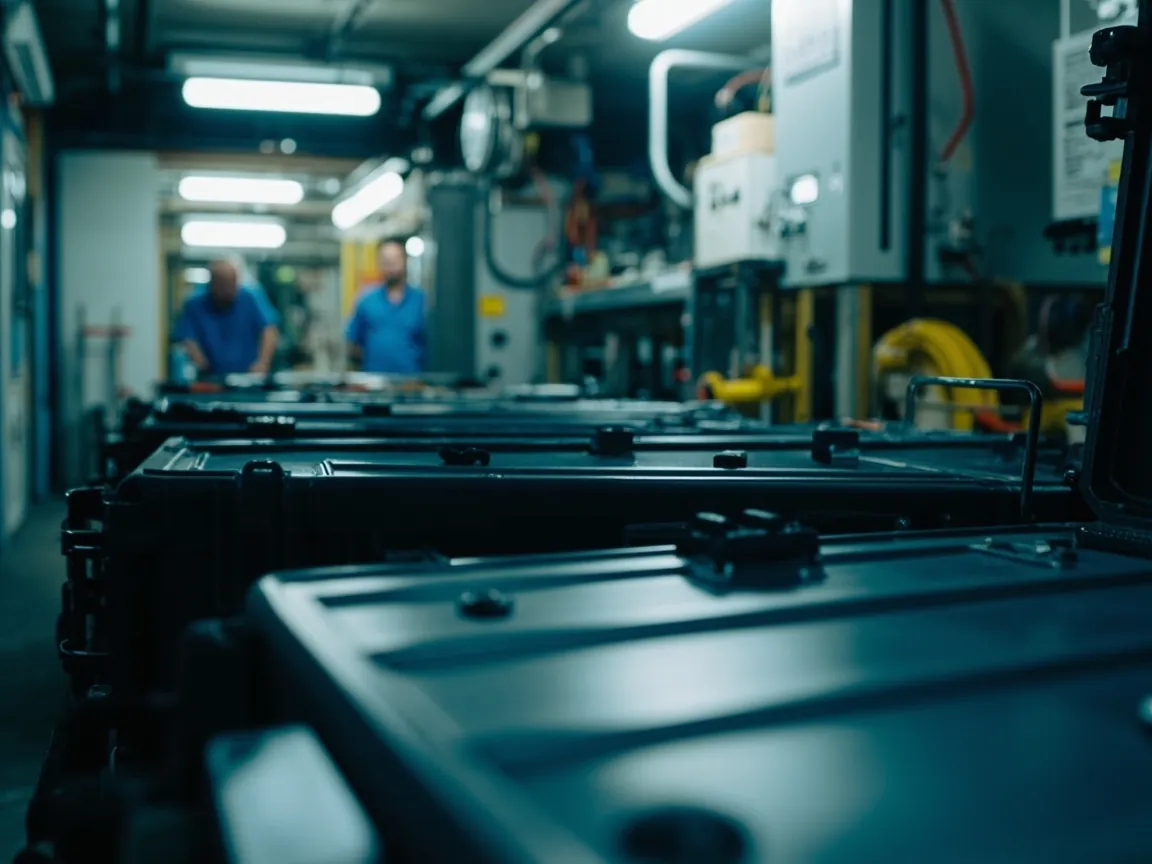
Case design should fit the actual service workflow rather than exist in isolation. A typical workflow is: verify de-energization on arrival—lockout/tagout—remove the faulty module—place in the case's old-part zone—take the new module—install—power-up self-test—record and archive. The case should support every step.
For example, the lid inside can have a work-order card slot and process prompts; the liner can split "to-inspect" and "inspected" zones by color; the case edge can serve as a temporary placement bench, reducing module contact with the ground. For work in narrow distribution areas, the case should allow one-hand opening and on-the-spot part retrieval.
Treating the case as a "mobile workstation" rather than a "container" is the key to improving service efficiency. In OEM, JUNZHJIA can work with customers to map the service path and turn workflow requirements into liner zones and marking design.
Safety Codes and Work Protection
Charging-infrastructure O&M adds high-voltage safety requirements, so case-related codes cannot be ignored:
- The case should have high-voltage warning markings and rated-parameter labeling.
- The liner and case should be anti-static to avoid ESD damage.
- Handling heavy modules should use wheels or two-person cooperation to prevent drops.
- Insulated tools and instruments should be periodically calibrated; leave a calibration-record card slot inside.
- Rainy-day work should ensure effective sealing to keep moisture out.
Safety codes land as the coordination of "person—case—tool": the person follows the workflow, the case provides a controlled environment, and the tools stay properly insulated. A missing link can cause an accident. Writing these requirements into case selection and acceptance truly serves safe O&M.
It also helps to standardize the pre-task check as a short ritual: verify the case is closed and sealed, confirm the insulation tools are present and in calibration, check the desiccant and humidity card, and confirm the new module matches the work order. Done consistently, this two-minute routine catches the small omissions that cause the most expensive failures—a loose latch in the rain, an uncalibrated meter, or a wrong module carried to site. Safety at charging sites is rarely about one big decision; it is the accumulation of small, repeatable habits.
Size Module and Transport Tool Matching
EV charger module maintenance case size must match transport tools. Urban patrol often uses e-bikes or vans, so trunk size matters; inter-station transfer may use trucks, so loading module and stacking matter; elevators and corridor corners decide the maximum passable size. Recommend measuring the "bottleneck size" of common paths first, then deriving the case module.
For loading, calculate loading rate: case dimensions divisible by truck and pallet give minimal void and most stable fixation. For multi-case combined transport, prefer an interlock-stackable series to reduce straps. Modularization also simplifies stock: one shell with different liners covers many module models, reducing inventory variety.
When planning the loading, also account for the pallet edge effect: cases at the perimeter bear more vibration than those at the center, so place the heaviest cases at the bottom center and strap or stretch-wrap the whole stack. For sea transport, consider container sweat and salt-air corrosion on metal latches and inserts and specify stainless or coated hardware with desiccant if humidity is high. Document stack height and orientation on the packing list so downstream handling follows the validated configuration rather than ad-hoc stacking that voids the protective design.
Selection Checklist and Procurement Advice
Condense into an executable checklist:
- Clarify module shape, weight, center of gravity, and electrical parameters.
- Define use environment (indoor/outdoor/coastal/wading) and protection rating.
- Select insulating material and flame-retardant grade, confirm anti-static needs.
- Design liner scheme (EVA/foam/custom cut) and zone marking.
- Confirm seal structure, latch layout, and pressure-equalization valve.
- Align transport-tool module with stacking and wheeled scheme.
- Request material TDS, flame-retardant and seal tests, and liner fit notes.
Recommend a small pilot on the real service path before volume. JUNZHJIA can provide structure, seal, and flame-retardant test documents during prototyping for internal acceptance archiving.
Keep the decision in writing. A short spec sheet—module parameters, protection rating, insulating and flame-retardant grade, liner scheme, seal and valve configuration, module, and referenced standards—prevents scope creep between quote and delivery and gives receiving inspection a clear pass/fail basis. Attach photos of the approved prototype and keep a sealed reference sample; when a later batch looks or feels different, the sample settles the dispute quickly without halting service operations.
Spare and consumable planning deserves a line in the same checklist. Gaskets, latches, wheels, and desiccant are the parts that age first, so stock a small, clearly labeled kit with each maintenance case and log its replacement interval. A worn gasket that still looks intact can quietly break the IP rating, and a seized latch or a flat wheel turns a protective case into a trip hazard. Set a simple inspection cadence: check seal compression, latch travel, wheel bearings, and desiccant color at every quarterly service, and record the result on the case's own card. Because the module failure history and the case condition end up side by side, this small habit feeds the data-driven maintenance loop that eventually lowers both return rates and total cost of ownership.
Industry Application Cases
- Charging operators: urban patrol vehicles carry a wheeled maintenance case with spares and tools.
- Charging stack makers: after-sales visits use a divided maintenance case to ship several power units, vibration and moisture protected.
- Third-party O&M: multi-station work uses modular maintenance cases, cross-station borrowing and spare commonality.
- Highway service areas: rainy module swaps, IP67 case keeps the process dry.
- Storage and PV sites: carried in the same case as test equipment, referencing the new-energy site patrol solution.
The common thread is "workflow first, zoning second, protection third," treating the maintenance case as a mobile workstation. Across every case, the win comes from matching the box to the actual service journey rather than to a catalog photo, and from making the safe way also the easy way so technicians follow it without being told.
FAQ
Question: What is the essential difference between an EV charger module maintenance case and an ordinary toolbox? Answer: The difference lies in the protection dimensions. An ordinary toolbox mainly solves "fits and carries," while an EV charger module maintenance case must simultaneously solve vibration damping, moisture protection, anti-static control, and insulation safety. Charging modules are vibration- and moisture-sensitive, contain ESD-sensitive devices, and may retain high voltage, so the case must have a custom buffer liner to fix the module, a seal to block moisture and dust, and anti-static and insulating design for safety. Carrying modules in an ordinary toolbox lets transport vibration and humidity cause "repaired then broken again" secondary damage, raising cost instead. Put safety and protection before convenience and price in selection.
Question: How high should the maintenance case's protection rating be set? Answer: Set it by scenario. Indoor charging-station patrol is basically fine with IP54; outdoor patrol and rainy loading recommend no lower than IP65; wading, pressure-wash, or emergency scenarios recommend IP67; only long submersion and extremes need IP68 (depth and time agreed with the maker). Impact references IK08 or above. The key is not to trust the label alone but to "retest seal after drop and vibration," since dynamic failure is more common than static. Write "post-drop IP retest" into acceptance to best reflect the real level.
Question: Why custom-cut the liner instead of just loose foam? Answer: Loose foam cannot precisely position the module, so it rattles and collides in the cavity, buffering drops sharply, and pick/place is inefficient. A custom liner routes the module by its 3D shape so it is constrained in six directions with even buffer, protecting and easing return-to-position. For precision electrical parts like charging modules, a custom liner is a necessary investment. Recommend 3D scanning or accurate drawings before CNC routing, and make the liner anti-static to avoid the "case anti-static, liner insulating" gap.
Question: Does anti-static really matter for charging module maintenance? Answer: Very much. Devices inside the module such as MOSFETs and IGBTs are ESD-sensitive; a charged human or liner touching them can cause breakdown, and this damage often appears only after installation, making troubleshooting hard. Therefore both case and liner should be anti-static, with surface resistance in the anti-static band and grounding or conductive structure. Ignoring this can cause hidden batch damage. Relevant standards and structures are in the anti-static and EMI shielding topic.
Question: How do I choose between a charging-stack maintenance case and a single-charger maintenance case? Answer: Look at the number of modules one task must carry. A single-charger case targets one or few modules, emphasizing portability and quick open; a charging-stack case targets several power units or a full spare set, emphasizing divided capacity, total-weight control, stacking stability, and wheeled transport. Capacity follows "modules needed per task," avoiding too-small multiple trips or too-large overweight. Beyond the manual handling threshold, fit wheels and a pull handle. Also consider inter-station transfer loading module and stacking.
Question: Where does the flame-retardant requirement come from? Answer: From the electrical and thermal risk around charging infrastructure. Charging stations and stacks involve high voltage and power devices; if an accidental fire occurs, an easily flammable case material aggravates spread. Therefore the case should use flame-retardant engineering plastic reaching UL94 V-0 or V-2. At purchase, request material TDS and third-party flame-retardant test reports, and write the grade into the technical requirement. For long outdoor use, add UV and salt-spray requirements so material aging does not drop both flame retardancy and strength at once.
Question: Is a pressure-equalization valve necessary? Answer: It depends on duty. If the maintenance case must be transported where day-night temperature swings or altitude changes are large (such as mountain sites or air-freighted spares), internal-external pressure difference makes opening hard or even sucks the case flat and draws in moisture, so a pressure-equalization valve (breathable, water-blocking membrane) is necessary to balance pressure while keeping the water rating. If used only in normal-temperature plains, it can be omitted. When fitting a valve, match breathable volume to case internal volume and periodically check the membrane for clogging or damage.
Question: How does the case coordinate with the workflow during field module swaps? Answer: Design the case as a "mobile workstation." A typical workflow is verify de-energization, lockout/tagout, remove old part, place in old-part zone, take new part, install, self-test, archive. The lid inside can have a work-order card slot and process prompts; the liner splits "to-inspect" and "inspected" zones by color; removed old modules and new modules are kept separated to avoid mix-up; the case edge serves as a temporary placement bench, reducing module contact with the ground. This "pick-place closed loop" markedly lowers field error rates and eases later traceability.
Question: How to guarantee consistency and after-sales in bulk purchase? Answer: Write acceptance criteria into the contract appendix: require material TDS, flame-retardant and seal test records, liner fit notes, and anti-static surface-resistance data; agree AQL sampling and non-conformance handling. Validate module fit and protection at prototyping, accept volume against the prototype baseline. For wear parts (gaskets, latches, wheels) keep separate stock; the supplier providing model-matched spare kits greatly shortens on-site downtime. JUNZHJIA can attach structure, seal, and flame-retardant test documents with each batch for customer archiving.
Conclusion and Related Reading
The selection logic of an EV charger module maintenance case is "safety first, protection second, convenience third": first meet electrical safety such as insulation and anti-static, then implement vibration and moisture protection, and only then consider portability and pick/place efficiency. Treating the maintenance case as a mobile workstation rather than an ordinary container, using custom liners, seal structures, and clear marking to place modules in a controlled environment, truly lowers return rates and safety risk under frequent inspection. In procurement, communicate duty, module parameters, and acceptance standards up front, and write test documents into delivery. The return shows up in fewer moisture-damaged modules, shorter site visits, and safer work in the rain, on every service call and every shift across the whole operating season.
Related Reading