

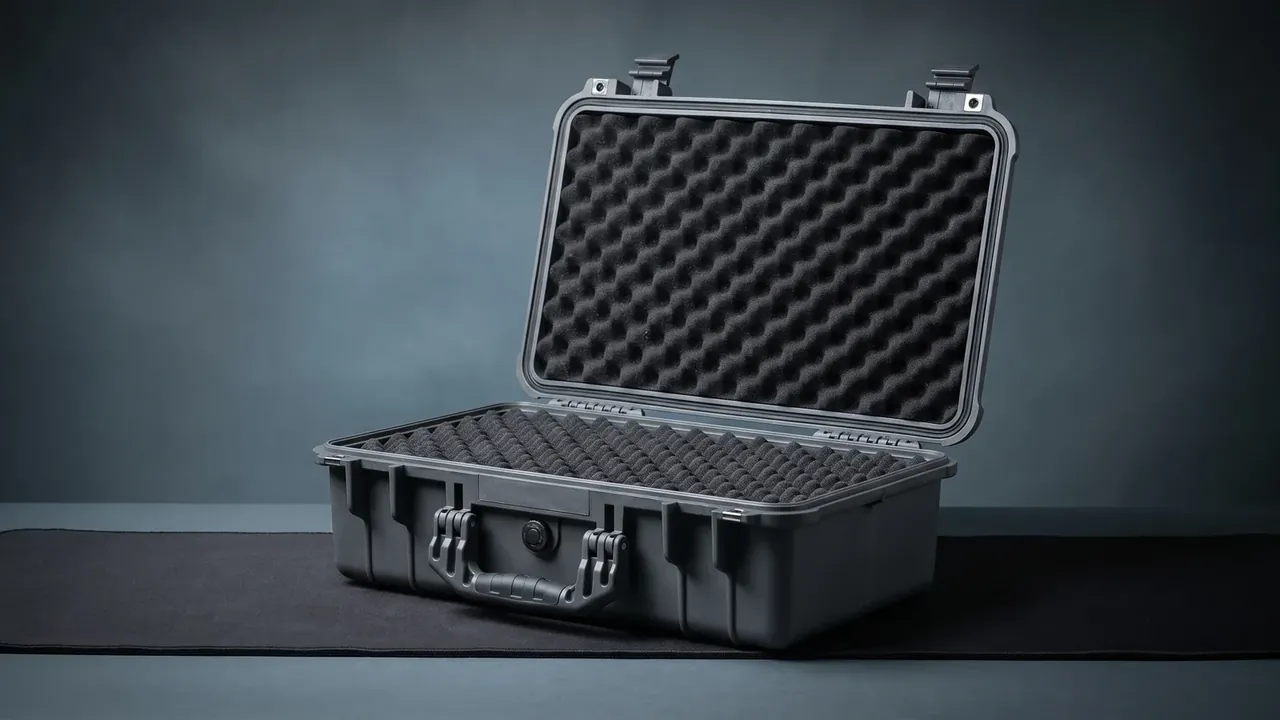
Quick answer: About 80% of how an explosive container behaves on site comes from fit-up actions, not the shell: four scenarios, 12 actions, each with the failure that happens and a 30-second check.
Table of contents
- Four field scenarios for an explosive container
- Truck mounting: three-point tie-down
- Warehouse racking: three tiers, 1.2 m aisle
- Field storage: ground anchors and a 50 mm drain
- Opening and resealing: 90 seconds and eight bolts
- Handover records: filed within 24 hours
- FAQ
1. Four field scenarios for an explosive container
The same explosive container meets four places: a truck bed asks where it is tied, a shelf asks how many tiers sit above it, a lay-by asks about drainage and anchors, a workshop bay asks about the opening sequence. Three actions per setting makes 12, each with a check under 30 seconds.
| Scenario | Action | Failure | 30s check |
|---|---|---|---|
| Truck | Measure 1.1 m clearance | Blind lift, roof strike | Press lid, no rattle |
| Truck | One strap front, one rear | Handle strapped only | Push body, under 10 mm |
| Truck | 12 mm pad under base | Padding edge to edge | Pull strap, pad stays |
| Racking | Load checked at 3 tiers | Trusting the shelf rating | Wall bulge under 2 mm |
| Racking | Face marking to aisle | Body laid sideways | Number read from aisle |
| Racking | 5 mm gap at corners | Dragged in on its base | 5 mm gauge enters |
| Field | 4 pins at 400 mm, 45 degrees | Weight on top, no anchor | Push body, under 10 mm |
| Field | 50 mm drain trench | Trench above the base | Water clears in 30 min |
| Field | Shade net 300 mm above | Net laid on the lid | Lid cool at midday |
| Opening | Rest 90 seconds | Opening on arrival | Valve hiss stops |
| Opening | 8 bolts, 2 rounds | One round, fully torqued | 0.05 mm gauge blocked |
| Opening | Gasket wiped before refit | Greasing it to seat | No film, sits flush |
Only 3 actions touch the shell: 6.5 mm wall, 2 latches, 1 gasket ring. The other 9 belong to people and tools, which is why two crews with the same explosive container log a 3x gap in faults.
2. Truck mounting: three-point tie-down
Measure the bed first. A 1120 x 420 x 340 mm interior holds about 46 kg, so two people lift it to a 1.1 m bed. Empty it is 18.5 kg; past 20 kg a lone handler drags it and wears the 4 base corners.
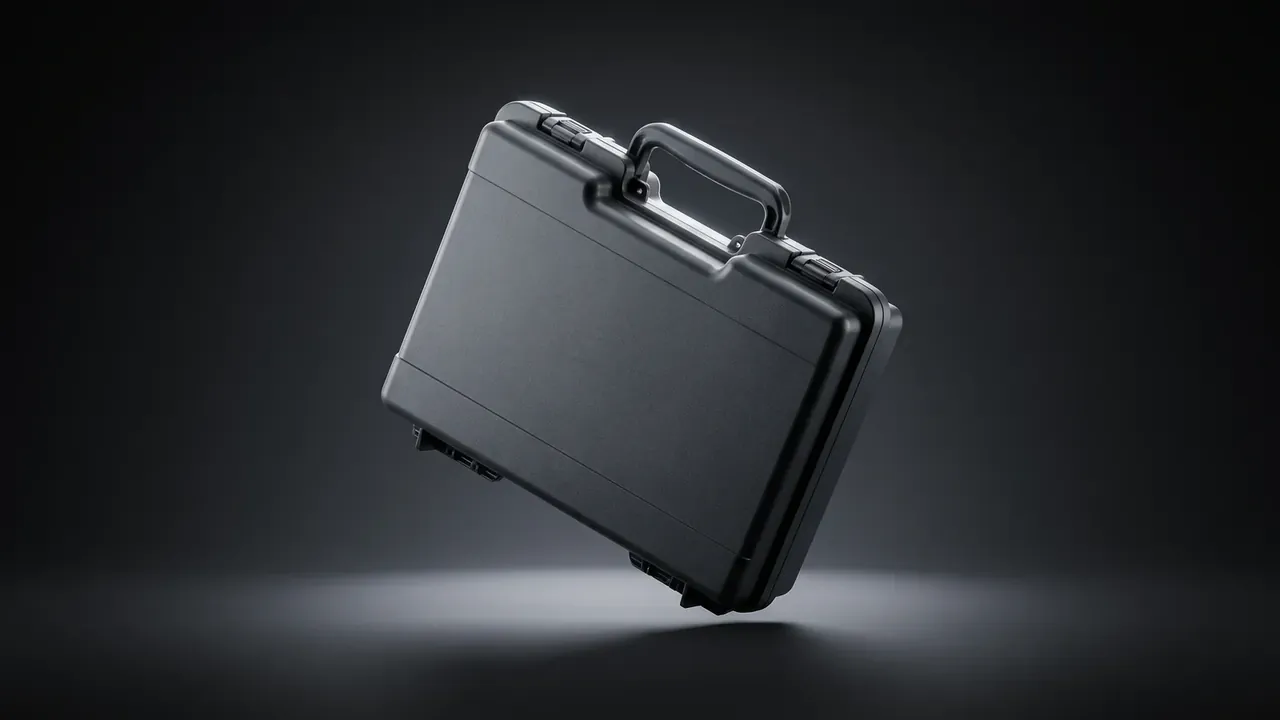
Two straps, front third of the lid and rear third of the base, at 25 N·m. The usual error is the handle alone: 25 N·m on 2 rivets, and 200 km of highway stretches those holes 3 mm.
Leave 50 mm bare at each corner of a 12 mm EVA pad so the body settles; a full pad removes the give and each hop backs a latch off. Above a 1.5 t bed, add a cross bar at two thirds of body height to stop forward travel.
3. Warehouse racking: three tiers, 1.2 m aisle
In storage an explosive container stacks 3 high, 140 kg on the bottom. At 4 tiers the walls bow, and past 2 mm the gasket stops sealing.
| Tiers | Bottom load | Aisle | Verdict |
|---|---|---|---|
| 2 | 95 kg | 1.2 m | No visible bow |
| 3 | 140 kg | 1.2 m | Bow under 2 mm |
| 4 | 190 kg | 1.5 m | Shelf and corner guards |
| 5 | 240 kg | 1.5 m | Use racking instead |
A 1.2 m aisle comes from a pallet truck turning circle plus standing room. At 1 m, pickers tilt the body and the seal face keeps a 1 mm gap. Marking faces the aisle: reverse it and the picker turns the unit 180 degrees, scraping the corners. Fewer than 60% of positions in 3 warehouses passed.
4. Field storage: ground anchors and a 50 mm drain
In a lay-by the first enemy is water, not impact. Put 2 bearers of 100 mm under the base and cut a 50 mm trench away from it; the floor dries within 30 minutes of rain.
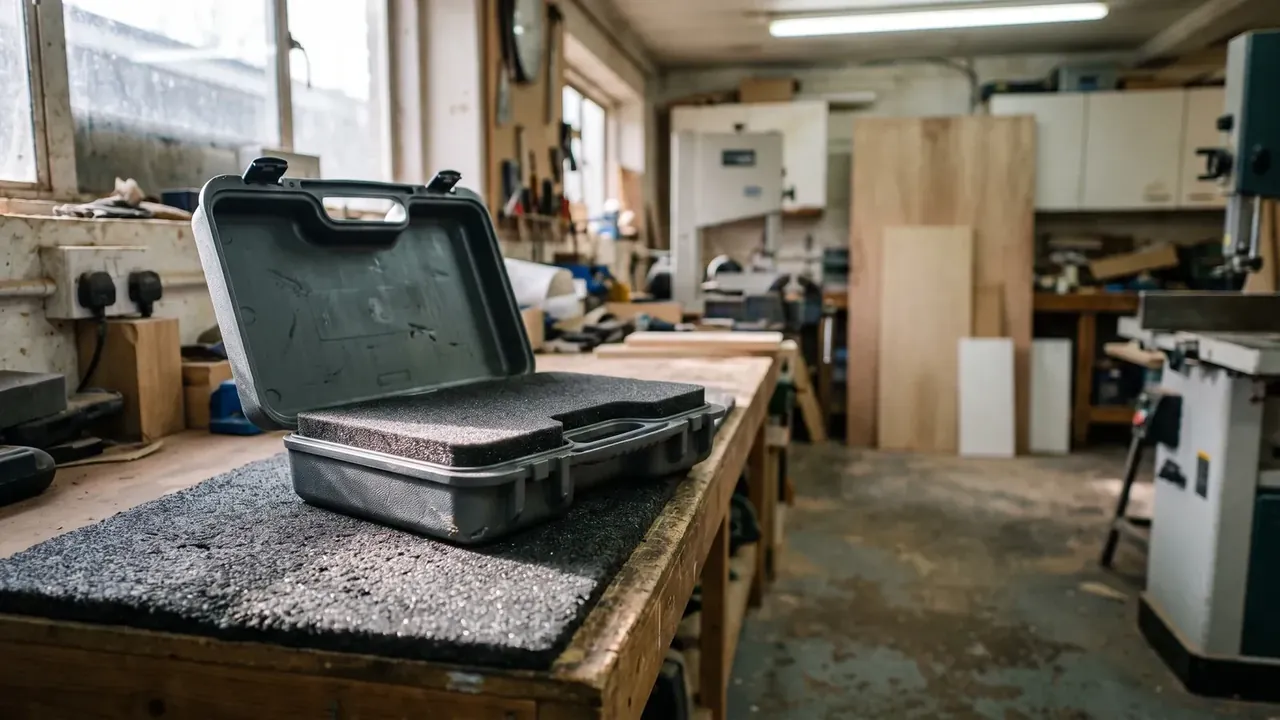
Anchoring takes 4 steel pins of 400 mm, driven at 45 degrees from the corner eyes until the body will not move 10 mm. Exposed ground doubles that to 8.
Sun is the second enemy. The shell reaches 65 °C, the interior 8 °C more, and the gasket hardens within 30 days. Keep netting 300 mm clear; past 72 hours, leave the unit half open rather than latched.
5. Opening and resealing: 90 seconds and eight bolts
Wait 90 seconds before the lid rises so the differential bleeds off. Above a 15 °C spread, opening at once springs the edge 5 mm and pulls the gasket out.
| Step | Tool | Check |
|---|---|---|
| Rest 90 seconds | None | Valve hiss stops |
| Crack 8 bolts | M6 hex key | Half turn each |
| Open to 100 degrees | None | Edge does not spring |
| Inspect gasket | Ethanol and cloth | No film or set marks |
| Reseal, 2 rounds | 6 N·m wrench | 0.05 mm gauge blocked |
Reseal diagonally in 2 rounds at 6 N·m per bolt; one full round lifts the edge 1.5 mm. Wipe the gasket with ethanol, never oil: oil swells EPDM by 0.3 mm inside 7 days.
6. Handover records: filed within 24 hours
Twelve actions still need a signature. The sheet carries 3 items: unit number, actions, photos of anything abnormal, all filed within 24 hours; past 48 hours a record carries little weight. The value is comparison: a tight latch on 5 consecutive sheets for the same explosive container means inspect the lid edge, not pull harder.
Conclusion
Four scenarios, 12 actions: 3 on the shell, 9 in the hands of the crew — straps at 25 N·m, 3 tiers at 140 kg, a 50 mm trench, a 90 second rest. Put those figures on the handover sheet and the fault log for an explosive container starts to fall.
This article discusses only the container (case body) side of specifications and design intent, and does not cover any handling, loading or use of the contents.
Related Reading
- Acceptance and marking rules for the same case
- Isolation, venting and marking explained
- How storage cases are arranged on a warehouse floor
- Handling routine inside a grenade storage facility
- Tie-down practice for road transit cases
Related Products
- 8 Series — Gun Cases; Military Equipment Cases; Camera Equipment Cases; Drone Cases; Watch Cases; Knife Cases; First Aid Cases; Electronics Equipment Cases
- WL8-2812 PP Gun Case — model WL8-2812
- All protective cases and toolboxes: 7 series, 158 models