

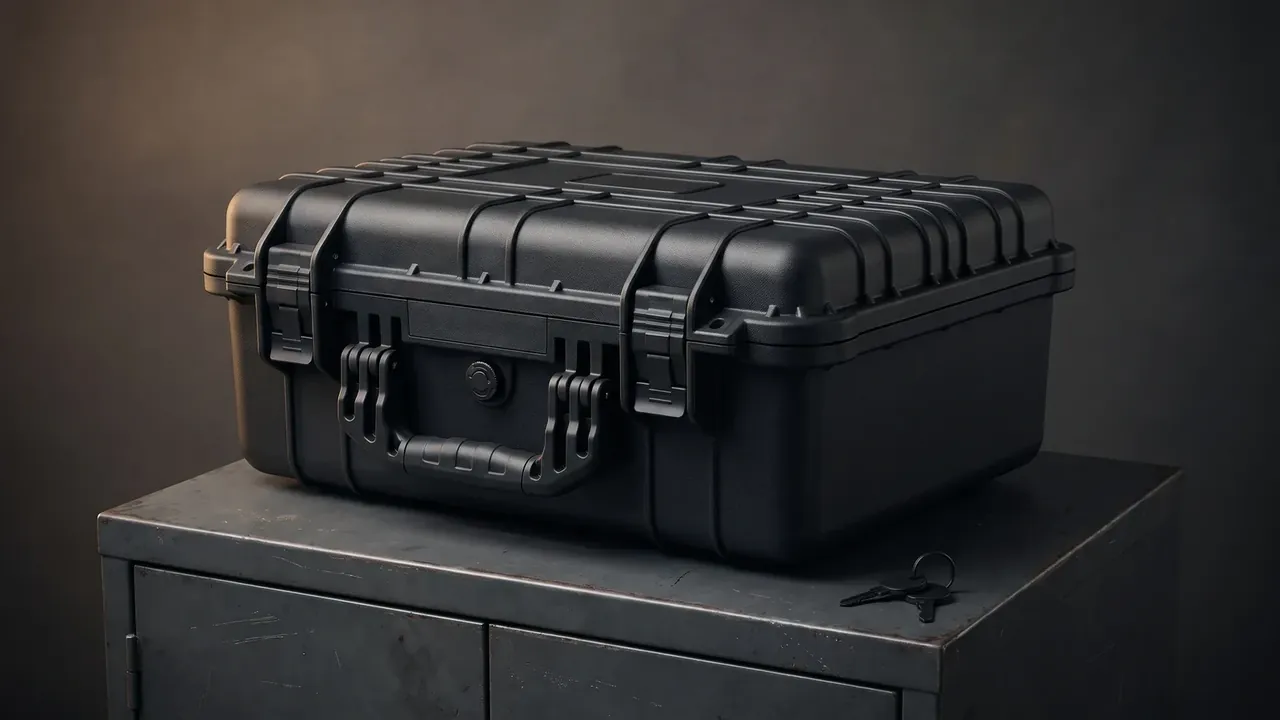
Quick answer: Quotes for the same Explosive Container drawing often spread by 30%, and 4 items explain the gap: test clauses, minimum order quantity, tooling ownership and payment milestones. Put all 4 into the RFQ and the spread falls to around 5%.
Table of contents
- Test clauses decide the price
- MOQ and who owns the tooling
- Sampling and the factory visit
- Lead time in five stages
- Payment milestones and credit terms
- Where a low quote picks the money back up
- FAQ
1. Test clauses decide the price
Start with the clause in almost every Explosive Container RFQ: 480 hours of neutral salt spray without blistering. The same 480 hours covers 3 grades of rigour, since chamber volume, rack angle and rating scale are rarely written down.
A tight Explosive Container inquiry pins every figure: cavity 1200 mm by 450 mm by 300 mm, wall 8 mm, working load 46 kg, 20 kPa held for 30 seconds with a drop under 0.5 kPa, 480 hours of spray, and a 1.2 m drop on 6 faces.
| Cost block | Typical share | Movement when clauses change |
|---|---|---|
| Material and moulding | 52% | Wall from 6 mm to 8 mm adds 11% |
| Surface treatment | 18% | Salt spray from 96 h to 480 h adds 14% |
| Testing and inspection | 12% | Batch sampling instead of 100% leak test cuts 6% |
| Packing and freight | 18% | Carton instead of crate cuts 4% |
Those shares average 6 quotes from 2025. A bid 20% under the group means one line was cut: surface treatment and testing carry 30% of room, enough to explain it.
2. MOQ and who owns the tooling
An MOQ follows tooling arithmetic, not sales habit. A single-cavity mould runs a 210 second cycle with 4 hours of changeover, so 50 units against 500 differs 9 times on setting cost per part.
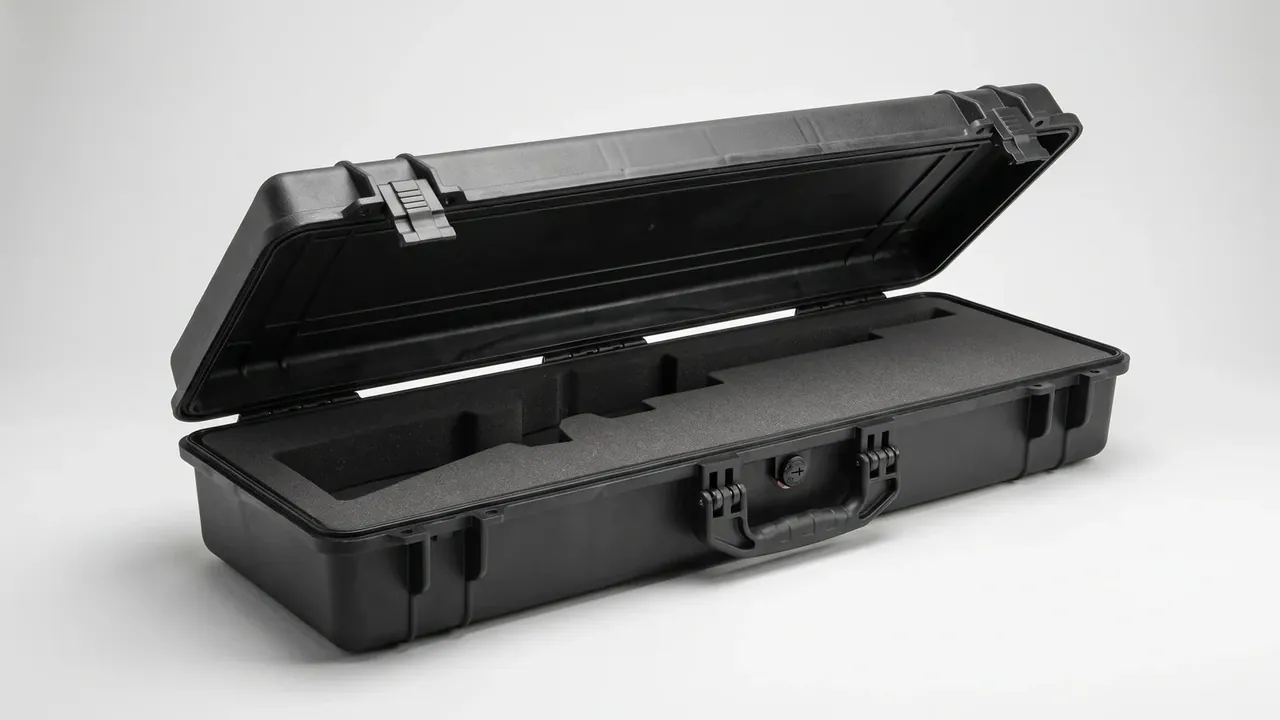
Tooling for a 1200 mm cavity quotes 48,000 to 72,000 CNY, the spread sitting in bolster steel and cooling layout. Three sentences settle ownership of an Explosive Container mould: transfer on final payment, frozen drawing revision, no use for other buyers.
| Batch size | Setting cost per unit | Price index | Tooling treatment |
|---|---|---|---|
| 50 units | 32 CNY | 1.15 | Charged in full |
| 200 units | 8 CNY | 1.00 | Charged or credited on first batch |
| 500 units | 3.2 CNY | 0.94 | Fully absorbed in first batch |
Amortise once. At 500 units against a 48,000 CNY tool the share is 96 CNY per unit, so the same line on batch 4 means the mould was sold twice.
3. Sampling and the factory visit
Three samples cover the checks: one cut open for wall distribution, one for leak and drop, one kept for colour and marking. Seven days for samples and 15 for the report is normal; a plant that slips has not mounted the mould.
| Check | Action on site | Pass line |
|---|---|---|
| Machine tonnage | Read the plate and mounted mould | 1600 t or above |
| Wall distribution | Callipers at 5 points | Plus or minus 0.3 mm |
| Leak tightness | Hold 30 seconds | Drop no more than 0.5 kPa |
| Salt spray | Review the 480 hour report | Rating 9 or better |
| Records | Pull 3 batch files | Material lot traceable |
Only a 1600 t machine holds a 1200 mm cavity flat; below that the lid warps 2 mm to 3 mm and the gasket never seats. Read walls at the 4 corners and the base centre, and treat anything beyond 0.3 mm as uneven cooling. An Explosive Container plant with no leak bench is describing testing, not running it.
4. Lead time in five stages
Forty-five days splits into 5 stages: 25 days of tooling, 6 days of moulding at 210 seconds per part, 3 days of assembly, 2 days of inspection and 5 days of freight. When a supplier offers fewer, one stage was cut.
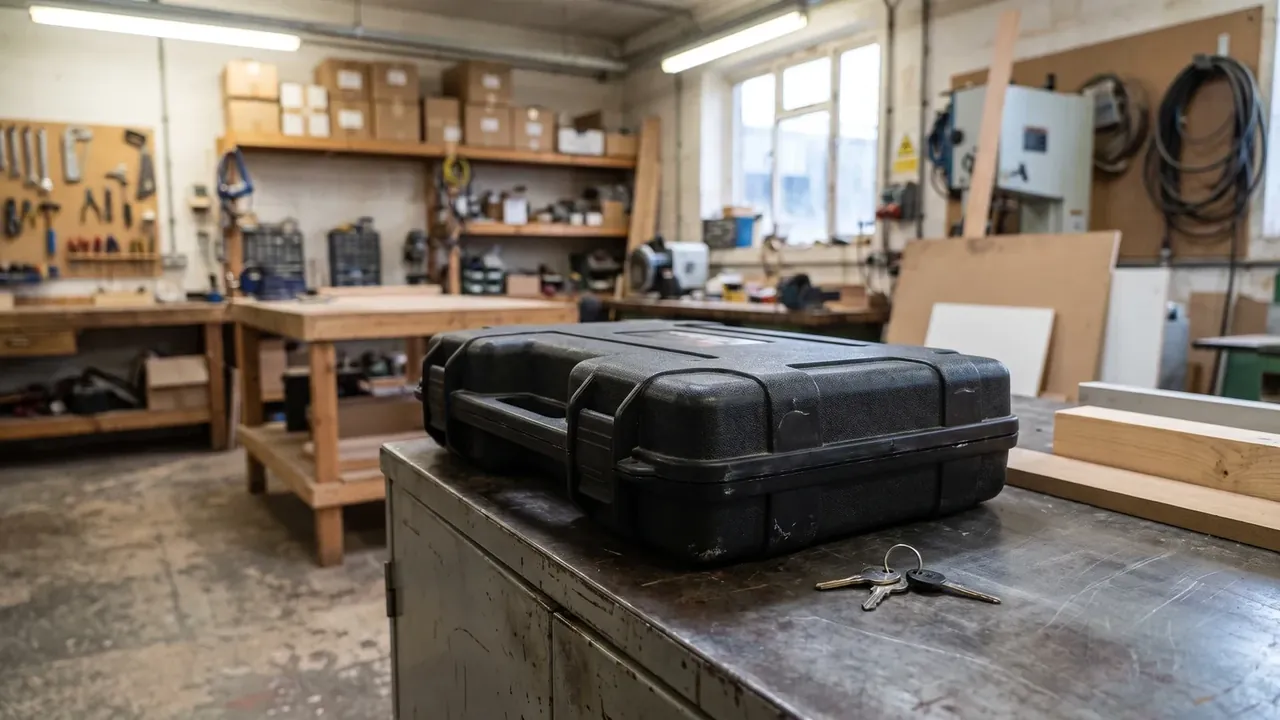
Drawing sign-off takes 3 days inside those 25; stretch it to 10 and the date moves. Freezing the revision at quotation removes 2 rounds of argument.
At 8 mm wall the 210 second cycle holds steady. At 10 mm it reaches 300 seconds and the part costs 18% more, while the working load falls from 46 kg to about 32 kg, so a shorter date bought by thinning the wall is paid for in capacity. Any Explosive Container lead time should name all 5 stages.
5. Payment milestones and credit terms
Milestones beat the credit period. A 60 day term looks generous, yet 30% up front plus the tooling bill ties up more cash than 90 days with staged releases.
| Milestone | Share | Usual condition |
|---|---|---|
| Order deposit | 30% | 5 working days after PO |
| Tooling approval | 20% | Signed after trial shots |
| Batch shipment | 40% | 30 days after acceptance |
| Retention | 10% | Released after 12 months |
Above 1200 units a year the deposit drops from 30% to 20% and acceptance from 20% to 15%, keeping roughly 5% of the cash on the buyer's side.
6. Where a low quote picks the money back up
A quote of 1680 CNY per unit lands at 2100, and the extra 420 scatters across 5 lines: tooling charged twice, outsourced testing, an export crate, inland freight and 13% VAT.
Double-charged tooling is the usual pattern: 96 CNY on batch one, then 60 CNY on batch two under a maintenance label. Outsourced reports hide in the header: a report issued to a trading company rather than the factory is rejected at acceptance, and each costs 800 to 1500 CNY. Freight bills on volume at 0.32 cubic metres per unit, 6.4 per pallet of 20, up to 6% of goods value. An Explosive Container quote that says freight included without a destination has left itself an opening.
Conclusion
Buying an Explosive Container comes down to 4 levers: clauses written as numbers, tooling amortised once, lead time split into 5 stages, and milestones pushed line by line. A cheap supplier is not automatically a problem; one that cannot say where the saving came from is. Turn the 4 levers into a standard RFQ and the next Explosive Container inquiry returns numbers that compare.
This article discusses only the container (case body) side of specifications and design intent, and does not cover any handling, loading or use of the contents.
Related Reading
- Test clauses and acceptance lines for this case type
- What the body is and how it isolates
- How a propellant charge case is built
- Stackable body specifications and load ratings
- Inspection intervals for a storage case
Related Products
- 8 Series — Gun Cases; Military Equipment Cases; Camera Equipment Cases; Drone Cases; Watch Cases; Knife Cases; First Aid Cases; Electronics Equipment Cases
- WL8-2812 PP Gun Case — model WL8-2812
- All protective cases and toolboxes: 7 series, 158 models