

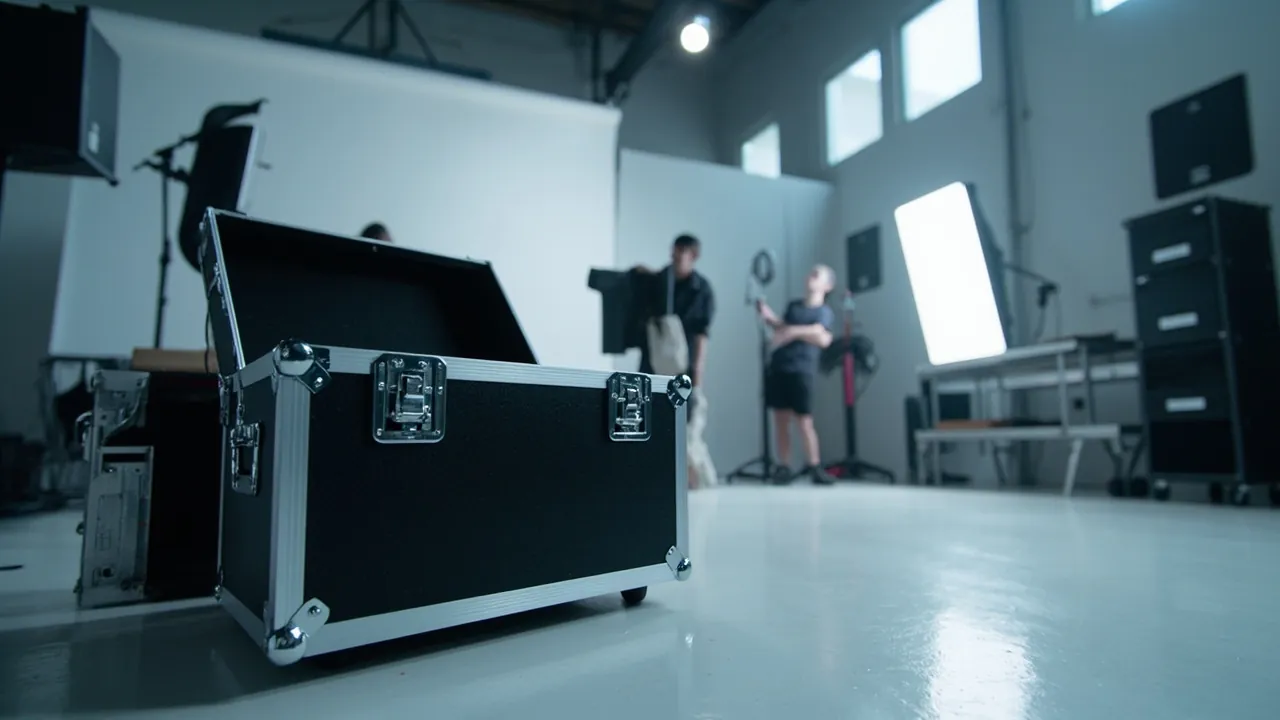
Film, television, live-event and broadcast equipment is almost always made of many small, irregularly shaped parts. Carried loose, these items get knocked, tangled and dampened. The conclusion is clear: a dedicated protective case for lighting and sound gear drives transport damage to a minimum and forms the baseline safeguard for crews, outside-broadcast teams and production companies. This article explains, from materials and standards to liners, latches and a procurement checklist, how to configure the right case for each type of device, and gives an executable method for acceptance at purchase.
Before going deeper, one core judgment should be stated plainly: the loss of film and stage equipment usually does not come from a single drop but from the accumulated micro-vibration of repeated handling, humid environments and tangled cabling. A well-designed case solves the two contradictory needs of "repeated stress accumulation" and "fast on-site access." For buyers, the case price is only a tiny fraction of total equipment value, yet it decides whether the gear stays intact after many transfers, so the return on this investment is extremely high.
Table of Contents
- Why Film Lighting and Audio Gear Needs Dedicated Cases
- Mainstream Case Materials and Structure Comparison
- Ingress Protection Ratings and Certifications
- Compartment Design for Lighting Equipment Cases
- Shock and Moisture Control for Audio Equipment Cases
- Broadcast and Studio Production Cases
- Stage Sound Cases and Cable Management
- Special Requirements for Projection Equipment Cases
- Liner and Cushion Material Selection
- Latches, Seals and Pressure-Equalization Valves
- Custom Cutting and OEM/ODM Workflow
- Transport, Stacking and Vibration Verification
- On-Site Transfer and Asset Management
- Procurement Selection Checklist
- FAQ
Why Film Lighting and Audio Gear Needs Dedicated Cases
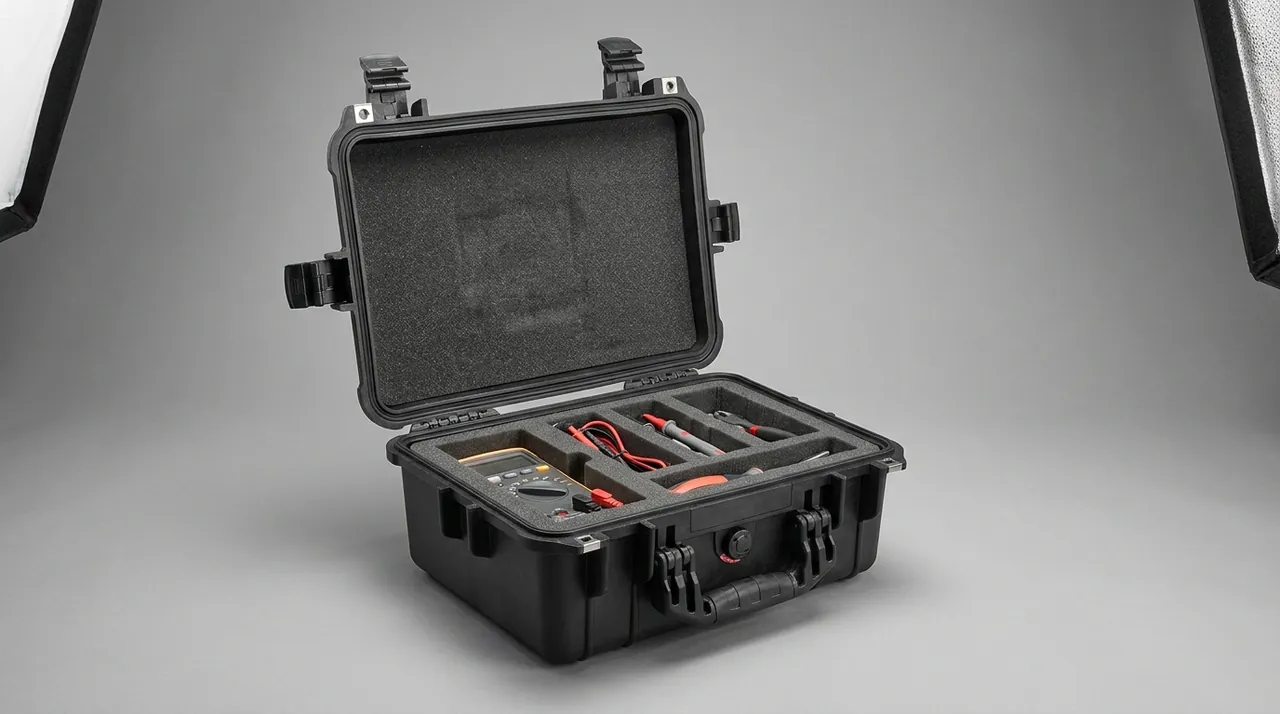
Film and stage devices carry high unit prices, precise structures and frequent transfers between venues. Take LED panels, spotlights, wireless microphone receivers and mixing consoles as examples: their shells are mostly aluminum alloy or engineering plastic, and inside sit glass, lenses, circuit boards and precision potentiometers. Ordinary cartons or woven bags cannot resist the compression and drops of transit. A dedicated lighting equipment case uses a hard shell plus a custom liner to spread external force across the case body and lock the device inside the cushion layer, avoiding local stress concentration that causes cracks.
Another overlooked factor is site efficiency. A large gala may need dozens of cases for lighting and sound; without uniform compartments and numbering, setup and teardown waste huge amounts of labor. Field experience shows that after adopting standardized protective cases, single-transfer preparation time is typically cut by around thirty percent. That is also why studio production cases and camera equipment cases treat "fast identification" as a design priority. From an asset-management view, numbered cases with lists also lower loss rates, which is critical for rental companies. You can read more about studio workflow in our live broadcast equipment cases guide.
In field deployments, the sealing and cushioning of Film Lighting & Sound Equipment Cases come first: referencing IEC 60529 and GB/T 4208 for the IP rating, IP65 suits dust and splash protection while IP67 is preferred for wet or submerged environments to keep the contents free from moisture and grit.
Film Lighting & Sound Equipment Cases is often paired with Oil-Well Pressure Instruments & Pipeline Inspection Equipment Cases, for example a main unit with separate battery and accessory layers that protect the gear and speed field setup.
For site management, tag Film Lighting & Sound Equipment Cases with an ID and a contents card, keep a master list with the supervisor, and reconcile against the card on departure and return; this mirrors the numbering system used by Thermal-Imager, Flaw-Detector & CMM Boxes: Metrology Detection Boxes and cuts loss rates.
Mainstream Case Materials and Structure Comparison
The outer shell material directly determines weight, strength and cost. Current mainstream options concentrate on modified PP (polypropylene), ABS and PC (polycarbonate) engineering plastics, plus aluminum-profile frame cases. The table below gives a typical comparison:
| Material | Typical Wall | Tensile (typical) | Temp Range | Weight Index | Application |
|---|---|---|---|---|---|
| --- | --- | --- | --- | --- | --- |
| Modified PP | 3–5 mm | Medium | -20°C to +60°C | Low | General lighting, audio cases |
| ABS | 2.5–4 mm | Medium-High | -10°C to +70°C | Medium | Studio production case shells |
| PC | 2–3 mm | High | -40°C to +120°C | Medium-High | High-value projection cases |
| Aluminum frame + ABS | Frame | High | -40°C to +80°C | High | Heavy stage sound cases |
Material advice: for budget-limited teams that move mainly by road, the one-piece injected PP case offers the best cost-performance; if the equipment is valuable and needs air freight or long outdoor tours, upgrade to PC or an aluminum frame structure. Aluminum frame cases are heavier but reach larger sizes and higher load, suiting concentrated amps and speakers.
Structure is the extension of material. Injected cases are one-piece with good sealing; aluminum frame cases can be made larger and stronger but rely on sealant strips at joints for waterproofing. Either way, the four corners should be thickened and rounded to disperse drop impact. Handles, wheels and latches are load-bearing and should use metal or glass-fiber reinforced parts to avoid fatigue fracture of plastic under long-term load.
For impact resistance, Film Lighting & Sound Equipment Cases should be designed to an IK rating per IEC 62262, with thickened rounded corners and metal latches; transit drops are evaluated against MIL-STD-810H Method 516.8, and experience shows the shell can survive multiple 1.2 m drops without cracking.
For shipping, add desiccant and a humidity card outside Film Lighting & Sound Equipment Cases, especially for sea freight or humid regions; long-term storage follows the ISTA guidance on temperature-humidity cycling to avoid gasket aging and metal corrosion.
For Film Lighting & Sound Equipment Cases that is airdropped or flown at altitude, balance weight and ballast, add redundant latches and, where needed, a pressure-equalization valve to counter altitude-induced suction; related thinking appears in Drone Transport Cases & Battery Cases: Agriculture, Inspection, Police & Fire Drones.
Ingress Protection Ratings and Certifications
The core metric of a protective case is dust and water resistance, per IEC 60529 (the Chinese equivalent is GB/T 4208) IP code. Outside broadcast often meets rain and dust, so at least IP67 is recommended:
- IP65: protects against water jets, suitable for indoor and tent use;
- IP67: no water entry under short immersion (1 m / 30 min), the first choice for location work;
- IP68: customizable longer immersion, for aquatic and very wet environments.
For impact, refer to the IK rating (IEC 62262); general location cases should be IK08 or above. Flammability follows UL94; a V-0 or V-1 rated shell adds fire-safety value. For equipment that travels by air or with a drone transport case, also consider the drop and random-vibration methods in MIL-STD-810H as a higher-level verification basis.
Tip: an IP rating is only a valid selling point with a third-party lab report. Ask the supplier for test documents; JUNZHJIA can provide matching seal kits and test files by model, easing integrator acceptance and archiving.
Vibration and transit reliability can be verified with the ISTA 3A/3E series of simulated shipping tests; for sensitive loads such as Film Lighting & Sound Equipment Cases, custom-cut EVA foam that holds every item in place markedly reduces in-transit damage.
When standard grids cannot fit odd-shaped gear, custom-cut Film Lighting & Sound Equipment Cases pays off; JUNZHJIA's OEM/ODM flow is sample, drawing, prototype and batch, with test files supplied and tooling on hand to shorten lead time.
Compartment Design for Lighting Equipment Cases
The worst practice for a lighting case is "shove all lamps into one empty space." The right approach is one slot per lamp: each LED light, spotlight head and color frame gets its own foam cavity. Compartment design should balance:
- Irregular-fit: lenses, brackets and clips get separate cutouts;
- Weight balance: heavy items at the bottom, light items on top, lowering the center of gravity;
- Anti-scratch: metal lamp bodies separated by fleece or EVA;
- Identifiability: a list pasted inside the lid shows accessories at a glance.
For large luminaires, a folding light-stand case can store stands and bodies in separate chambers. For touring stage sound equipment cases, reserve a cable-coiling zone to avoid signal and power lines mixing and causing interference. Light hooks and safety cables should be fixed separately to prevent falling off in transit and damaging other gear.
Material choice for Film Lighting & Sound Equipment Cases typically spans modified PP, ABS and PC: PP is light and shock-tolerant for frequent carrying, ABS offers good rigidity at moderate cost, and PC gives the highest impact strength at the expense of weight; flame rating can be specified to UL 94 V-1 or better for in-vehicle and cabin safety.
If Film Lighting & Sound Equipment Cases carries lithium cells or energetic parts, give it a separate fire-resistant bay with labeling and ship per UN 38.3 and IATA rules for lithium batteries; like Detection Instrument Protective Cases: Gas, Water-Quality, Noise & Wind-Speed Meters, isolation and marking are key.
Shock and Moisture Control for Audio Equipment Cases
Wireless microphones, recorders and audio interfaces are extremely sensitive to shock and humidity. Audio case liners should be mainly high-density EVA, with PE hard foam support at key points. For moisture control:
- Place replaceable desiccant packs inside with a humidity indicator card;
- Use closed-cell EPDM gasket with good long-term compression recovery;
- For seaside or rainforest shows, add an aluminum-foil moisture barrier to the inner skin;
- Ensure gear is powered off and cooled before boxing to avoid condensation of hot humid air.
Typical value: in an environment above 80% relative humidity for a continuous week, an untreated case interior may still condense; desiccant replacement cycle is therefore a maintenance priority, suggested weekly humidity-card check and replace as needed.
Audio connectors (XLR, combo, USB) are best protected with dust caps, and the liner should reserve upward-facing slots to reduce plug wear. For precision devices like condenser microphones, add a hard shell cover before the foam cavity to prevent diaphragm compression.
Liners commonly use high-density EVA or PE foam, CNC-cut to the actual part or drawing so each item sits in its own pocket. JUNZHJIA supports custom liners and OEM/ODM with brand-color printing, matched seals and test documentation for batch acceptance.
For field usability, Film Lighting & Sound Equipment Cases should open one-handed even with gloves, with latches that resist accidental release; in designs such as Industrial Equipment Cases: Oil Exploration, Nuclear Inspection, Surveying & Rail Maintenance, quick access and loss prevention rank above looks.
Broadcast and Studio Production Cases
Outside-broadcast vans and studio production desks consist of switchers, monitor walls, intercom hosts and recording servers — large and shock-averse. Studio production cases usually adopt an aluminum frame structure, with the interior built as a 19-inch rack-compatible pull-out tray; equipment is fixed by rails, pushed in as a whole for transit and pulled out as a whole on site.
These cases emphasize "plug-and-play on arrival": all cables pass through side grommets, avoiding coiling inside. If paired with a tripod and panhead case, support and transmission equipment can be integrated into one transport plan, raising transfer efficiency. Production cases should also fit a cable manager and label area, easing multi-camera signal mapping and reducing live accidents.
Temperature and humidity control is an often-overlooked aspect of Film Lighting & Sound Equipment Cases transport: passive insulation can use phase-change cold packs or an insulated bladder, and extreme temperature bands follow MIL-STD-810H Methods 501/502, with experience indicating structural stability from -20 C to +60 C.
To set the protection grade of Film Lighting & Sound Equipment Cases, list the gear and the real duty (temperature, humidity, dust, drop, vibration), then match IEC 60529, MIL-STD-810H, ISTA, UL 94 and IK item by item rather than trusting marketing numbers.
Stage Sound Cases and Cable Management
Stage sound cases carry amplifiers, speaker processors, microphones and massive cabling. Unlike ordinary cases, sound cases must address:
- Speaker units fixed separately to avoid cone compression;
- Amplifiers stood vertically for cooling, with ventilation gaps in the liner;
- Cables on reels or in divided boxes, sorted by length and type;
- Heavy items near the wheel end for easier pulling.
Cable management is one of the biggest pain points in the show industry. It is recommended that each sound case carry a cable list card stating specification, length and quantity; recovering by card at teardown sharply lowers loss rates. Microphones should enter independent shock slots to avoid grille deformation affecting pickup. Monitor and main speakers ship separately, protecting units and allowing flexible layout by venue SPL.
For Film Lighting & Sound Equipment Cases with electronic circuits, consider conductive gaskets and a metallized case for EMI shielding, assessed against the GB/T 17626 series for immunity so strong electromagnetic fields in the field do not disturb readings or comms.
In field deployments, the sealing and cushioning of Film Lighting & Sound Equipment Cases come first: referencing IEC 60529 and GB/T 4208 for the IP rating, IP65 suits dust and splash protection while IP67 is preferred for wet or submerged environments to keep the contents free from moisture and grit.
Special Requirements for Projection Equipment Cases
Engineering projectors and laser projection hosts contain optical engines and DLP chips, highly sensitive to temperature, humidity and dust. Projection equipment cases should:
- Buffer temperature: add an insulation layer to the liner to reduce condensation from day-night swings;
- Prioritize dust: sealing not below IP65, with filter cotton at vents;
- Protect lenses: lens in a hard shell cover, then into a foam cavity;
- Keep a low center: projector host sits low, with handles and wheels.
Note: before transport, always reset lens shift and cool the projector down; packing a hot unit directly may cause internal condensation. The lens is the most expensive and delicate part; avoid single-point force in transit.
At incoming inspection, Film Lighting & Sound Equipment Cases should ship with third-party IP, IK and drop reports; check gasket continuity, even latch compression and liner fit item by item. Like Portable Diagnostic Equipment Cases: Handheld Ultrasound, Patient Monitor, Ventilator & Defibrillator, complete documentation eases warehousing and insurance claims.
For impact resistance, Film Lighting & Sound Equipment Cases should be designed to an IK rating per IEC 62262, with thickened rounded corners and metal latches; transit drops are evaluated against MIL-STD-810H Method 516.8, and experience shows the shell can survive multiple 1.2 m drops without cracking.
Liner and Cushion Material Selection
The liner decides shock absorption. Common materials compared below:
| Material | Density | Rebound | Processing | Suits |
|---|---|---|---|---|
| --- | --- | --- | --- | --- |
| EVA foam | Medium | Good | Carve / heat-press | Lighting, audio, camera gear |
| PE hard foam | High | Medium | CNC cut | Heavy sound, projection |
| PU sponge | Low | Excellent | Die-cut | Light accessories |
| EPP | Medium-Low | Excellent | Molded | Recyclable eco cases |
Custom cutting is a routine JUNZHJIA capability: by the device's 3D drawing, CNC or hot-wire cutting produces a fitted cavity so the device has zero displacement inside. For high-value gear like a camera equipment case, a two-layer liner is advised: a support bottom and a press-on top, double-fixed. Liner density should match device weight; too soft collapses, too hard transmits shock, so engineering confirmation is needed.
For site management, tag Film Lighting & Sound Equipment Cases with an ID and a contents card, keep a master list with the supervisor, and reconcile against the card on departure and return; this mirrors the numbering system used by Fire-Fighting Equipment Cases & Rescue Forcible-Entry Kits and cuts loss rates.
Vibration and transit reliability can be verified with the ISTA 3A/3E series of simulated shipping tests; for sensitive loads such as Film Lighting & Sound Equipment Cases, custom-cut EVA foam that holds every item in place markedly reduces in-transit damage.
Latches, Seals and Pressure-Equalization Valves
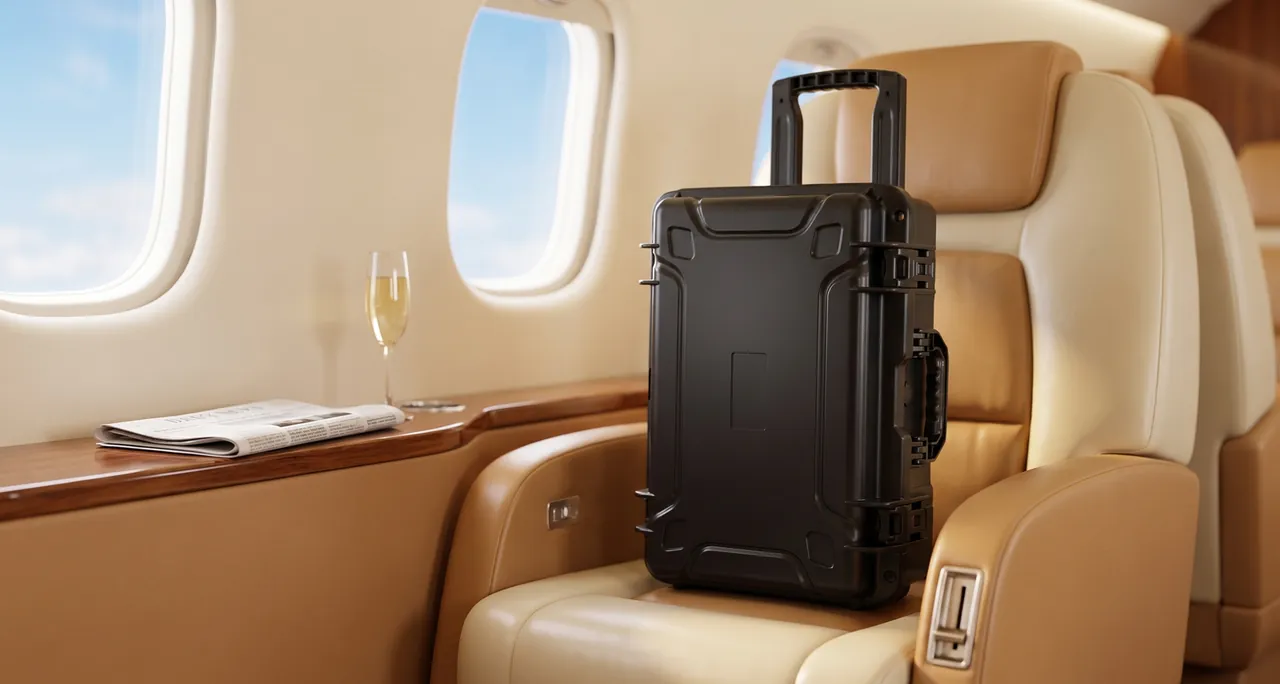
Latches decide the sealing life of a case. Quality cases use metal latches with silicone washers, openable with one hand and fitted with a security hole. The gasket should be vulcanized in one piece to avoid splice gaps. High-altitude transport (such as tours into Tibet) must include a pressure-equalization valve, otherwise internal-external pressure difference may pop the lid or pull off the gasket.
Maintenance: after each use, wipe the gasket dry and check the latch spring; when stored long-term, leave the lid slightly open to prevent gasket adhesion aging. Latch bolts should be tightened periodically to avoid loosening under long transit vibration.
For Film Lighting & Sound Equipment Cases that is airdropped or flown at altitude, balance weight and ballast, add redundant latches and, where needed, a pressure-equalization valve to counter altitude-induced suction; related thinking appears in Earthquake Emergency Kits & Flood-Control Emergency Cases.
Material choice for Film Lighting & Sound Equipment Cases typically spans modified PP, ABS and PC: PP is light and shock-tolerant for frequent carrying, ABS offers good rigidity at moderate cost, and PC gives the highest impact strength at the expense of weight; flame rating can be specified to UL 94 V-1 or better for in-vehicle and cabin safety.
Custom Cutting and OEM/ODM Workflow
When standard cases cannot fit irregular devices, a custom workflow is needed. Typical steps:
- Provide the equipment list and 3D dimensions (or a physical sample);
- Engineering confirms shell material, protection rating and liner plan;
- Issue cutting drawings and renderings for customer confirmation;
- Make a prototype and run small drop/vibration tests;
- Batch production and outgoing inspection.
JUNZHJIA supports OEM/ODM, adjusting brand color, silk-print and latch specs by customer, and provides matching seal kits and test documents for integrators to rebrand and supply directly. Lightweight needs similar to a live broadcast equipment case can follow the same workflow. Before customizing, confirm whether devices contain lithium batteries, to plan fire and isolation together.
To extend seal life, keep the silicone gasket of Film Lighting & Sound Equipment Cases away from oil and prolonged UV, wipe it regularly and apply silicone grease; lubricate latch hinges and store the case slightly open to avoid crushing the gasket.
Liners commonly use high-density EVA or PE foam, CNC-cut to the actual part or drawing so each item sits in its own pocket. JUNZHJIA supports custom liners and OEM/ODM with brand-color printing, matched seals and test documentation for batch acceptance.
Transport, Stacking and Vibration Verification
A protective case is not "bought and done"; it must be verified in real logistics. Reference standards:
- ISTA 3A/3E: simulates Less-Than-Truckload and unitized transport drops and vibration;
- MIL-STD-810H Method 516.8: drop; Method 514.8: random vibration;
- Stacking test: fully loaded cases stacked 72 hours with no obvious deformation.
When stacking, follow "heavy below, light above, same size aligned" and secure with straps. For special airdrop cases, also run free-fall and shock verification, but film lighting cases usually do not need that level. Inside the transport vehicle, lay an anti-slip mat under cases to reduce sliding on turns.
On size and stacking, choose Film Lighting & Sound Equipment Cases with interlocking ribs and lateral stackability so vehicle or rack transport saves space and resists sliding; aligning the outline with Security Inspection Cases & Explosion-Proof Inspection Toolkits simplifies modular handling.
Temperature and humidity control is an often-overlooked aspect of Film Lighting & Sound Equipment Cases transport: passive insulation can use phase-change cold packs or an insulated bladder, and extreme temperature bands follow MIL-STD-810H Methods 501/502, with experience indicating structural stability from -20 C to +60 C.
On-Site Transfer and Asset Management
The value of a protective case lies not only in protection but also in management. Suggestions:
- Spray or label each case (e.g., LT-01, AU-02);
- Attach an inside list card stating equipment and accessories;
- The producer or audio engineer keeps a master table, checked on transfer;
- Valuables with you, ordinary cases with the vehicle.
Consistent with the numbering system of outdoor gear cases, film cases also lower loss by numbering. At return, count by card to spot missing or damaged items early for accountability and repair.
Export Film Lighting & Sound Equipment Cases must address RoHS, REACH and packaging directives, with flame and environmental declarations supplied in the case; JUNZHJIA can prepare market-specific compliance files to lower the buyer's customs and audit risk.
For Film Lighting & Sound Equipment Cases with electronic circuits, consider conductive gaskets and a metallized case for EMI shielding, assessed against the GB/T 17626 series for immunity so strong electromagnetic fields in the field do not disturb readings or comms.
Procurement Selection Checklist
For convenient procurement decisions, a practical checklist:
| Check Item | Pass Requirement | Note |
|---|---|---|
| --- | --- | --- |
| Protection rating | ≥ IP67 (location) | IP65 indoor |
| Liner fit | Zero device displacement | CNC custom first |
| Latch life | ≥ 5000 cycles | Metal lasts longer |
| Load wheels | Moves when fully loaded | Heavy sound required |
| Test docs | Provide IP/drop report | Eases acceptance |
| Dry maintenance | Humidity card / desiccant | Audio, projection must |
Checking item by item avoids the procurement trap of "looks solid, fails in use." For more case types, see the protection design of vehicle emergency toolboxes.
Against soft bags, the hard shell of Film Lighting & Sound Equipment Cases wins on crush resistance, water protection and security, suiting higher-value or long-stored Film Lighting & Sound Equipment Cases; specify by equipment value and terrain rather than chasing the highest nominal rating.
At incoming inspection, Film Lighting & Sound Equipment Cases should ship with third-party IP, IK and drop reports; check gasket continuity, even latch compression and liner fit item by item. Like Geo/Hydro/Meteo/Env/Radiation/Gas/Water/Noise/Wind Detection Boxes, complete documentation eases warehousing and insurance claims.
FAQ
Q: Can film lighting cases and audio equipment cases share one liner? A: Not recommended. Lighting gear is mostly metal-shelled, regularly shaped and heavier, suiting high-density EVA hard cavities; audio gear contains many precision connectors and thin bodies that need softer rebound layers and moisture control. A shared liner often leaves one type unfixed and the other crushed. The right method is to design separate zones for the two types, or divide one large case into two independent chambers with fitted foam each. If the combination is fixed, a mixed "lighting + audio" cut liner can be commissioned, but ensure balanced center of gravity and reasonable weight distribution, and run simulated transit at prototyping.
Q: Must location broadcast cases reach IP68? A: Not necessary. IP68 means long-term immersion, with cost and sealing process far above IP67. Most location broadcasts, concerts and camp markets meet rain spray, ground water and dust; IP67 (1 m / 30 min no entry) is enough. Only when equipment goes on water, wades or stays long on damp ground is IP68 worth the premium. Procurement should judge by the real environment, not blindly chase high ratings, and spend budget on liner and latches that more affect lifespan. Working outdoors with a drone transport case, unify at IP67 for easier management.
Q: Why do projection cases emphasize moisture and temperature so much? A: Projection hosts have optical engines, DLP chips and precise boards, extremely sensitive to condensation. If the case is well sealed but the inside-outside temperature gap is large, interior air meets cold and condenses water on lens and optics—blurring images or corroding circuits. So projection cases need insulation liners to slow temperature swings, desiccants to control humidity, and cooled shutdown before packing. Dust in the light path causes black spots and overheating, so dust rating cannot be low. Overall, projection cases are the pickiest of film gear about environment; before transit always reset the lens and cool down.
Q: How should heavy items in a stage sound case be placed safely? A: Sound cases often hold amplifiers, speakers and cables, very heavy. Safe rules: heavy items at the bottom and near the wheel end, lowering center and easing pull; speaker cones fixed front-forward to avoid deformation; cables coiled separately, not pressed on top of devices. When stacking, heavy below, light above, same size aligned and strapped. If a single case exceeds a typical 25 kg, switch to heavy wheels or split cases to avoid handling injury and shell cracking. Precision items like microphones should enter shock slots, not mixed with amps.
Q: What does a pressure-equalization valve do, and is it needed on every case? A: It balances inside-outside pressure. When a case moves from plain to plateau, or a plane cargo hold depressurizes, outside pressure drops and inside air expands, possibly popping the lid or pulling off the gasket, letting water and dust in. The valve bleeds pressure slowly without breaking waterproofing. Whether it is required depends on the transport profile: plain road and indoor use can skip it; any air freight, high altitude or cargo-hold transport strongly suggests it. It is low cost, high effect, an easy-to-miss yet critical detail. JUNZHJIA fits valves by model and provides test files for acceptance checking.
Q: How long is the lead time for a custom liner? A: It depends on complexity and sampling rounds. The standard flow is confirm dimensions, draw, sample, batch; simple foam cutting with complete data is typically a few days to one or two weeks; if it involves aluminum frame, pressure valve, silk-print and multiple confirmations, the cycle extends. To shorten lead time, provide 3D drawings or a physical sample early and confirm material and rating at once to avoid repeated changes. JUNZHJIA's OEM/ODM line holds molds for common case types, greatly compressing sampling time. Devices with lithium batteries need a fire plan too, slightly adding lead time.
Q: If a case latch breaks, can it be replaced alone? A: Yes, provided the latch is modular. Quality cases fix metal latches by screws; when broken, buy the same spec and replace without scrapping the whole case. Ask the latch model and supply channel when procuring, preferably a market-common part. If the gasket ages, replace the whole loop for reliability. In daily care, wipe the gasket and check the spring after each use to extend life greatly. For seal replacement, contact the original factory by model to keep the waterproof rating from dropping. Same system as studio production cases, suggest a spare-parts list.
Q: How to tell if a case truly meets the claimed IP67? A: Three points. First, a third-party IP test report—verbal claims are invalid. Second, the gasket is one-piece with no splice gaps, and the case body is evenly stressed around after latch closure. Third, openings like valves and grommets have independent sealing. A simple check: submerge an empty closed case in shallow water for minutes and inspect the interior dry. But the safest is to request the report and sample-drop and stack at acceptance to ensure batch consistency. JUNZHJIA provides seal kits and test files by model for integrator archiving.
Q: Do film equipment cases need fire retardancy? A: Recommended. Studios, stages and broadcast vans are densely populated or electrically dense; if the shell reaches UL94 V-1 or V-0, it can slow spread during electrical fault or nearby fire, raising safety margin. Especially cases with lithium batteries and amplifiers benefit. Retardancy adds material cost but is usually worth it versus equipment value and personnel safety. Write the retardancy grade into the spec and ask the maker for material proof. Like live broadcast equipment cases, battery-containing cases must check retardancy.
Conclusion and Related Reading
The high-frequency transfer of film lighting, audio, broadcast and stage sound equipment means a protective case is not an optional accessory but key gear safeguarding device life and site efficiency. From material choice, protection rating, liner cutting to latch maintenance, every step affects the final experience. Procure against the checklist item by item, and prefer suppliers who provide test documents and custom capability.
Related Reading