

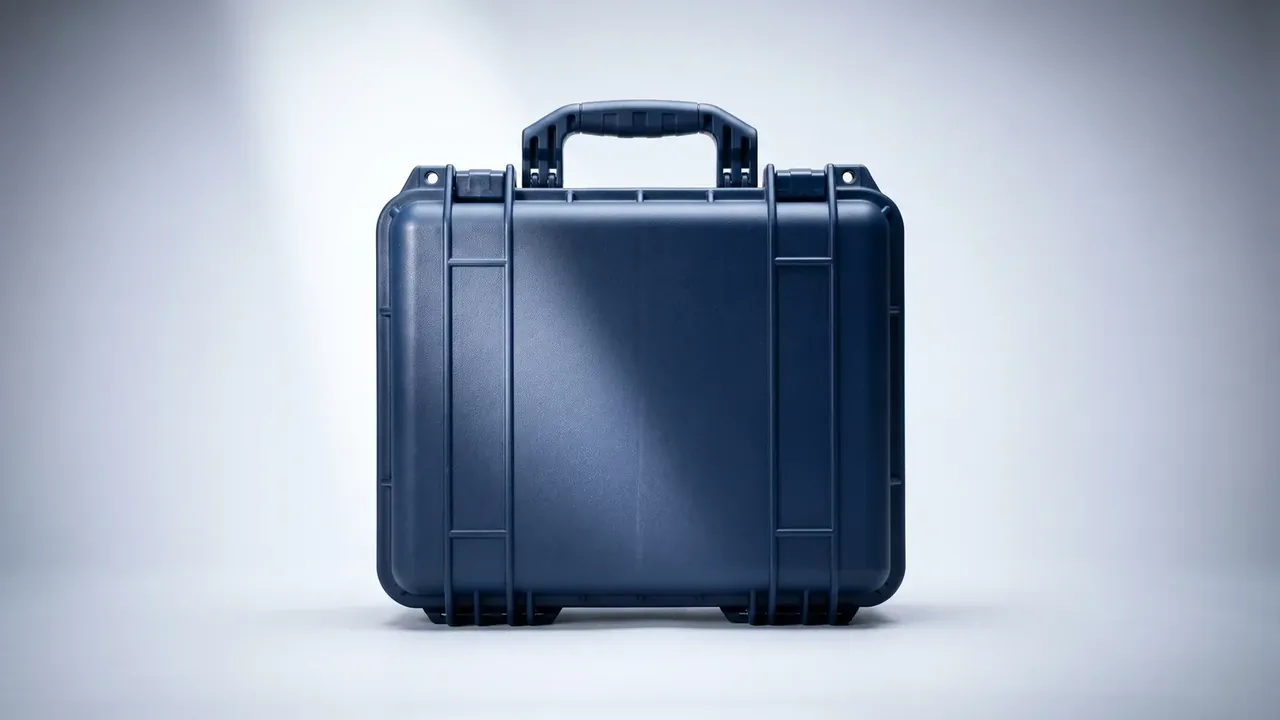
Quick answer: A First Aid Kit Case is four sets of parts — shell, liner, latches, handle — its cold-weather behaviour depends on where the ribs run, the hold the latches keep, and how tightly the liner meets the wall.
Table of contents
- What a First Aid Kit Case Is at Minus Twenty
- How the Shell Is Molded in One Cycle
- Wall Thickness Lives in the Mold
- Latches and Hinges Opened Every Day
- How Foam and Dividers Go In
- From Parts to a Finished Case
- FAQ
1. What a First Aid Kit Case Is at Minus Twenty
A box van on a winter long haul sits at -20°C for twelve hours, then opens the moment the tailgate drops. There the shell must not go brittle, the latch must open on the first pull, and the liner must not shrink supplies out of their slots.
Structurally it is two molded shells meeting at a lip, closed on latches, holding a liner cut to the supplies. What separates it from a plain storage box is the load path: weight runs from the handle into the wall, then into the base.
| Function | Parts | How it is made | Failure looks like |
|---|---|---|---|
| Carrying load | Shells, ribs | Single-shot molding | Lip gapes when lifted |
| Opening | Latches, hinge | Molded parts, steel pin | Lid drops shut |
| Dividing | Foam, dividers | Die-cut, assembled | Supplies shift in slot |
2. How the Shell Is Molded in One Cycle
Shells are usually copolymer polypropylene at a 230°C melt against an 80°C mold. Pellets dry four hours, then clamp, inject, pack and cool in one cycle.
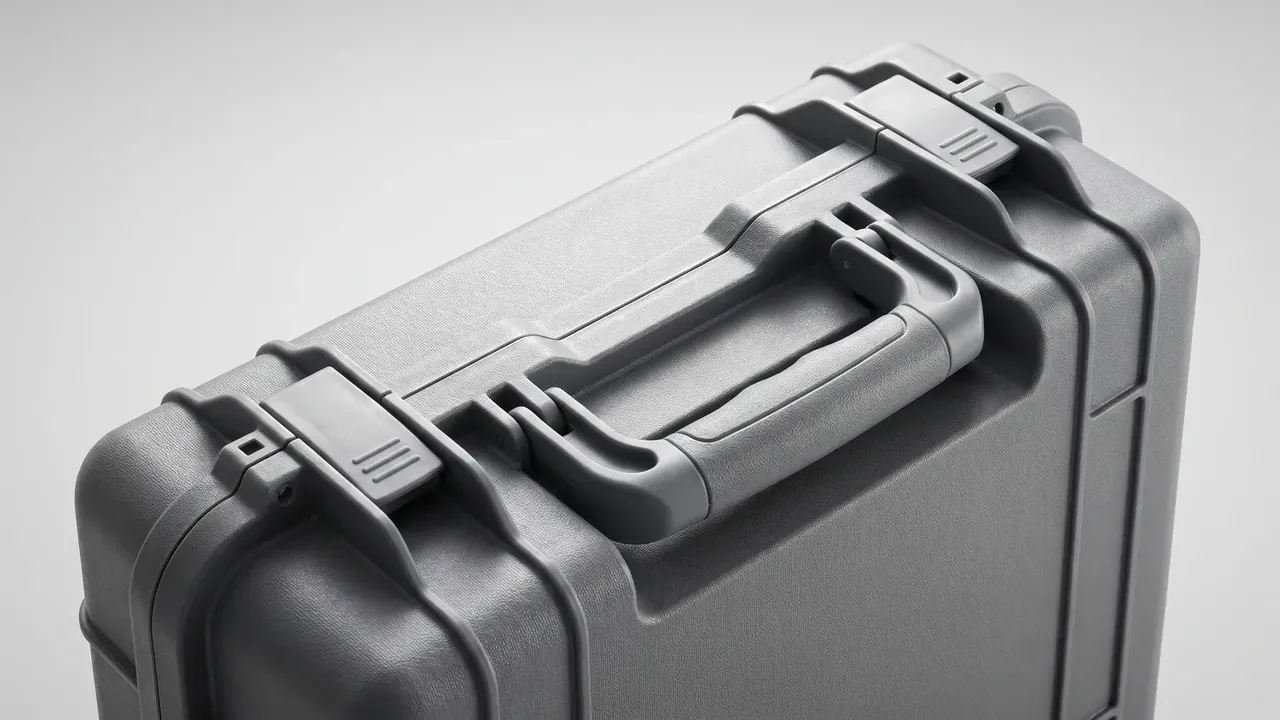
Packing holds 8 seconds and cooling runs 25, for a cycle near 45 seconds. Too little packing and the lip sinks where the latch clamps; too little cooling and the wall whitens as it ejects, leaving a stress point.
Three mold dimensions appear on no datasheet. Draft is 1.5 degrees: less scuffs the part, more thins the lip. Internal corners stay above 3mm radius, where cold shells split first. Ribs stop at 1.8mm against a 2.8mm wall, because a rib as thick as the wall sinks the outside, often onto the seal groove.
3. Wall Thickness Lives in the Mold
Datasheets list outer size, volume and weight. Thickness is blank or a range; the real distribution shows in a mold-flow report and a sectioned first shot.
| Location | Typical | Job | If off |
|---|---|---|---|
| Main wall | 2.6–3.0mm | Stacking, impact | Flexes on lift |
| Ribs | 1.6–2.0mm | Bending stiffness | Outside sinks |
| Lip flange | 3.2–3.8mm | Latch engagement | Latch cannot bite |
| Hinge boss | 4.0mm | Repeated opening | Pin hole elongates |
One check needs no instruments: close the empty case, grip both ends of the lip, press inward, release. The lip should spring back with no permanent set; a slow return or a white line means the flange is thin.
Stiffness is not linear either: 2.8mm to 3.2mm adds weight faster than it adds stiffness. More rib beats more wall.
4. Latches and Hinges Opened Every Day
Latches are acetal, working against a lid hook and a base pocket. Hold reaches 180N so road vibration cannot pop them, while release stays under 60N for a gloved hand.
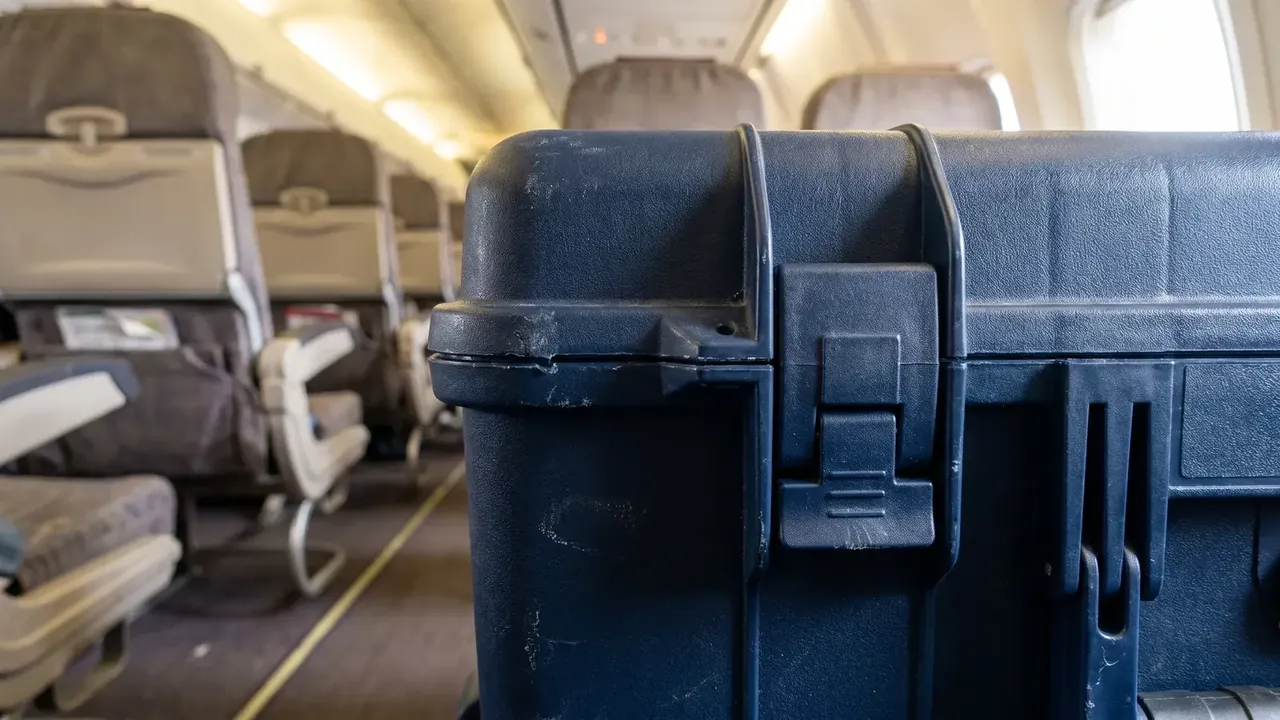
Thin-wall cases often mold a living hinge into the shell. At room temperature that band lasts thousands of cycles; at -20°C it cracks after roughly two hundred. A separate hinge — one lug per shell, a 4mm stainless pin peened at both ends — lasts an order of magnitude longer.
The weak point of a latch is the thin root, not the body. A root radius under 1mm breaks the first time the case lands on concrete from 1.2m.
5. How Foam and Dividers Go In
The liner is laid out from the supply list:
- Full-sheet EVA base at 30kg/m³, 20mm thick, absorbing drop energy
- 1.5mm polypropylene dividers in wall slots spaced 5mm apart
- A 10mm lid pad pressing supplies down in transit
- A clear lid pocket for the inventory and expiry sheet
Order matters. Base foam first, worked into the corners. Dividers next, standing 2mm below the lip. Lid pad last, its slots offset half a pitch from the dividers.
EVA at 30kg/m³ recovers over ninety percent of its height after two thousand compressions; the 20kg/m³ grade collapses within six months.
6. From Parts to a Finished Case
A case passes six stations: pin the hinge, fit latches, glue base foam, seat dividers, mount the handle, print the marking.
Screws go to 1.2N·m on a torque-recording driver: over-torque cracks the wall boss, under-torque lets the hinge work loose. Markings run a 60°C tunnel for 30 minutes, or the ink transfers to the case above.
Conclusion
A First Aid Kit Case looks like a hard box with a handle, yet the decisions that matter sit out of sight: draft on the mold, the ratio of rib to wall, the radius at the latch root. Get them right and the lid still opens on the first pull at -20°C; get them wrong and a perfect datasheet will not save the shipment. The fastest test of a supplier is whether they put wall distribution and latch cycle life in writing.
This article discusses only the container (case body) side of specifications and design intent, and does not cover any handling, loading or use of the contents.
Related Reading
- First Aid Kit Case dimensions: layers, sealing and marking
- First Aid Kit Case vs medical case: layout and order of use
- What a tool kit chest is: one delivery unit per tool set
- What a tool box is: from carry case to cabinet
- What a gear case is and how it differs from a tool box
Related Products
- 8 Series — Gun Cases; Military Equipment Cases; Camera Equipment Cases; Drone Cases; Watch Cases; Knife Cases; First Aid Cases; Electronics Equipment Cases
- WL8-2812 PP Gun Case — model WL8-2812
- All protective cases and toolboxes: 7 series, 158 models