

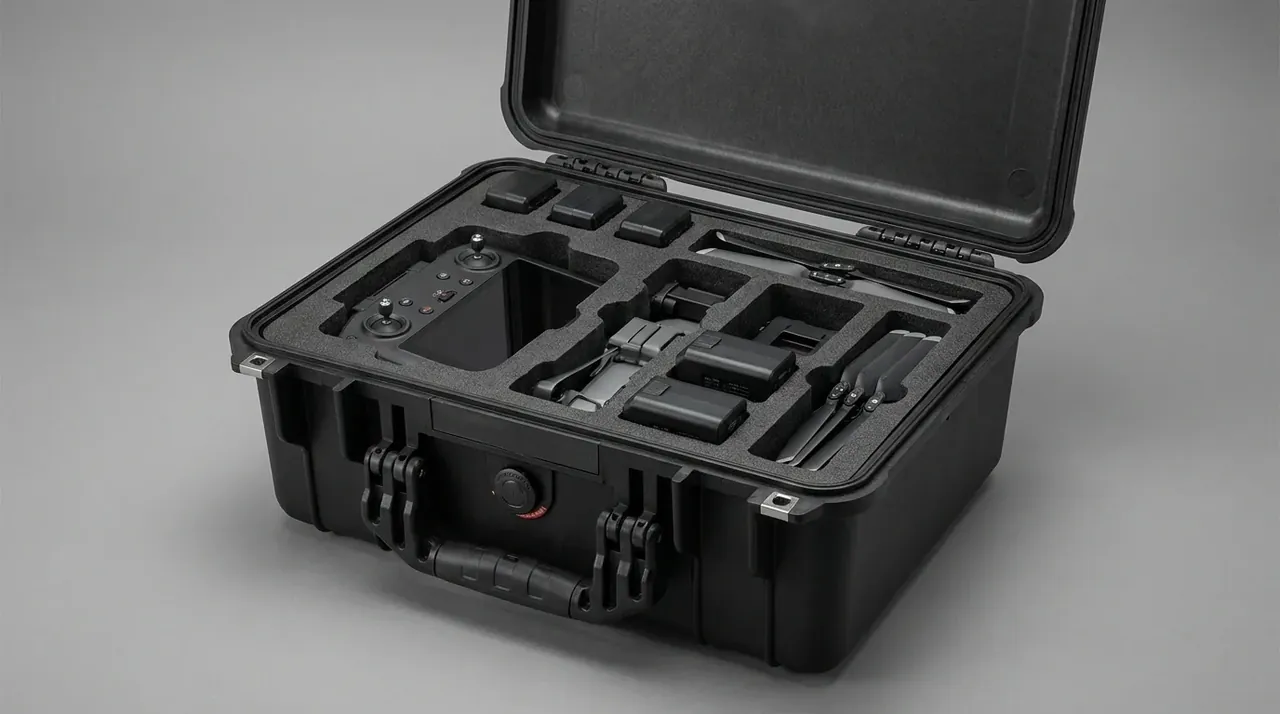
Quick answer: A case supplier audit covers five spots: resin store, moulding floor, assembly line, test room and finished bay, scored out of 100 with 80 to pass.
Table of contents
- Five spots against a 100-point sheet
- Resin store: grade, batch and retained samples
- Moulding floor: settings and first-off
- Assembly line: latch torque and gasket
- Test room and finished goods bay
- FAQ
1. Five spots against a 100-point sheet
Six presses are running and robots are picking parts, so the plant looks clean at nine in the morning. Then the resin store: the third sack says PP copolymer while the dosing sheet says homopolymer, and the batch number is missing from the goods-in ledger. A case supplier audit starts from that mismatch, not from the floor.
The route runs unloading dock, resin store, moulding floor, assembly line, test room, finished bay, about 90 minutes end to end. At each spot one object must reach your hand: a sack label, a setting screen, a torque wrench, a calibration certificate, a pallet dunnage.
| Spot | Weight | Object to hold | Fail line |
|---|---|---|---|
| Resin store | 25 | sack label, regrind bag, retained samples | grade differs from BOM |
| Moulding floor | 20 | setting screen, first-off log, setting card | settings unlocked, no first-off |
| Assembly line | 20 | torque wrench, gasket groove | no torque check, gasket misseated |
| Test room | 20 | calibration certificate, leak rig, retains | calibration older than 12 months |
| Finished bay | 15 | pallet, dunnage, stack height | floor stacking, above 5 high |
Weights follow risk. The resin store takes 25 because a wrong grade makes the other four scores meaningless. Moulding and assembly take 20 each, since settings and torque decide crush strength and latch life. The test room takes 20, because a broken record trail breaks traceability. The finished bay takes 15, covering the condition of the case on arrival.
Scoring is out of 100 in 5-point steps, no decimals on site. Before leaving, the numbers go on paper and both sides sign; that sheet is the baseline for the re-audit 30 days later.
2. Resin store: grade, batch and retained samples
The resin store answers three questions: what resin is this, which batch, and how much regrind is in it.
Pull three sacks, not one: the innermost on the rack, the outermost, and the one being hung on the dryer. Labels must agree, and each carries grade, supplier batch, arrival date and regrind ratio; a missing field costs 2 points.
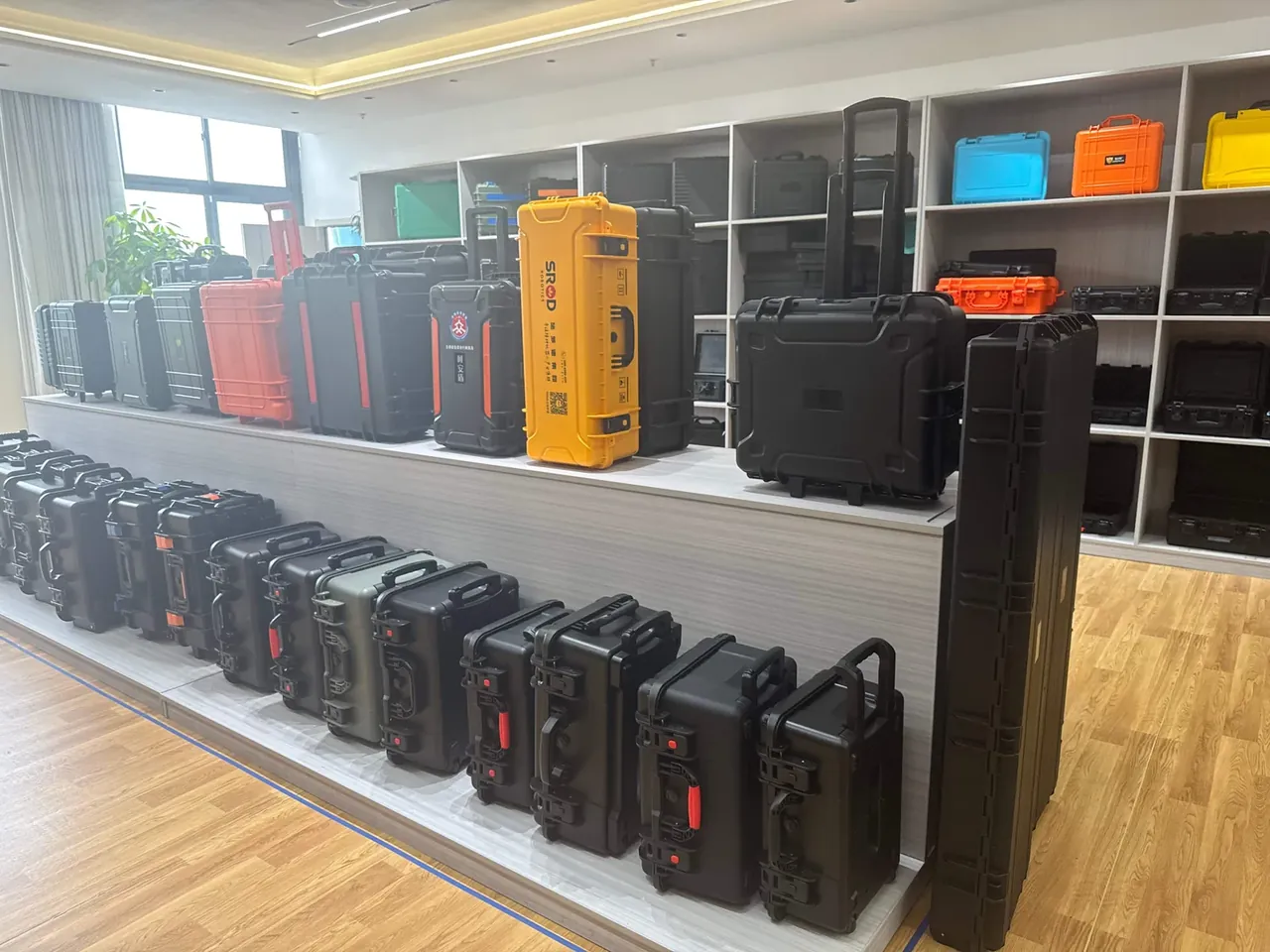
The grade must match the BOM character for character. A sack marked PP copolymer holding homopolymer halves low-temperature impact, and a drop at minus 20 ℃ shows it.
Regrind is where the store hides things. A hand-written 20% on the sack has to appear as 20% on the dosing sheet; a mismatch counts as adulteration. Latch fragments in the flake mean a torn screen and a blocked nozzle.
The retained sample cabinet is the last check: first-off samples, the tail piece of the previous batch and the approved colour chip must all be retrievable within 5 minutes.
3. Moulding floor: settings and first-off
Two things matter on the moulding floor: the settings on the screen and the first-off sheet on the desk. When they agree, the spot clears 16 of 20 without argument.
Stand at a running press and read the screen before the part: melt 235 ℃, mould 65 ℃, packing 5 s, cooling 28 s, checked against the setting card.
A first-off is the full inspection after a mould, material or shift change, run as 3 consecutive parts, all 3 passing before the batch starts. Count the last 10 mould changes against 10 first-off sheets; each missing sheet costs 5 points.
Machine and mould numbers must line up: the steel stamp on the mould, the number on the setting card and the number on the first-off sheet prove the tool ran in that press. When they differ, someone borrowed a sheet from another machine, which is why a case supplier audit walks the floor again during a shift change.
4. Assembly line: latch torque and gasket
At the assembly line a case supplier audit watches two motions: the turn that drives a latch screw and the press that seats a gasket. These set the repair rate over the first three months.
Latch screws run on a torque wrench set to 8 N·m with ±1 N·m tolerance, zeroed once per shift, with its calibration sticker on the tool trolley; an expired sticker stops the station.
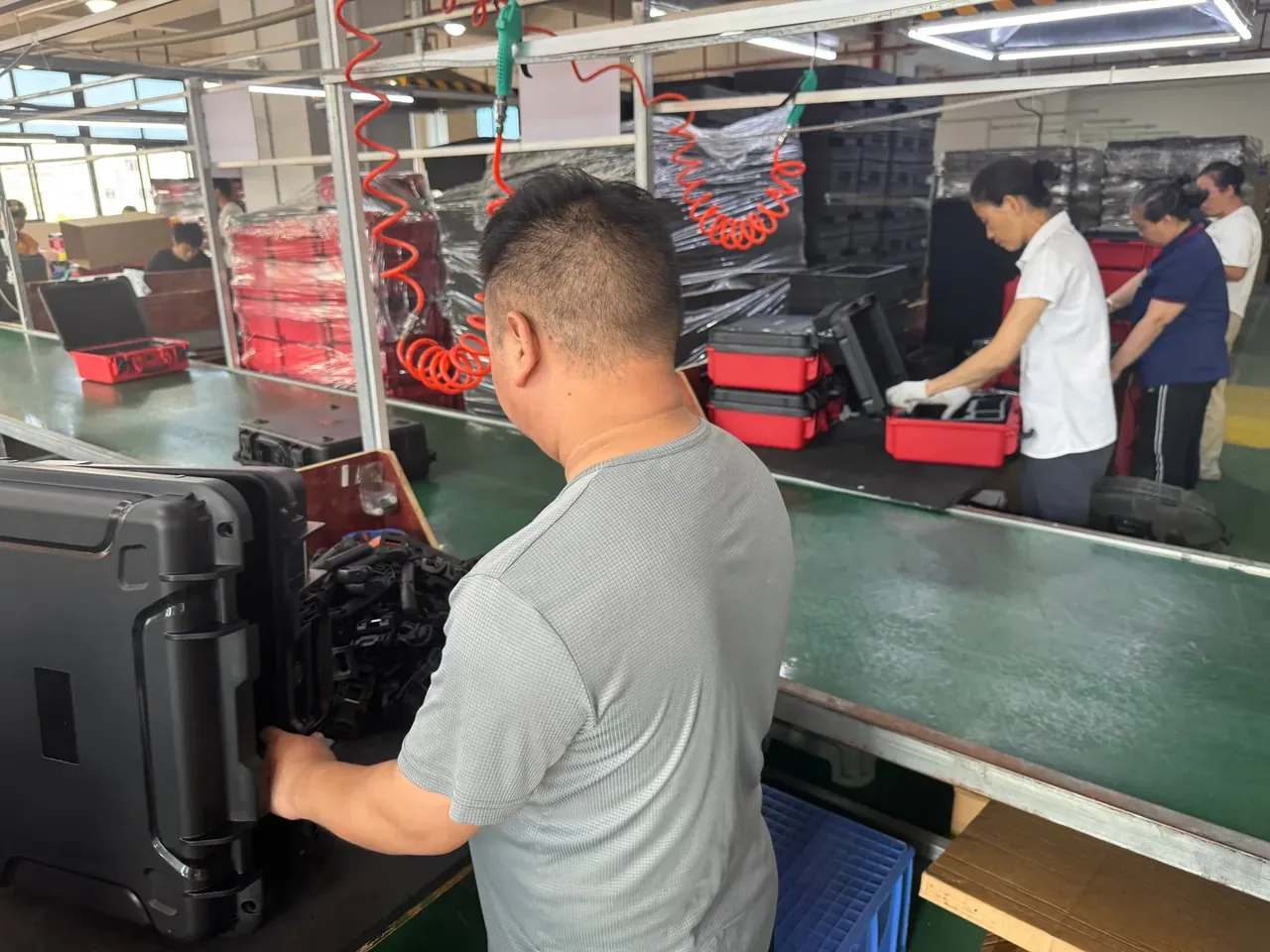
Gasket seating is about groove and joint. The cord is pressed in as one length, never stretched, because 5% stretch pulls a gap open at a corner within a week. The joint belongs at the middle of a long side, where the two ends do not fight each other. Afterwards a finger along the groove should find the cord about 1 mm proud of the lip.
5. Test room and finished goods bay
The test room is checked certificate first, instrument second: a 0.02 mm calliper, a 0.01 mm micrometer and a 1.6 class gauge on the leak rig all need calibration inside 12 months, with certificate numbers matching instrument numbers.
Air tightness is the core case property, so watch one full test: 15 kPa held for 90 s with no more than 0.3 kPa drop. The rig needs today's record, and the case number on it must tie back to a batch in the finished bay.
The finished bay is judged on clearance from the floor, stack height and aisle width. Pallets sit 100 mm off the floor, stacks stay at 5 high, and the main aisle stays 1.2 m clear.
Findings have to be classified, or the corrective action has no shape. A critical item fails the audit on first occurrence; major and minor items are counted against thresholds.
| Class | Threshold | Correction window | Re-audit |
|---|---|---|---|
| Critical | 1 item | 30 days | all five spots on site |
| Major | more than 3 items | 15 days | problem spots on site |
| Minor | more than 8 items | 7 days | photos and records |
No trial order belongs inside the correction window: critical items usually touch a mould or a resin source, and stability still needs one more batch.
Conclusion
A case supplier audit earns its keep through evidence, not the score, because the re-audit needs something to compare against. A plant running 800 cases a day typically lands at 77: resin store 18 of 25 on regrind ratio and a missing colour chip, moulding 16 of 20 on unlocked settings, assembly 17 of 20 on an expired torque wrench, test room 14 of 20 on no leak data, finished bay 12 of 15 on floor stacking. That is 3 points under the line, so the plant fails and gets 30 days. The fixes are concrete: write 10 first-off sheets, lock 4 presses, replace 2 torque wrenches, add dunnage under 6 pallets.
| Spot | Maximum | Score | Points lost |
|---|---|---|---|
| Resin store | 25 | 18 | regrind ratio unmatched, colour chip missing |
| Moulding floor | 20 | 16 | settings unlocked on 2 presses |
| Assembly line | 20 | 17 | 1 torque wrench out of calibration |
| Test room | 20 | 14 | no leak record for the day |
| Finished bay | 15 | 12 | 6 pallets without dunnage, stack above 5 |
| Total | 100 | 77 | below 80, correct in 30 days |
This article discusses container-side specifications and design implications only, and does not cover any handling, loading or use of the contents.
Related Reading
- Eight checkpoints for a case supplier audit
- What to prepare before a factory tour
- How to walk and document a case factory audit
- Moulding steps and control points for cases
Related Products
- 8 Series — Gun Cases; Military Equipment Cases; Camera Equipment Cases; Drone Cases; Watch Cases; Knife Cases; First Aid Cases; Electronics Equipment Cases
- WL8-2812 PP Gun Case — model WL8-2812
- All protective cases and toolboxes: 7 series, 158 models