

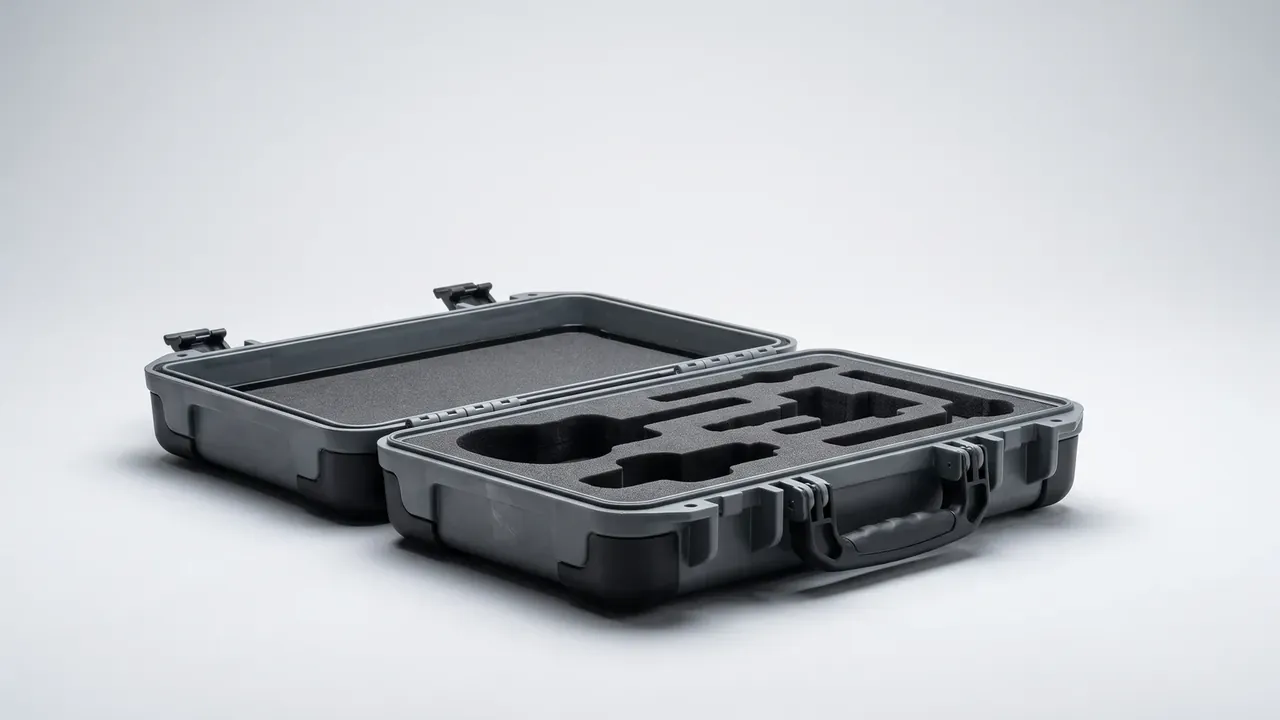
Quick answer: The money in foam insert installation sits in rework hours, not foam price: 27 minutes and 18 CNY per rework, so lifting first-pass yield from 94% to 98.5% on 500 units saves 405 CNY, more than dropping a material grade.
Table of contents
- What a Rework Actually Costs
- Die-Cut PU versus Moulded ETPU: Where the Unit Cost Sits
- When Foam Insert Installation Is the Wrong Choice
- Against EVA Milling, Air Cushions and Moulded Pulp
- Volume Break Points: Fifty Units and Five Hundred Units
- Three Moves That Cut the Unit Cost
- FAQ
1. What a Rework Actually Costs
Rework is not peeling foam off and pressing it back. Done properly it takes 27 minutes: four to strip, nine to clean cured adhesive, eight to cut, six to press and re-inspect.
That is 18 CNY per unit, before downtime.
| Cost item | Per unit | Note |
|---|---|---|
| Strip and clean | 9 CNY | 13 minutes, incl. scraping |
| Re-cut foam | 4 CNY | 8 minutes, incl. nesting loss |
| Adhesive and solvent | 2 CNY | Based on 0.2 kg of glue |
At volume: 500 units at six percent rework means thirty reworks and 540 CNY, while pulling that to 1.5% saves 405 CNY. Cutting density from 45 to 38 kg/m³ saves less and costs more in rebound.
2. Die-Cut PU versus Moulded ETPU: Where the Unit Cost Sits
One 300 × 200 × 60 mm insert, two sets of books. Die-cutting bills by area: 14 CNY of foam, 8 CNY of machining, 22 CNY per unit, no tooling. Moulding inverts it: 16 CNY per unit plus 6,800 CNY of tooling.
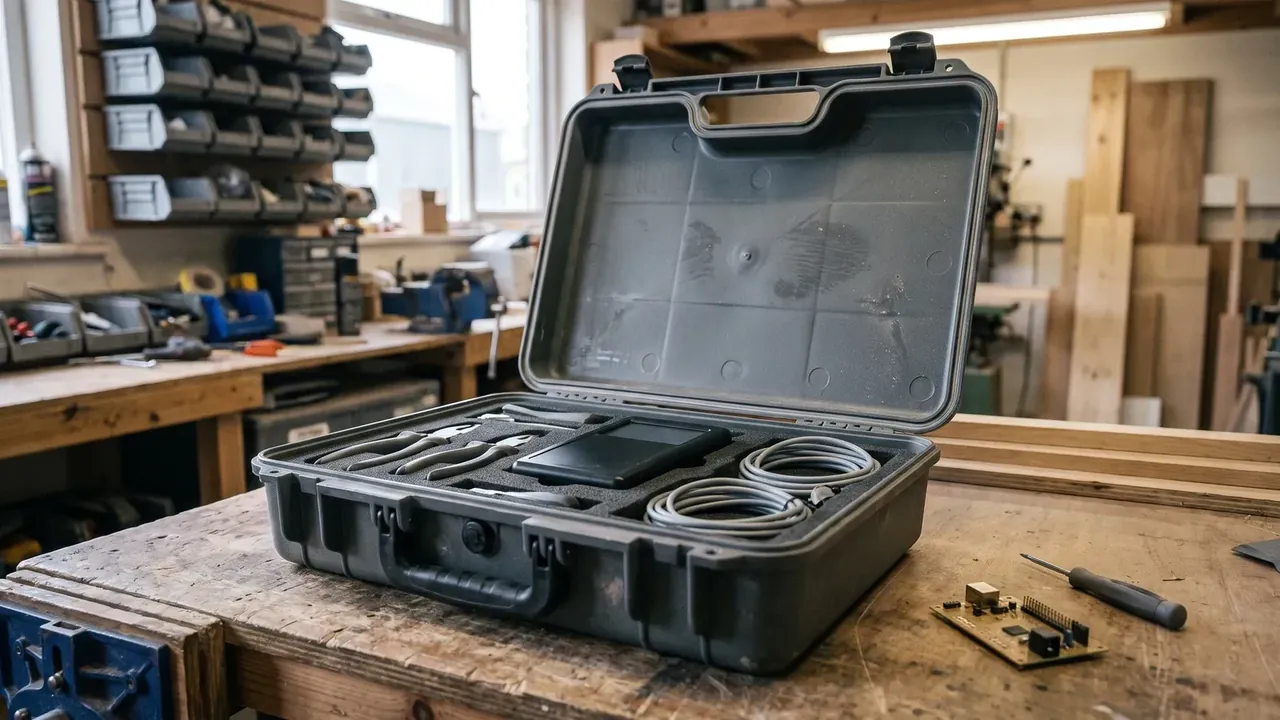
At 500 units the 6,800 CNY adds 13.6 CNY, so the first order lands at 29.6 CNY and loses. At 1,000 units it adds 6.8 CNY, reaching 22.8 CNY and level. Break-even sits near 890 units.
Moulding wins on consistency: one mould holds clearance within ±0.3 mm, while die-cutting drifts 0.5 mm between batches.
3. When Foam Insert Installation Is the Wrong Choice
Some spending cannot be saved. Force foam into the wrong application and you patch it for the rest of the product's life:
- Above 12 kg per item: foam cannot hold it and the case deforms.
- Under 50 units a year: tooling never amortises; buy stock foam instead.
- Over 30 open-close cycles a day: the mouth furs in three months.
- Drainage needed: foam soaks liquid, doubles in weight and loses rebound.
- Sea freight beyond 45 days: humidity swells foam about one percent.
- Open-lid inspection: a full sheet hides labels and ports.
One test decides it: how often the case is opened and moved. Past a certain count, foam's marginal cost overtakes its benefit.
4. Against EVA Milling, Air Cushions and Moulded Pulp
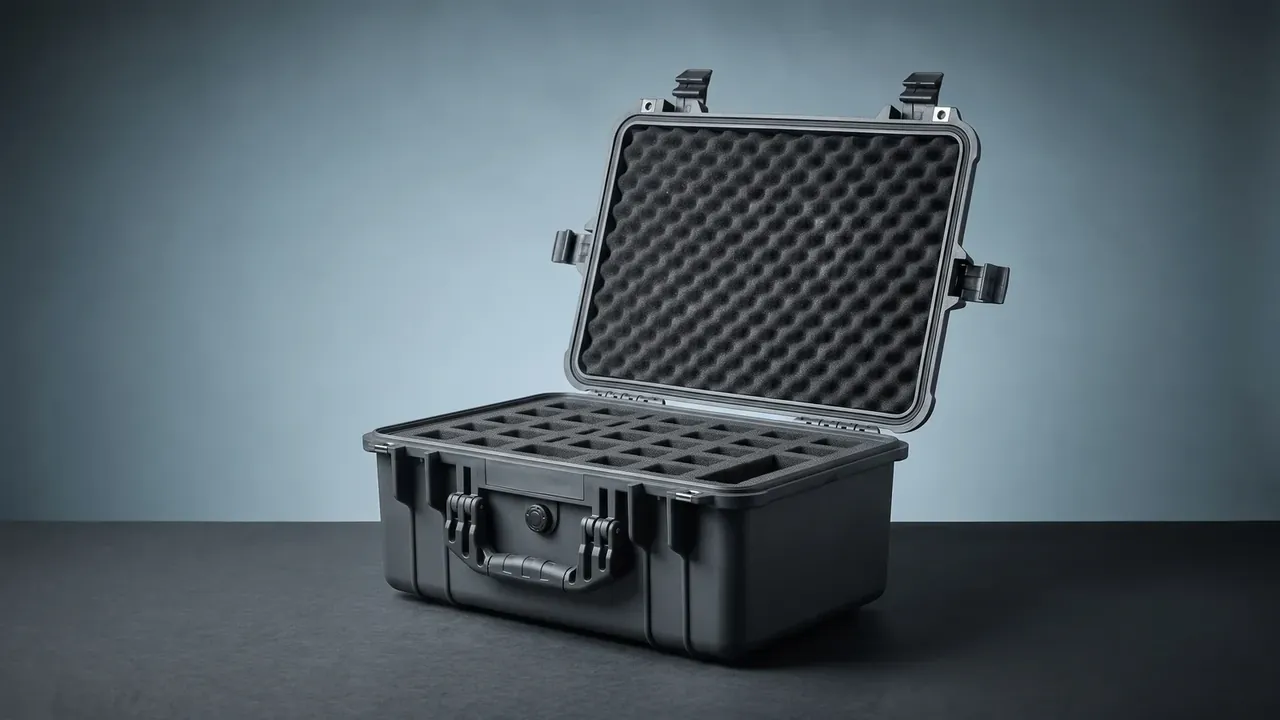
Five routes differ threefold in price, and each difference buys something.
| Route | Unit cost | Volume fit | Main penalty |
|---|---|---|---|
| Die-cut PU | 22 CNY | 50–800 units | Edges fur |
| Moulded ETPU | 16 CNY | 900+ units | 6,800 CNY tooling |
| Milled EVA | 34 CNY | 50–300 units | Heavier, slower path |
| Air cushions | 48 CNY | Any | Needs leak testing |
| Moulded pulp | 12 CNY | 3,000+ units | Coarse tolerance |
Milled EVA feels rigid and wears well but adds weight and machining time. Air cushions cost most and still win for demo equipment, since they deflate and repeat. Pulp is cheapest and holds the least precision.
So "which is cheaper" follows "what does one failure cost": above 20,000 CNY per case, the gap between EVA and multilayer foam is noise.
5. Volume Break Points: Fifty Units and Five Hundred Units
Volume picks the process, and the process sets the curve.
Under 50 units, hand cutting plus tape is cheapest: high labour, zero tooling. Between 50 and 500, die-cutting with a fixture is the sweet spot at about 22 CNY, and a dimension change costs a re-cut. Past 500, moulding wins, provided the drawing has stopped moving. The real break point is not quantity but whether the geometry is finished.
Lead time sits in the same sum: samples in three days, tool changes five, production twelve, so a deadline that cannot absorb a mould puts die-cutting back in front.
6. Three Moves That Cut the Unit Cost
Nesting comes first: laying cavities out on a 2440 × 1220 mm sheet lifts utilisation from 62% to 78% and takes 3 CNY off the foam per unit.
Fixtures come second. A 200 CNY locating fixture cuts positioning from 25 seconds to eight, returning 4.7 hours of labour across a thousand units.
Inspection moves forward third. Ten minutes on first-article approval beats 27 minutes of rework, and a photographed first article shows whether the fault was tool path or adhesive. None of the three changes the product, yet that is where most of the cost in foam insert installation lives.
Conclusion
Eighty percent of the cost in foam insert installation never appears on a foam quotation; it sits in rework minutes, nesting yield and tooling amortisation. Pushing rework from six percent to 1.5% beats cheaper material, and knowing the break-even beats trusting a discount promise. Run those three numbers and foam insert installation becomes a decision, not a guess.
This article discusses only the container (case body) side of specifications and design intent, and does not cover any handling, loading or use of the contents.
Related Reading
- How the three steps of foam insert installation are ordered
- Foam insert layouts for different transport scenarios
- Cost and accuracy across five foam cutting methods
- From drawing to production for custom foam inserts
- Material cost comparison for magazine boxes
Related Products
- 8 Series — Gun Cases; Military Equipment Cases; Camera Equipment Cases; Drone Cases; Watch Cases; Knife Cases; First Aid Cases; Electronics Equipment Cases
- WL8-2812 PP Gun Case — model WL8-2812
- All protective cases and toolboxes: 7 series, 158 models