

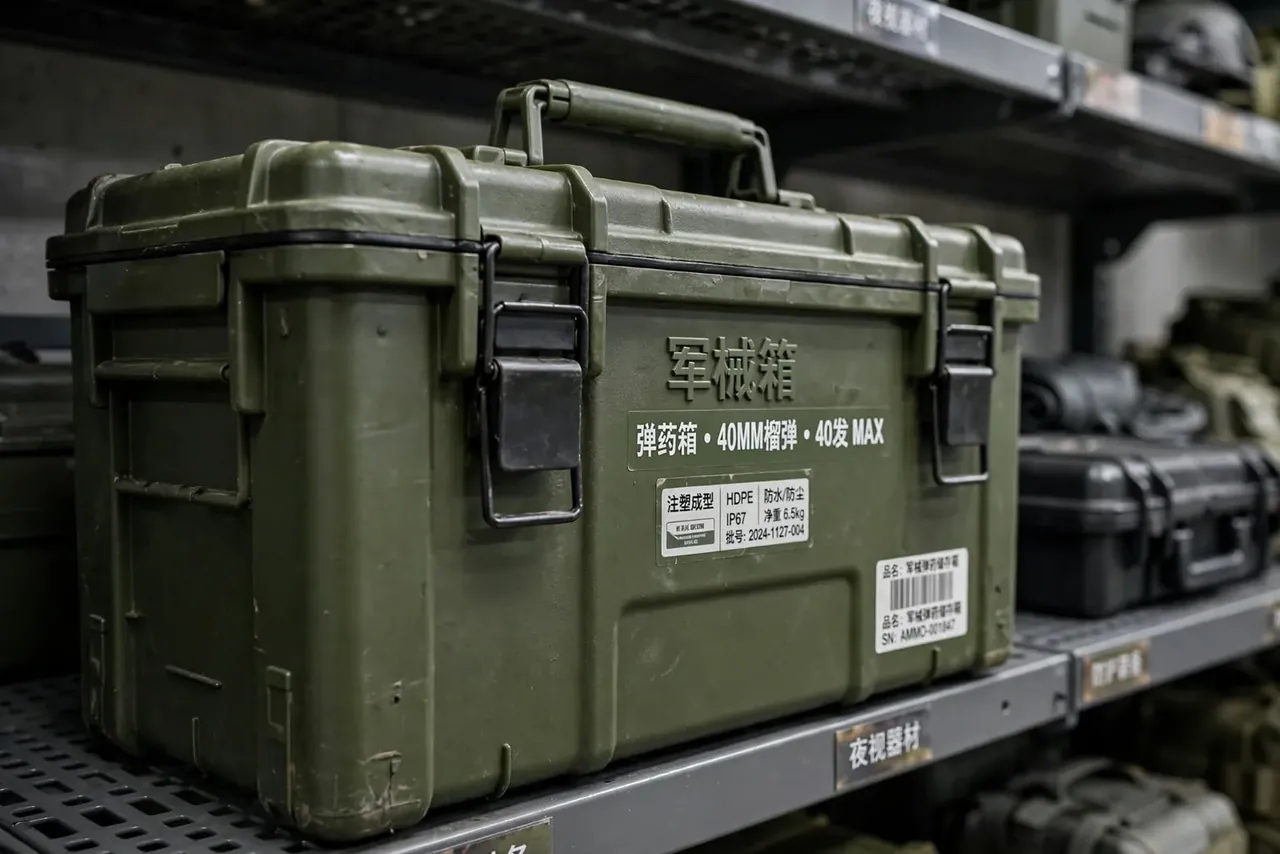
Quick answer: Same case, four documents for GJB against three for MIL, yet MIL drops it 26 times against 10, so paperwork is the cheap part here.
Table of contents
- Where the two systems line up
- Temperature, drop and vibration
- Documents, lead time and traceability
- What changes on the same case
- Three routes and where the price goes
- FAQ
1. Where the two systems line up
Send one case to two labs and paperwork runs opposite to testing. GJB asks for 4 documents and drops the case 10 times; MIL asks for 3 and drops it 26 times.
The standards are not translations of each other. GJB 150A uses 150.3A for high temperature, 150.4A for low, 150.16A for vibration and 150.18A for drop; MIL-STD-810H uses 501.7, 502.7, 514.8 and 516.8. Method numbers pair up, but levels, counts and dwell times come from the contract annex, not the standard text.
| Test | GJB 150A | MIL-STD-810H | Difference |
|---|---|---|---|
| Heat | 150.3A | 501.7 | 70 vs 71 ℃ |
| Cold | 150.4A | 502.7 | −55 vs −40 ℃ |
| Vibration | 150.16A | 514.8 | 3 axes |
| Drop | 150.18A | 516.8 | 10 vs 26 |
| Humidity | 150.9A | 507.6 | cycles |
What does not pair up is tailoring. 810H puts the life-cycle profile in the body and demands tailoring before testing. GJB 150A carries tailoring clauses too, yet domestic projects far more often quote a method number and skip the profile work.
Tailoring produces a plan, not a compliance statement. It fixes sample count, preconditioning, dwell, failure criteria and retest rules. On the same GJB 150A, a tailored plan runs 18 pages and an untailored one 7, an 11,000 price gap with no structural change.
2. Temperature, drop and vibration
The cold end separates furthest: GJB runs −55–70 ℃, MIL runs −40–71 ℃. That is 15 ℃ at the cold end and 1 ℃ at the hot end. The 15 ℃ lands on material, where polypropylene sits near its brittle range and a falling-ball impact turns from ductile to brittle.
Drop differs in count. GJB 150.18A runs 10 drops across faces, edges and corners; MIL method 516.8 runs 26, repeating each and covering packed and unpacked states. It is not 10 doubled: one sample must finish all 26 and still function, with no substitution.
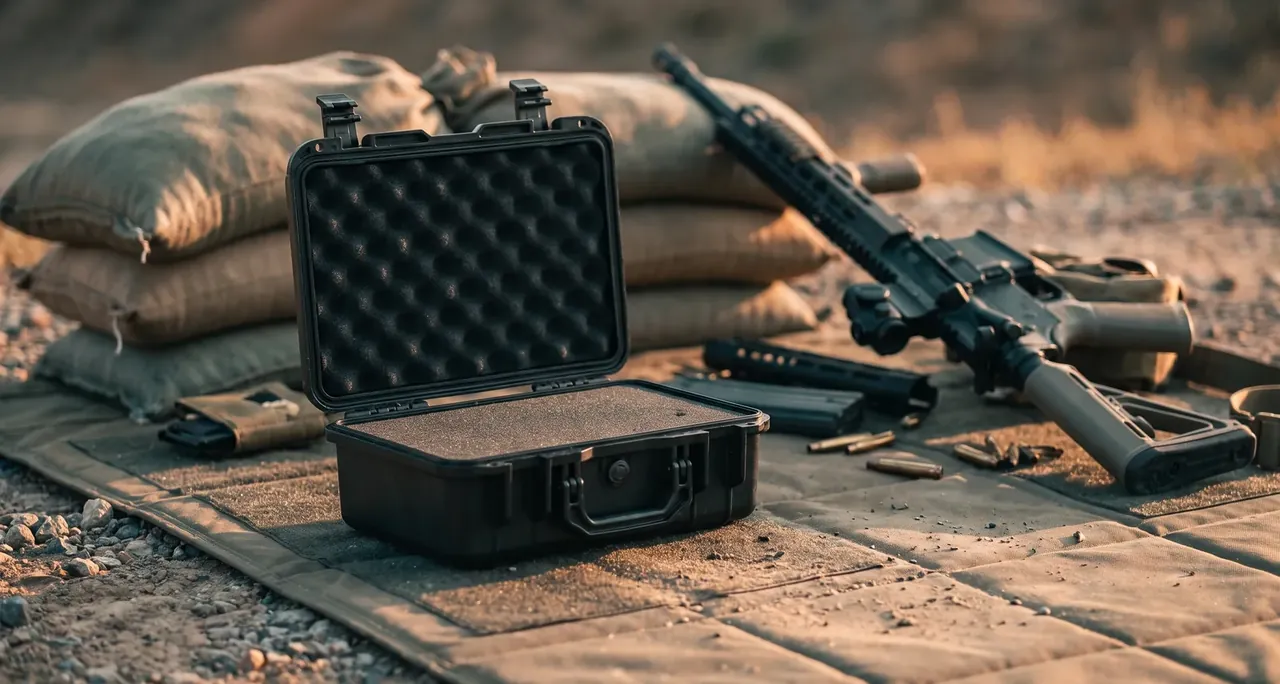
Vibration is 3 axes in both, with the difference in spectrum and dwell per axis, both from the contract annex. The standard body gives methods and tolerances, not levels.
Both systems share one acceptance rule: function check plus an airtight retest. After 26 drops, a case whose decay at 0.3 kPa loosens from ≤0.05 kPa to 0.09 kPa fails even if it still opens and closes. At the hot end the 1 ℃ barely matters, since both 70 ℃ and 71 ℃ sit inside the long-term service range of PP; dwell separates them, at 4 h under GJB and 6 h plus humidity under MIL.
3. Documents, lead time and traceability
The GJB four are an inspection report, a material certificate, a certificate of conformity and a batch traceability sheet. The MIL three are an inspection report, a certificate of conformity and a packing list, with the material data folded into the certificate as an annex.
| Item | GJB | MIL |
|---|---|---|
| Documents | 4 | 3 |
| Test lead time | 3 weeks | 5 weeks |
| Batch trace | batch, date, manufacturer code | batch, contract, part number |
| Marking | characters ≥5 mm on a non-load face | durable mark with part number |
The 2-week gap comes mostly from 26 drops and the longer dwell. Same lab, same benches: 3 weeks for GJB, 5 for MIL, with a week and a half queued at the drop bench.
Traceability moves too. GJB traces to batch and manufacturer, MIL to part number and contract, so one batch split across two contracts must be individually traceable. That pays off during a return or an investigation, and the rest of the time it is one more line on a label.
4. What changes on the same case
Four structural items move. Corners first: with 26 drops and no cracking allowed, ribs go from 4 to 6 and corner guards from 2.5 mm to 3.2 mm. Then the gasket, where −55 ℃ grows compression set, so hardness drops from 60 Shore A to 50.
Marking comes third. The side needs an 80 mm × 50 mm flat free of ribs so three lines at ≥5 mm fit. The base is fourth, since 26 drops include repeated base hits and rib pitch tightens from 60 mm to 45 mm. Durability changes as well, legible after 48 h of damp heat, which means two-part ink and 1.2 more per case.
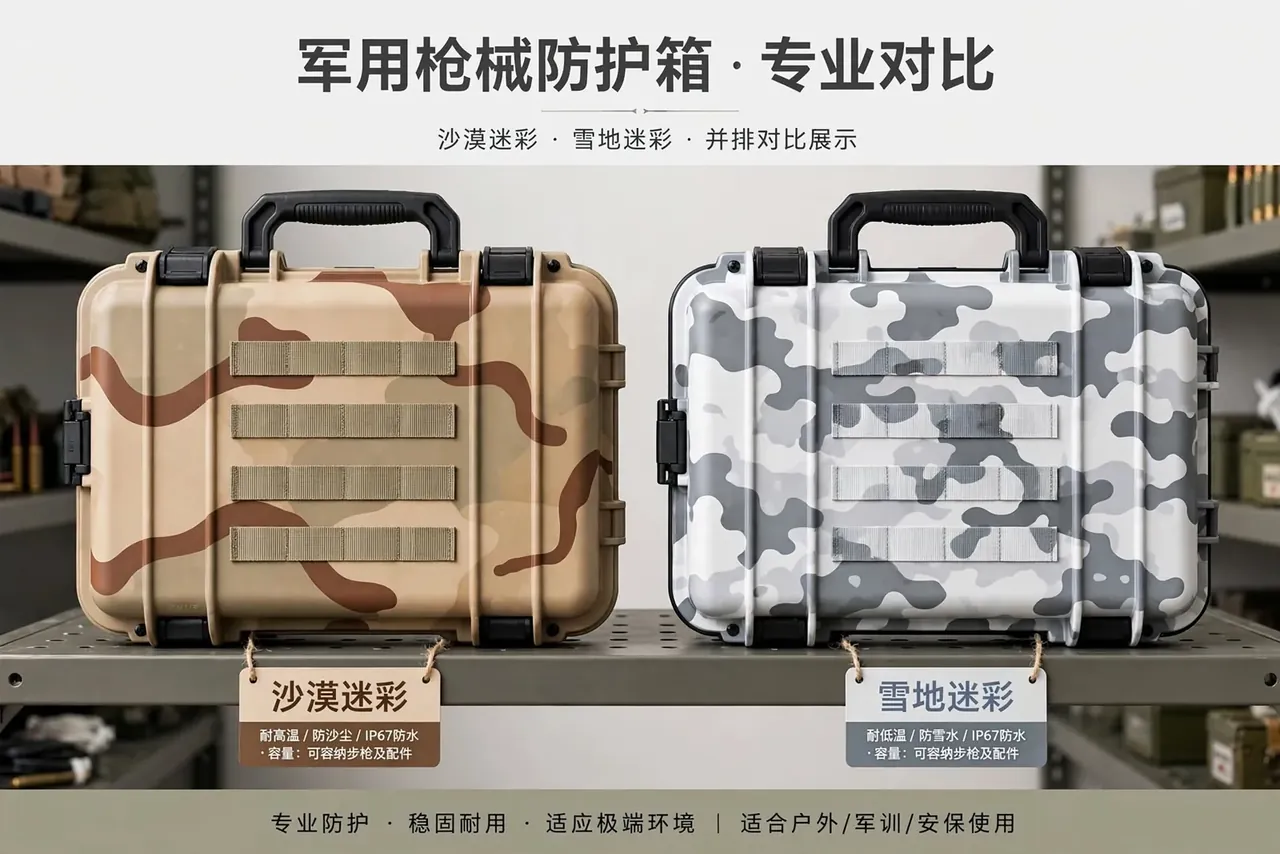
One pass criterion most drawings omit: after 26 drops, no through-crack at the corners, only stress whitening within 0.5 mm.
All four changes add 18 per case. What the 18 buys is one sample surviving 26 drops instead of a new sample every 10.
5. Three routes and where the price goes
A domestic project has three legitimate routes to MIL. The first quotes MIL-STD-810H method numbers and a version in the contract annex. The second keeps GJB 150A as the skeleton and adds the MIL equivalent only where GJB has no coverage. The third follows the standard a foreign or aid project nominates and records the version and tailoring result.
Test volume differs by route, and price follows. The same case costs about 18,000 in test fees under GJB and about 46,000 under MIL with 26 drops and longer dwell, a 28,000 gap, or 56 each across 500 pieces.
The second route is the one most often written badly. When both numbers appear, the plan must say which governs each item, or the lab runs the stricter of the two. A contract line saying reference MIL-STD-810H can turn into 26 drops plus full three-axis vibration, doubling the bill.
So the difference lands in three lines on a quote: 18 for structure, 56 for test amortisation and 6 for documents, 80 per case. Test fees are 70% of it and structure 22%, leaving under 4 to squeeze if a buyer only pushes on moulding. Order both reports and the drop sequences cannot be shared, since a 10-drop and a 26-drop sample end in different states.
Conclusion
GJB vs MIL packaging is best read as a line-by-line table rather than a verdict on which is stricter. Temperature and drop are hard differences: −55 ℃ against −40 ℃, 10 drops against 26. Documents and lead time are soft: 4 against 3, 3 weeks against 5. Soft items can be negotiated; hard ones change structure or test volume, and on a quote those are 6 and 74 respectively.
| Item | GJB 150A | MIL-STD-810H | Gap | Lands on |
|---|---|---|---|---|
| Cold limit | −55 ℃ | −40 ℃ | 15 ℃ | material, gasket |
| Hot limit | 70 ℃ | 71 ℃ | 1 ℃ | negligible |
| Drops | 10 | 26 | 2.6× | corners, test fee |
| Vibration axes | 3 | 3 | 0 | spectrum |
| Documents | 4 | 3 | 1 | paperwork |
| Lead time | 3 weeks | 5 weeks | 2 weeks | schedule |
Choose with three tests in order: a military or defence-trade delivery takes GJB; a contract or foreign buyer naming a MIL version takes MIL with the version recorded; with neither specified, follow the environment profile, and a spread beyond 60 ℃ or more than 10 drop events goes straight to the 26-drop sequence.
This article discusses container-side specifications and design implications only, and does not cover any handling, loading or use of the contents.
Related Reading
- GJB military standard case requirements
- Inspection items for military supply cases
- The military supply case standards family
- Comparing military supply case specifications
- How an AQL 2.5 sampling plan works
Related Products
- 8 Series — Gun Cases; Military Equipment Cases; Camera Equipment Cases; Drone Cases; Watch Cases; Knife Cases; First Aid Cases; Electronics Equipment Cases
- WL8-2812 PP Gun Case — model WL8-2812
- All protective cases and toolboxes: 7 series, 158 models