

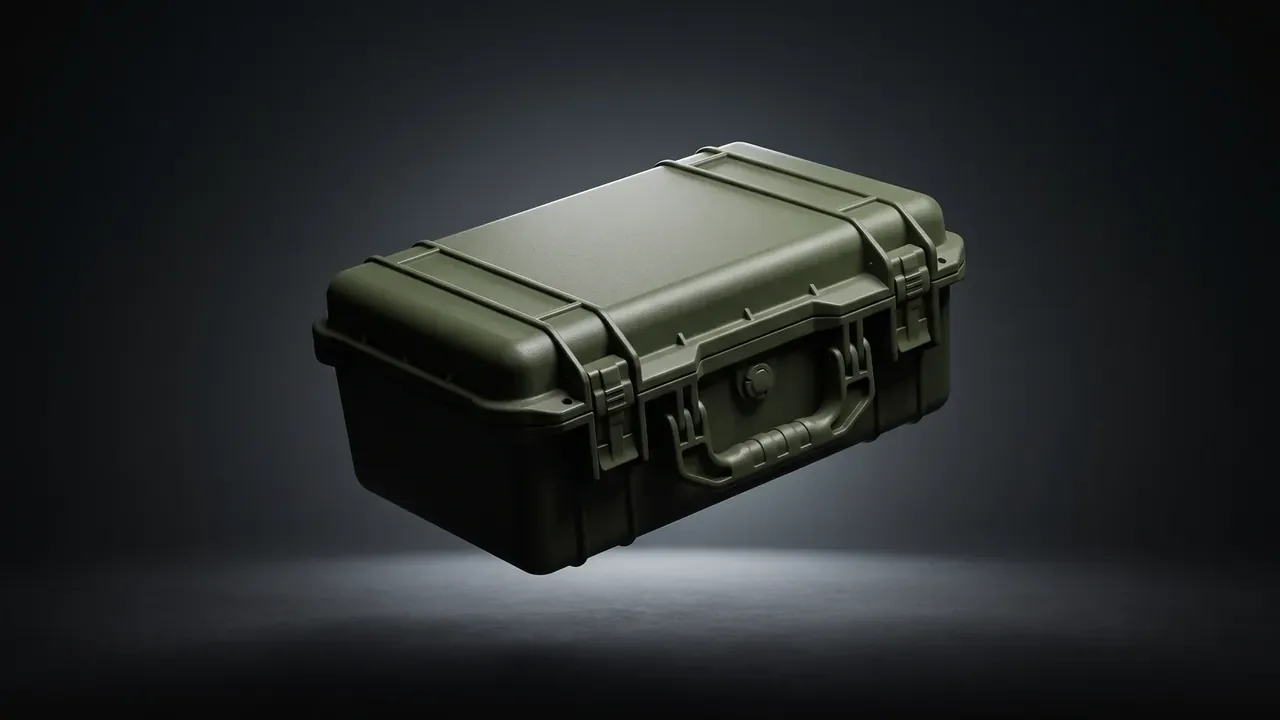
Quick answer: On coastal routes, gun case production units need three inspection bands: seals and latches at 30 days, valve diaphragms and foam at 90, shell and pins at 180. Thresholds are numbers, so a part past the line is replaced. Field work covers cleaning and swaps; cracks go back to the plant.
Table of contents
- Inspection intervals from salt-spray hours and cabin temperature
- Seven steps before the lid comes off
- Two lines for cleaner strength and water temperature
- Replacement thresholds for seals, latches and valves
- Spares kit ratios and storage posture
- Where field service stops and depot overhaul starts
- FAQ
1. Inspection intervals from salt-spray hours and cabin temperature
Take one duty cycle: a depot 12 km from the quay, one pickup run a day, 38 °C in the cabin, 85% humidity, 40 km of broken seal road. On that route the factory baseline of gun case production erodes fast; a 96 hour salt-spray pass proves only where the coating started. Three bands follow wet-dry cycles and loading counts: wearing parts 30 days, elastic parts 90, structural parts 180. Change the route and the intervals move with it.
| Item | Interval | Failure signal |
|---|---|---|
| Seal and gasket | 30 days | Grit in groove, slow recovery |
| Latches | 30 days | Keeper wear at 0.8 mm |
| Valve diaphragm | 90 days | No opening at 0.2 bar |
| Foam insert | 90 days | Cavity sag over 3 mm |
| Shell and ribs | 180 days | Crack over 20 mm |
| Hinge pins | 180 days | Play over 1 mm |
Intervals are ceilings; 90 days pour grit from the groove.
2. Seven steps before the lid comes off
Vent before opening, so pressure never drags the gasket out of its groove.
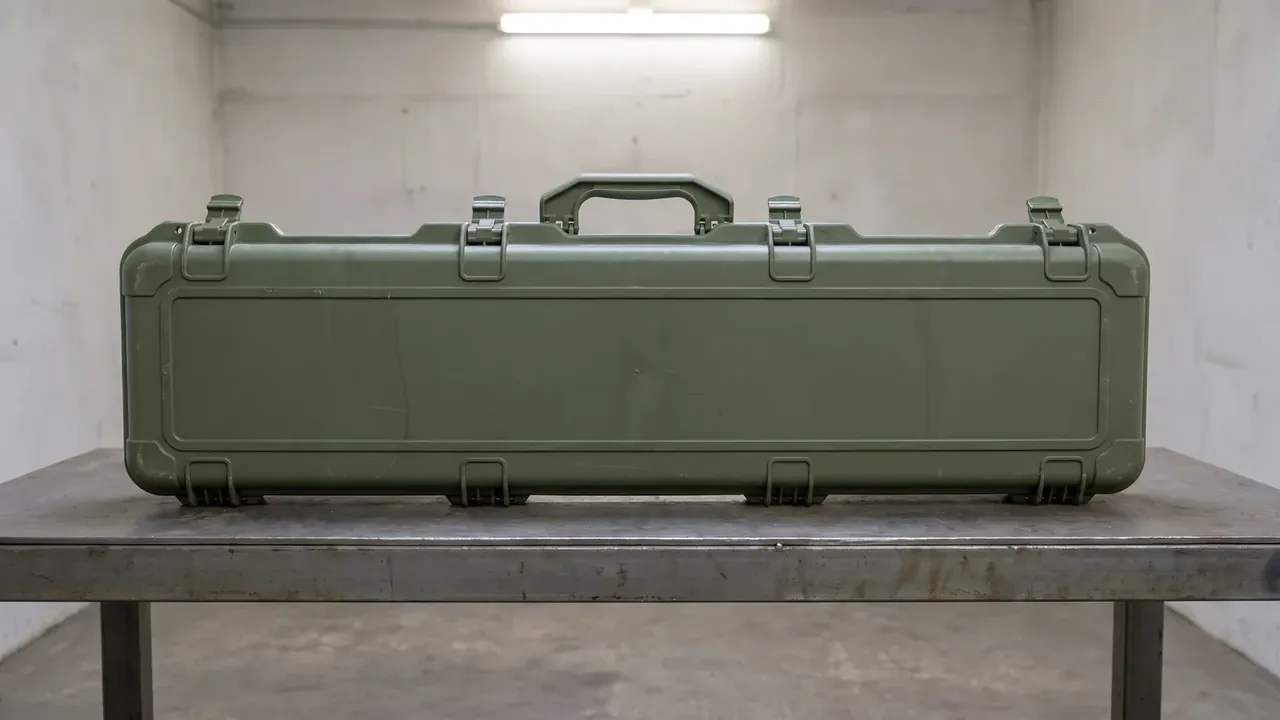
About 15 minutes per case:
- Hold the valve 2 seconds, then release latches.
- Dry cloth outside, damp cloth inside only.
- Blow the groove at 0.3 MPa, nozzle 45 degrees along it.
- Press the gasket; recovery past 5 seconds gets logged.
- Scrape four keepers, photograph base metal.
- Rock the lid; axial play means pulling the pin.
- Close on four paper strips; one sliding out means the seal failed.
3. Two lines for cleaner strength and water temperature
Cleaning is the riskiest step. Above 40 °C the gasket takes compression set fast, and a cleaner outside pH 6 to 8 crazes the nylon latches.
Keep petrol, thinner and strong alkaline degreaser off gun case production benches; damage to windows and gaskets is irreversible.
Mix neutral cleaner at 1 to 30, soak 3 minutes, brush, rinse and blow dry. Residue turns the gasket tacky in two weeks.
4. Replacement thresholds for seals, latches and valves
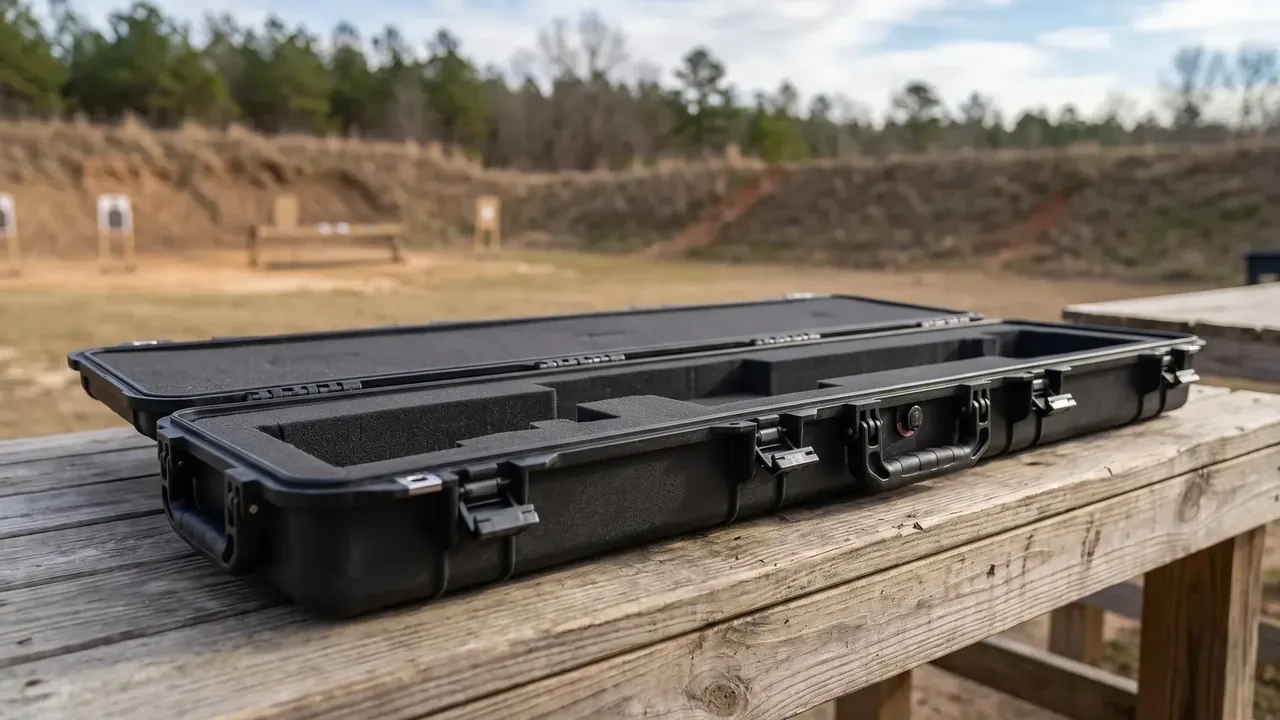
A replacement call needs a repeatable test, or two inspectors reach two conclusions.
| Part | Test | Threshold |
|---|---|---|
| Gasket | 25% set, 24 h at 70 °C | Over 30% |
| Latch | Pull test | Under 60 N or over 90 N |
| Plating | 96 h salt spray | Red rust over 5% |
| Diaphragm | 0.2 bar, 60 s | No drop to 0.02 bar |
| Foam | Recovery 24 h | Sag over 3 mm |
| Hinge pin | Caliper | Play over 1 mm |
Under 60 N the lid pops open on washboard road; over 90 N the keeper seizes and forcing it splits the lid lip.
5. Spares kit ratios and storage posture
One kit per 10 cases: two gaskets, two latches, two diaphragms, four pins. Records show latches and pins moving twice as fast.
Stand cases upright, stack no more than 4 high, hold the store below 60% humidity, between -10 °C and 40 °C.
6. Where field service stops and depot overhaul starts
Field work is cleaning, tightening and swaps, no more than 3 a visit. Past that, or with a shell crack, a cracked latch seat or diagonals out by 3 mm, it returns to the plant.
Depot checks: a 1.2 m drop on four corners, two edges and one face, then 0.3 bar held 60 seconds, no more than 0.02 bar loss.
A service card records kilometres, inspections and parts; distance beats dates, since intervals follow duty cycle.
Conclusion
Gun case production maintenance is simple: band intervals by cycling, write thresholds as numbers, keep swaps apart from depot work. Done well, a case stays controllable for three years on a coastal route. The expensive failure is the lid opened when a gun case production check was skipped.
This article discusses only the container (case body) side of specifications and design intent, and does not cover any handling, loading or use of the contents.
Related Reading
- Maintenance intervals for submachine gun storage boxes
- Gun case production audit: equipment, process, records
- Long-term sealing checks for war reserve cases
- Seal and wheel care on hard-shell suitcases
- Rust limits for metal ammunition boxes
Related Products
- 8 Series — Gun Cases; Military Equipment Cases; Camera Equipment Cases; Drone Cases; Watch Cases; Knife Cases; First Aid Cases; Electronics Equipment Cases
- WL8-2812 PP Gun Case — model WL8-2812
- All protective cases and toolboxes: 7 series, 158 models