

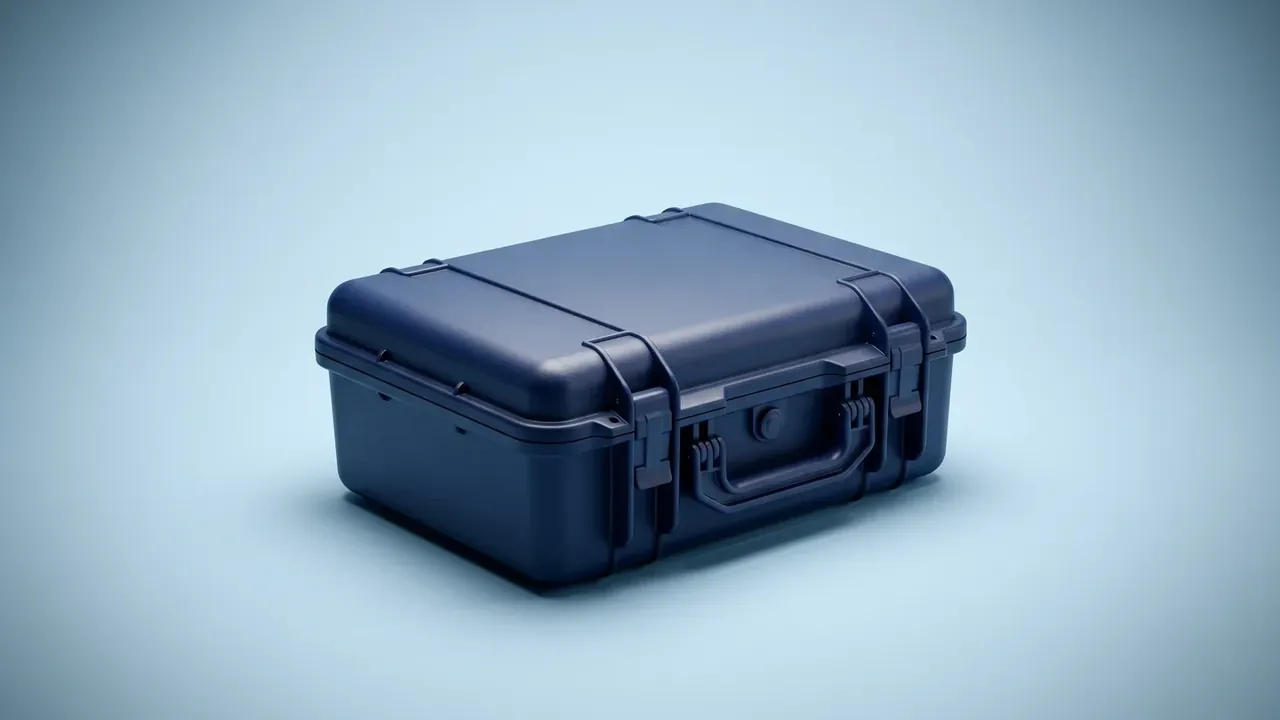
Quick answer: A Hand Carry Hard Case pays off only when three variables hold together: 300 to 800 m per trip, 50 to 150 trips a year, and a payload that keeps one size. Outside that window, alternatives are cheaper.
Table of contents
- Three Variables Behind the Comparison
- Lighter Options: Soft Bags and Folding Crates
- Bigger Options: Trolley Cases and Fixed Cabinets
- Cheaper Options: One-Way Packaging at What Volume
- Three Things Only a Hand Carry Hard Case Does
- One Table, Four Axes, Five Options
- FAQ
1. Three Variables Behind the Comparison
Price quotes carry little information. Two cases of equal volume can differ threefold, and the gap sits not in the material sheet but in distance per trip, trips per year and payload stability. Those variables pick the structure and the price.
Distance decides whether wheels exist: under 300 m people carry by hand, past 800 m any handle cuts into fingers.
| Option | Carrying distance | Trips per year | Liner can change |
|---|---|---|---|
| Soft tool bag | Under 300 m | Over 200 | Pockets |
| Folding crate | Under 50 m | Around 100 | Fixed |
| Trolley case | Over 800 m | Around 60 | Fixed |
| Fixed cabinet | Does not move | Not counted | Fixed |
| Hand Carry Hard Case | 300 to 800 m | 50 to 150 | Foam |
| One-way packaging | Single trip | One | None |
2. Lighter Options: Soft Bags and Folding Crates
At equal volume a soft bag weighs 0.9 kg against 3.6 kg for a hard shell, and those 2.7 kg come out of comfort. For wrenches and cable, 10 mm EPE suffices. Side load is where it gives way: 80 N pushes 10 mm of EPE in by 12 mm. Folding crates collapse to 90 mm and cost nothing on the return leg. With no gasket they work inside a plant only. Neither quotes a sealing class, which rules both out wherever dust or splash matters.
3. Bigger Options: Trolley Cases and Fixed Cabinets
A trolley case reaches past 800 m: 38 litres at 4.6 kg, rolled through an airport hall. Its weak point is the wheel set, which gravel, kerbs and stairs wear out.
Fixed cabinets solve storage, not transport: 200 trips a year, tools in one place, 40 kg per shelf, and a cabinet beats anything portable.
The hard case holds the narrow middle: tougher on bad ground than a trolley, more mobile than a cabinet.
4. Cheaper Options: One-Way Packaging at What Volume
A corrugated box costs 9, a hard case 280; on the first shipment the box wins.
Cycles change the answer: 280 divided by 9 is 31, so the two break even at 31 trips, and a case rated for 500 cycles earns from trip 32. Most projects never get there.
Hidden line: a case must come back and be counted, and that freight often costs more than the case.
5. Three Things Only a Hand Carry Hard Case Does
Its place is not the price list but three properties:
- Sealing: O-ring cord and double latches, 30 minutes submerged, IP67
- Stacking: three high, 40 kg on top, bottom walls still straight
- Temperature: minus 25 to 60 degrees Celsius, latch force shifting under 40 N
Ask for any two and only a metal case qualifies: a soft bag fails the first, a carton the second, a trolley the third at its wheels.
6. One Table, Four Axes, Five Options
| Option | Cost per unit | Protection ceiling | Carrying radius | Ten-year cost |
|---|---|---|---|---|
| One-way packaging | 9 | Dust only | Single trip | Rises linearly |
| Soft tool bag | 60 | Scuffing | 300 m | Low |
| Folding crate | 120 | Impact | 50 m | Medium |
| Trolley case | 400 | Dust and splash | Over 800 m | Medium |
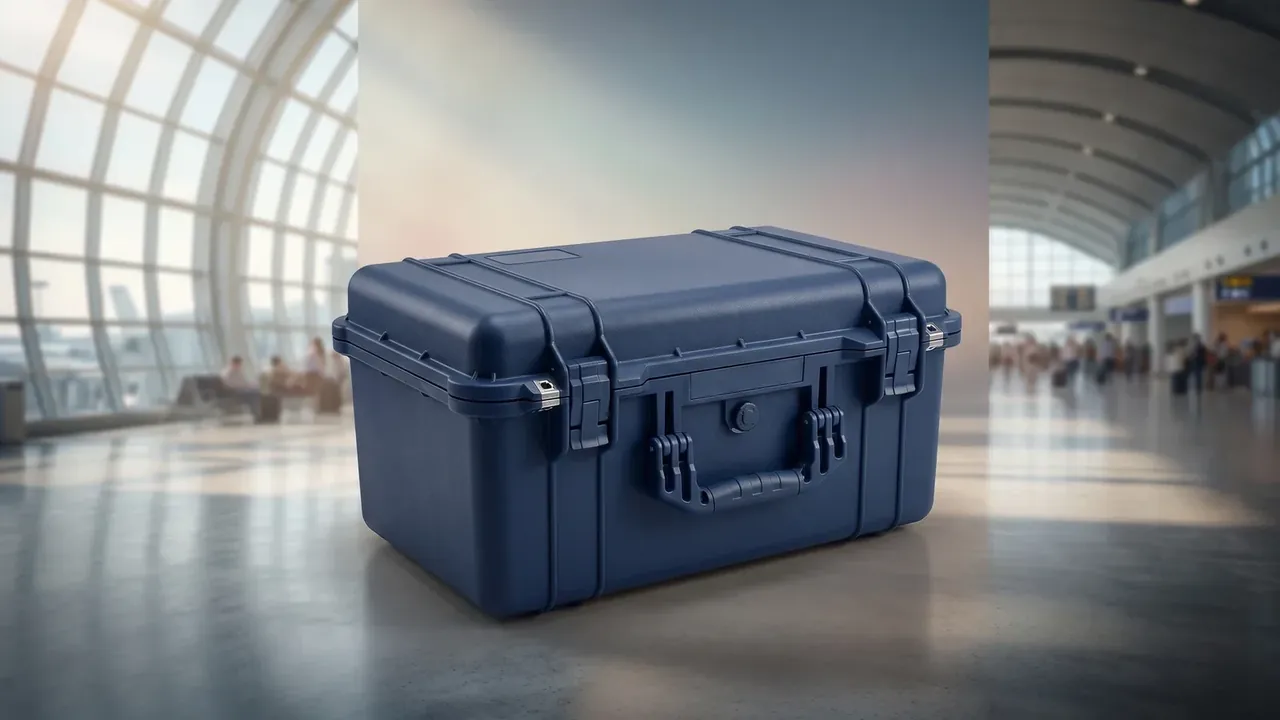
| Hand Carry Hard Case | 280 | Water and load | 300 to 800 m | Lowest |
The lowest ten-year cost is the hard case, if trips are there.
Conclusion
A Hand Carry Hard Case is not the default answer; it is the best answer in a narrow band. Hold 300 to 800 m per trip, 50 to 150 trips a year, and a need for sealing and stacking, and it wins. Drop one and a bag, trolley or cabinet fits better. Ask not which case is better, but how often a Hand Carry Hard Case runs your route.
This article discusses only the container (case body) side of specifications and design intent, and does not cover any handling, loading or use of the contents.
Related Reading
- How a Hand Carry Hard Case carries load at handle, hinge and latch
- What a Hand Carry Hard Case is for: single trips and field calls
- Cartridge box materials: five shell options compared
- Tool box lid materials: injection, blow moulding and metal
- Hard-shell suitcase materials: aluminium frame, PC and ABS
Related Products
- 8 Series — Gun Cases; Military Equipment Cases; Camera Equipment Cases; Drone Cases; Watch Cases; Knife Cases; First Aid Cases; Electronics Equipment Cases
- WL8-2812 PP Gun Case — model WL8-2812
- All protective cases and toolboxes: 7 series, 158 models