

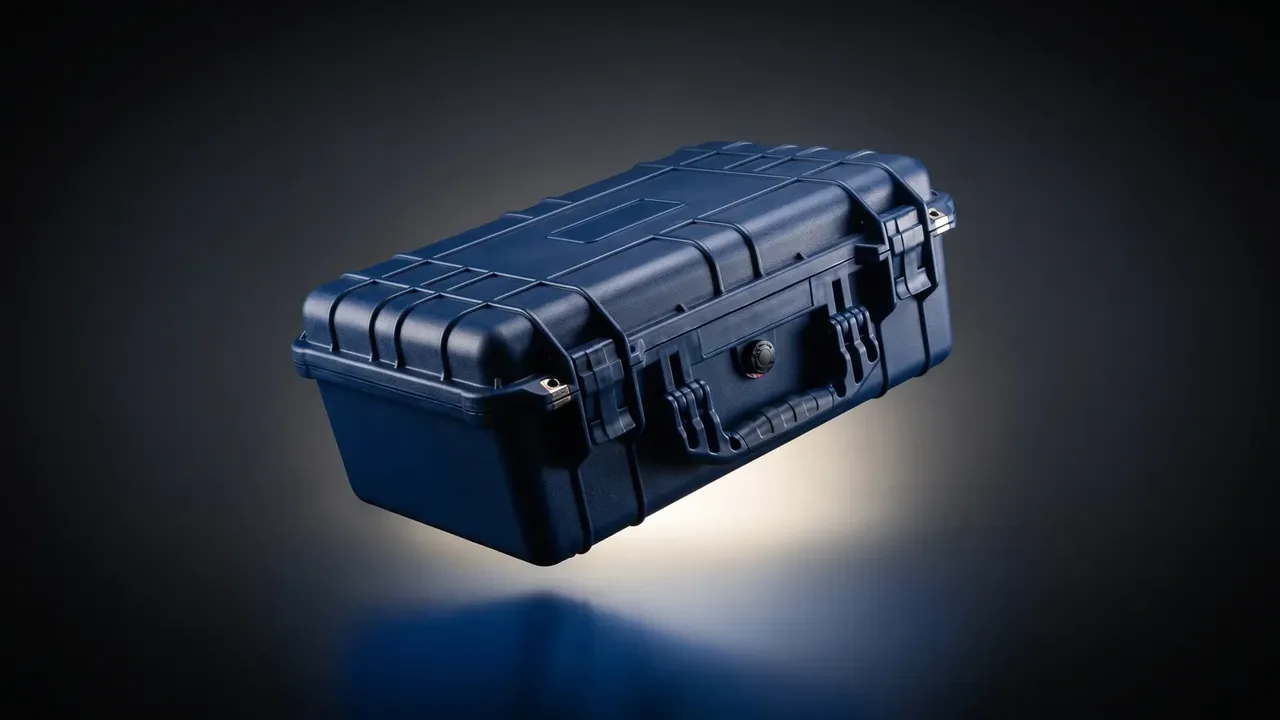
Quick answer: A Hand Carry Hard Case is not specified from total weight. Set the cavity first, derive wall thickness from support points and span, then add ribs. For an 18 kg load, 3.2 mm sides, a 4.5 mm base and a 5 mm rim are enough; 6 mm everywhere only adds mass.
Table of contents
- Case Weight Is the Wrong Starting Point
- Cavity Size Derived Backwards from the Load
- Wall Thickness Follows the Load Path
- Rib Pitch and Corner Radius Make Stiffness
- Gasket, Latch and Handle Sizes Move Together
- Turning the Chain into a Spec Sheet
- FAQ
1. Case Weight Is the Wrong Starting Point
Buyers ask how thick the wall should be for 20 kg. Weight sets handle and hinge size, not thickness.
An 18 kg case may load a 200 mm square, a 12 kg case spreads it, so equal walls dent the lighter one first.
| Common claim | What happens | What to measure |
|---|---|---|
| 20 kg needs 5 mm | base collapses | support spacing |
| thicker is stronger | 40 percent more mass | wall to rib ratio |
| size by outside dimensions | load will not fit | cavity, radii |
Weight is an output, not an input.
2. Cavity Size Derived Backwards from the Load
A Hand Carry Hard Case cavity equals load envelope plus clearance, cushion and rib intrusion.
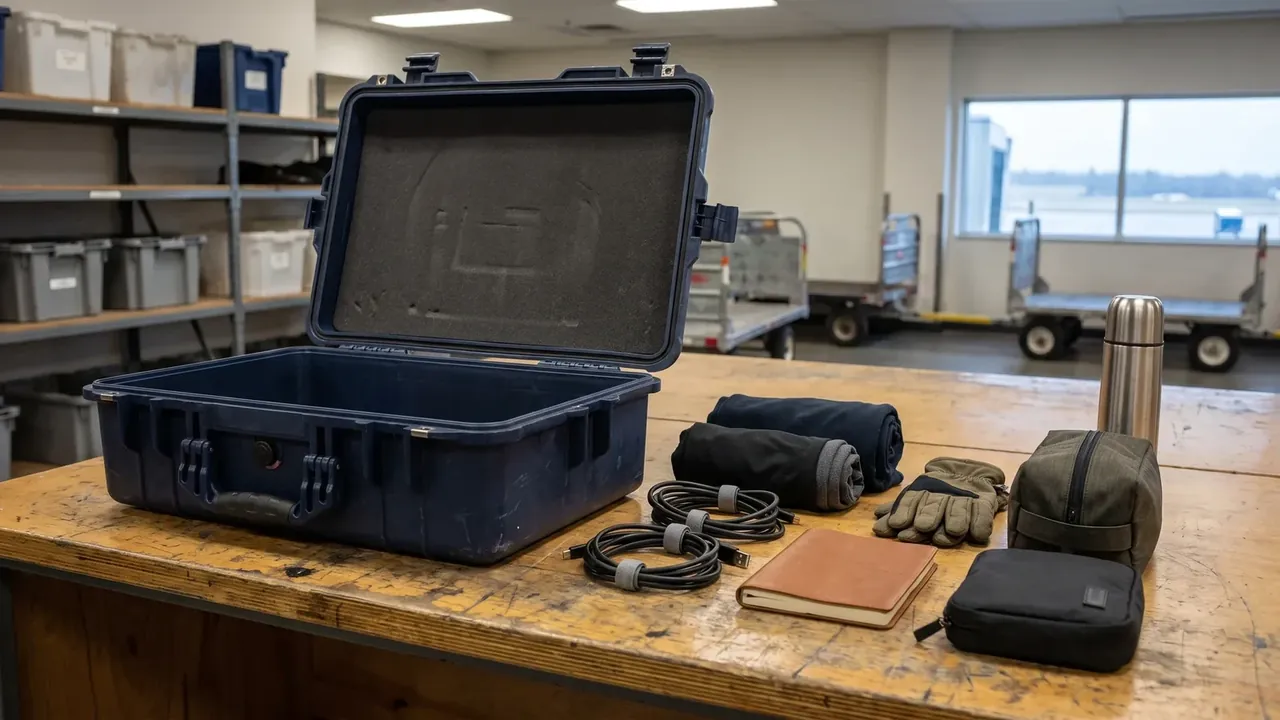
Clearance is 3 mm per side; a tight gap becomes levering.
Cushion follows drop height: at 1.2 m, EPE needs 15 mm, EVA 20 mm.
A 4 mm rib takes 8 mm off usable width; thinner walls carry deeper ribs.
3. Wall Thickness Follows the Load Path
Walls on the handle, latch and support routes run thickest.
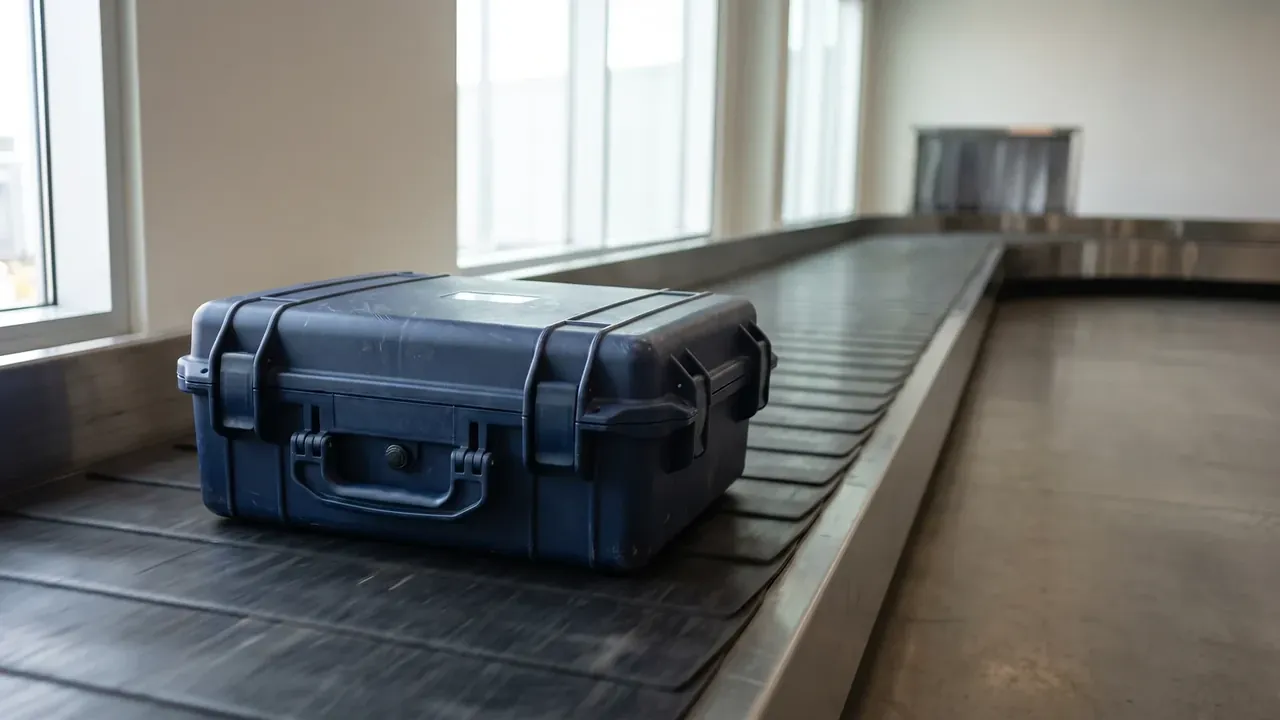
| Zone | Load | Thickness | Basis |
|---|---|---|---|
| Side | squeeze | 3.2 mm | 30 kg stacked |
| Base | support | 4.5 mm | 0.8 mm sag |
| Rim | preload | 5 mm | bending, groove |
| Handle root | lifting | 6 mm | bolt creep |
At 3.2 mm the side wall sits at its floor; thinner, the melt front freezes into a weak weld.
The base spans: 30 kg at 200 mm spacing sags 0.8 mm, and at 300 mm the feet lift.
The rim resists preload and carries a 4 mm wide, 5 mm deep groove; a wall under 3 mm flares out. The lid is sized by stacking: the bottom of three carries 80 kg, sag inside 1.5 mm. The handle root follows the M6 bolt, whose 9 kN clamp creeps any plastic face under 250 square millimetres. Each number answers one failure mode. Write the test beside each number. Without it, the moulder works to nominal values.
4. Rib Pitch and Corner Radius Make Stiffness
Ribs close the stiffness gap, and efficiency depends on pitch, not height.
- Height 3x wall: beyond it the root sinks.
- Thickness 0.6x wall: equal to the wall it hot-spots.
- Outside radius R8: below it, corners crack first.
- Draft 1 degree: taller ribs need more.
Past 80 mm the panel sinks about 0.5 mm, which the eye catches.
Radius matters more in a drop: R8 spreads impact over 60 mm, R3 over 20 mm, tripling stress at -10 °C.
5. Gasket, Latch and Handle Sizes Move Together
Fitting positions follow from shell dimensions and feed back into them.
Latches run every 240 mm of rim: five on a 1.2 m perimeter holds the gap at 0.15 mm, three leaves 0.6 mm.
Gasket squeeze sits at 28%: under 25 it leaks, over 35 it cannot rebound.
Handle span stays at 160 mm or less; beyond it the root needs an insert and cost rises 12 percent.
6. Turning the Chain into a Spec Sheet
| Parameter | Value | Tolerance | Check |
|---|---|---|---|
| Cavity | envelope + 6 mm + cushion | +2 / 0 mm | caliper |
| Side wall | 3.2 mm | ±0.15 mm | ultrasonic |
| Base | 4.5 mm | ±0.2 mm | ultrasonic |
| Rim | 5 mm | ±0.1 mm | caliper |
| Rib pitch | 60 mm | ±3 mm | drawing |
| Latch spacing | 240 mm | ±5 mm | tape |
| Gasket squeeze | 28% | ±3% | feeler |
A 0.15 mm wall spread moves mass 4 percent and stiffness 8 percent.
Specify a Hand Carry Hard Case for the toolmaker, not the buyer.
Put the derivation in the agreement: with results only the moulder adjusts by experience, with reasons changes come back.
Conclusion
A Hand Carry Hard Case is a chain: cavity sets size, load sets thickness, pitch sets stiffness, fittings set the rim. An 18 kg unit runs 3.2 mm sides, a 4.5 mm base, 60 mm pitch and 240 mm latch spacing; change one, recheck three. That is how a Hand Carry Hard Case survives its first drop.
This article discusses only the container (case body) side of specifications and design intent, and does not cover any handling, loading or use of the contents.
Related Reading
- How handle, hinge and latch share the load
- Configurations and selection by scenario
- Carry-on luggage dimensions and wheel specs
- Cavity layout for hand tool cases
- Wall thickness and sealing on missile boxes
Related Products
- 8 Series — Gun Cases; Military Equipment Cases; Camera Equipment Cases; Drone Cases; Watch Cases; Knife Cases; First Aid Cases; Electronics Equipment Cases
- WL8-2812 PP Gun Case — model WL8-2812
- All protective cases and toolboxes: 7 series, 158 models