

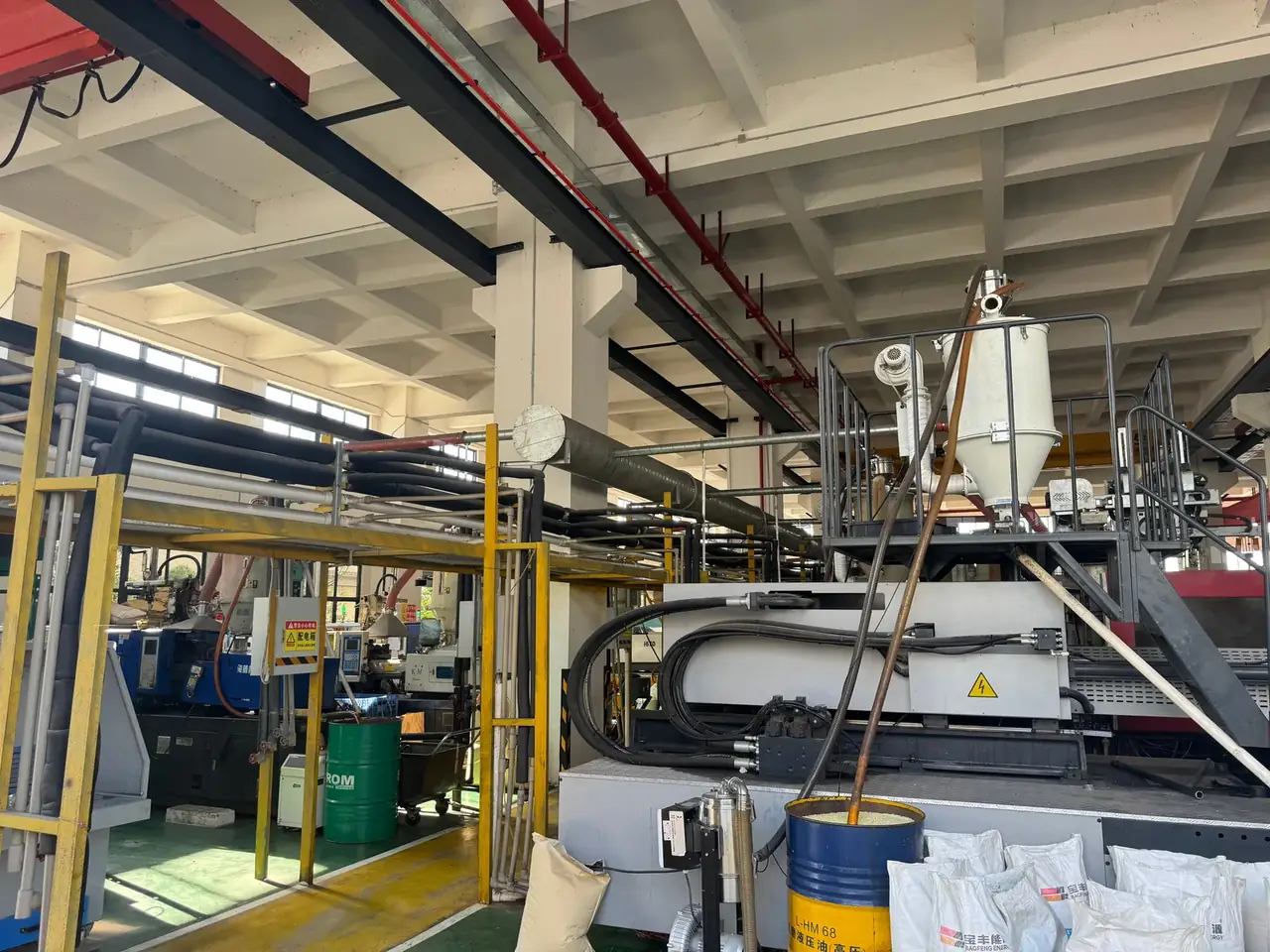
Quick answer: Hopper Feeding starts from hourly usage: a 50 kg hopper, 2 h at 80 ℃, a 6 m suction line with 3 elbows, −0.04 MPa vacuum and 15% regrind.
Table of contents
- Matching the dryer to the hopper
- Suction line length and elbow count
- Regrind port share and position
- Level control and starvation alarms
- Material changeover and cross contamination
- FAQ
1. Matching the dryer to the hopper
Hopper Feeding is sized backwards from consumption, never from machine tonnage. Take the hourly draw first: a 1.1 kg case on one cavity at a 55 s cycle runs about 65 shots an hour, near 72 kg of resin. A 50 kg hopper lasts 40 min at that draw, resin temperature slides once hot air stops, and a 2 h schedule never completes.
| Draw, kg/h | Hopper | Continuous run | Setup |
|---|---|---|---|
| Under 20 | 25 kg | 75 min | Single hopper, manual fill |
| Around 40 | 50 kg | 75 min | 50 kg plus auto loader |
| Around 70 | 50 kg | 40 min | 100 kg or twin hoppers |
| Above 100 | 100 kg | 60 min | Twin hoppers, central dryer |
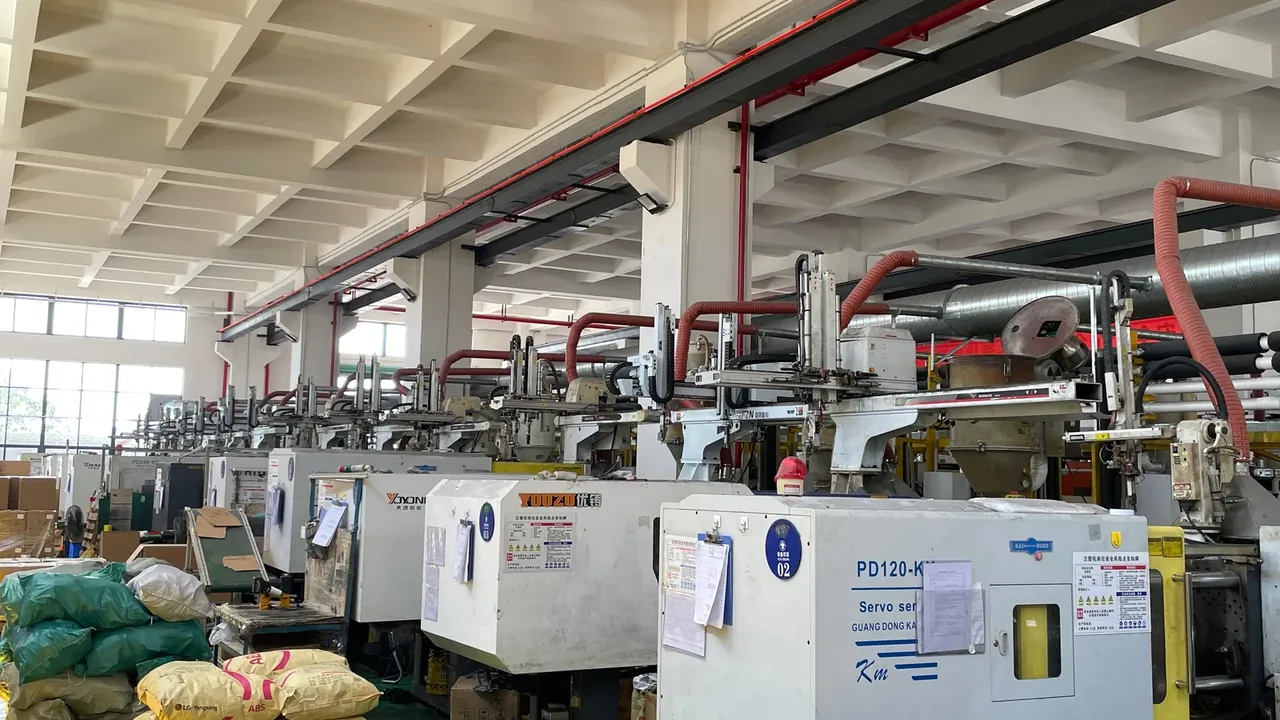
Hopper Feeding dryer capacity shows in two numbers: airflow and heater power. A 50 kg hopper wants 120 m³/h and return air holding at 75 ℃ to keep resin at 80 ℃. Starve the airflow and the surface dries while the core stays damp, which reads as silver streaking on the case wall, so 30 mm of shell insulation belongs in the match.
2. Suction line length and elbow count
On Hopper Feeding, two extra bends let resin bridge inside the pipe, so the hopper looks full but stops feeding. Size on equivalent length: measure horizontal and vertical runs as they are, add 1.5 m per 90 degree elbow and 1 m per swept tee. A 6 m run with 3 elbows lands near 10.5 m equivalent, the practical ceiling for −0.04 MPa.
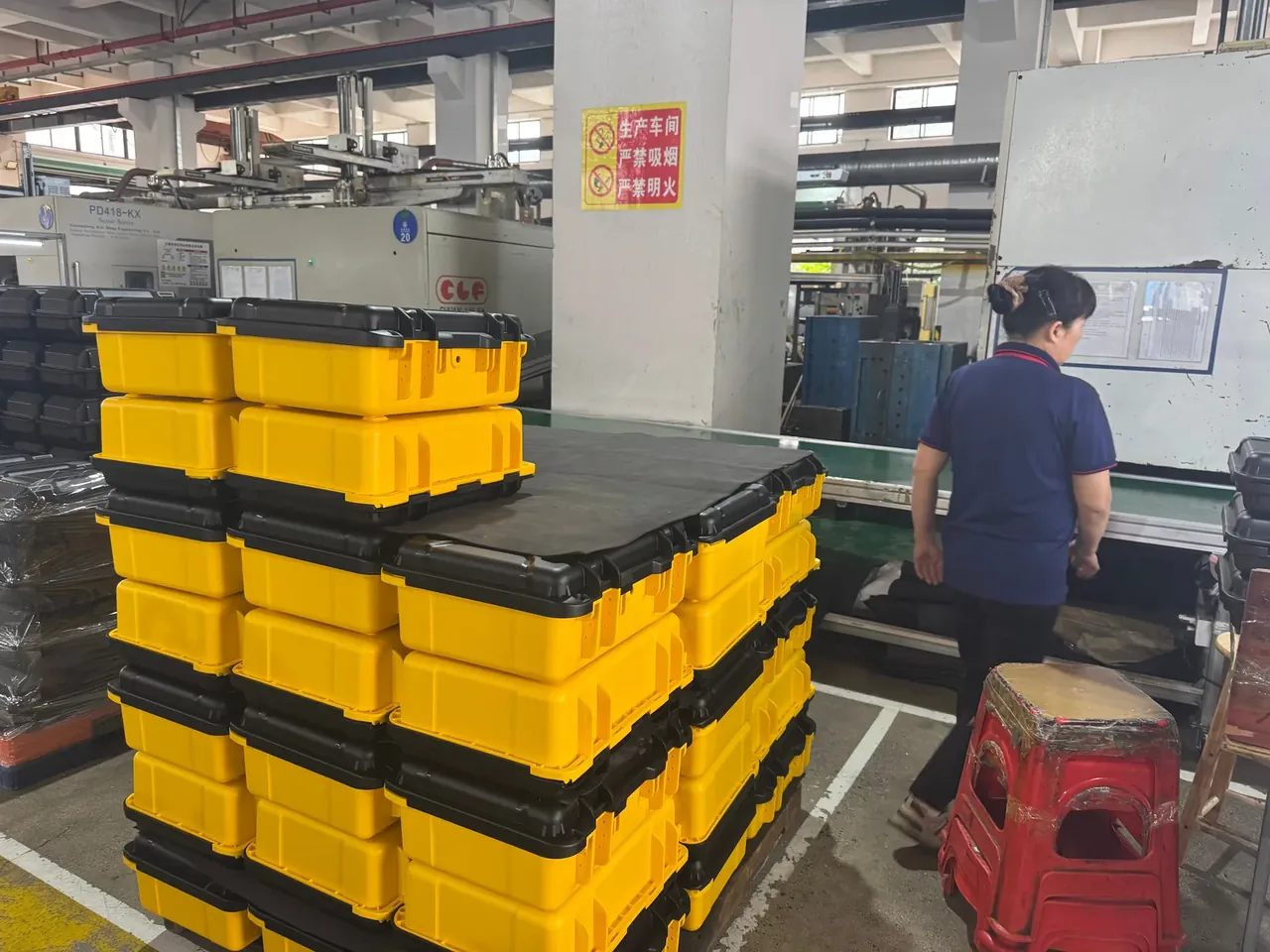
Hopper Feeding lines pair bore with air speed. In a 50 mm bore, 18 to 22 m/s keeps pellets moving; below 15 m/s they settle, above 25 m/s they hammer the wall and ground resin cakes at the elbows. Use flexible hose only where the machine moves, no longer than 1.5 m, bond every section to earth, and hold the pickup 50 mm off the sack floor so fines stay out of the filter.
3. Regrind port share and position
On Hopper Feeding, where the regrind port sits decides how evenly it blends. The usual arrangement is a 50 mm spigot at mid-height, regrind falling by gravity while virgin resin enters at the top, the streams meeting in the middle. At the top the regrind floats and leaves first, pushing the real share high; at the base the screw draws it straight out and the share runs low.
| Port position | Feed method | Share error | Where it fits |
|---|---|---|---|
| Top of hopper | Drops with dried resin | 3 to 5 points high | Small volume, same colour |
| Mid hopper | Gravity, mixes with level | 1 to 2 points | Standard 15% share |
| Base of hopper | Straight to the screw | 3 to 5 points low | Not for light colours |
Hopper Feeding regrind usually starts at 15%. Virgin resin at 8 g/10min moves to about 9 g/10min at that share, still inside the process window; past 25% the latches feel slack at assembly. Ground resin left in an open sack for two days reaches 0.3% moisture, so dry regrind alone for 1 h at 80 ℃ or blend it into dried resin for 10 min before loading.
4. Level control and starvation alarms
Hopper Feeding level control aims at neither an empty hopper nor an overflowing one. A high limit at 85% leaves room for regrind and refills, while 20% is the alarm point; from there to empty is about ten minutes of resin, so alarm-to-attendance must stay under 3 min or the screw runs dry and burnt specks appear.
| Level band | System action | Operator action |
|---|---|---|
| Above 85% | Loading stops | Check load time setting |
| 50 to 85% | Normal cycling | Log the level once per shift |
| 20 to 50% | Faster loading | Check the line for bridging |
| Below 20% | Light and horn, 3 min timer | Attend, load by hand if needed |
On Hopper Feeding, capacitive pads sit outside the hopper, easy to fit but sensitive to build-up; a rotary paddle enters from the top and reads resin contact, direct but prone to jamming on dust. Fit both, capacitance for trend and paddle for the low limit, then wire the alarm to the stack light and a 5 min slowdown.
5. Material changeover and cross contamination
Hopper Feeding changeover time follows colour and material, and skipping the grading drags dark resin into light parts. Dark to light is the expensive direction: pull the pipe, blow through, wipe the hopper wall, change the filter, purge 5 shots, which is 15 min at best. Light to dark needs a blow-through and 3 shots, about 8 min, while PP to ABS adds a drying change.
| Changeover | Work content | Time | Carry-over risk |
|---|---|---|---|
| Same resin, same colour | Blow line and hopper | 5 min | Low |
| Light to dark | Blow-through, 3 purge shots | 8 min | Medium |
| Dark to light | Strip pipe, wipe, new filter, 5 shots | 15 min | High |
| PP to ABS | Above plus a new drying curve | 25 min | High |
Hopper Feeding hides one more contamination point, the regrind port. Regrind from the previous resin hangs in that line and drags the old colour into the first blended batch. Strip and blow that line too, then close the changeover with a white-cloth wipe and a dated filter on the machine.
Related Reading
- Injection machine spec sheets: what actually matters
- Sizing a press around case dimensions
- Tracing odour back to resin or residue
- Setting case wall thickness without sink marks
- Plastic cases and wooden crates: transfer cost
This article covers specifications and design implications on the case side only.
Related Products
- 8 Series — Gun Cases; Military Equipment Cases; Camera Equipment Cases; Drone Cases; Watch Cases; Knife Cases; First Aid Cases; Electronics Equipment Cases
- WL8-2812 PP Gun Case — model WL8-2812
- All protective cases and toolboxes: 7 series, 158 models