

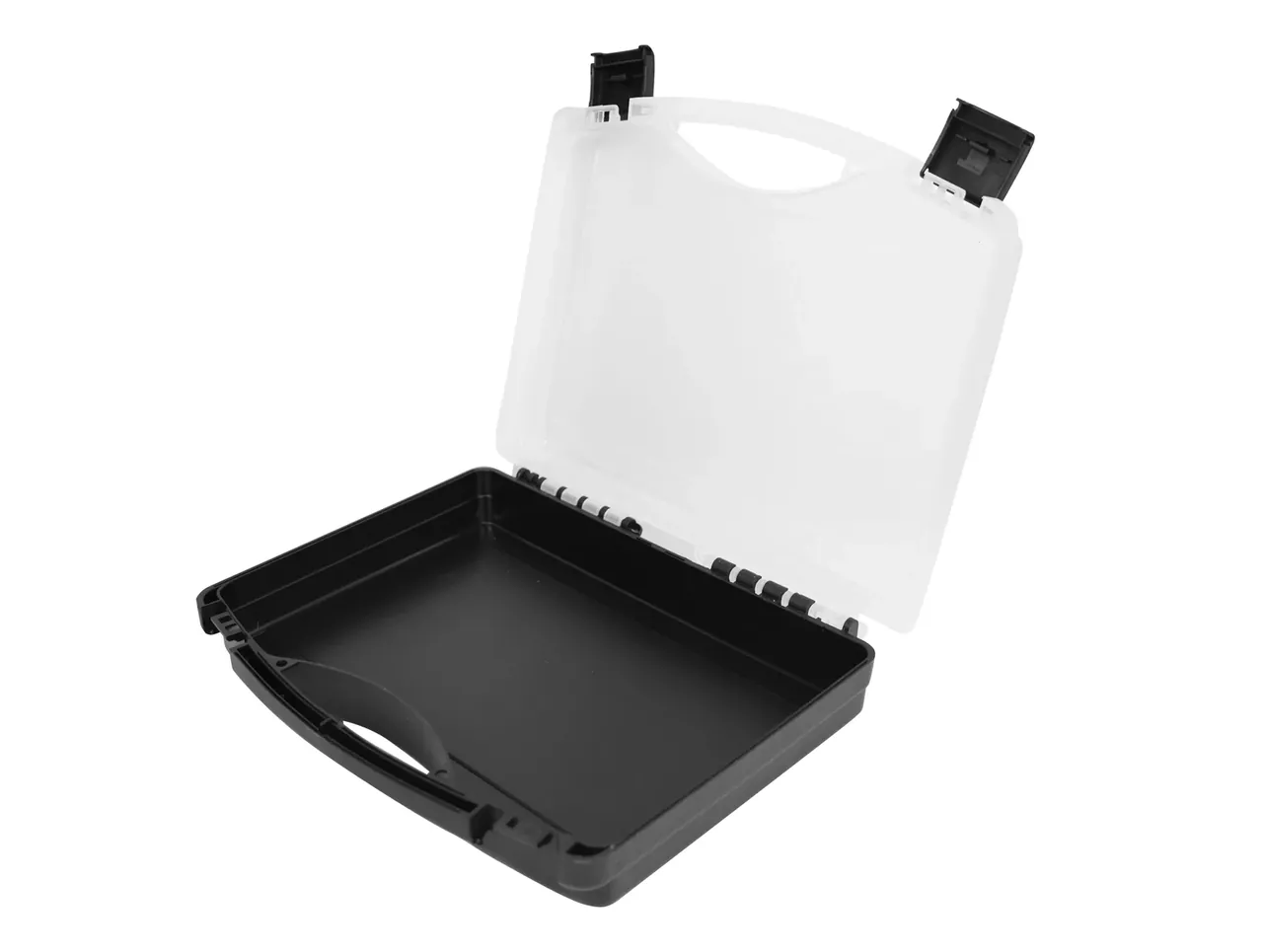
Quick answer: Judge a case injection molding machine by four measurements: clamp force over projected area, tie-bar clearance against mould width, shot size against part weight, and the weight spread over 30 shots. Hit all four and a smaller press will do.
Table of contents
- Tonnage has to be back-calculated from projected area
- Mould height and opening stroke: does the tool fit
- Screw and shot size: what part weight leaves you
- Cycle, power and repeatability: one hour of data
- What belongs on the acceptance sheet
- FAQ
1. Tonnage has to be back-calculated from projected area
An instrument case plant in Changzhou was quoted a case injection molding machine of 800 tonnes. The first trial shot left a 0.4 mm flash line at the lid rim, and three rounds of tool polishing did not close it.
The tool was fine. This body projects 1.05 m by 0.45 m, or 0.47 square metres. At 25 MPa cavity pressure, clamp force must reach 11.75 MN, or 1200 tonnes; with a 1.15 factor, 1400 is the honest answer. An 800 tonne press covers 0.32 square metres. Divide tonnage by projected area and case moulds land at 25 to 30 MPa; below 22 MPa flash opens at the rim.
| Projected area | Cavity pressure | Clamp force | Machine | Typical error |
|---|---|---|---|---|
| 0.32 sq m | 25 MPa | 8.0 MN | 800 t | Copying a big case down |
| 0.47 sq m | 25 MPa | 11.8 MN | 1200 t | Trialling on 800 t |
| 0.47 sq m | 30 MPa | 14.1 MN | 1400 t | Shallow-cavity pressure |
| 0.60 sq m | 25 MPa | 15.0 MN | 1500 t | Tonnage without gate area |
2. Mould height and opening stroke: does the tool fit
On this 1200 tonne case injection molding machine the tie bars stand 810 mm apart and the mould is 760 mm wide, leaving 25 mm a side.
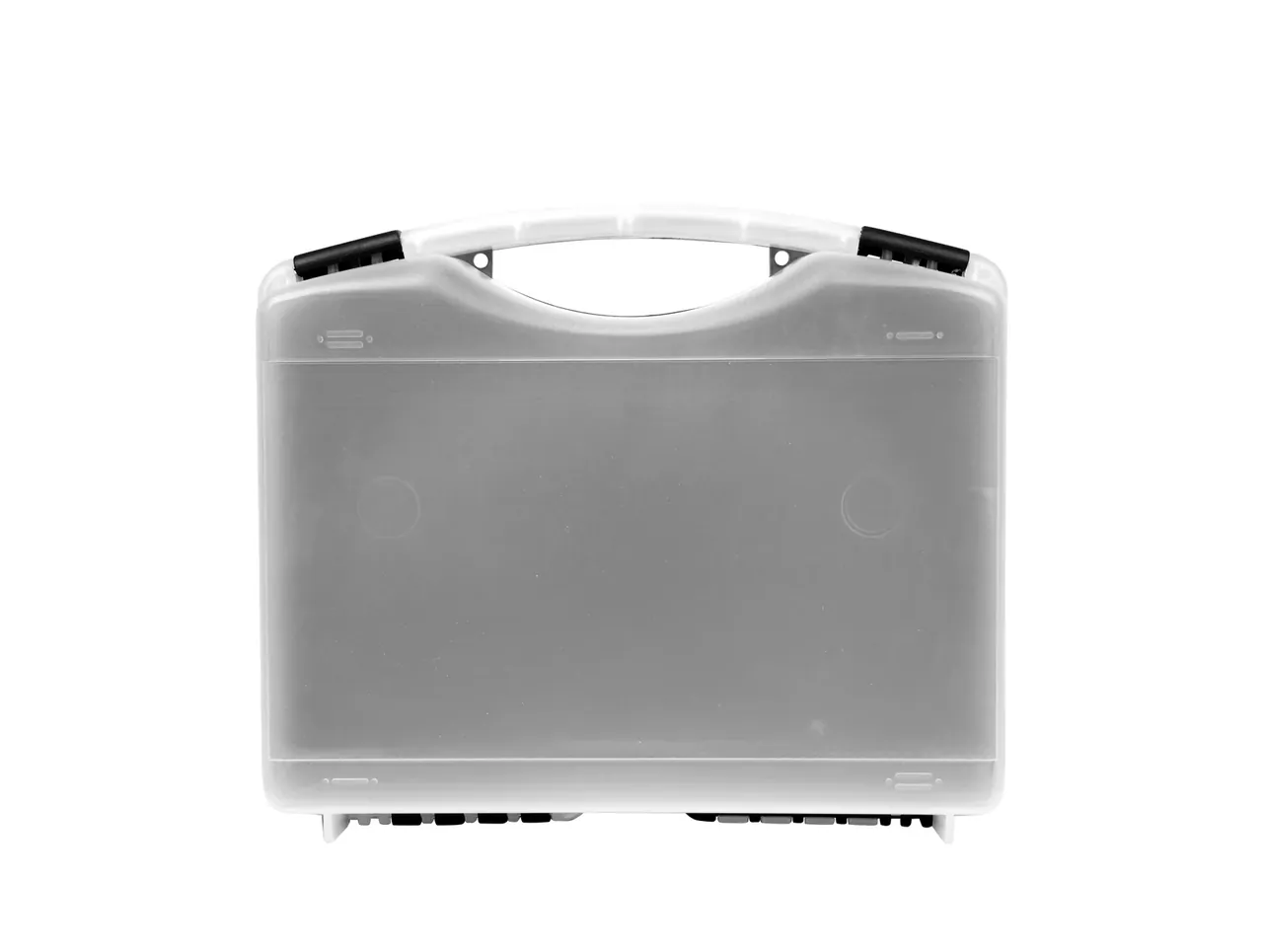
The platen range runs 300 to 900 mm against a 620 mm stack, leaving 40 mm of adjustment. Opening stroke gets missed: a 320 mm deep box needs 640 mm plus 80 mm for removal, or 720 mm, against a rated 700. Twenty millimetres short keeps the robot off the parting line, parts come out by hand and the cycle grows 15 seconds. Ejection travel of 180 mm against 60 mm passes, provided pins clear the corners where a 6 mm wall whitens.
| Item | Machine | Tool needs | Margin | Verdict |
|---|---|---|---|---|
| Tie-bar spacing | 810 mm | 760 mm | 25 mm a side | Tight |
| Mould height | 300 to 900 mm | 620 mm | 40 mm | Pass |
| Opening stroke | 700 mm | 720 mm | minus 20 mm | Fail |
| Ejection stroke | 180 mm | 60 mm | 120 mm | Pass |
3. Screw and shot size: what part weight leaves you
Shot size is chosen backwards from part weight. This body weighs 2.4 kg against a 3200 g shot, a 75 percent ratio inside the 60 to 80 percent band. Past 85 percent the screw runs out of stroke and the base picks up a cloud pattern; below 40 percent the melt degrades.
A 75 mm screw at 22 to 1 and 2.4 compression suits polypropylene with 10 percent glass, which needs a bimetallic barrel or the screw scores in three months and shot weight drops 8 percent. The box cools in 95 seconds and plasticises in 18, so 77 seconds of idle screw time allows a 10℃ drop; at 110 seconds the machine is the bottleneck.
4. Cycle, power and repeatability: one hour of data
An hour of running exposes a case injection molding machine faster than any brochure. Log cycle time, part weight, one critical dimension and oil temperature across 30 shots.
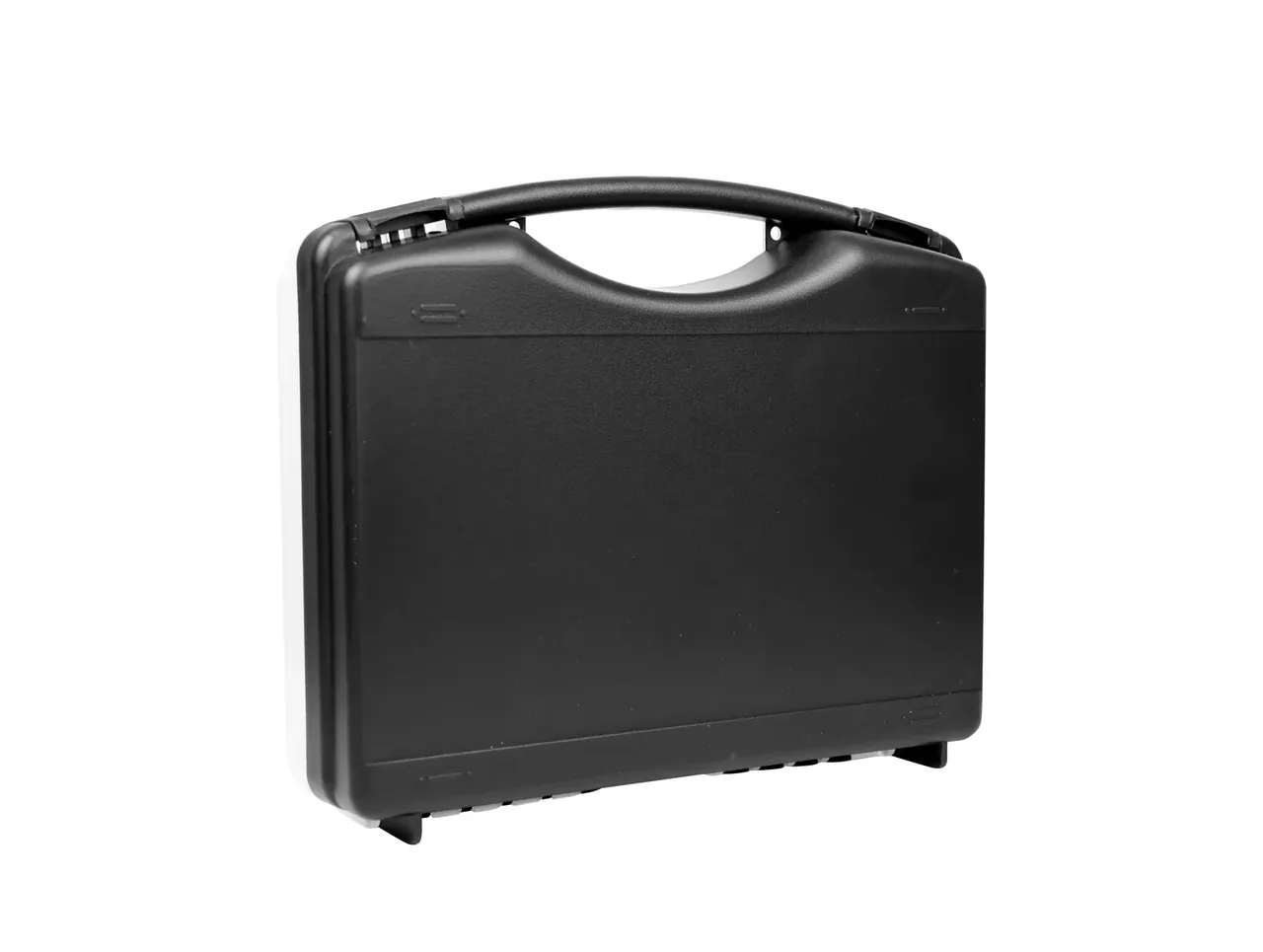
The baseline is a 210 second cycle, 95 of them cooling. A 2.8 second dry cycle saves 0.8 seconds a shot against 3.6, or 1200 parts a year at 400 shots a day.
Power divides wider. A 55 kW servo machine draws 3.2 kWh per part; a fixed-pump machine of the same tonnage draws 75 kW and 4.4 kWh, or 36000 yuan a year more at 50000 parts. Repeatability shows as a weight spread under 0.3 percent over 30 shots, about 0.05 mm of wall; past 0.8 percent, check the ring. Keep oil at 45℃ plus or minus 2℃, since a 4℃ drift moves dimensions 0.1 mm.
5. What belongs on the acceptance sheet
Four items can be measured on the spot: clamp force within 5 percent of the nameplate, platen parallelism within 0.05 mm over 1 m, dry cycle within 0.3 seconds of the quote, barrel zones within 3℃ of set point. Three are noise: imported servo, German technology, lifetime service.
| Item | Pass line | How to measure | If it fails |
|---|---|---|---|
| Clamp force | Within 5 percent | Pressure or strain gauge | Recut area to measured force |
| Parallelism | 0.05 mm over 1 m | Feeler gauge, four corners | Ask for platens to be reground |
| Dry cycle | Within 0.3 s | Stopwatch, three runs | Convert the gap into output |
| Barrel zones | Within 3℃ | Contact probe, top to bottom | Replace bands or couples |
Conclusion
Tonnage, mould space, shot size and repeatability are all measurable; none is a feeling. A case injection molding machine proves itself in the first hour: whether flash appears, whether the weight drifts.
This article discusses only the container (case body) side of specifications and design intent, and does not cover any handling, loading or use of the contents.
Related Reading
- Where selection numbers start for moulded protective cases
- Repeatability limits for defibrillator cases
- Sizing clamp force for thin-wall air freight cases
- Cavity pressure and vent placement on sealed cases
- Tool ownership and trial sampling for ammunition boxes
Related Products
- 8 Series — Gun Cases; Military Equipment Cases; Camera Equipment Cases; Drone Cases; Watch Cases; Knife Cases; First Aid Cases; Electronics Equipment Cases
- WL8-2812 PP Gun Case — model WL8-2812
- All protective cases and toolboxes: 7 series, 158 models