

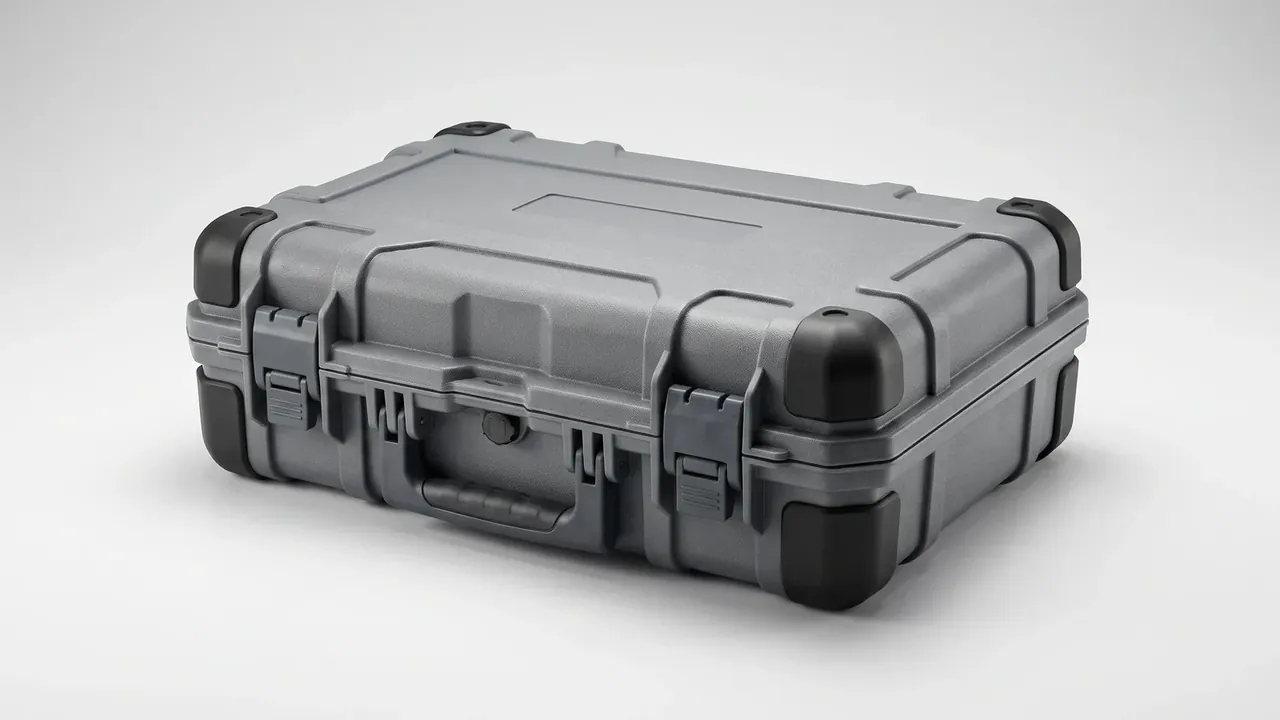
Quick answer: A -25 °C dock, 12 units per pallet stacked four high and a 40-minute loading window expose what an industrial plastic tool box supplier actually builds. Check site conditions, molding cycle and three records before pricing MOQ, molds and terms.
Table of contents
- Site conditions an industrial plastic tool box supplier must sign off
- Watch the molding cycle, not the showroom
- MOQ and mold ownership as contract language
- Batch traceability: twelve characters under the case
- Lead time and payment terms as clauses
- Spares and after-sales: three years of latches
- FAQ
1. Site conditions an industrial plastic tool box supplier must sign off
A frozen-goods dock sits at -25 °C all year, frosting a case within ten minutes. Brittle walls never show on a quotation.
One shipment sat 2.5 hours too long. Three latches snapped at loading; the resin was homopolymer PP with no impact modifier.
| Site condition | What it demands of the supplier |
|---|---|
| -25 °C soak, 2 hours | Copolymer PP with impact modifier, wall 2.8 mm |
| 12 units per pallet, 4 high | 180 kg on the bottom case, lid flat within 1.2 mm |
| 320 units loaded in 40 minutes | One case opens in 3 seconds, latch worked one-handed |
Stacking gets skipped: 180 kg on the bottom lid, a dip past 3 mm tilts the pallet.
Ask an industrial plastic tool box supplier to sign the table line by line: agreement means a steady low-temperature resin channel, hedging means standard resin.
2. Watch the molding cycle, not the showroom
Showroom samples prove nothing; the cycle board proves capacity.
A 1,200 x 480 x 320 mm mold runs a 68-second cycle, two parts per shot. One press yields 2,300 cases a day. Three presses support 150,000 a month; one press quoting 200,000 sends the rest out.
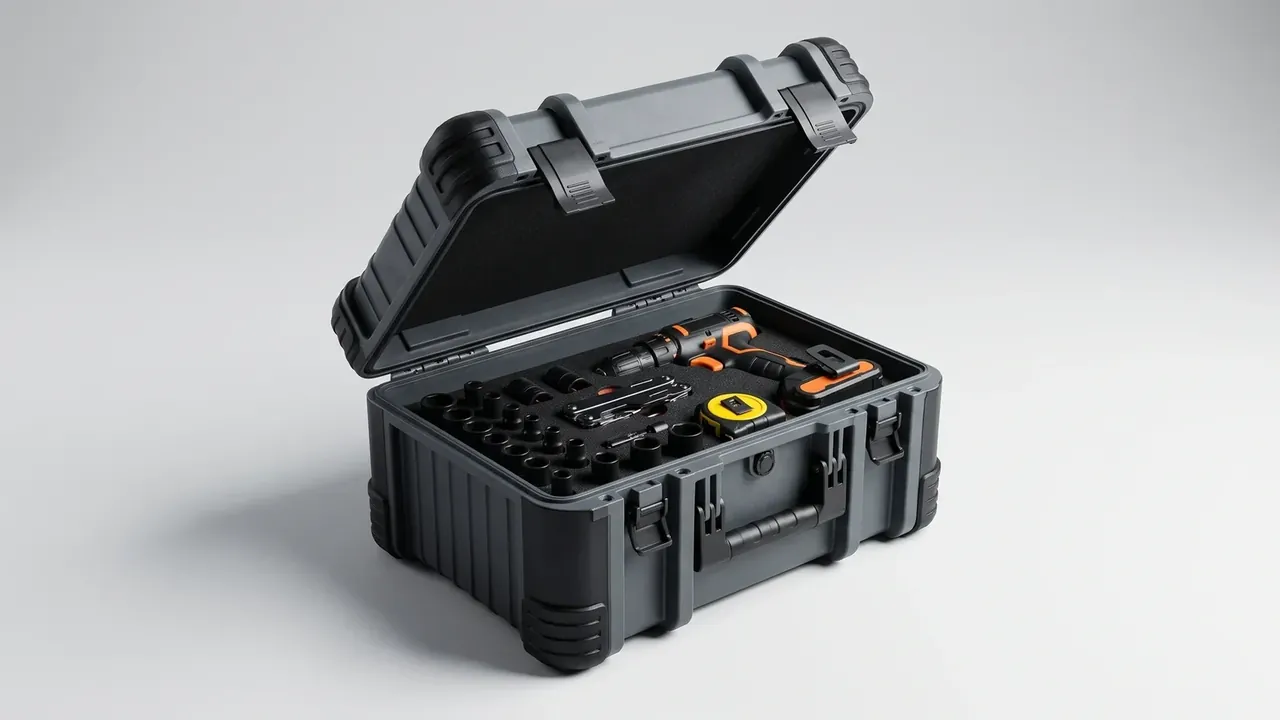
Subcontracting is normal, hiding it is not. Suppliers that farm out orders often skip the mold temperature controller; a 3 °C drift moves wall thickness 0.2 mm.
Three records:
- Mold maintenance card, logged against a 300,000-shot tool life.
- Masterbatch ledger matching the code under each case.
- First-article sheet, wall readings per shift to 0.01 mm.
3. MOQ and mold ownership as contract language
- Color MOQ is 500 units; below that a stock shade pushes color difference past Delta E 1.5.
- A new mold pays back at 3,000 units per model; below that, an insert goes into the existing cavity.
- Mixed-color runs start at 800 units and follow the last material to arrive.
A mold set costs CNY 128,000 with first samples, amortized two ways: buy it outright, or pay CNY 4.3 per case until 30,000 ship.
Outright purchase leaves the risk with the buyer; amortization keeps the unit price low, but a stopped order leaves the money sunk.
Storage, collection and freight belong in the contract; the usual trap leaves the mold in the supplier's care, then bills storage three years later. Tool life runs 300,000 shots, after which the cavity grows 0.15 mm. Asking an industrial plastic tool box supplier that beats shaving three cents.
4. Batch traceability: twelve characters under the case
The twelve characters under each case are not decoration. 26A35B102407 reads as year 26, mold A3, press 5, shift B, October 24, shot 07.
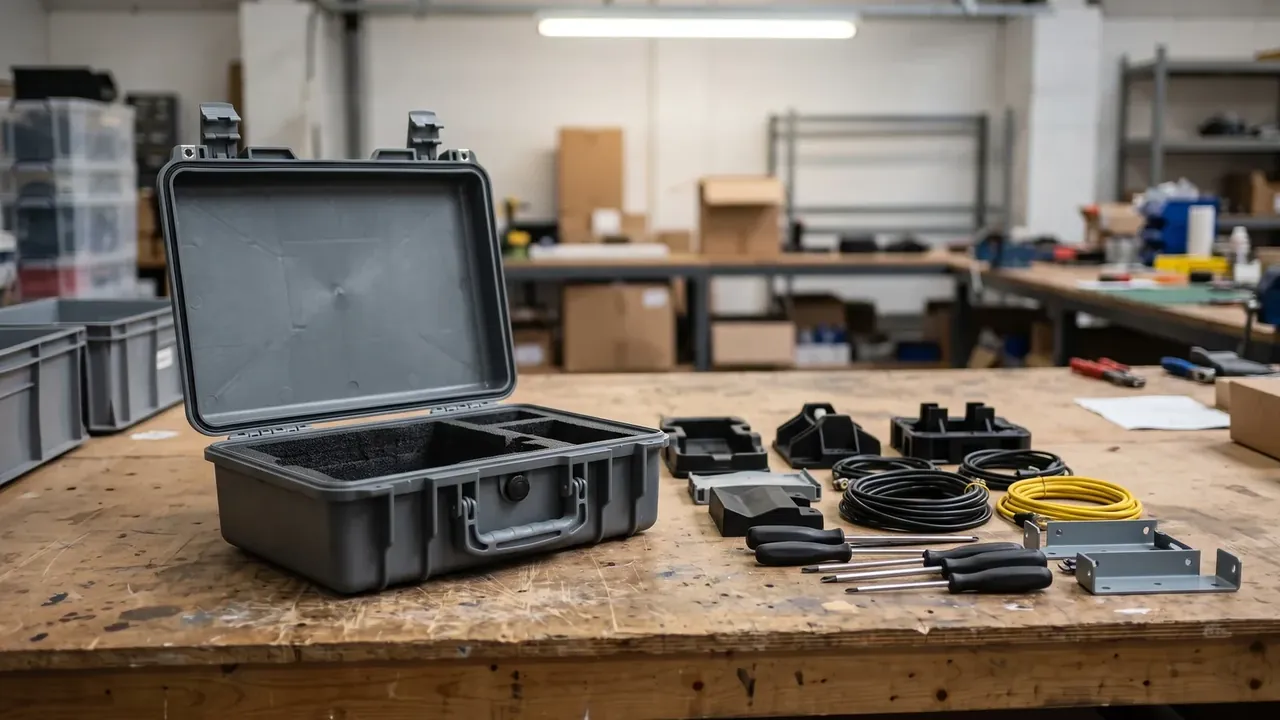
That string ties resin, press, operator and date together. When a wall cracks, the code points to one press and one shift, and the mold curve plus masterbatch lot surface within two hours instead of a full recall.
| Trace level | Carrier | Retention |
|---|---|---|
| Case body | 12-character code under the base | 3 years |
| Hardware | Stamp inside the latch | 3 years |
An industrial plastic tool box supplier that keeps the code honest for three years quotes 2% higher, and the recall it avoids costs more.
Traceability can be rehearsed. Read a two-year-old case's code back to the supplier and ask for a full record within 48 hours. Fewer than half answer completely. Fewer still match their ledger. A supplier that cannot answer is printing the code for show. Price does not rescue that risk, because after a batch of brittle walls there is no thread to pull. Traceability buys the difference between a two-hour answer and a two-week scramble.
5. Lead time and payment terms as clauses
First order 45 days, reorder 22. The extra 23 sit in tooling: a two-cavity mold needs three trials before flash holds under 0.15 mm.
Payment terms are part of the price. Net 30 versus net 90 moves the unit price 2.7%, about 0.9% per extra 30 days for an industrial plastic tool box supplier.
Four clauses to copy:
- Lead time starts at sample sign-off, not deposit.
- Extensions only for power rationing or resin up 8%, with 7 days notice.
- Late delivery costs 0.3% of contract value per day, capped at 5%.
- Spares ship with the main batch at 3%; 200 latches ordered alone wait 15 days.
6. Spares and after-sales: three years of latches
A latch costs CNY 4.5, a handle 7.2, a hinge pin 1.8; put all three on the spare list and cap increases at 10%.
A case outlives its model; a missing latch writes off the unit three years later.
Conclusion
Those three broken latches say more than any quotation. Capability shows in a signed table, on a cycle board, in twelve characters under a case, and in a three-year spares promise. Only then is it worth arguing price with an industrial plastic tool box supplier.
This article discusses only the container (case body) side of specifications and design intent, and does not cover any handling, loading or use of the contents.
Related Reading
- How a tool box is built and opened
- Load paths in the lid and hinge
- Scoring rules for a supplier scorecard
- Comparing shell molding processes
- A pre-shipment production audit checklist
Related Products
- 8 Series — Gun Cases; Military Equipment Cases; Camera Equipment Cases; Drone Cases; Watch Cases; Knife Cases; First Aid Cases; Electronics Equipment Cases
- WL8-2812 PP Gun Case — model WL8-2812
- All protective cases and toolboxes: 7 series, 158 models