

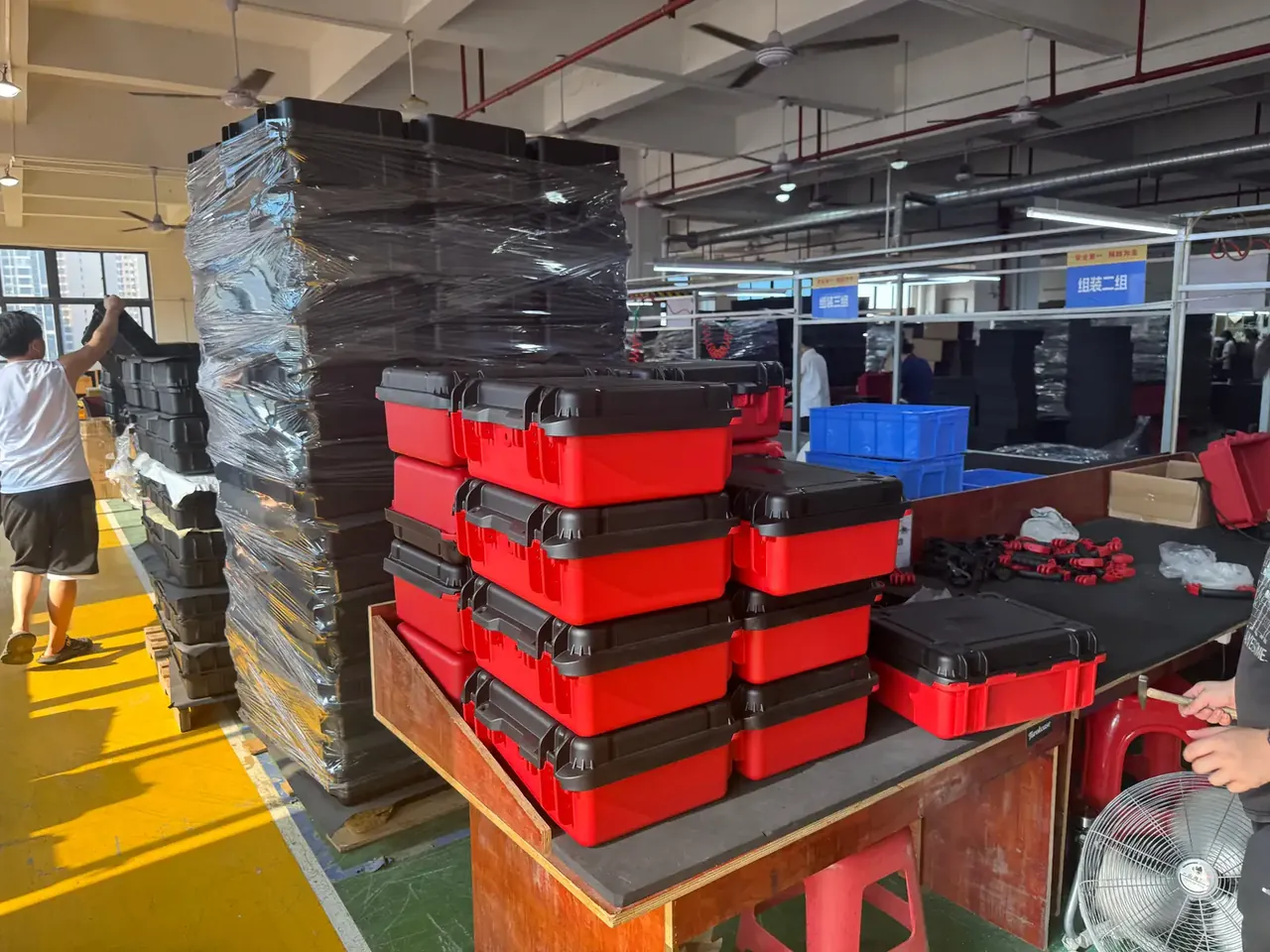
Quick answer: An Injection Molded Protective Case is not the default answer to every protection requirement. In one three-round job, a 600 x 400 x 220 mm body passed a 1.2 m drop only at 4.2 mm wall and 3.6 kg, where its price closed on a rotomolded rival.
Table of contents
- First Round: Where the Case Breaks
- Second Round: Wall Thickness and Latches
- Three Alternatives That Fit Narrower Conditions
- Four Situations Where It Should Not Be the Default
- One Table, Four Dimensions
- Four Contract Clauses
- FAQ
1. First Round: Where the Case Breaks
The brief: a 600 x 400 x 220 mm instrument case with foam, six-face drop from 1.2 m, five-high stacking, and a -20 C to 55 C cycle. T1 was built at 2.8 mm on an old mold base with new inserts.
The base and side corners held. On the lid's diagonal the latch boss whitened at 0.9 m, and at 1.2 m one latch let go. Sectioning showed a 2.4 mm boss root on the weld line's path.
| Round | Change | Drop result |
|---|---|---|
| T1 | 2.8 mm wall, plastic latches | Boss whitening at 0.9 m, release at 1.2 m |
| T2 | 3.6 mm bosses, metal keepers | 1.2 m passed, side bulge after 72 h stacked |
| T3 | 4.2 mm wall, two ring ribs | Six faces passed at 3.6 kg, cold retest passed |
That exposed structural margin, not a process fault: latch and hinge bosses are thin pads formed in one shot.
2. Second Round: Wall Thickness and Latches
T2 took bosses to 3.6 mm and swapped plastic latches for stainless keepers. Only inserts changed, so rework stayed under 20,000 RMB.
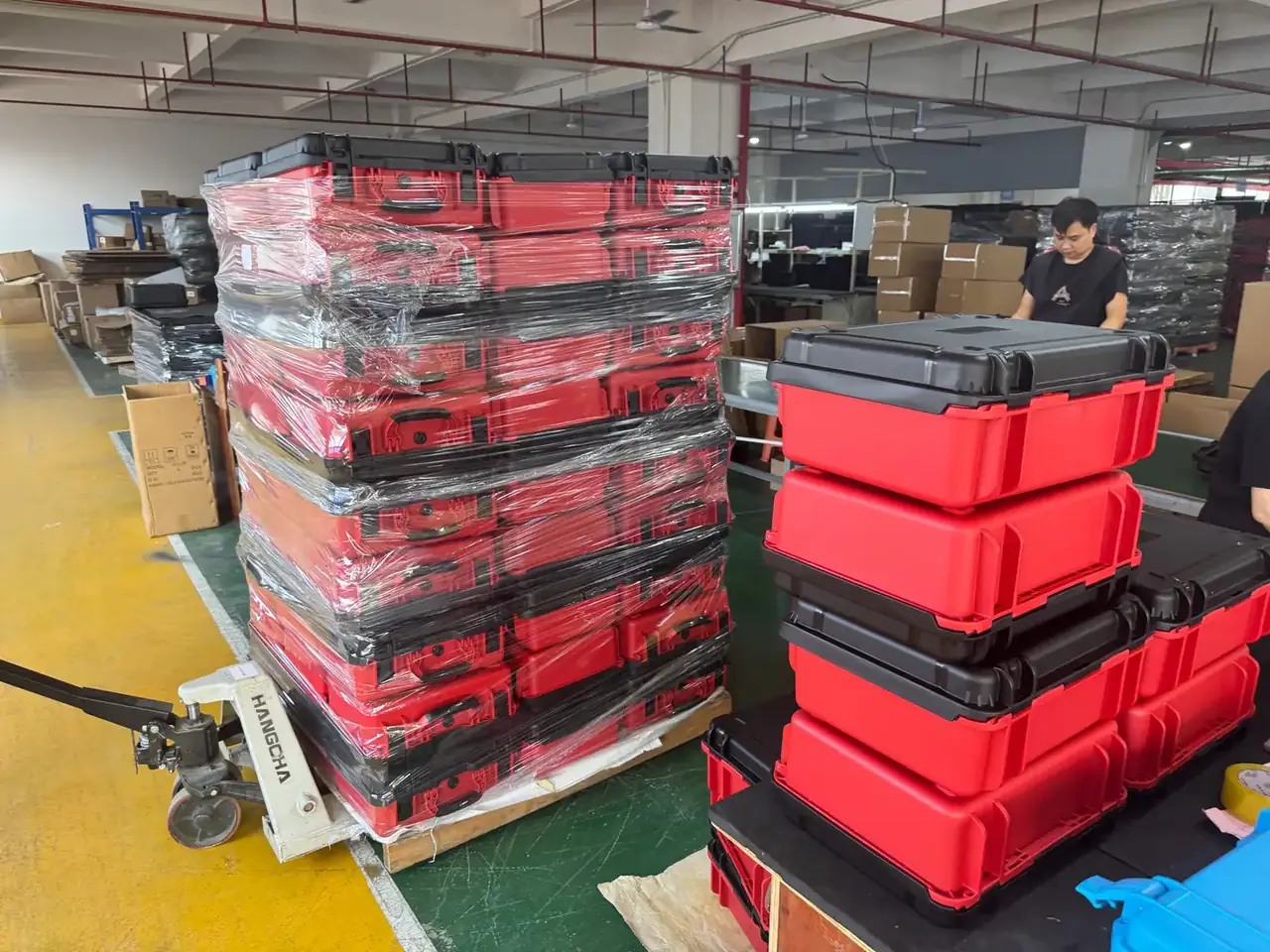
Bosses on the Injection Molded Protective Case stopped releasing and lid rebound settled. Stacking did not: after 72 hours at five high the mid-side wall bulged 1.5 mm, recovering 0.4 mm six hours after unloading.
The bulge traces to missing ribs. They pull along the draw direction, so depth is capped by the 1 to 2 degree draft, and a 4 mm rib at 60 mm deep carries almost no bending. Thicker bosses pay off, deeper ribs do not. Round three went to 4.2 mm. Weight 3.6 kg, cycle 78 s, cost up 31 per cent. All passed, but the quote came within 8 per cent of a rotomolded case.
3. Three Alternatives That Fit Narrower Conditions
Injection molding is not weak; here, stepping aside is cheaper.
- Outside dimensions past 800 mm, or depth past 350 mm: a rotational mold is a welded aluminium shell, so a cavity change only moves a weld bead, at 6 to 8 mm walls.
- Volume under 300 units on a non-standard shape: blow molding and rotomolding need a tenth of injection tooling spend.
- Dividers that keep moving: sheet-metal cases can be drilled later, while a cut tool freezes every position.
- Long outdoor exposure: rotomolded HDPE holds colour longer than PP.
4. Four Situations Where It Should Not Be the Default
Three rounds left four reasons to skip an Injection Molded Protective Case.
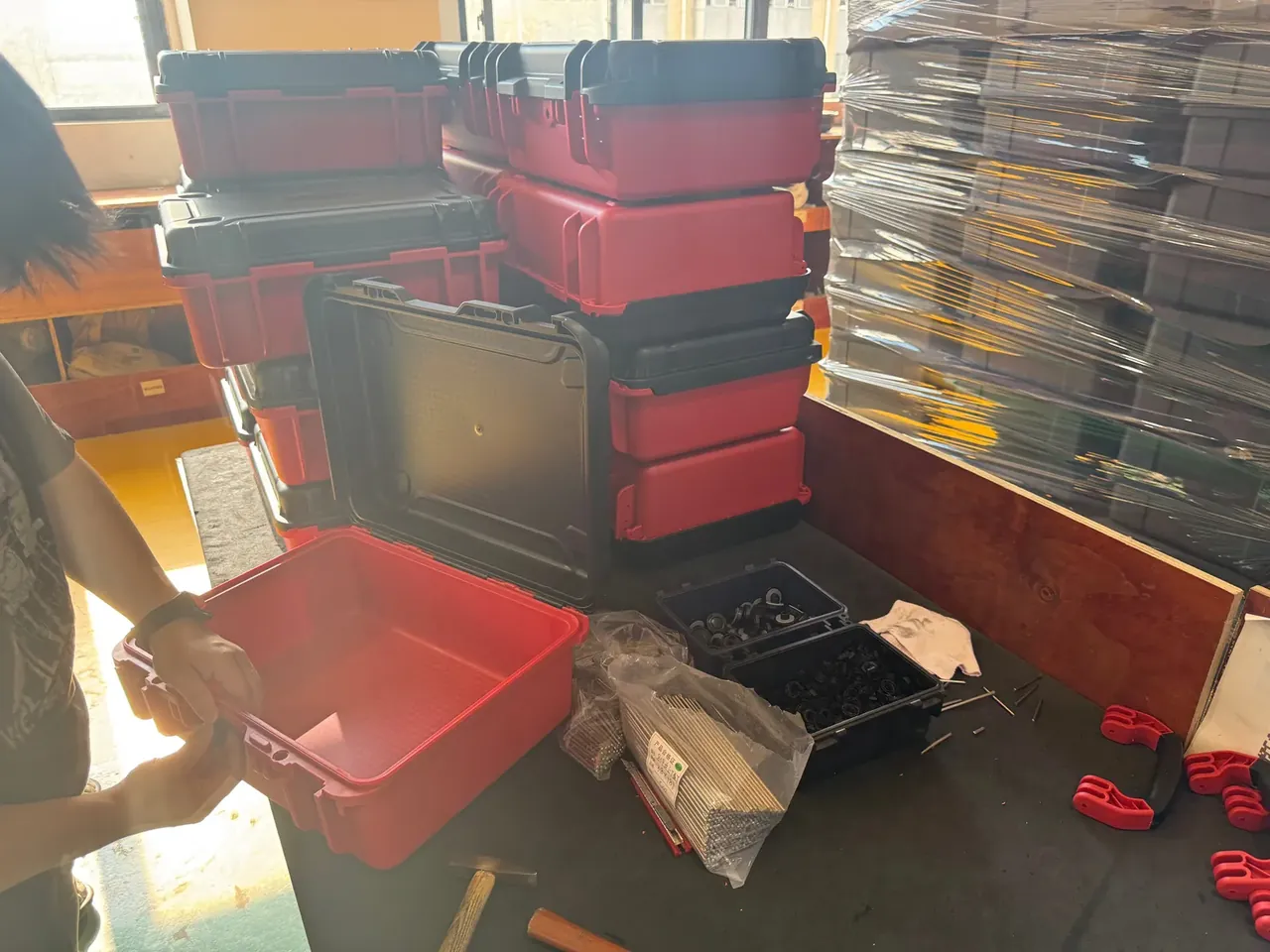
Empty weight can be capped: under 3 kg with insert, a 4.2 mm wall is off the table, and 2.8 mm erases the drop margin.
Volume can fail to absorb the tool: a 600 x 400 mold quotes 120,000 to 180,000 RMB, so 300 units carry 400 to 600 RMB each.
The interior keeps changing: three divider revisions, the third bill at 15 per cent of the first quote.
The environment can carry solvents: PP and ABS resist esters only so far, and cracking starts near the gate.
5. One Table, Four Dimensions
Forty days in, what settled it was this table, which ignores resin grades and compares four quantities that change the answer.
| Dimension | Injection Molded Protective Case | Rotomolded | Blow molded | Sheet-metal |
|---|---|---|---|---|
| Order quantity | 800 units and up | 30 and up | 200 and up | 10 and up |
| Wall range | 2.2–4.5 mm | 4–10 mm | 2–5 mm | 1.5–3 mm sheet |
| Interior change cost | 10,000–30,000 RMB | 3,000–8,000 RMB | 8,000–20,000 RMB | Re-drill and rivet |
| 1.2 m six-face drop | 4 mm wall or more | Standard wall passes | Corners need thickening | Internal frame |
Prices for the Injection Molded Protective Case are absent on purpose, since they move with volume. Order quantity and change cost hold steady; once either leaves the injection window, later tweaks polish the wrong solution.
6. Four Contract Clauses
- Record the sample's wall thickness, tolerance 0.15 mm, and re-measure lots at the same points.
- Record latch type and boss wall thickness; substitutions need written approval.
- Repeat drop and stacking as on the sample, three units per lot, recheck on failure.
- Record tool ownership and change billing, pricing insert work apart from cavity work.
Conclusion
We advised against the injection route after three rounds because the process has an edge, not a flaw: volume, a frozen interior, light tare weight and a clean environment, all at once. Break one and the cost returns as tooling bills, overweight and rework. Whether an Injection Molded Protective Case fits follows from four numbers, not taste.
This article discusses only the container (case body) side of specifications and design intent, and does not cover any handling, loading or use of the contents.
Related Reading
- How an injection molded protective case is actually formed
- Deriving case specs from load and stacking
- Material routes for firearm protective cases
- Tool box lid materials and structure
- How industry requirements differ for protective cases
Related Products
- 8 Series — Gun Cases; Military Equipment Cases; Camera Equipment Cases; Drone Cases; Watch Cases; Knife Cases; First Aid Cases; Electronics Equipment Cases
- WL8-2812 PP Gun Case — model WL8-2812
- All protective cases and toolboxes: 7 series, 158 models