

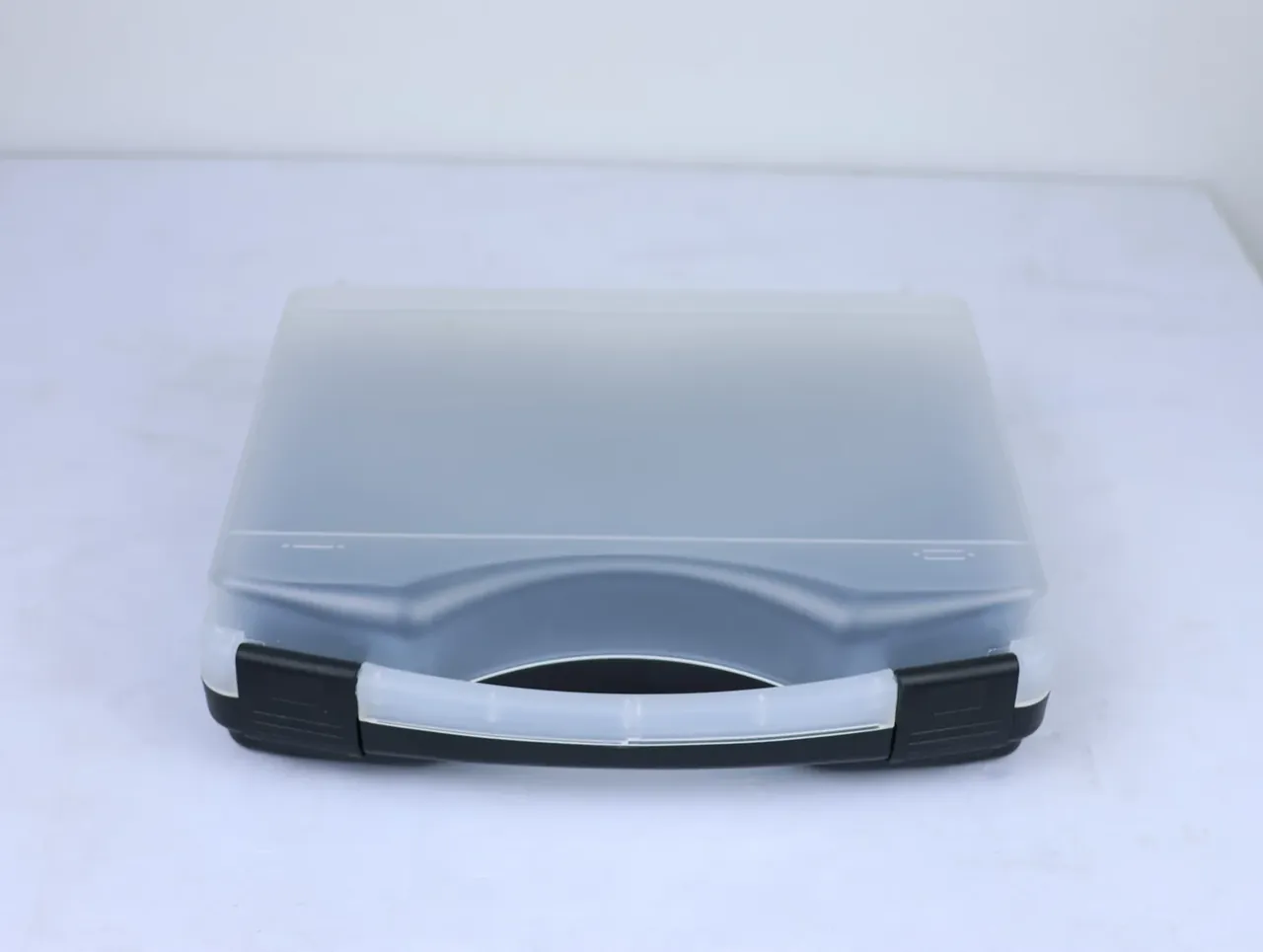
Quick answer: A knife case pays only while cutters stay under 150 mm, picks stay under 12 a shift and the box moves by hand. Break one and a pine rack, a cabinet or a trolley costs less.
Table of contents
- Four situations where a knife case should stay off the floor
- Against a pine rack: 460 yuan more, 0.6 mm of swell
- Against a stainless cabinet: 12 times the load, 1.4 m2 of floor
- Against a canvas roll: edge protection and volume
- Against a drawer trolley: 13 seconds on 40 picks
- The four side by side: when to swap the knife case out
- FAQ
1. Four situations where a knife case should stay off the floor
Last August a mould shop on the Zhejiang coast moved 47 milling cutters out of a pine rack and into 30 knife cases. Three months later 18 came back. A 185 mm long-edge cutter would not drop into a 520 x 340 x 120 mm cavity, and cutters used 40 times a shift lost the changeover race to the latch.
No shell had cracked. The box had been dropped into the wrong leg of the process.
It moves and stacks well: full on a trolley, five high on a rack, still square after a drop. It opens slowly, twice the motion of a drawer pull.
| Field signal | Better fit | What the swap saves |
|---|---|---|
| Single edge over 150 mm | Floor stand or wall rack | One less re-fixture per cutter |
| More than 25 picks a shift | Drawer trolley | About 9 minutes a shift |
| Handles wet with coolant | Cabinet with a drip tray | One wipe-down a shift |
| Load above 30 kg | Wheeled cabinet | Two-person lift becomes one push |
One signal is enough to take the case off that station. Two, and the line needs something else.
2. Against a pine rack: 460 yuan more, 0.6 mm of swell
A shop-made pine rack holds 24 cutters and costs 780 yuan with labour. The knife case of the same capacity runs 1240 yuan, so 460 more, or 19 yuan a slot.
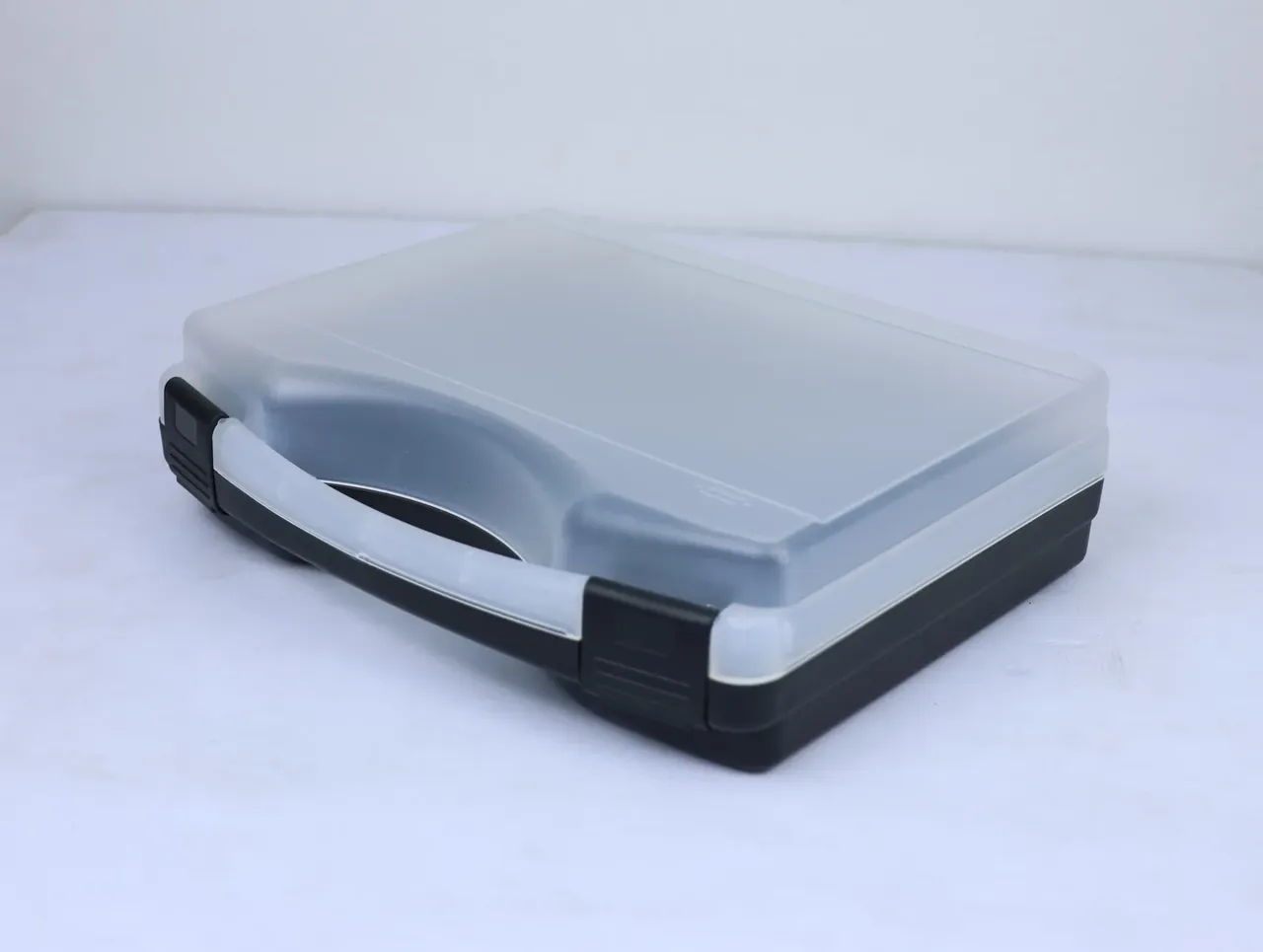
Humidity turns the argument. Through the plum rains a southern shop sits at 85% relative humidity; pine swells 0.6 mm and an 8 mm slot closes to 7.4 mm. A 6 mm spine still slides in. A 7 mm one is forced, and every forced entry raises the fibres. Wood does not spring back, and three rounds of that in a year will scrap the slot.
Polypropylene takes up water below 0.02%, so the same three months moves a slot under 0.05 mm. Above 70% relative humidity the 460 yuan comes back in re-cutting labour inside two years. Below 60% the rack keeps its edge.
3. Against a stainless cabinet: 12 times the load, 1.4 m2 of floor
A 1.2 m stainless cabinet weighs 210 kg and carries 300 kg per shelf; the case weighs 6.8 kg and is rated at 24 kg. That is 12 times the load, and 1.4 square metres of floor against 0.18 with the case stood on end.
The cabinet wins on bookkeeping: issue and return happen in one place. Coolant draws the other line: stainless shrugs off a pH 12 wash, while polypropylene soaked 300 hours above pH 10 at 50 °C will craze along the gate. A washing step means a material upgrade.
4. Against a canvas roll: edge protection and volume
A 12-pocket canvas roll weighs 0.9 kg and rolls to 380 mm; the case weighs 6.8 kg at 560 x 380 x 140 mm. The roll has almost no compression strength, so stacked five high the bottom one carries 34 kg and a handle punches through the cloth.
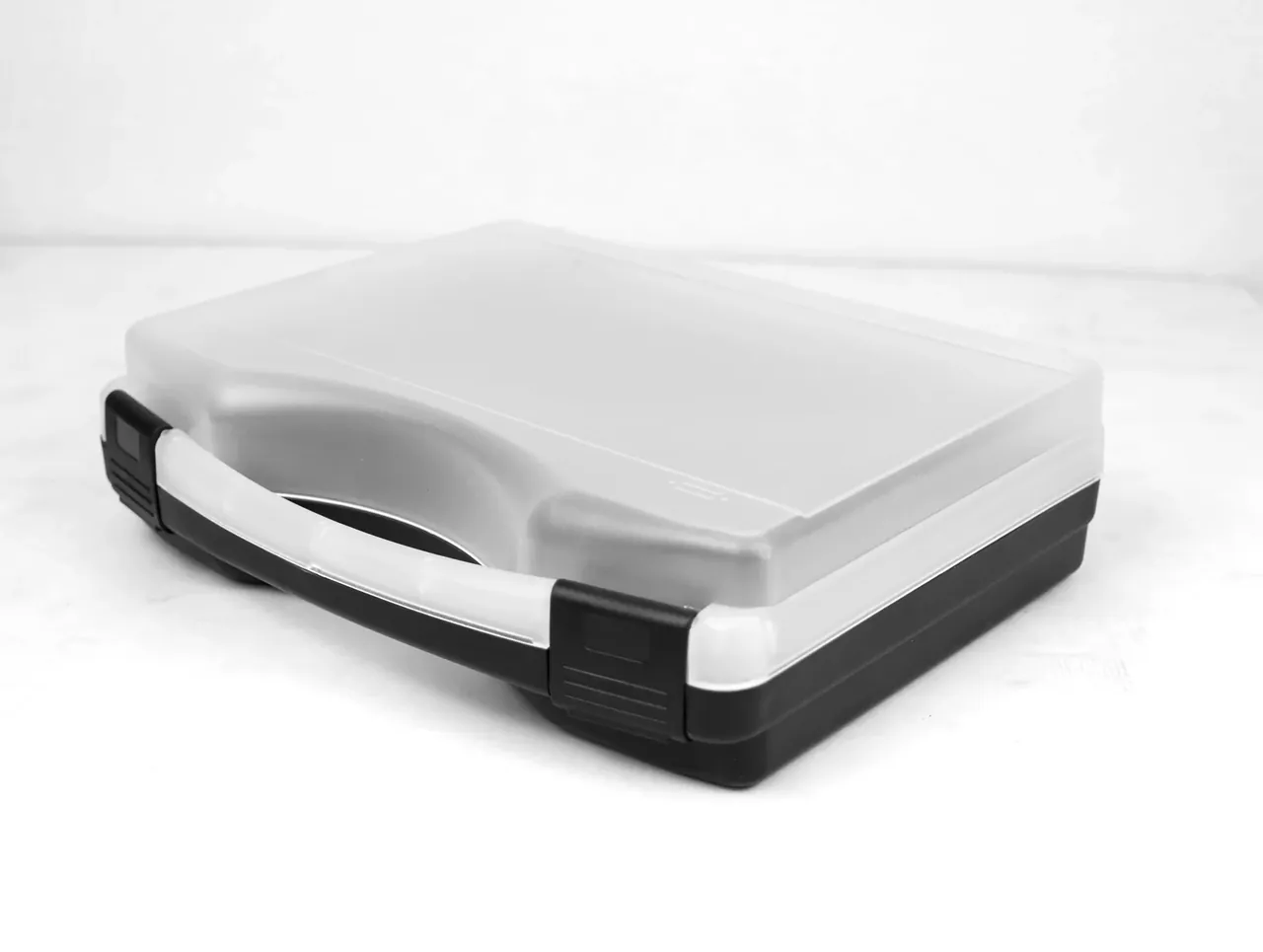
Edge protection is material, not thickness. The roll gives about 2 mm of canvas between edge and cloth. The case buries the edge in 30 mm of EVA, so on a 1.2 m drop the foam takes the impact. A white crease past 1 mm deep means the insert is spent.
Volume runs the other way: 0.42 square metres of bench for the open roll, 0.21 for the case whether open or shut.
5. Against a drawer trolley: 13 seconds on 40 picks
A four-drawer trolley on 35 kg runners takes 9 seconds to pull, pick and push back. The case takes 22 seconds to unlatch, lift, pick, close and press. That is 13 seconds, or 8.7 minutes over 40 picks, more than 3 hours a month.
The trolley stays indoors: thresholds, lifts, straps and weather all add steps on a cross-site run. Most shops mix them, keeping the trolley at the machine and the case on the road.
6. The four side by side: when to swap the knife case out
| Option | Cost each | Rated load | One pick | Swap when |
|---|---|---|---|---|
| Pine rack | 780 yuan | 60 kg | 4 s | Humidity below 60%, set fixed |
| Stainless cabinet | 4600 yuan | 300 kg | 7 s | Over 30 cutters, with a ledger |
| Canvas roll | 130 yuan | 8 kg | 6 s | Carried on the person, 3 cutters |
| Drawer trolley | 2100 yuan | 35 kg | 9 s | High-frequency picks in one bay |
Re-cutting the inserts in those 18 returned cases cost 2600 yuan, freight 480 and two lost days 3200, which is 6280 more than specifying correctly. None of it was a defect: two numbers, cutter length and pick frequency, went unrecorded.
Where it fits, the case is still the lightest option listed: 24 kg rated, 6.8 kg empty, under 3 yuan a cross-site trip.
Conclusion
The lesson from those 18 returns is not about the box. It is that carrying and stacking are where the case saves money, and long edges, high pick counts and wash tanks are where it loses. Set against a rack, a cabinet, a roll and a trolley, the trade comes down to four numbers: cutter length, pick frequency, rated load, floor area. Miss three and the case is the wrong tool; match them and a knife case stays the lightest link in the loop.
This article discusses only the container (case body) side of specifications and design intent, and does not cover any handling, loading or use of the contents.
Related Reading
- How slots and locating blocks are laid out
- Whether airdrop case comparisons carry over
- The trade-off lines in ammunition box comparisons
- Where transit cases stop and storage cases begin
- What to compare in insert materials
Related Products
- 8 Series — Gun Cases; Military Equipment Cases; Camera Equipment Cases; Drone Cases; Watch Cases; Knife Cases; First Aid Cases; Electronics Equipment Cases
- WL8-2812 PP Gun Case — model WL8-2812
- All protective cases and toolboxes: 7 series, 158 models