

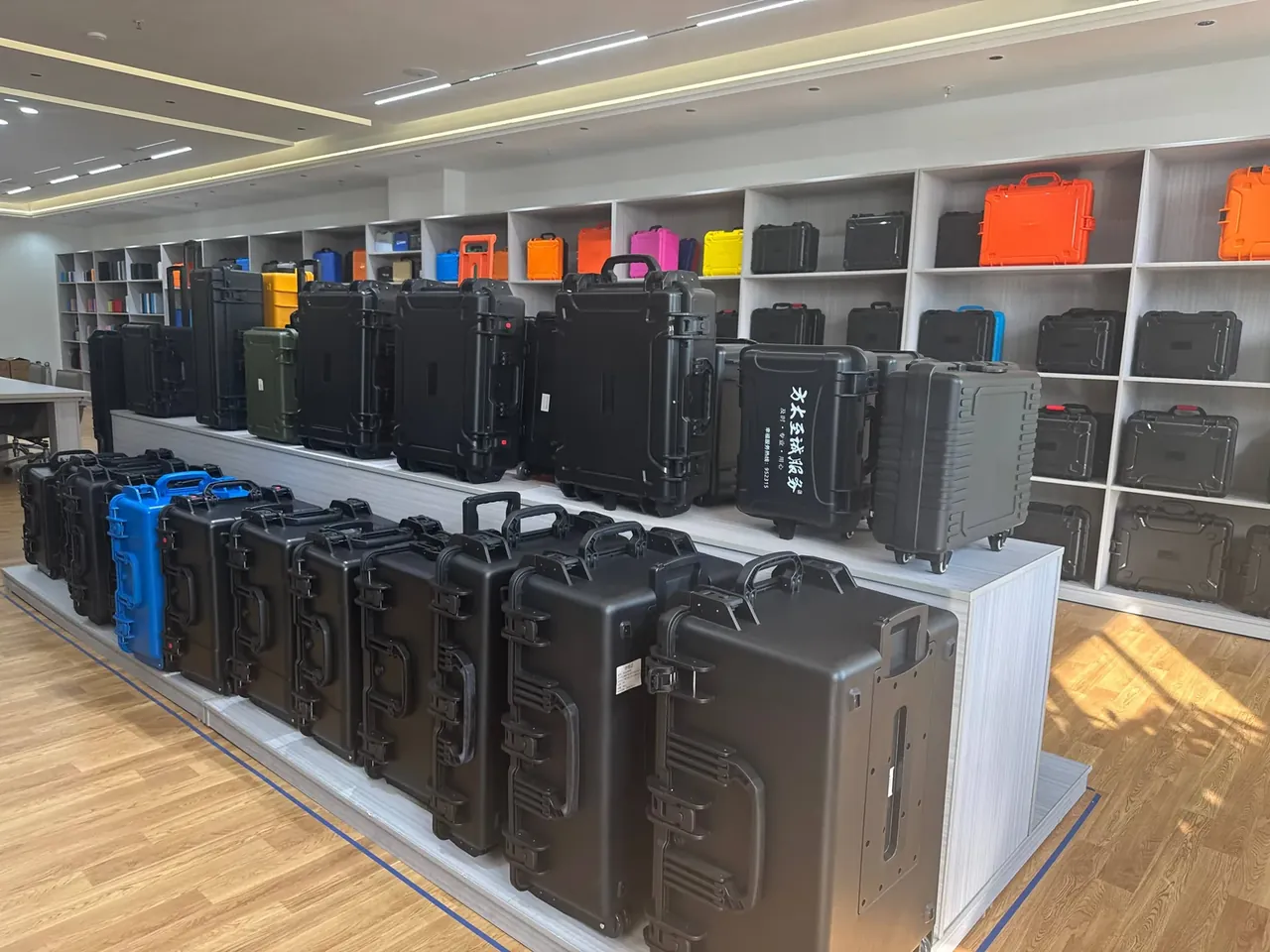
Quick answer: Case label peeling usually starts at the shell, not in the glue: PP sits at 30 mN/m against 38 for ABS, so one 25 μm tape holds 8 N/25mm on ABS and 4.5 on PP.
Table of contents
- Two paths before any tape change
- Surface energy at 30 and 38
- A dyne pen at 38 and three treatments
- 25 μm of adhesive and labelling temperature
- FAQ
1. Two paths before any tape change
A corner lifts, the label comes away whole and the wall underneath stays clean: the adhesive failed. Peel one back and find a white haze of glue on the wall while the backing is clean: the surface was too slippery to grip. Both look the same on a returned case, the fixes point in opposite directions, and the tear test that separates them takes about 10 s.
Read where the residue landed. Glue stuck to the shell means the adhesive grips the case better than it grips the label stock, so the primer or the adhesive type is at fault. A clean wall means the glue never wet the shell, which puts the problem in surface energy and cleaning. On a 60 mm × 30 mm label a corner lift over 2 mm is already a reject.
So the first move in case label peeling is not a tape change, it is deciding which side the glue chose to stay on.
Cleaning is the step that gets skipped. Release agent, hand grease and plasticiser from the wrapping film leave an invisible low-energy layer; one wipe with isopropanol plus 30 s of flash-off restores the material's own pull strength. Stick without wiping and the label rides a film that tears at the first nick.
2. Surface energy at 30 and 38
Polypropylene measures 30 mN/m and ABS 38 mN/m, an 8 mN gap worth a whole grade of wetting. The same 25 μm acrylic tape pulls 8 N/25mm off untreated ABS and 4.5 N/25mm off untreated PP.
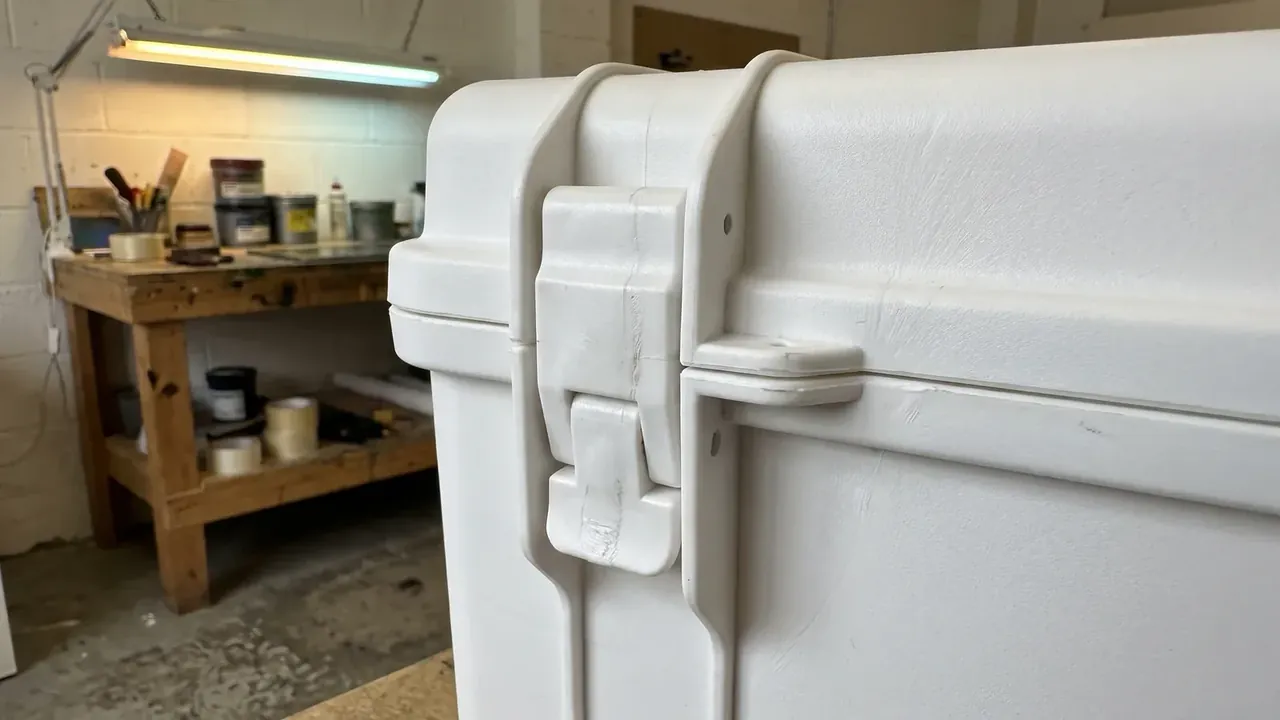
Low surface energy widens the contact angle. The adhesive bridges the peaks of the moulded texture instead of flowing into the valleys, so contact area shrinks and peel stress concentrates at the corner, which is where the lift begins. Water gives a quick second opinion: it beads near 100° on PP and spreads to about 70° on ABS, and the adhesive spreads the way the water does.
Surface energy is chemistry; roughness only amplifies it.
| Wall condition | Surface energy (mN/m) | Peel (N/25mm) | After 4 h at −20 ℃ | Verdict |
|---|---|---|---|---|
| PP, untreated | 30 | 4.5 | 1.8 | Reject |
| PP, sanded to Ra 1.6 | 34 | 6.3 | 2.5 | Still reject |
| PP, flame treated | 40 | 8.6 | 3.4 | Pass |
| ABS, untreated | 38 | 8.0 | 3.0 | Pass |
The sanded row is the one people mistake for a cure. An Ra 1.6 pattern lifts peel by 40%, from 4.5 to 6.3 N/25mm, and still misses the 8 line, because roughness does nothing about the inert chemistry of PP. A PP shell that must carry a label needs flame or primer in the process card; an ABS shell only needs proper cleaning.
The cold column deserves its own line. At −20 ℃ the acrylic hardens and peel falls from 8 N/25mm to 3 N/25mm, so case label peeling surfaces on the second morning of a cold-chain run rather than on the day of application.
3. A dyne pen at 38 and three treatments
Draw a 10 mm line of 38 dyne fluid on the wall. If it holds as a continuous film for 2 s without pulling into droplets, the surface is at or above 38 mN/m and the label can go straight on; if it breaks into beads within 1 s, the surface is below 38 and needs treatment first.
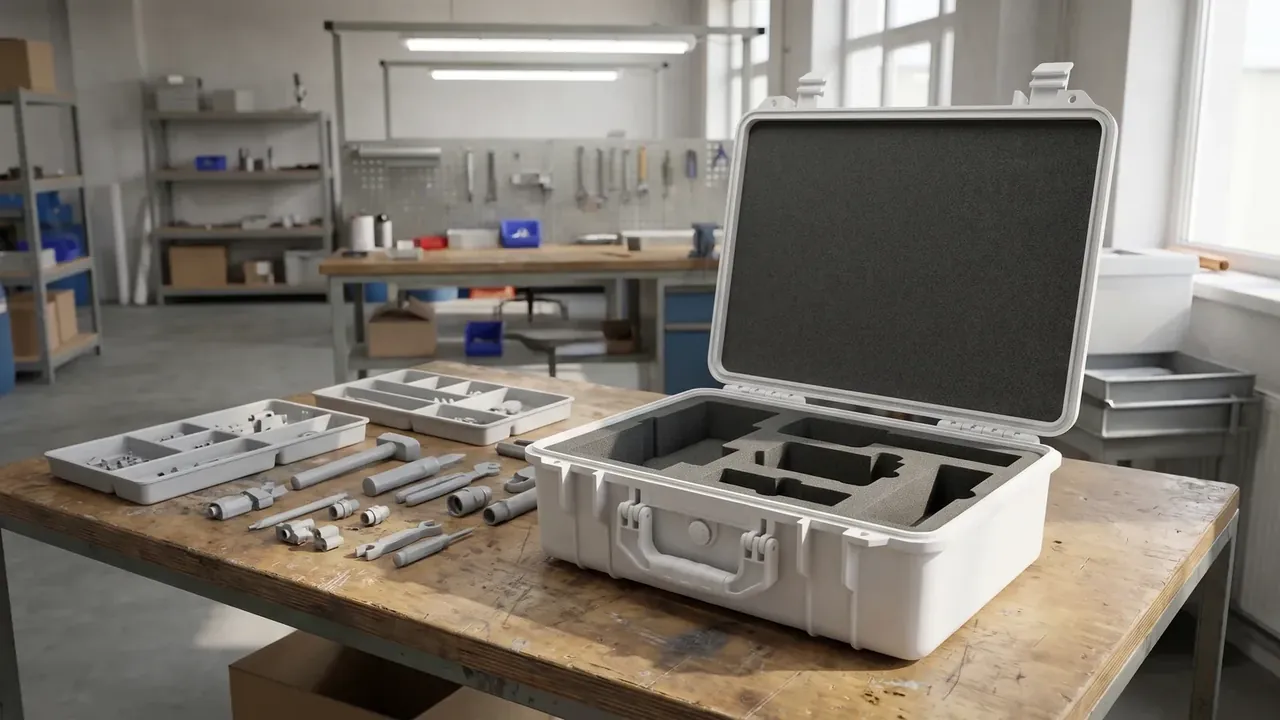
Test three spots per case: the centre of the label area, within 5 mm of each corner, and alongside the parting line. If one spot fails, judge by the lowest reading. Release agent collects near the parting line and drags the number down 4 to 6 grades against the centre.
Three treatments cover the range, ordered by cost. Flame passes a gas torch across the wall for 0.5 s, reaching 40 mN/m and 8.6 N/25mm at 0.2 yuan per case on flat faces. Corona at 3 kW reaches 42 mN/m and 9.1 N/25mm for 0.4 yuan on a continuous line. A 1–2 μm chlorinated polyolefin primer reaches 44 mN/m and 9.5 N/25mm at 1.2 yuan, and it is the one that works on curved faces.
Keep the flame blue and pass the wall through the inner cone for half a second, stopping when the surface just starts to gloss. Turning yellow means the pass went too far, the PP skin degrades and bond strength drops. Corona effects decay about 15% within 24 h, so treated shells should be labelled on the same shift, and a flame-treated surface is best used within 8 h before airborne contamination pulls the reading back 4 grades.
A reading of 44 is not a bonus. It means the skin has been over-treated, the polymer chains cut and a chalky low-strength layer left where the label must bond; peel then tears the wall itself, which is harder to repair than a loose label.
4. 25 μm of adhesive and labelling temperature
A 25 μm adhesive layer is the common specification. Thin it to 20 μm and the glue no longer fills the moulded valleys, costing about 20% of peel; push it to 35 μm and the corner squeezes out an adhesive lip that collects dust and lifts first.
Labelling temperature belongs between 20 and 30 ℃. Below 15 ℃ the initial tack is too low and corners spring back within 24 h; above 35 ℃ the adhesive is soft enough to be pushed to the edge during roll-down, leaving a ring of glue with no pressure behind it.
Roll pressure is 0.15 MPa with three passes, plus 2 s of extra pressure on each corner. A hand squeeze measures about 0.03 MPa, which barely reaches the last 2 mm of a corner, and that is where the lift starts.
Measure peel 24 h after application. Pressure-sensitive adhesive needs time to wet out, and an instant reading comes in about 30% low. Curved faces need a soft adhesive pushed along the arc in one direction, and label corners should be moulded at R2 or more; a sharp corner thins the adhesive and no treatment holds it.
Conclusion
Case label peeling can be settled by one fixed order: tear the label to see which side keeps the glue, draw 38 dyne fluid at the label centre, at each corner and beside the parting line, treat any wall below 38, re-test, and check peel at 8 N/25mm a day after application. A new adhesive cannot rescue a 30 mN/m surface, and a treated surface cannot rescue adhesive hardened by cold. Run in that sequence, a repair decision drops from 15 min to 5 min per case and the repeat rate falls from 30% to under 10%.
| Dyne reading | Surface energy (mN/m) | Untreated peel (N/25mm) | Action |
|---|---|---|---|
| 34 or lower | Below 34 | Under 4.5 | Flame or prime, then re-test |
| 36 | 34–37 | 5.5 | Clean and re-read, treat if it fails again |
| 38 | 38 | 8.0 | Label directly |
| 40 | 40 and above | 8.6 | Preferred for cold routes |
This article discusses container-side specifications and design implications only, and does not cover any handling, loading or use of the contents.
Related Reading
- Label area and nameplate placement on cases
- When screen printing suits a case shell
- Label content rules for packaging compliance
- Layout and wording of English case labels
Related Products
- 8 Series — Gun Cases; Military Equipment Cases; Camera Equipment Cases; Drone Cases; Watch Cases; Knife Cases; First Aid Cases; Electronics Equipment Cases
- WL8-2812 PP Gun Case — model WL8-2812
- All protective cases and toolboxes: 7 series, 158 models