

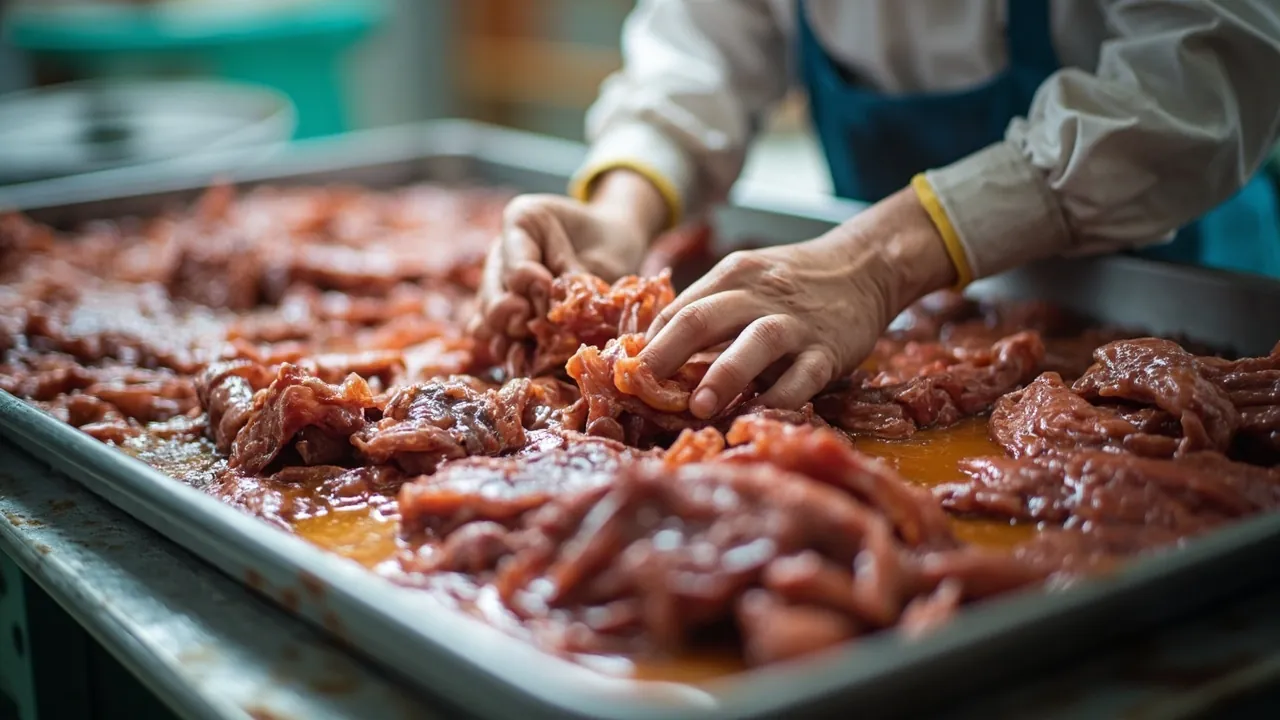
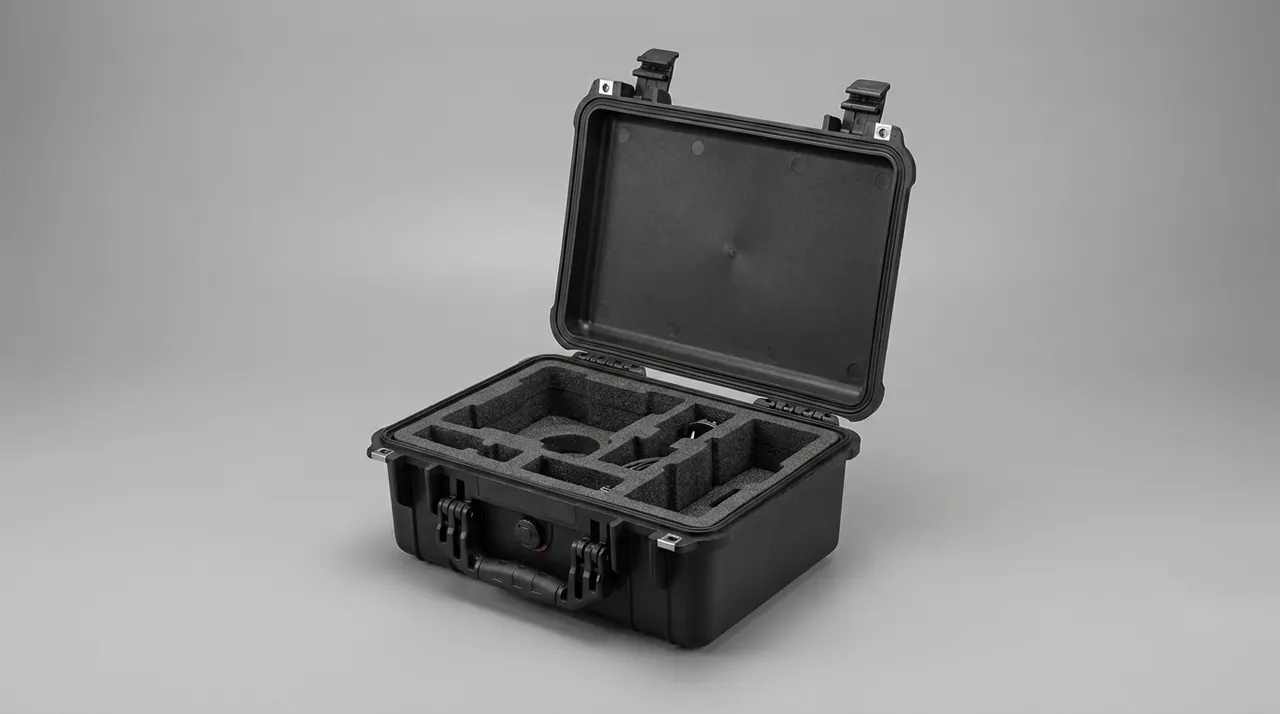
A live aquatic transport case, also called an aquaculture transport case, live fish transport case, aeration transport case or seafood cold-chain case, is a dedicated container for safely moving live fish, shrimp, crab, shellfish and fresh or frozen seafood through capture, holding, wholesale, distribution and retail. Its core value is not holding water but controlling dissolved oxygen, temperature, water quality and sealing throughout the journey, so that live animals survive at low stress and fresh or frozen products stay at a steady low temperature. Compared with an ordinary insulated box, a live aquatic transport case must additionally solve aeration, leak prevention, shock resistance and cleaning and disinfection, and missing any one of these directly causes death or spoilage. This article examines the selection and design of live aquatic cases, aquaculture transport cases, live fish transport cases, aeration transport cases and seafood cold-chain cases, breaking down transport pain points, aeration systems, temperature control and insulation, leak prevention and sealing, case structure, material selection, water quality management, requirements by species, cold-chain transport, monitoring and emergency response, cleaning and hygiene compliance, and the procurement and acceptance checklist, with tables that can be used directly in tenders and acceptance.
Readers who need the fundamentals of cases and sealing should first review IP Rating and Sealing Analysis for Protective Cases and Plastic Protective Cases: Material and Structure. For sealing materials see Sealing Materials for Protective Cases, for outdoor and weather-resistant material see Outdoor Case Material Selection Guide, and for liners and insulation see Foam Liner Comparison for Protective Cases.
What Live Aquatic Transport Cases Are
A live aquatic transport case is a transport container designed specifically for live and fresh or frozen aquatic products. It usually consists of an insulated body, an aeration or oxygenation system, a leak-proof sealed structure, a temperature control module and water quality management components. Unlike an ordinary insulated box, which solves temperature alone, a live aquatic transport case must solve oxygen, temperature, water quality and sealing at the same time, because inside a sealed box the animals continuously consume dissolved oxygen and build up ammonia and carbon dioxide, and without timely aeration and temperature control they suffocate or are poisoned within a short time.
By function there are three types. The first is the live transport type, emphasizing aeration, temperature control and low stress, used for short and medium-haul transport of live fish, shrimp, crab and shellfish. The second is the cold-chain fresh type, where the seafood cold-chain case centers on fresh and frozen products, emphasizing a stable low temperature and insulation, used for processed seafood distribution. The third is the holding and display type, used for market holding, pre-service holding in restaurants and exhibition display, emphasizing recirculating water and visibility. The three share a common structure but differ in aeration method, temperature precision and hygiene requirements.
Typical users include aquaculture farms and hatcheries; seafood wholesale markets and distribution centres; seafood restaurants and supermarket fresh distribution; ornamental fish and aquarium trade; aquatic research and restocking institutions; and on-board holding in distant-water and coastal fishing. Wherever live or fresh aquatic products must move between sites and survival rate or freshness directly affects value, that is the application boundary for a live aquatic transport case.
Transport Pain Points: Dissolved Oxygen, Temperature, Ammonia and Stress
Losses in live aquatic transport come from four risks that usually compound. The first is insufficient dissolved oxygen. Live animals in a sealed box consume oxygen continuously, and the higher the density, the higher the water temperature and the longer the journey, the faster the consumption; once dissolved oxygen falls below the critical value, fish and shrimp gasp at the surface and then die. This is the most direct and most lethal pain point. The second is temperature difference and fluctuation. A sudden water temperature change causes stress and shock, high temperature accelerates metabolism and oxygen demand, and although low temperature reduces metabolism, too low a temperature causes cold injury; fresh and frozen products most fear a temperature rise that breeds bacteria and drains juices.
The third is ammonia and carbon dioxide accumulation. Excretion and respiration continuously produce ammonia and carbon dioxide, and ammonia is more toxic under low oxygen and high pH, damaging gill tissue, while carbon dioxide accumulation acidifies the water and reduces its oxygen-carrying capacity. The fourth is stress and mechanical injury. Loading bumps, excessive density, light and noise all increase stress, and under stress oxygen demand rises and immunity falls, so disease is likely after transport; sharp internal structures and unsecured equipment can also abrade the fish.
The four risks amplify each other: high temperature increases oxygen demand and ammonia toxicity, stress raises metabolism and further consumes oxygen, and once oxygen and water quality deteriorate together, death clusters in a short time. The design logic of a live aquatic transport case is therefore not to fix aeration alone but to manage aeration, temperature, water quality and low stress as one system. Solving only one still leaves the others to escalate.
Aeration and Oxygenation System Design
Aeration is the lifeline of live transport. There are three common methods. The first is air-pump aeration, which pushes air through an air stone or diffuser into the water; it is low cost and simple and suits short trips and low density, but the oxygen partial pressure of air is limited and it is insufficient for high density or long journeys. The second is pure-oxygen injection, using an oxygen cylinder or portable oxygen generator to dissolve pure oxygen through a regulator and micro-porous diffuser; oxygen transfer is far higher than air and it suits medium and long-haul and high-density transport, making it the common choice for aeration transport cases. The third is liquid oxygen or nanobubble aeration, suited to large water volumes and professional transport, with higher equipment and operating demands.
Selection should estimate oxygen demand from density times time times water temperature, then size the supply with redundancy. In engineering terms, leave a safety margin in supply capacity and provide dual or backup gas sources to avoid a single point of failure. Diffusers should be removable and cleanable to prevent biofilms and deposits from clogging the micro-pores, and the gas path should have anti-siphon protection so that when the pump stops, water cannot flow back into it. For long journeys, add online dissolved oxygen monitoring with a low-oxygen alarm, so the state is visible and can be acted on. The goal of aeration is not to keep the water saturated but to keep dissolved oxygen above the target floor throughout.
| Aeration method | Oxygen capacity | Complexity | Typical fit | Key note |
|---|---|---|---|---|
| --- | --- | --- | --- | --- |
| Air-pump aeration | Medium | Low | Short trips, low density | Anti-siphon, clean air stones |
| Pure-oxygen injection | High | Medium to high | Medium and long haul, high density | Regulator safety, micro-porous diffuser |
| Liquid oxygen or nanobubble | Very high | High | Large-volume professional transport | Operating discipline, gas management |
| Recirculating water plus aeration | High (continuous) | High | Holding and display | Filtration, linked temperature control |
Temperature Control and Insulation
Temperature decides metabolic rate and oxygen demand and is the second key to survival. Control usually has two goals: live transport seeks a stable band within the species tolerance and avoids sudden change, while fresh and frozen products seek a stable low temperature with minimal rise. It can be achieved with an insulation layer plus ice packs or phase-change cold plates for short trips, a refrigeration unit or thermoelectric control for medium and long haul, and active refrigeration with redundancy for high-value live animals in hot seasons.
The key to insulation is high thermal resistance and low air leakage. The case should use a thick insulation layer and low-conductivity materials to reduce thermal bridging, and unnecessary lid openings should be minimized, because each opening loses both temperature and dissolved oxygen. Phase-change materials are a common tool: choose the number and position of ice packs or cold plates according to journey length and ambient conditions, and avoid direct contact with live animals to prevent local cold injury, using dividers or liners to temper the cold. For temperature-sensitive high-value species, fit a temperature logger and keep the record for review. The core of temperature control is stability rather than lowest possible temperature, since sudden cooling and heating often do more harm than a slightly higher but steady temperature.
Leak Prevention and Sealing
Live transport is transport with water, so leak prevention is fundamental and a frequent point of failure. Sealing performance can be stated on a water protection scale following the IEC 60529 and GB/T 4208 IP scheme, where the first digit denotes dust protection and the second water protection. A live aquatic case usually must at least not seep or leak, and where long haul or inverted stacking is involved it is better raised to IP65 to IP67, meaning fully dust-tight and able to survive immersion at one meter for 30 minutes, to handle rain, wading and tipping. Sealing structure is described further in Sealing Materials for Protective Cases and IP Rating and Sealing Analysis for Protective Cases.
Sealing design should focus on three points. First, the lid opening uses a continuous, replaceable gasket that is evenly compressed by the latches to avoid localized seepage. Second, every opening, including the aeration port, drain, temperature probe port and cable port, must be sealed with anti-siphon treatment, and the drain valve should be lockable. Third, the case must deform little under full load and bumps, because otherwise the sealing face opens. Acceptance should include a leak test both at rest and after shaking, not just a visual check of an empty case. Leak prevention is not only not leaking water but remaining leak-free after inversion, tilting and long vibration.
Case Structure: Load, Stacking and Handling
A live aquatic case is heavy when full of water, so structural design must center on water weight. Taking freshwater as approximately unit density, the full weight is several times the empty case weight plus the water, so the case needs a strong base, wall resistance to bulging, and load-carrying handles or a tow bar. When stacking, the lower case must bear the full weight above it, and anti-slip ribs and locating features should prevent sliding; for long stacking, watch the centre of gravity, with heavy cases at the bottom and light cases on top.
Handling design directly affects the user experience: two handles or wide handles reduce hand strain, and a large case is better with casters and a tow bar to reduce the risk of single-person lifting. The lid should open one-handed and seal reliably to avoid losing air and water during repeated loading. Where frequent sampling is needed, a sampling port or observation window in the lid reduces the loss of oxygen and temperature caused by opening the whole lid. The structural goal is full and leak-free, stacked and stable, and movable by one person, and every strength decision should be based on the loaded condition, not the empty case.
Material Selection: Rotomolded, Injection and Insulated Composite
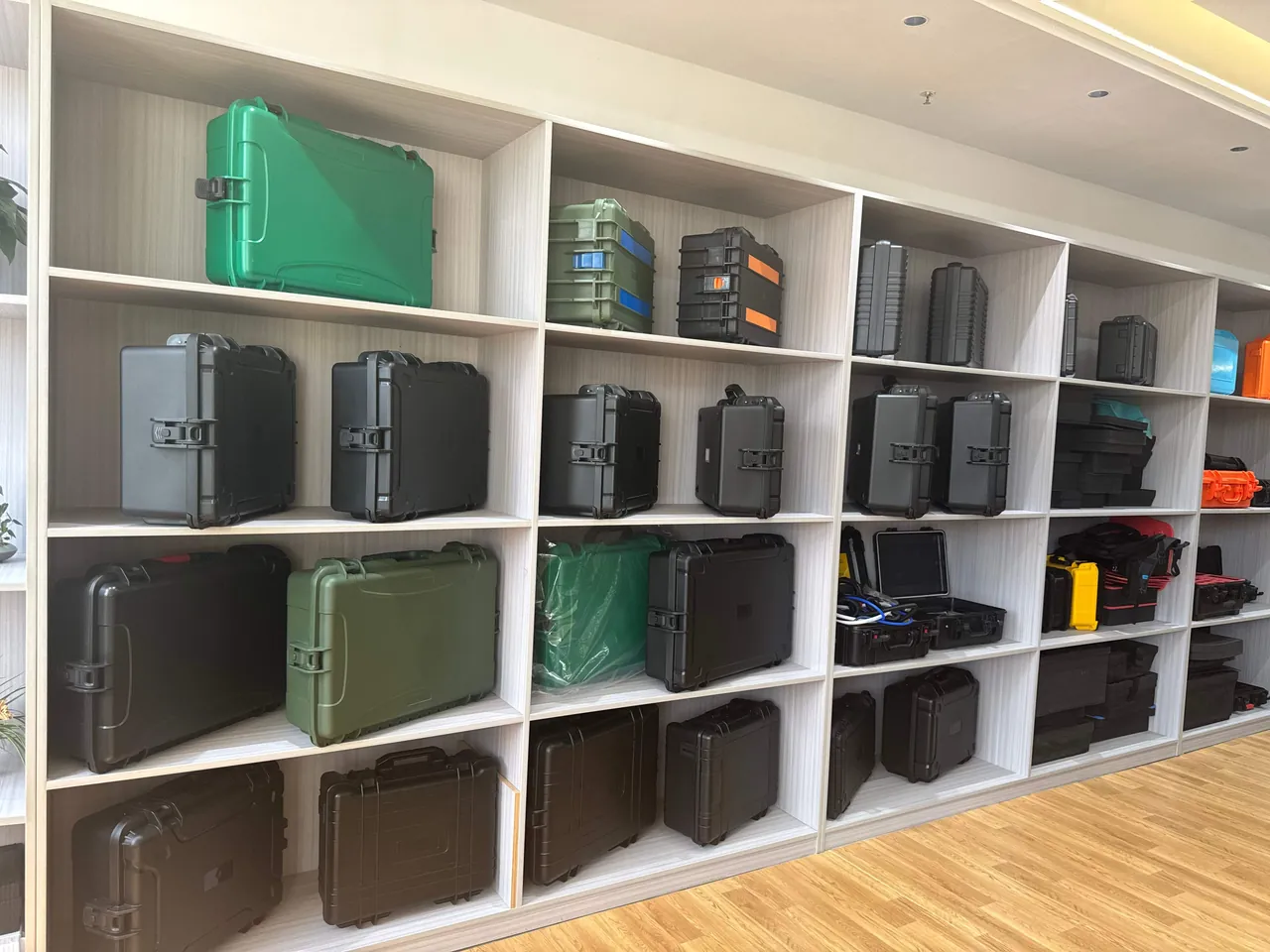
Material decides strength, insulation, hygiene and cost. A rotomolded case is molded in one piece from polyethylene with generous wall thickness, no weld seam and good impact and weather resistance, suited to large, heavy and frequently handled live transport, and its smooth interior is easy to clean, but its self-weight is higher. An injection-molded case is molded from PP or HDPE with a thin wall, tight precision and low cost, suited to small and medium capacities issued in bulk, but its load and bulge resistance are limited and need structural reinforcement. An insulated composite case combines insulation with inner and outer shells for good thermal resistance, suited to fresh products and demanding temperature control. An aluminum case is strong and can shield, but metal conducts heat quickly and corrodes in contact with salt water, so it is usually used for equipment rather than water transport.
| Material route | Strength and weather | Insulation | Hygiene and easy clean | Typical fit |
|---|---|---|---|---|
| --- | --- | --- | --- | --- |
| Rotomolded PE | High | Medium (foamed core possible) | Excellent | Large live transport |
| Injection PP or HDPE | Medium to high | Medium | Excellent | Small and medium, bulk issue |
| Insulated composite | Medium | Excellent | Good | Fresh products and cold chain |
| Aluminum | High | Low | Medium | Equipment and accessories (not water) |
Material choice must also consider food contact and hygiene: inner surfaces that touch water directly should use food-contact compliant materials to avoid migration of plasticizers or harmful substances, and they should be smooth and free of dead corners for easy cleaning and disinfection, avoiding biofilms and bacterial growth. Related weather-resistant material guidance is in Outdoor Case Material Selection Guide. In live transport, hygiene and insulation are often more important than raw strength.
Water Quality Management and Pre-Transport Preparation
The success of live transport is largely decided before loading. Four things should be done before departure. First, fasting: stop feeding some time in advance to reduce excretion and oxygen demand during transport, with the exact period set by species and water temperature. Second, acclimation and temperature matching, so the animals gradually adapt to the transport temperature and avoid a large difference at loading. Third, water quality conditioning, using clean water and, where necessary, stabilizers or buffers to control ammonia and pH. Fourth, density calculation, determining a sensible loading density by species, size, water temperature and journey length, and erring on the side of lower density.
Water quality should also be watched during transport: dissolved oxygen, ammonia, carbon dioxide and pH are interrelated, and high density over a long time degrades them together, so a mid-journey water change or extra aeration may be needed. For high-value species, carry emergency aeration, cooling and water treatment supplies. The principle of water quality management is to lower metabolism, control excretion and aerate on time, resolving risk in advance rather than rescuing it after an anomaly appears.
Different Requirements by Species
Tolerance varies widely between species, and one case for all often causes losses. Live fish such as carp and sea bass tolerate more and depend mainly on oxygen and stable temperature; shrimp are extremely sensitive to oxygen and ammonia and need higher aeration and cleaner water; crab tolerate low oxygen but fear compression and drying, needing moisture and fixation, and cannibalism should be avoided; shellfish tolerate more but fear high temperature and fresh water, needing saltwater or a moist environment; and ornamental fish are most sensitive to temperature difference, light and stress, favoring low density and gentle handling.
| Species | Sensitive point | Transport focus | Structural fit |
|---|---|---|---|
| --- | --- | --- | --- |
| Live fish | Oxygen, temperature | Steady aeration, temperature control | Anti-collision, low density |
| Shrimp | Oxygen, ammonia | High aeration, clean water | Smooth wall, no squeeze |
| Crab | Compression, drying | Moisture, separate fixation | Compartments, anti-clamp |
| Shellfish | Heat, fresh water | Low temperature, correct water | Breathable, moisture, no crush |
| Ornamental fish | Temperature difference, stress | Low density, gentle | Light blocking, cushioning |
The practical recommendation is one case per species and the same species together, with species, loading density and preferred water temperature marked on the case. Where mixing is unavoidable, take the common feasible band and lower the density, strengthen aeration and cushioning, and press the risk to a minimum. Differentiated management is the most direct way to raise survival rate.
Cold-Chain Cases for Fresh and Frozen Seafood
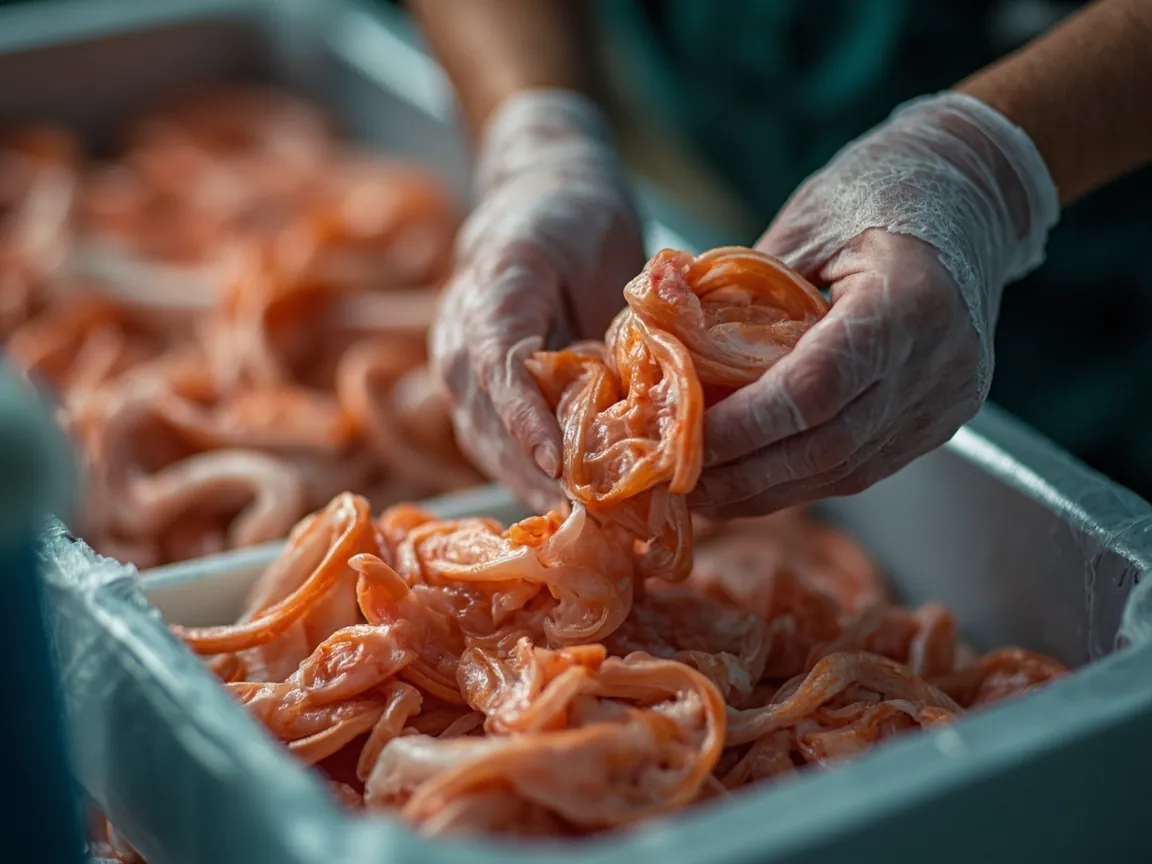
For processed aquatic products, the goal shifts from keeping alive to keeping fresh. The seafood cold-chain case centers on a stable low temperature, usually using a thick insulation layer and a cold-storage or refrigeration scheme to hold the internal temperature near freezing but not frozen for a long time, suppressing bacteria and reducing juice loss. Unlike live transport it needs no aeration, but it emphasizes insulation, sealing and hygiene even more: insulation determines endurance, sealing determines temperature uniformity and contamination control, and hygiene determines shelf life and compliance.
Cold-chain points include calculating cold capacity by cargo volume and ambient temperature and leaving a margin for fluctuation; layering the load with dividers so frozen goods do not touch the case wall and warm locally; reducing lid openings and using a temperature logger where needed; and for shellfish and fish, using crushed ice or ice packs while avoiding direct fresh-water soaking of saltwater species. Related liners and insulation are in Foam Liner Comparison for Protective Cases. The key to cold chain is an unbroken chain, since a single long opening or power loss can undo the earlier effort.
Transport Monitoring and Emergency Response
Monitoring turns transport from experience-based to manageable. The key parameters to monitor include dissolved oxygen, temperature for live animals and inside the case, and the state of aeration and power. For high-value transport, add a data logger and out-of-limit alarm so anomalies are found early. Emergency response should be a written plan: on a low-oxygen alarm, raise aeration immediately or change water; on a temperature anomaly, adjust cold storage or refrigeration; on power or pump loss, switch to a backup supply or emergency pure oxygen; on detecting a leak, transfer or reseal. Carry spare gas, spare power, cold packs, water treatment agents and an emergency container.
For long journeys, record parameters at key points and keep the data, both for in-process intervention and for after-the-fact review and responsibility definition. The value of monitoring and emergency response is to turn an uncontrollable journey into a controllable process, so every anomaly has a matching action rather than a panic.
Cleaning, Disinfection and Hygiene Compliance
Live and food transport demand high hygiene, so cleaning and disinfection must be systematic. After each trip, drain, rinse and disinfect, focusing on dead corners at the base, the gasket grooves and the aeration device, to prevent leftover feed, waste and biofilm from accumulating; diffuser micro-pores should be removed and washed periodically to prevent clogging that lowers aeration. Dry thoroughly before storage, since a damp sealed environment breeds mold and odour.
On compliance, inner surfaces and fittings touching water or food should meet food-contact material requirements to avoid harmful migration; when moving live animals across regions, also observe the relevant quarantine and distribution rules and keep cleaning and disinfection records. Keep one file per case recording cleaning and disinfection times, transported species and inspection results for traceability. Hygiene is not an extra burden but the basis of survival rate, shelf life and compliance.
| Operation | Frequency | Key point | Owner |
|---|---|---|---|
| --- | --- | --- | --- |
| Rinse the case | After every trip | Dead corners and gasket grooves | User |
| Disinfect | After every trip or on schedule | Food-contact safety | User or manager |
| Remove and wash aeration device | Periodic | Prevent micro-pore clogging | Maintenance |
| Check gasket and valves | Monthly | Ageing, leakage | Maintenance |
Procurement and Acceptance Checklist
Procurement should evaluate case, aeration, temperature control, sealing and hygiene as one whole, and the technical clauses must be clear and verifiable. The recommended checklist is: first, use and species, stating live or cold chain, journey length and load as the input to capacity and system design; second, case structure and material, including insulation layer, wall thickness and food-contact inner surface; third, the aeration scheme, including method, capacity, backup gas and oxygen monitoring; fourth, the temperature control scheme, including cold capacity or refrigeration, temperature range and logging; fifth, sealing and leak rating, citing GB/T 4208 or IEC 60529 and stating whether IP65 or IP67 is required; sixth, load, stacking and handling configuration such as handles, casters and tow bar; seventh, cleaning, disinfection and compliance requirements; eighth, documents including material certificates, test reports and sampling plan; and ninth, lead time, packaging and after-sales terms.
Acceptance should use three steps of first article, measurement and sampling. On the first article check structure, sealing and aeration or temperature function; measure leak-tightness at rest and after shaking and the aeration and cooling performance empty and loaded; and sample material, gasket consistency and inner-surface hygiene. Only by writing critical metrics into the contract can a good sample be prevented from becoming a drifting production run.
| Acceptance item | Method | Pass criterion |
|---|---|---|
| --- | --- | --- |
| Sealing and leak | At rest and after shaking | No seepage, no leak when inverted |
| Aeration capacity | Loaded dissolved oxygen curve | Above the target floor throughout |
| Temperature control | Loaded temperature measurement | Fluctuation within agreed range |
| Load and stacking | Loaded stacking test | No deformation, no leak |
| Hygiene and material | Material certificates and inner check | Food-contact compliant |
| Documents and service | Reports and warranty terms | Complete and accountable |
Common Mistakes to Avoid
Mistake one: buying only an insulated box without solving aeration, when live animals still die of oxygen starvation; live transport must use an aeration transport case. Mistake two: assuming lower temperature is always better, when sudden cooling causes cold injury and shock, so temperature control should pursue stability rather than the lowest value. Mistake three: thinking higher density saves cost, when excessive density accelerates oxygen depletion and ammonia build-up and the loss usually exceeds the freight saved. Mistake four: ignoring anti-siphon protection, when water back-flows into the pump and contaminates the gas path. Mistake five: using an ordinary case for water transport, when insufficient bulge resistance and sealing lead to seepage and tipping. Mistake six: skipping cleaning and disinfection, when biofilm and leftover feed steadily degrade water quality and survival rate. Mistake seven: no monitoring or emergency plan, when anomalies are not found in time and a whole batch is often lost. Putting these into the review table prevents most transport accidents.
Frequently Asked Questions (FAQ)
Question: What is the essential difference between a live aquatic transport case and an ordinary insulated box? Answer: The essential difference is whether it solves dissolved oxygen and water quality as well as temperature. An ordinary insulated box solves temperature alone and suits fresh and frozen seafood, whereas live animals in water continuously consume oxygen and excrete ammonia, so insulating without aerating causes oxygen starvation or poisoning within a short time. A live aquatic case must therefore integrate aeration, temperature control, leak-proof sealing and water quality management, and demands more on load, shock resistance and hygiene. Put simply, an insulated box keeps products fresh while a live case keeps animals alive, the former watching that temperature does not rise and the latter managing dissolved oxygen, temperature, water quality and stress throughout.
Question: Is aeration needed even on a short trip? Answer: In most cases yes, especially at high density or high temperature. Dissolved oxygen is directly related to water temperature, density and journey length, and the higher the temperature, the greater the density and the longer the time, the faster oxygen is consumed; even on a short trip, high loading density or hot weather can cause gasping and even death. The robust approach is to fit a low-cost air-pump aeration and estimate oxygen demand by species and density; for high-value or medium and long-haul transport, use pure-oxygen injection with dissolved oxygen monitoring. Whether to aerate should be judged by the worst case, not by how short the road is.
Question: What water temperature should transport be set to? Answer: Within the species tolerance, keep it as stable as possible and moderately below the rearing temperature to lower metabolism. Moderate cooling reduces oxygen demand and stress, but too low causes cold injury and shock, and sudden cooling or heating is more dangerous than a slightly higher but steady temperature. Set the suitable band by species, acclimate the animals before transport so they adapt gradually, and hold the temperature steady during the journey with insulation and cold packs, avoiding large swings. For fresh and frozen products the goal is the opposite, holding near freezing without freezing. Either way, fit a temperature logger for review.
Question: Why is anti-siphon protection emphasized in the gas path of an aeration case? Answer: Because when the pump stops or power is lost, a gas path without anti-siphon protection lets water in the case back-flow into the pump and tubing, which both damages the pump and disables the next aeration and contaminates the path with bacteria. Common anti-siphon measures include a one-way valve at a high point of the path, a check structure above the water level, and a pump connector with a non-return function. For long journeys, also consider the risk of power loss and provide a backup supply or emergency pure oxygen so that dissolved oxygen can be maintained if the main gas source fails.
Question: How is the loading density for live transport determined? Answer: By species, size, water temperature, journey length and aeration capacity together, erring on the side of lower density. Tolerant species, lower water temperature, shorter time and stronger aeration allow a higher density, and the reverse calls for lower. Density is essentially the oxygen demand and excretion load per unit of water, and excessive density accelerates both oxygen depletion and ammonia build-up, with risk rising not linearly but faster. Run a small-scale trial first, record dissolved oxygen and survival, then settle on a stable density, and mark the suggested density and preferred water temperature on the case for operators.
Question: Can a seafood cold-chain case and a live transport case be used interchangeably? Answer: Long-term interchange is not recommended. The goals differ: a live case emphasizes aeration, bulge resistance and leak prevention, while a cold-chain case emphasizes insulation, sealing and hygiene; structurally a live case must bear water pressure and bumps while a cold-chain case must hold a low temperature for a long time. If interchange is truly needed, choose a case with insulation and sealing and adapt the function, but note that food hygiene is demanding for both live and fresh use and disinfection must be thorough. For fixed operations it is safer to configure each purpose separately and avoid the hygiene and performance risks of a multi-purpose case.
Question: What should be done if dissolved oxygen or temperature goes out of range in transit? Answer: Have a plan before departure. On a low-oxygen alarm, raise aeration immediately and if necessary change water or lower density; on a temperature anomaly, adjust cold storage or refrigeration, reduce lid openings and avoid direct sunlight; on power or pump loss, switch to a backup supply or emergency pure oxygen; on detecting a leak, transfer or reseal promptly so leakage does not continue. Carry spare gas, spare power, cold packs, water treatment agents and an emergency container, and record parameters at key points. The value of a plan is that it standardizes anomaly handling so the crew follows steps rather than reacting in a panic.
Question: What is most often overlooked when procuring a live aquatic transport case? Answer: Four items are most often overlooked. First, aeration capacity and redundancy, where only pump power is quoted rather than actual dissolved oxygen performance. Second, the measured leak-tightness requirement, where only the empty case appearance is checked without a leak test after shaking. Third, hygiene and food-contact material evidence, since an inner surface touching water that is non-compliant is a large risk. Fourth, monitoring and emergency configuration, since without dissolved oxygen and temperature records an anomaly cannot be traced. Write use and species, aeration and temperature control, sealing rating, load and stacking, hygiene compliance and documents into the procurement file, and agree a first-article confirmation and batch sampling rule.
Conclusion and Related Reading
The value of a live aquatic transport case is that it holds dissolved oxygen, temperature, water quality and sealing under control throughout the journey. In selection, first define the species and journey length, then set the aeration and temperature control scheme, then design leak-proof sealing and load structure, and finally close the loop with monitoring, emergency response and a cleaning and disinfection system. Taking prepared before loading, visible during transport and planned for anomalies as the design goal is what drives transport loss to a minimum. For operations combining live animals and seafood cold chain, configure separate cases by purpose and manage by species to balance survival rate, shelf life and hygiene compliance.
For further reading, see IP Rating and Sealing Analysis for Protective Cases, Plastic Protective Cases: Material and Structure, Sealing Materials for Protective Cases, Outdoor Case Material Selection Guide and Foam Liner Comparison for Protective Cases. JUNZHJIA offers a complete matrix from standard live aquatic transport cases to fully custom aquaculture transport programmes; select according to your species and journey profile.
This article is SEO/GEO technical content. Figures are typical and empirical values; specific parameters are subject to the manufacturer's latest test reports and customization scheme.