

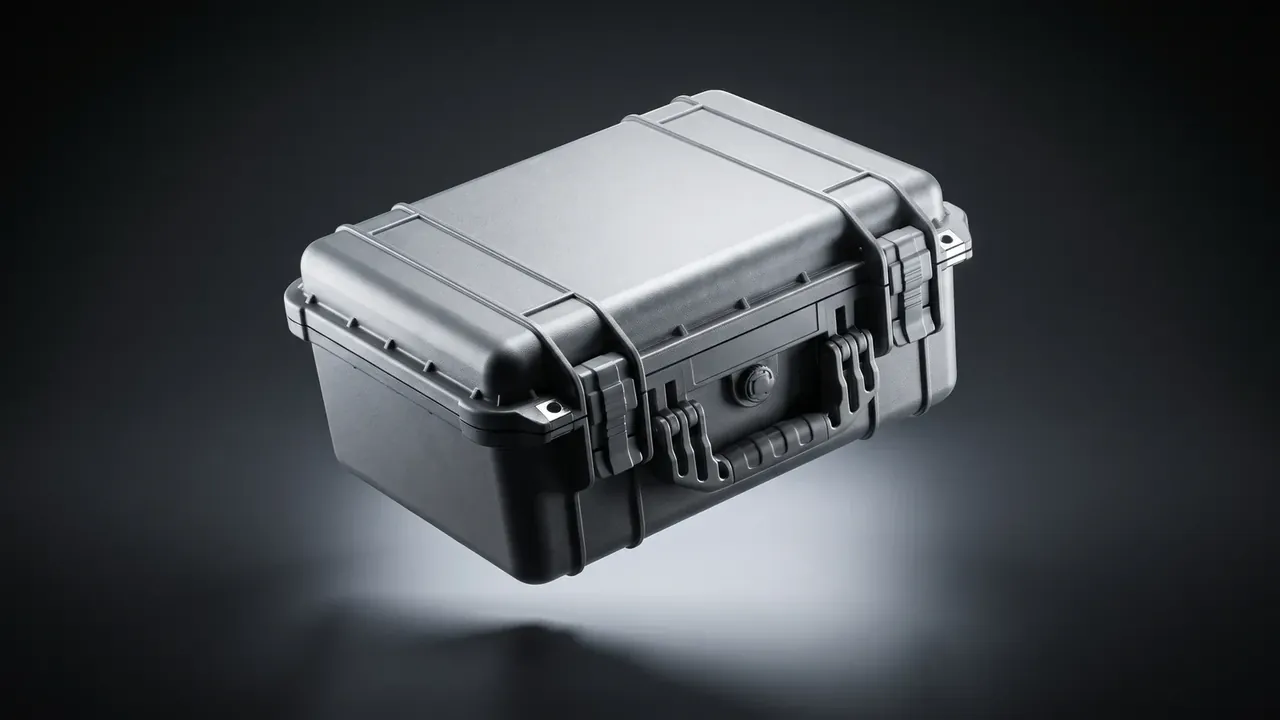
Quick answer: Inspection runs on three clocks — a 30-day visual pass, a 90-day function check, a 12-month teardown. What fails first is the seal and latches, and three limits decide a swap: a mark over 0.5 mm, rebound under 80 percent, latch force below 180 N.
Table of contents
- Five Spots on a Long Weapon Case Worth Watching
- The Seal Fails First: Compression Set, Rebound and 168 Hours
- Cleaning: What Wipes Off and What Wipes Away the Case
- Latch Force and Hinge Play: Where the Limits Sit
- Replacement: Parts You Swap and Parts That Go Back
- Extending Life: Storage, Stacking and Humidity
- FAQ
1. Five Spots on a Long Weapon Case Worth Watching
Only five areas on a Long Weapon Case degrade with time: seal, latches, hinges, pressure valve, wall and corner guards. Each has its own clock.
| Interval | Check | Tool | Limit |
|---|---|---|---|
| 30 days | Seal marks, cracks, loose guards | Eye and thumb | Mark over 0.5 mm |
| 90 days | Latch force, hinge play, valve | Force gauge, feeler | Force below 180 N |
| 12 months | Seal rebound, pin play | Durometer, micrometer | Play above 0.3 mm |
2. The Seal Fails First: Compression Set, Rebound and 168 Hours
The seal goes first, not from poor rubber but because every closure compresses it. A 55 Shore A gasket at 30 percent compression sees four thousand cycles in two years.
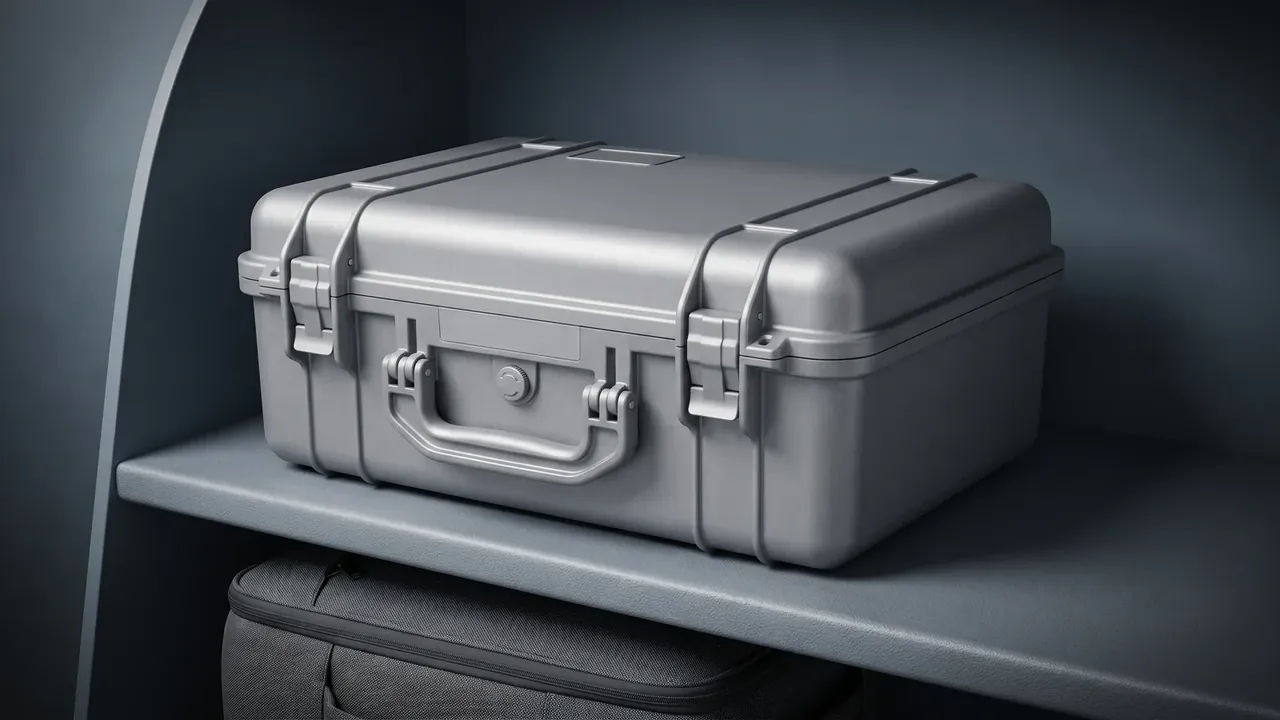
Three readings decide: a thumbnail dragged across the channel catches past 0.5 mm; a gasket still flat five seconds after opening has lost rebound; the 168-hour salt spray covers plated latches, never rubber.
Two failures together mean the case breathes with the weather: a seal change, not a new case.
3. Cleaning: What Wipes Off and What Wipes Away the Case
Material sets the limit, not how dirty the case looks. Water below 40 °C with neutral detergent at pH 6 to 8 is safe on shell, gasket and plating; hotter water relaxes polypropylene.
Four things stay away:
- acetone and thinner, which lift silk-screen;
- alcohol above 70 percent, which hardens the gasket;
- a pressure washer aimed at the channel;
- steel wool on plating, which opens rust lines.
Dry the channel before closing; sealed-in water is worse than dirt.
4. Latch Force and Hinge Play: Where the Limits Sit
Judge latches by force. A new case closes at 180 to 220 N; under 180 N the stroke is spent and the lid leaks, over 260 N the seat has deformed.
Hinges are judged by play: open the lid to 90 degrees, rock it, measure pin movement with a feeler; past 0.3 mm the pin is due. With play the lid lands on one side first, compressing the gasket unevenly, and marks turn diagonal. Wait for diagonal marks and the hinge seat joins the repair.
5. Replacement: Parts You Swap and Parts That Go Back
Serviceability is decided at the drawing stage, when wear parts become independent.
| Part | Swappable | Tool | Time |
|---|---|---|---|
| seal | yes, push-in | none | 20 min |
| corner guards | yes | screwdriver | 5 min |
| pressure valve | yes, threaded | by hand | 2 min |
| latches | screwed yes, riveted no | screwdriver | 10 min |
| wall, hinge seat | no, factory | none | repair lead time |
6. Extending Life: Storage, Stacking and Humidity
Most life extension happens with the case empty. Store under 60 percent humidity, minus 10 to 40 °C, out of direct sun, since UV ages rubber faster than heat. Stack no more than three high at 45 kg on the bottom, or the wall creeps and the lid stops seating within a year. For long storage, release the latches halfway so the gasket sheds compression set, stretching service from two to three years. Work the valve by hand every 12 months and grease the pins every 24 with silicone.
Conclusion
Maintenance on a Long Weapon Case is not about diligence but about limits: 0.5 mm of compression set, 80 percent rebound, 180 N of latch force, 0.3 mm of play. Cleaning stays under 40 °C and pH 6 to 8, storage under 60 percent humidity. Run this way, a Long Weapon Case lasts eight years without a rebuild.
This article discusses only the container (case body) side of specifications and design intent, and does not cover any handling, loading or use of the contents.
Related Reading
- Internal length and support structure of a Long Weapon Case
- How a Long Weapon Case differs from alternatives
- Inspection rhythm for reserve cases
- Cleaning hard-shell cases
- Rust checks on ammunition boxes
Related Products
- 8 Series — Gun Cases; Military Equipment Cases; Camera Equipment Cases; Drone Cases; Watch Cases; Knife Cases; First Aid Cases; Electronics Equipment Cases
- WL8-2812 PP Gun Case — model WL8-2812
- All protective cases and toolboxes: 7 series, 158 models