

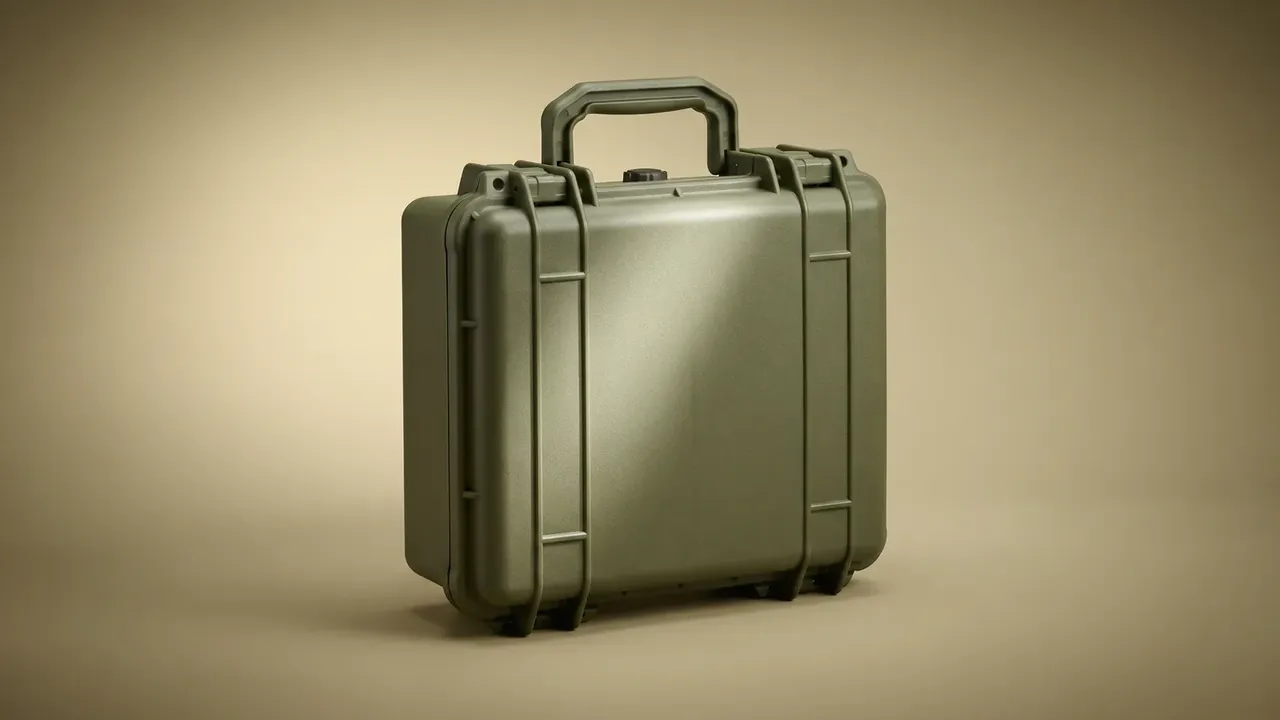
Quick answer: Interior dimensions are the worst starting point. In a Metal Ammunition Box the chain runs load to floor area to interior to gauge to structure, and sealing last.
Table of contents
- A Metal Ammunition Box spec starts with load
- Interior dimensions follow load distribution
- Gauge changes along the load path
- Flanges, ribs and latches share the force
- Sealing and coating land on tolerances
- Six values fill the specification sheet
- FAQ
1. A Metal Ammunition Box spec starts with load
Fix the interior first and adjust the gauge later — the commonest order and the one that generates most rework. A specification is a chain: load sets floor area, floor area sets the interior, interior and stack height set the gauge, gauge and edge form set the structure. Freeze a link early and the rest is bought back with thickness.
Nothing fails on the first delivery. The problem surfaces at the third batch, when the lid sags in the middle and the cover needs a push before it closes.
| Load source | How to calculate | What it sizes |
|---|---|---|
| Contents | Weight times count, over floor area | Floor gauge |
| Stacking | Upper weight times 1.5 | Lid gauge and ribs |
| Drop shock | Peak acceleration in a loaded 0.9 m corner drop | Corner flanges and latches |
A specification sheet without a load calculation is a copy.
2. Interior dimensions follow load distribution
Bigger is not better, and two millimetres over a sample outline is not enough. Spread 60 kg over 0.18 square metres and it works out at about 330 kg per square metre; squeeze the same load onto 0.12 and it becomes 500. Clearance follows the hands: 8 mm bare, 15 mm gloved.
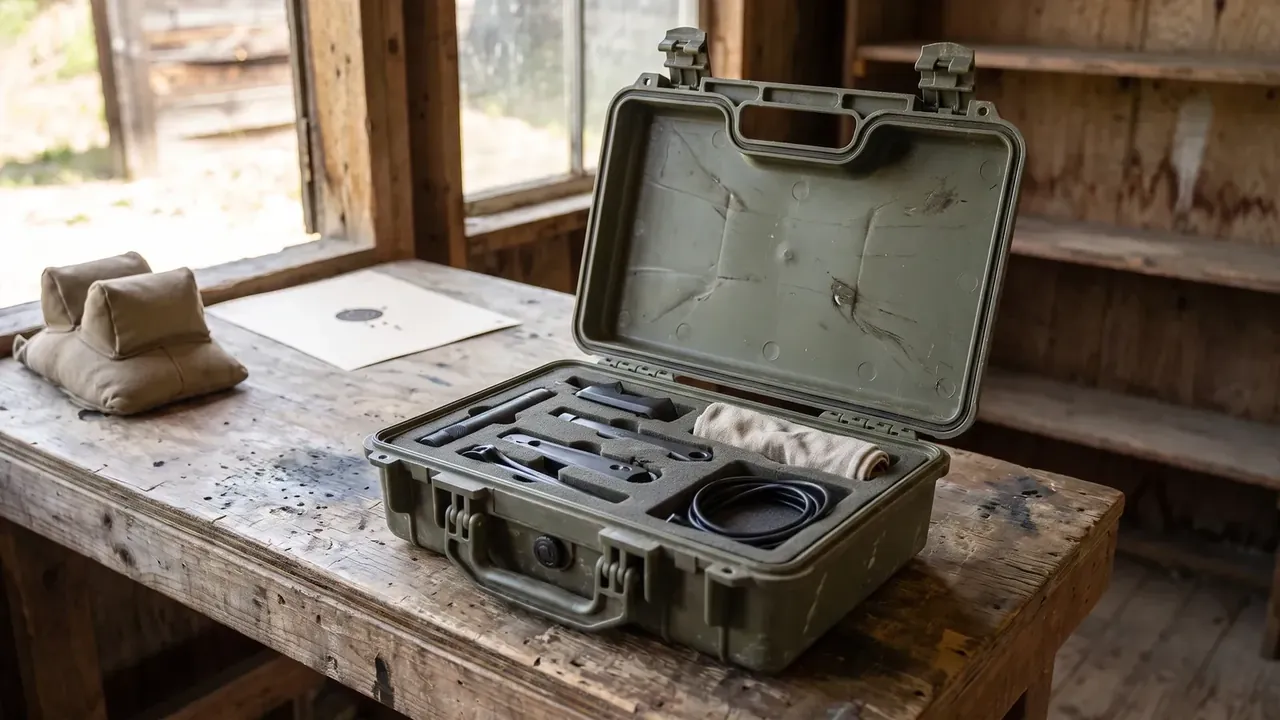
Interior height answers to working room. A lid swings to about 100 degrees, and past 260 mm of depth people tilt the case to reach the far corner, so tested cases end up 20 to 30 mm shallower than drawn.
| Load | Floor area | Interior reference | Floor gauge |
|---|---|---|---|
| 40 kg | 0.13 sq m | 500×280×200 mm | 1.5 mm |
| 60 kg | 0.18 sq m | 600×300×220 mm | 1.8 mm |
| 120 kg | 0.30 sq m | 800×400×260 mm | 2.0 mm |
3. Gauge changes along the load path
The three panels carry different loads and should not share one gauge. The lid takes the stack at 2.0 mm, the sides resist neighbouring cases at 1.5 mm, and the floor takes contents plus forklift knocks at 1.8 mm.
One gauge for all three is the easiest drawing to make and the most expensive case to buy.
With 60 kg distributed and 3 200 N held for 24 hours, lid set stays under 2 mm. Set matters more than peak strength: a peak exists only on a rig, while set accumulates.
4. Flanges, ribs and latches share the force
Flanges and ribs work one problem from two ends: a flange turns a panel edge into a small section, a rib breaks a large flat into smaller fields. A 12 mm flange with ribs at 25 mm pitch brings a 2.0 mm panel close to 3.0 mm flat sheet, at 6 percent extra weight.
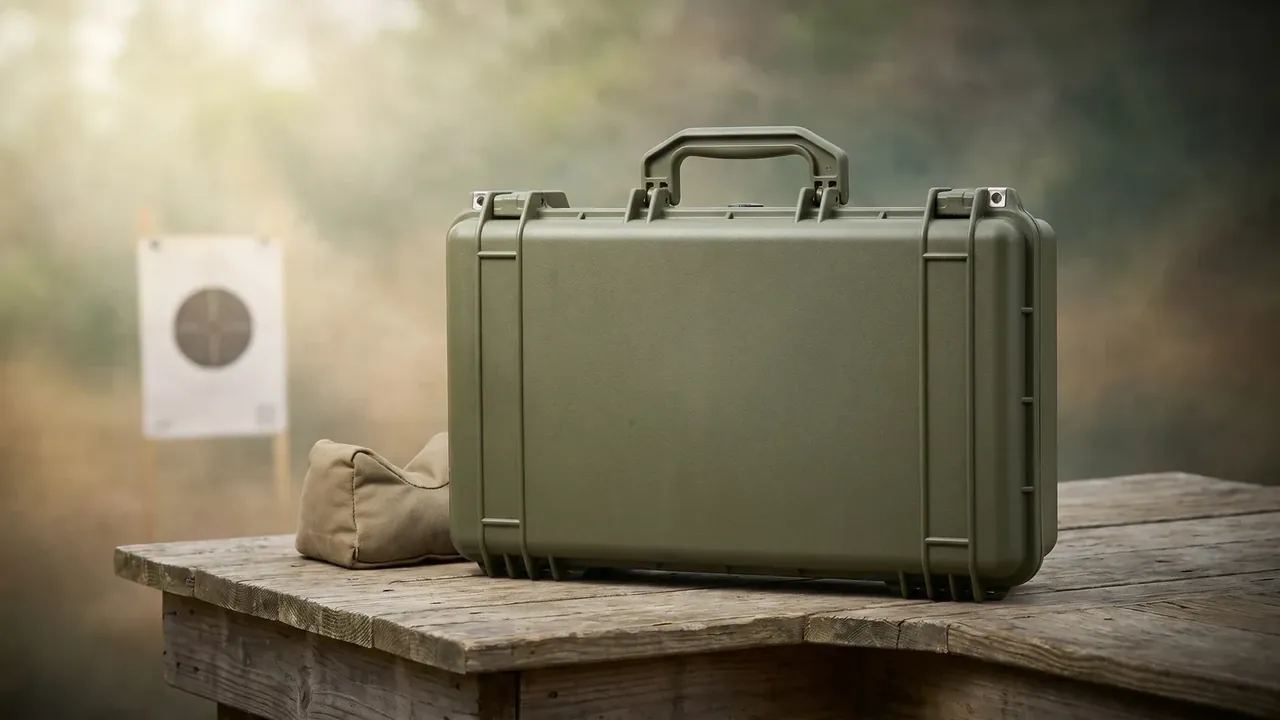
Four lower bounds cover most drawings:
- Flange of at least 12 mm, closed folds at every corner;
- Rib pitch 25 to 30 mm, a 20 mm transition at each flange;
- Latch spacing under 300 mm, plus a centre latch beyond;
- Hinge at least 60 percent of case width, one rivet per end.
The latch resists not pull but the prying force on a lid edge, and the nearer a corner it sits the shorter that lever.
5. Sealing and coating land on tolerances
Sealing is a compression figure, not a feel. A gasket compressed by 0.8 mm corresponds to a lid gap under 1.5 mm. Too wide and the seal never loads; too tight and the latch has to be forced, the gasket collapses and stops springing back.
Coating is its own chain: degrease, spray, cure at 120 C for 20 minutes, dry film of 60 to 80 microns, then 480 hours of neutral salt spray without red rust. Below 60 microns the fold lines show bare metal first.
Tolerances exist for assembly, not for the inspection report.
6. Six values fill the specification sheet
Six values close the specification of a Metal Ammunition Box: interior dimensions, the gauge of all three panels, rated load, stack count and pressure, seal class, and surface treatment. Miss one and the drawing stays a sketch.
A sheet with a blank row still has an uncalculated link.
Conclusion
The specification of a Metal Ammunition Box is derived, not chosen. Load sets floor area, floor area sets the interior, stack height sets the gauge, gauge and flange set the structure, and sealing closes the chain. Put all six values on one sheet and the drawing gains a testable starting point. Every millimetre of thickness on a Metal Ammunition Box then traces back to a load it carries.
This article discusses only the container (case body) side of specifications and design intent, and does not cover any handling, loading or use of the contents.
Related Reading
- Maintenance and re-inspection for a metal ammunition box
- Material options for a metal ammunition box
- Specification scope for small arms ammunition boxes
- General clauses in ammunition case specifications
- How an ammunition box is built and used
Related Products
- 8 Series — Gun Cases; Military Equipment Cases; Camera Equipment Cases; Drone Cases; Watch Cases; Knife Cases; First Aid Cases; Electronics Equipment Cases
- WL8-2812 PP Gun Case — model WL8-2812
- All protective cases and toolboxes: 7 series, 158 models