

Quick answer: Military Equipment Case Purchasing Checklist pairs 6.5 mm latch travel and a 3.8 mm gasket to keep force decay under 9% at 3000 compressions.
Table of contents
- Latch Compression Travel in the Military Equipment Case Purchasing Checklist
- Gasket Cross-Section Diameter
- Holding-Force Decay After Three Thousand Compressions
- Compression-Rate Fallback After Rest
- Locking the Travel for a Verification Batch
- FAQ
1. Latch Compression Travel in the Military Equipment Case Purchasing Checklist
Working down a checklist, latch travel and gasket thickness only show which slackens first after three thousand compressions. Military Equipment Case Purchasing Checklist fixes a 6.5 mm travel: the tongue moves 6.5 mm from contact to seated, and four latches on a 660×465×265 mm lid press around a 590×400×200 mm mouth. Beyond that, travel buys nothing: at 4.5 mm the gasket takes a shallow squeeze and the rig loses pressure early; at 9.0 mm the ring is crushed solid with no spring-back. 6.5 mm brings a 3.8 mm section to 21% compression without crushing, and it opens the rig card.
Four latches at 430 N each must move alike or the lid cocks; a 590×400×200 mm cavity in a 4.9 mm wall needs a flat mouth so load reaches the whole ring.
2. Gasket Cross-Section Diameter
The 3.8 mm section is folded back from the 6.5 mm travel, not picked as a round figure: a thin section is driven through and decay climbs first, a thick one is only skimmed and the fallback after rest grows. The section seats in a lid seam whose depth, with the 4.9 mm wall, fixes the squeeze window so a released latch cannot vent the ring.
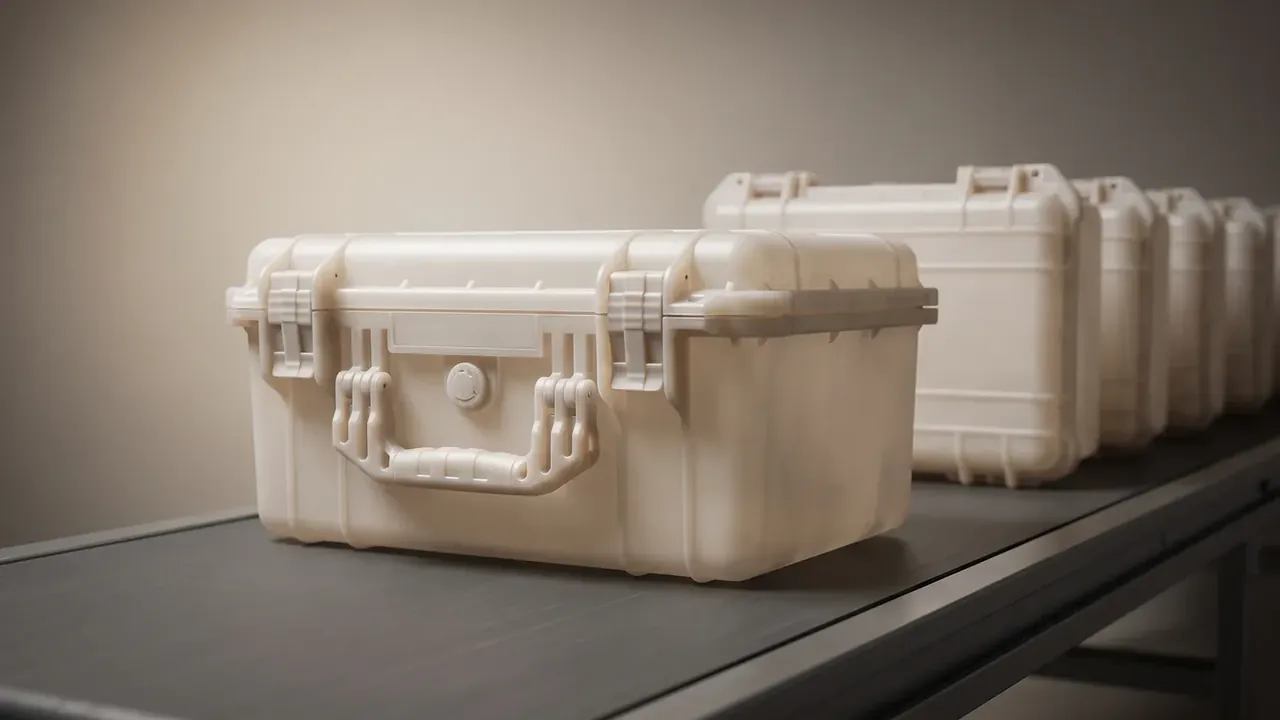
The travel card and the gasket card go into two columns: one logs tongue travel, the other section and compression, and neither is merged into the other. The rig revisits the tongue and gasket line after each block of cycles for spring-back or a creeping ring.
| Travel tier | Compression travel | Holding-force decay at cycle 3000 |
|---|---|---|
| Short | 4.5 mm | 12% |
| Middle | 6.5 mm | 8% |
| Long | 9.0 mm | 6% |
The 4.5 mm row reaches 12% and fails the 9% gate; 6.5 mm at 8% and 9.0 mm at 6% both pass, leaving Military Equipment Case Purchasing Checklist the shortest passing tier.
3. Holding-Force Decay After Three Thousand Compressions
The rig walks through 3000 compressions, logging holding force at each latch, and reads decay only at the end. Decay must stay within 9% for a tier to enter the verification batch; a high starting force counts for little once the gasket takes a set it cannot shed. One decay column per index is kept; unlogged blocks stay blank.
| Compression index | Rig span | Holding-force decay |
|---|---|---|
| Index 1 | 0–1000 cycles | 2% |
| Index 2 | 1000–2000 cycles | 5% |
| Index 3 | 2000–3000 cycles | 8% |
Index 3 reaches 8% at cycle 3000, still under 9%; the first two blocks sit at 2% and 5%, a steady climb without a jump. That span separates the tiers, and Military Equipment Case Purchasing Checklist marks the block on the rig card.
4. Compression-Rate Fallback After Rest
After the run the shell rests, and the compression rate is taken once more to see how much section the gasket recovers. A fallback within 3% is the retention floor: decay may be held, but a gasket that cannot climb back carries a set that slackens the lid later. Rest and end-of-run values are paired inside one tier, each rig row answering to one reading, with nothing spliced from a neighbouring tier.
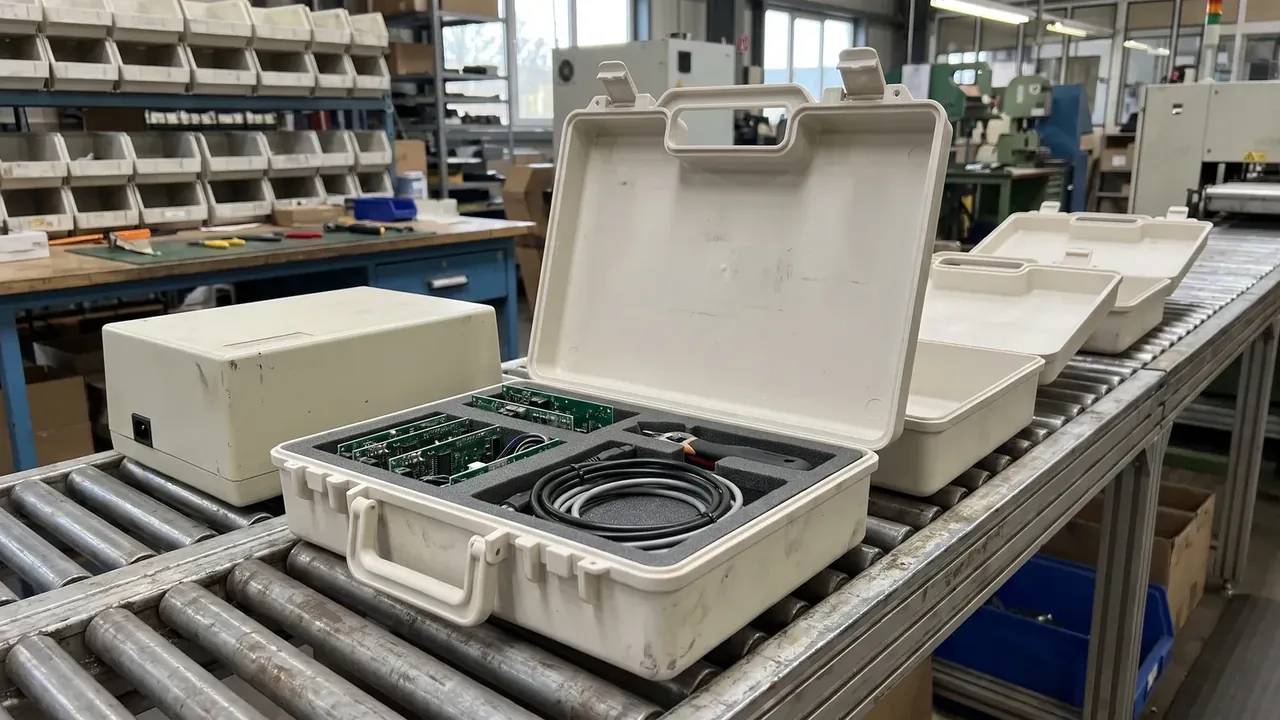
Two rings sit in the lid seam squeezed to a 21% rate, so the rest stage reads spring-back alone; the four 430 N latches are unloaded during rest. The 7.4 kg bare case, 19 kg loaded state and 3900 open-close cycles are logged apart under the shell heading.
| Holding-force reading | Fallback after rest | Disposition |
|---|---|---|
| 12% | 5% | Decay over line, non-sealed spec |
| 8% | 3% | Keep |
| 6% | 1% | Travel too long, spring-back tight |
The short row at 12% / 5% fails both gates and goes to a non-sealed spec; the middle 8% / 3% holds both lines; the long row decays only 6% but its 9.0 mm travel leaves too little spring-back, so Military Equipment Case Purchasing Checklist passes it over.
5. Locking the Travel for a Verification Batch
The travel is locked to the shortest tier still holding decay under 9% at cycle 3000; shorter travels go to non-sealed builds. Of the passing tiers 6.5 mm is the shortest: 8% decay stays under 9% and 3% fallback clears the floor, so rig card, gasket card and check sheet all pin to it. Military Equipment Case Purchasing Checklist gathers the scattered readings into one sheet, entering the 6.5 mm travel, the 3.8 mm section, and a 660×465×265 mm shell with a 590×400×200 mm cavity in a 4.9 mm wall.
IP67 is logged as a reference only; a 21% squeeze, two rings and four 430 N latches are verified individually, with no certificate number or test grade recorded. The 3000 compressions, the 3900 open-close cycles and the rest retest each keep a separate rig and curve, with no cross-vouching. Once the travel tier is written, the rig card for that batch is frozen.
Conclusion
Military Equipment Case Purchasing Checklist reconciles 6.5 mm travel, a 3.8 mm gasket section, 9% decay at cycle 3000 and 3% fallback against one rig card. A short travel lets the gasket seep first, a long one leaves spring-back tight; the middle tier survives because compression, rest and open-close cards were read block by block, with no tier chosen before the sheet was written. The decay column sets the travel for Military Equipment Case Purchasing Checklist, and each stage keeps its own card.
Related Reading
- How to Avoid Procurement Pitfalls When Buying Protective Cases: Ten Common Quality Problems
- How to Choose a Protective-Case Latch: Types, Compression Points, and Selection Checklist
- Case Volume Calculation: Cavity, Corners, Usable Ratio
- Long-Term Military Equipment Storage Case
- Military Protective Case Cost Factors
Related Products
- 8 Series — Gun Cases; Military Equipment Cases; Camera Equipment Cases; Drone Cases; Watch Cases; Knife Cases; First Aid Cases; Electronics Equipment Cases
- WL8-2812 PP Gun Case — model WL8-2812
- All protective cases and toolboxes: 7 series, 158 models