

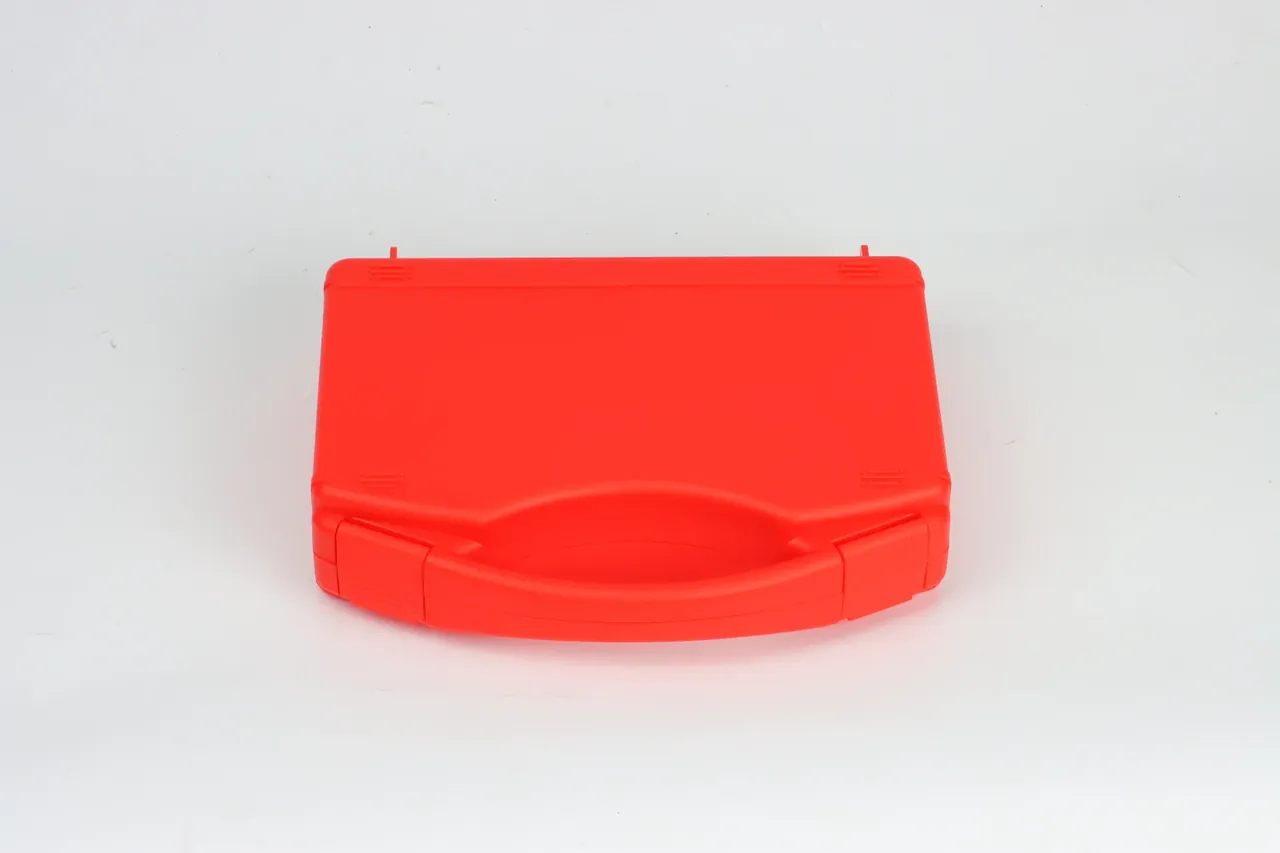
Quick answer: Most failures of a military supply case in a camp, a truck, on deck or on a rack come from a mismatch in setup, not a crushed body. Write down how it is fixed and opened in each setting first.
Table of contents
- A Military Supply Case Should Not Be Sized by Tonnage
- Field Camps: Lid Direction and 15-Second Access
- Trucks and Shelters: Four Lash Points at 800 N
- Ships and Docks: 480 h of Salt Spray and a Drain Hole
- Air Transfer: 0.6 bar Relief and a 2-Minute Balance
- Warehouse Rotation: Five Tiers and a 6-Month Count
- FAQ
1. A Military Supply Case Should Not Be Sized by Tonnage
The first question in a sourcing meeting is how many tonnes the body takes, but tonnage is a lab answer. What fails on site is the strap, the latch and the corner. The same military supply case sits still in a tent line, passes load into a truck bed through four corners, and needs dunnage and crossed rope on deck.
| Setting | How it is fixed | What decides success |
|---|---|---|
| Field camp | Stacked, stop bars | Lid direction, unit weight |
| Truck or shelter | Four-point lashing | Lash points, base thickness |
| Ship or dock | Dunnage, crossed rope | Drain hole, salt spray life |
| Air transfer | Seat-track ties | Valve direction, latch pin |
| Warehouse rack | Pallet, multi-tier | Base flatness, label facing |
| Emergency push | Roll-on at tailgate | Handle height, lid stay |
High tonnage does not mean an easy setup.
2. Field Camps: Lid Direction and 15-Second Access
In a tent line the military supply case faces the walkway with the lid opening downwind, because a lid caught by wind swings back on the person reaching in. Two stop bars or four pegs keep a three-tier stack from sliding on wet ground.
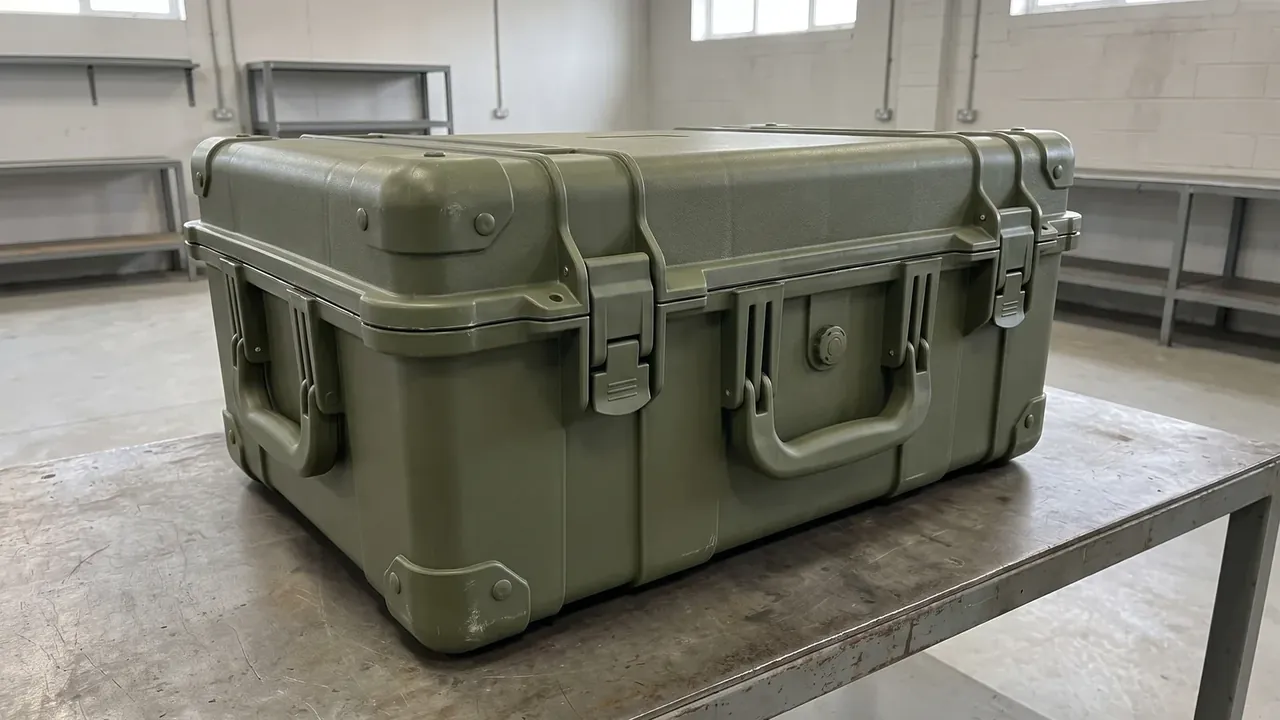
Access speed matters more than body strength. One soldier leans in, lifts the lid and takes an item out in under 15 seconds, which needs a lid opening past 100 degrees and no rib across the mouth.
Cold is the variable people forget. At minus 30 °C a plain PP latch needs about 40 percent more closing force, almost impossible with a glove on; a PA66 glass-filled latch climbs half as much.
The usual mistake is turning the case face to the wall to save walkway width.
3. Trucks and Shelters: Four Lash Points at 800 N
A military supply case in a truck bed is held by four corner straps, each tensioned to about 800 N. Lash points must land on metal corner caps; a strap over thin plastic pulls a dent into the wall at the first hard brake.
Position beats count. A case tied on two diagonals only pivots around the free corner in a turn, the bodies strike each other, and the latch goes first.
A 10 mm mat absorbs road vibration; thicker mats let the case shift once a strap slackens. Re-tension anything that moves past 20 mm.
Three checks before the door closes.
4. Ships and Docks: 480 h of Salt Spray and a Drain Hole
Seawater corrosion is harsher than inland air, so the metal parts of a military supply case should be specified to 480 hours of neutral salt spray.
| Factor | Target | Treatment |
|---|---|---|
| Salt spray | 480 h neutral | 316 stainless pins, plating over 12 μm |
| Deck water | 20 mm can pool | 6 mm drain hole, 2 mm below the floor |
| UV ageing | 12 months outdoors | UV stabiliser, light colours run 8 °C cooler |
| Temperature | minus 30 to 60 °C | Silicone gasket |
Set the case on 100 mm dunnage, run the rope in a cross and tilt it 5 degrees toward the drain, so wash water runs off the base rather than past a latch.
A drain hole blocked by the insert is the commonest error.
5. Air Transfer: 0.6 bar Relief and a 2-Minute Balance
Cabin pressure changes turn a sealed military supply case into a pressure vessel. A relief valve opens at 0.6 bar and levels the pressure within 2 minutes, so the lid does not push the latches open.
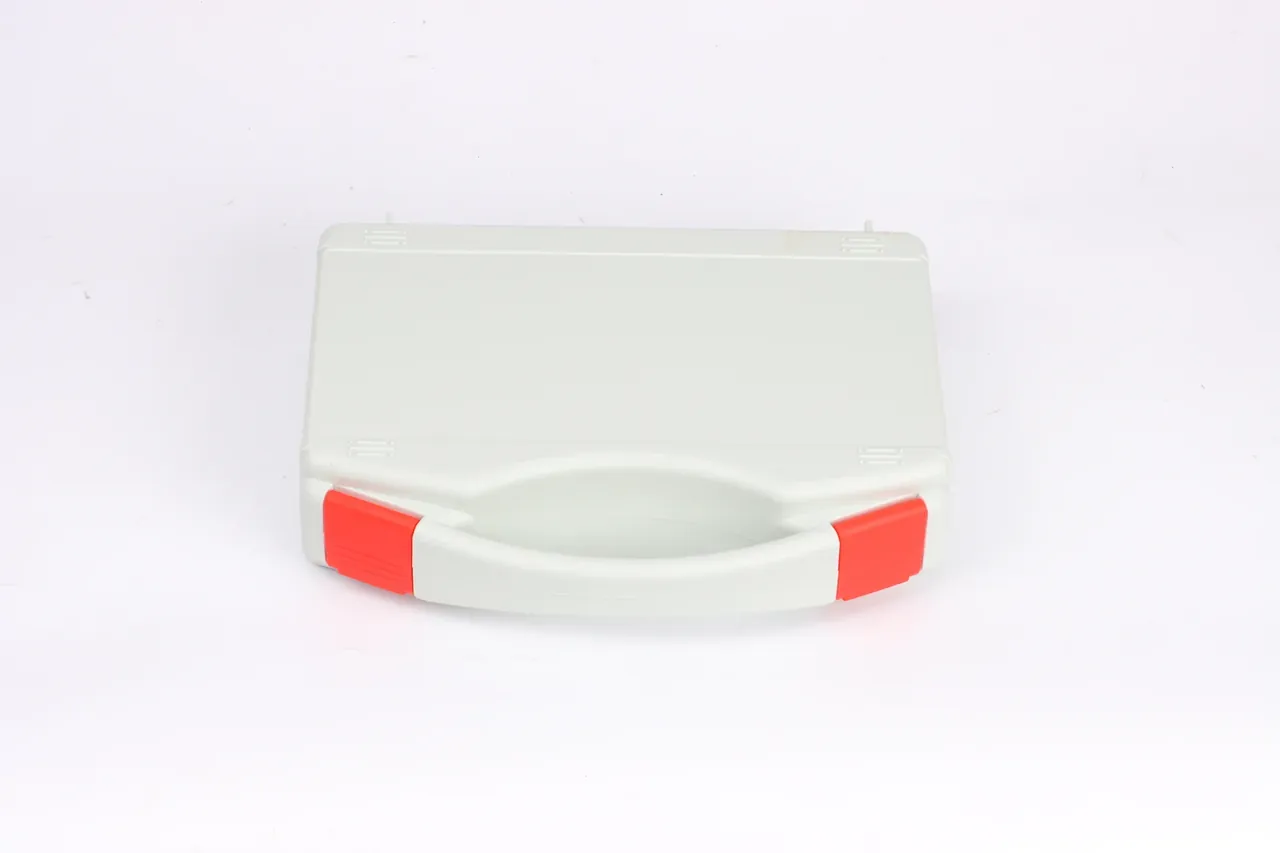
Orientation decides whether the valve works. Valve up and condensate cannot pool; valve down and moisture freezes in the chamber on a cold leg, and the 0.6 bar point is lost.
Seat-track ties stop the body moving, but each latch still needs its secondary pin fitted and reset after landing.
6. Warehouse Rotation: Five Tiers and a 6-Month Count
Warehouse practice is often written as first in, first out, which hides four points you can check.
- Height and load: five tiers, 120 kg per tier, heavy cases at the bottom.
- Base and pallet: flat base, four feet of equal height, forks clear of the base.
- Label and facing: 80 mm below the lid edge, front to the aisle, readable at 3 m.
- Rotation: count every 6 months, check latch spring, gasket groove, drain hole.
Label facing is the cheapest of the four and saves the most counting hours.
Conclusion
Most fit problems with a military supply case come from setup and local conditions, not from the weight the body takes. Write one line each for fixing method, opening action and usual mistake across the six settings, and the model list shrinks on its own.
This article discusses only the container (case body) side of specifications and design intent, and does not cover any handling, loading or use of the contents.
Related Reading
- A military supply transport case inside the logistics chain
- The specification layers of a military supply case: resin, colour and markings
- Military supply case inspection: appearance, sealing and drop
- How a flight case is rigged for airlift and redeployment
- Emergency supply case applications: depot, transfer and field
Related Products
- 8 Series — Gun Cases; Military Equipment Cases; Camera Equipment Cases; Drone Cases; Watch Cases; Knife Cases; First Aid Cases; Electronics Equipment Cases
- WL8-2812 PP Gun Case — model WL8-2812
- All protective cases and toolboxes: 7 series, 158 models