

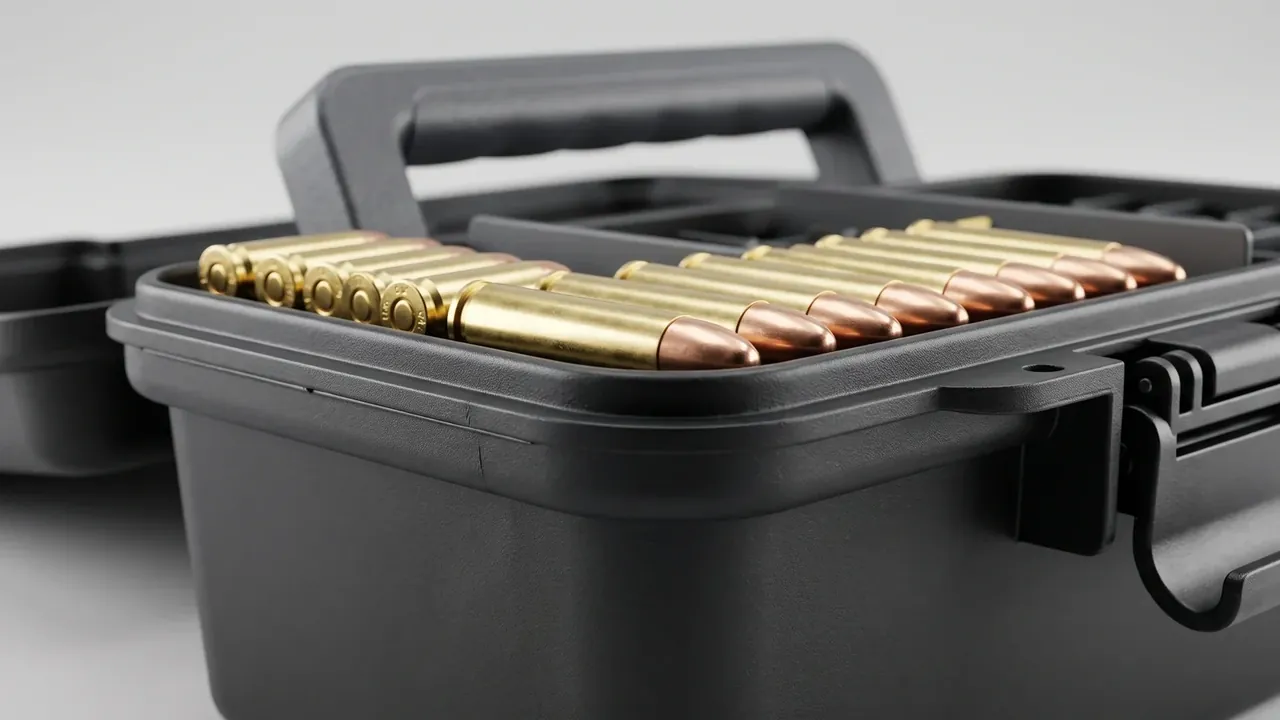
Quick answer: Ninety-six units went into store in 2021, and the first three failures at year five were all gaskets. This log from 20 rounds gives six zones checked every 90 days, four limits and the arithmetic behind an eight-year life.
Table of contents
- Where the Inspection Clock Starts on a Missile Warhead Container
- Ninety-Day Rounds: Six Zones, Four Limits
- Cleaning and Drying Without Scratching the Seal Face
- Three Measured Signals That Retire a Gasket
- Latch, Hinge and Valve Re-Torque Rhythm
- Stretching Service Life to Eight Years
- FAQ
1. Where the Inspection Clock Starts on a Missile Warhead Container
In March 2021 a test site took 96 missile warhead container units, serials A-2101 to A-2196, in four lots of 24. By round 20 in March 2026, three leaked faster than 0.5 kPa per 10 minutes, and stripping them found hardened gaskets with salt grit still in the groove.
All three were logged in July 2025 as light scoring at the mouth, serviceable, with no depth reading and no re-test. The deepest score was 0.2 mm on the seal line edge; the rubber sheared and failed 24 months later.
A log answers four questions: entry date, last test, pressure drop, parts changed; drop one and every limit becomes an opinion.
| Log field | Recorded as | What breaks without it |
|---|---|---|
| Serial and lot | One row per unit | No comparison within a lot |
| Entry date | Day-level | Gasket life counted from factory or store |
| Last drop | kPa per 10 minutes | Drift from 0.3 to 0.5 stays invisible |
| Gasket change | Date plus batch | Interval becomes memory |
2. Ninety-Day Rounds: Six Zones, Four Limits
Rounds on a missile warhead container run every 90 days, tightened to 45 days from June through September. One unit takes 8 minutes across six zones, so 96 units fit into 12.8 labour hours with one tool kit.
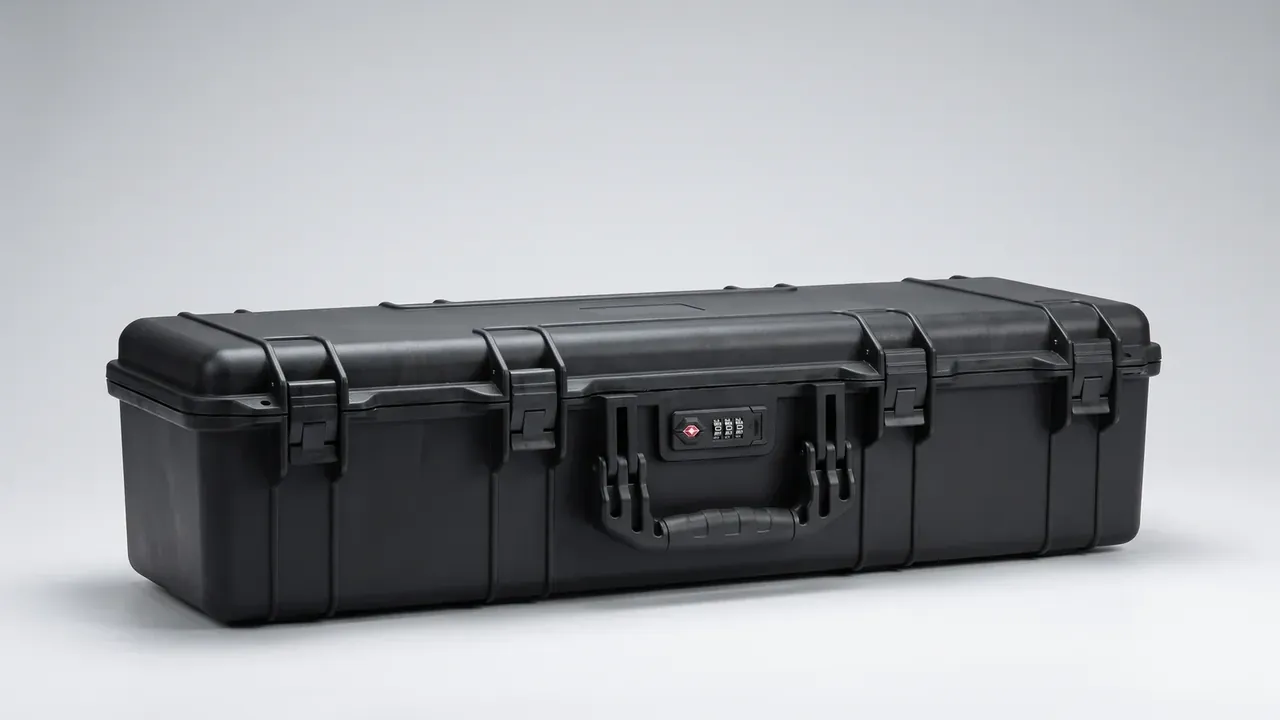
Zones are ordered by failure rate, not visibility: the seal face fails quietly.
| Zone | Tool | Limit | Action |
|---|---|---|---|
| Seal face | 5x loupe, depth gauge | 0.2 mm score, 5 mm across the line | Polish or new lid |
| Air valve | Decay gauge | 0.3 kPa per 10 minutes | New core, retest 3 times |
| Latches | Torque wrench | 4.5 N·m, re-tighten below 3.2 | Re-torque or replace |
| Hinges | Feeler gauge | Pin clearance 0.4 mm | New pin above 0.6 mm |
A limit has to be a number: when one crew swapped 0.2 mm for light, rework halved and leaks doubled in six months.
3. Cleaning and Drying Without Scratching the Seal Face
The coating passes a 480-hour salt spray test at the factory, an entry ticket rather than field endurance. Six months in a coastal store and the groove yields white salt that powders under a fingernail.
Wash with a pH 8 neutral cleaner and a soft brush, two passes in one direction. Rinse 30 seconds at no more than 0.2 MPa, nozzle 150 mm off the valve.
Rinsing without drying leaves the salt in the groove. Dry with compressed air through the groove and screw holes, then 4 hours at 40°C. Above 65% humidity all year, add 500 g of desiccant per unit and swap it every 12 months; a bag that gained more than 18% means the body leaks.
4. Three Measured Signals That Retire a Gasket
The gasket on a missile warhead container fails on a calendar, not on damage. It never cracks; it loses rebound, and a flat spot shows long after the drop is out of limits.
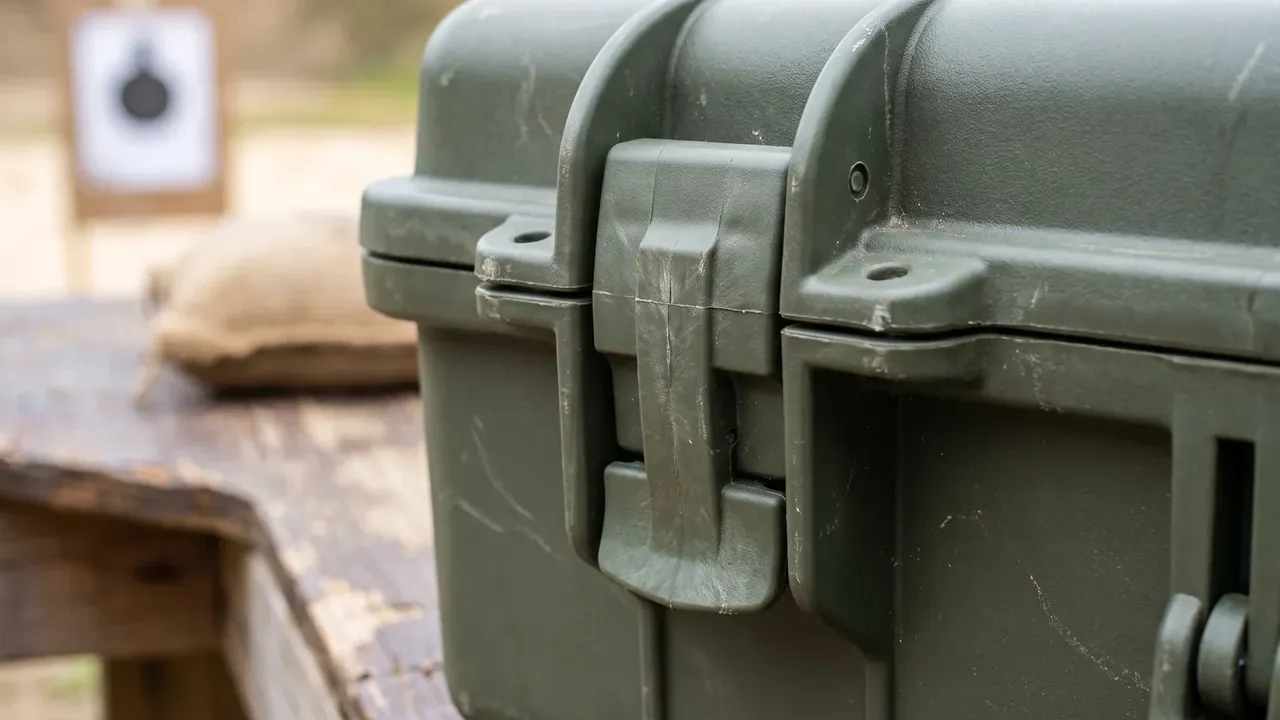
Three signals, easiest first: compression set, Shore hardness, a step in the groove. Two need the gasket off; the third is felt in place.
| Signal | Method | Limit | Action |
|---|---|---|---|
| Compression set | Off 24 hours, measure section | Above 30% | Replace now |
| Shore hardness | Type A, median of 3 points | Rise above 5 points | Replace this quarter |
| Groove step | Feeler along the groove | 0.1 mm | Replace, dress groove |
The baseline is 24 months, cut to 18 above 35°C, stretched to 30 in cold rooms. Wipe about 0.5 g of silicone grease before seating; more attracts grit.
Torque to 4.5 N·m in two diagonal passes. Above 5.5 N·m the gasket takes a permanent set and the second year leaks.
5. Latch, Hinge and Valve Re-Torque Rhythm
Fasteners fail slowly. Torque falls from 4.5 N·m to 3 N·m with no visible change to the latch, while the lid moves on rough ground. Leaks on a missile warhead container are often written on six screws rather than on the gasket.
| Part | Interval | Target | Out of range |
|---|---|---|---|
| Latches | 6 months | 4.5 N·m | Re-torque below 3.2 |
| Hinge screws, 6 off | 12 months | 3.5 N·m | Extract and replace |
| Valve | 12 months | 20 kPa held 5 minutes | New core and O-ring |
Hinge pin clearance is gauged with a feeler, 0.4 mm being the ceiling. At 0.6 mm the lid sits 1.5 mm out of square and loads one side of the seal. During the valve test a 2 kPa drop in 5 minutes means strip it.
6. Stretching Service Life to Eight Years
Ninety-six units written down over 5 years carry almost no book value, yet 60% of their life is unused. A new unit costs 3800 CNY; a gasket set costs 420 CNY plus 1.5 hours.
Three moves on the missile warhead container: replace every gasket, re-coat the mouth and base, rebuild the label and carry the old log forward. Re-coat to 60 microns, colour within 2 shade numbers.
Extending 96 units by 3 years costs 59,000 CNY and avoids 365,000 CNY of replacement, or 205 CNY per unit per year. Re-assess at year eight and retire any body that lost more than 0.3 mm of wall.
Conclusion
Five years of records on 96 units point to two empty columns and a limit written as an adjective, not to bad luck. Rounds at 90 days, four numeric limits and a gasket interval set by store temperature push the same failure back by 3 years. The output of maintenance is a decision path someone else can repeat, the least visible cost a missile warhead container carries through storage.
This article discusses only the container (case body) side of specifications and design intent, and does not cover any handling, loading or use of the contents.
Related Reading
- How six layers of structure protect this case
- Deriving cavity, wall and load rating
- Running a monthly check in an ammunition store
- Sealing and opening rhythm for grenade cases
- Cycle counts and repair limits for returnable cases
Related Products
- 8 Series — Gun Cases; Military Equipment Cases; Camera Equipment Cases; Drone Cases; Watch Cases; Knife Cases; First Aid Cases; Electronics Equipment Cases
- WL8-2812 PP Gun Case — model WL8-2812
- All protective cases and toolboxes: 7 series, 158 models