

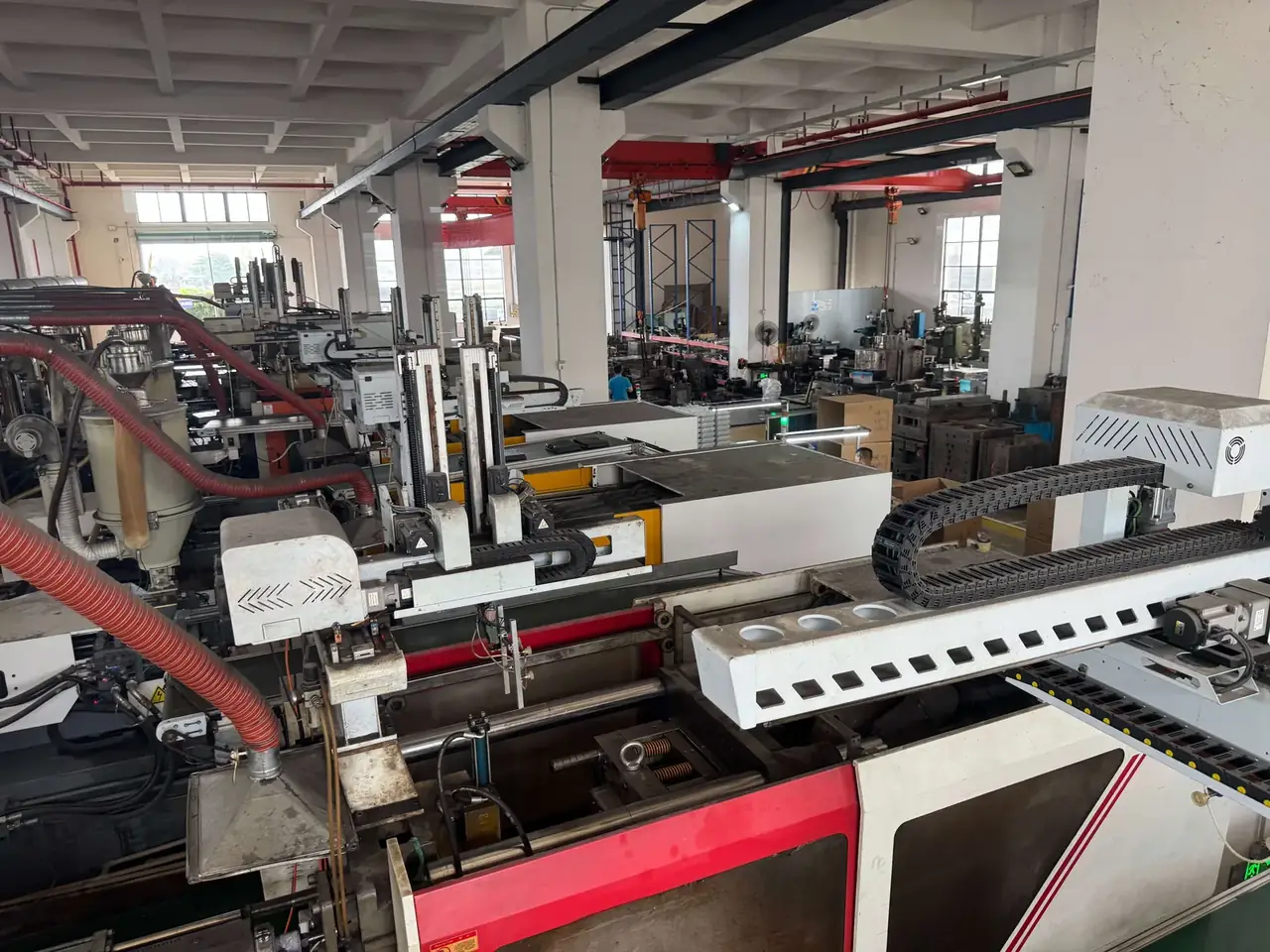
Quick answer: A 3 mm wall PP case runs a 62 s case moulding cycle: 3.4 s injection, 6.8 s packing and 35.0 s cooling, so cooling alone eats 56.5% of the shot.
Table of contents
- Splitting the cycle into stages
- Injection and packing seconds
- Cooling and the square rule
- Mould temperature and tonnage
- Cycle time into daily output
- FAQ
1. Splitting the cycle into stages
A 420 mm × 320 mm × 180 mm PP case, 3 mm walls, one cavity on a 530 t machine at 60 ℃ mould and 230 ℃ melt, ran 62 s per shot on a stopwatch: 2.6 s clamp close, 3.4 s injection, 6.8 s packing, 35.0 s cooling, 2.2 s open, 3.0 s ejection, 6.0 s robot removal, 3.0 s waiting.
Cycle time is not machine speed: it follows wall thickness, mould temperature and circuits, and a faster press saves 0.4 s of injection while cooling stays frozen.
| Stage | s | Share | Headroom |
|---|---|---|---|
| Clamp close | 2.6 | 4.2% | None |
| Injection | 3.4 | 5.5% | 0.4 s, vent limited |
| Packing | 6.8 | 11.0% | 1.5 s, gate limited |
| Cooling | 35.0 | 56.5% | 5–8 s |
| Open and eject | 5.2 | 8.3% | 0.5 s |
| Robot removal | 6.0 | 9.7% | 2.5 s, chute drop |
| Waiting | 3.0 | 4.8% | 1.0 s |
| Total | 62.0 | 100% | 9–12 s |
Removal is the stage quotes forget: the 420 mm square case forces the robot to turn the lid 90°, and a chute drop cuts 6.0 s to 3.5 s for 4% more output.
2. Injection and packing seconds
Injection runs 3.4 s for a 2.0 kg shot, 210 mm stroke and 95 MPa peak, and cannot be slow: PP melt held above 5 s at 230 ℃ marks the wall.
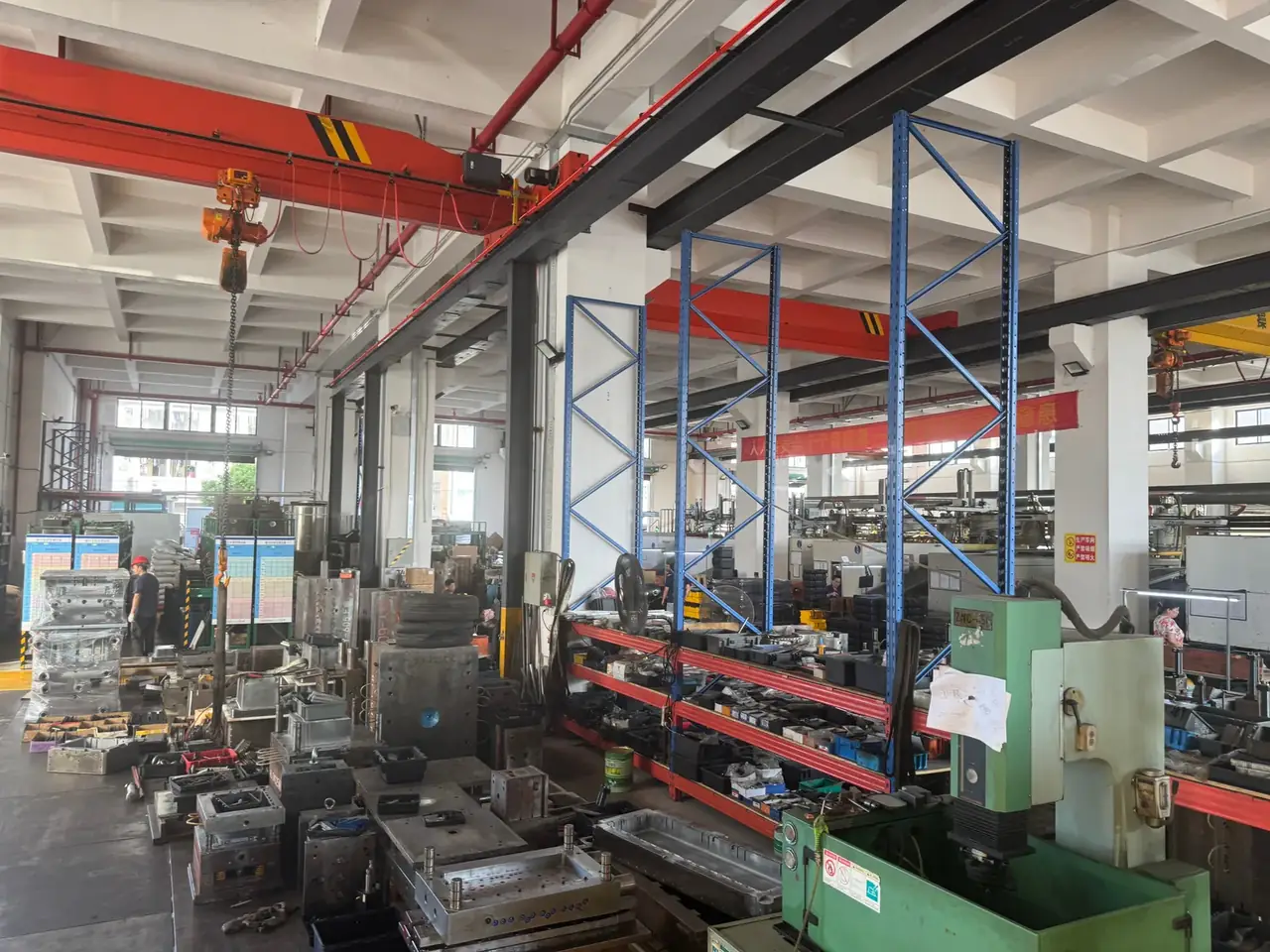
Speed is profiled in three steps, 60% then 45% then 25%, still 3.4 s but 0.6 s faster than constant speed with 8 MPa less vent pressure.
Packing has one test: weight stops rising. Five shots weighed 1842 g at 4 s, 1852 g at 6 s and 1853 g at 8 s, so the gate froze near 5.5 s and 6.8 s leaves 1.3 s of wear margin; pressure falls from 95 MPa to 55 MPa at 12 mm.
3. Cooling and the square rule
Cooling follows t = 3.9 × s², s in millimetres: 3 mm gives 35.1 s against 35.0 s measured, 2 mm gives 15.6 s and 4 mm gives 62.4 s.
| Wall (mm) | Cooling (s) | Cycle (s) | Parts a day |
|---|---|---|---|
| 2.0 | 15.6 | 43 | 1826 |
| 2.5 | 24.4 | 51 | 1540 |
| 3.0 | 35.1 | 62 | 1276 |
| 3.5 | 47.8 | 75 | 1056 |
| 4.0 | 62.4 | 89 | 880 |
The coefficient 3.9 moves with melt and mould temperature: 210 ℃ melt pulls it to 3.6, 70 ℃ mould pushes it to 4.3. Ejection waits for 78 ℃ or pins mark the base.
Circuits decide whether it is reachable: supply and return within 3 ℃, 12 L/min per circuit, 18 mm to the cavity.
4. Mould temperature and tonnage
Cooling runs 28.5 s at 40 ℃, 31.6 s at 50 ℃, 35.0 s at 60 ℃ and 41.0 s at 70 ℃, about 12% per 10 ℃, with finer surfaces on slow shots.
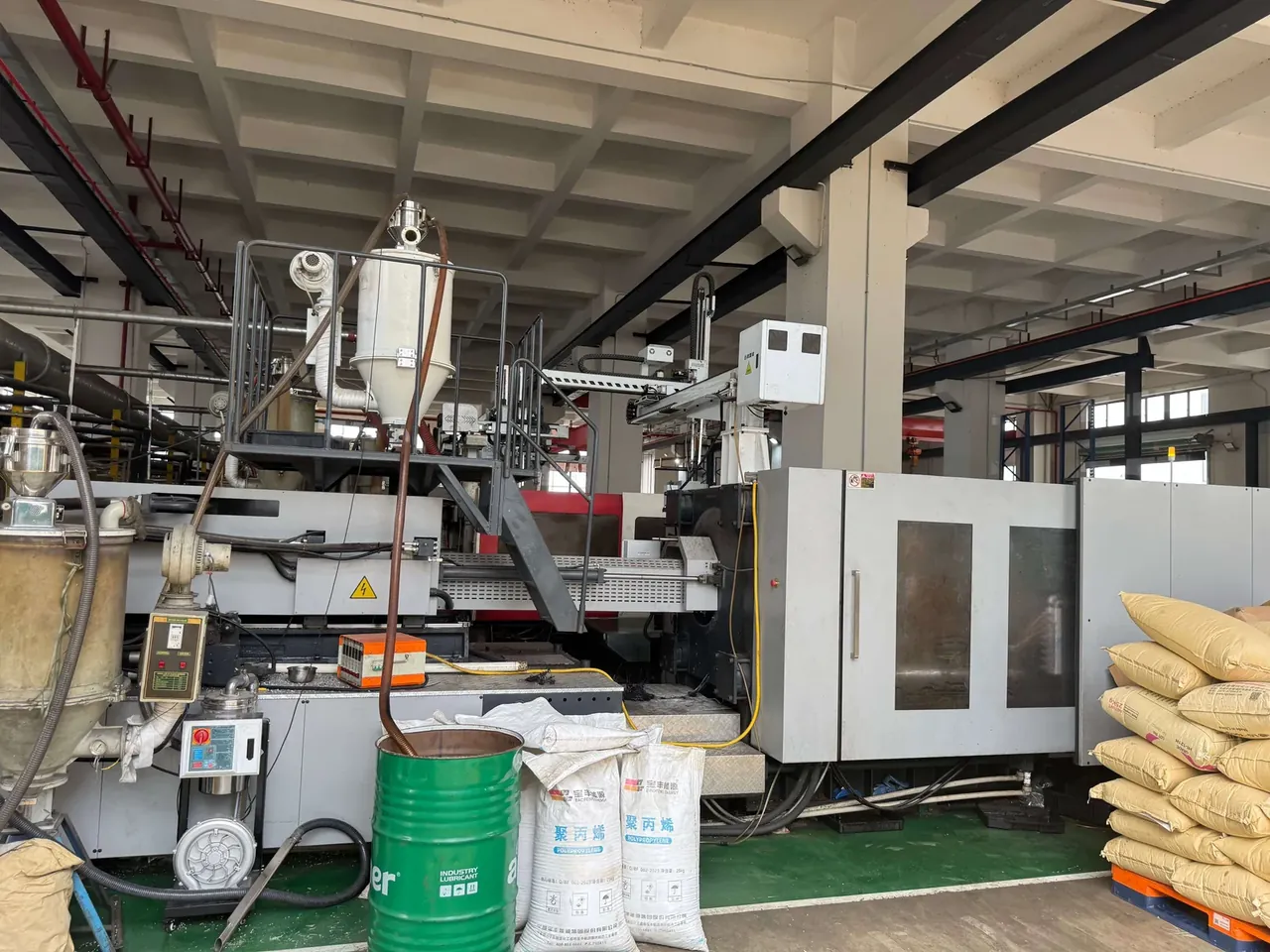
Tonnage is projected area times cavity pressure: 134,400 mm² at 32 MPa needs 430 t, so a 530 t press leaves 20% margin.
Two cavities are not double output: 120 mm more travel adds 1.8 s of dry cycle, so the shot is 66 s and each part 33 s.
Oversizing costs too: a 1000 t press on one cavity turns 62 s into 64 s, and below 8000 parts a month one cavity on two shifts beats a tool costing 65% more.
5. Cycle time into daily output
Daily output is 3600 divided by cycle seconds, times hours and availability. At 62 s that is 58 shots an hour, 1276 in 22 h and 1085 parts a day at 85% availability.
| Cycle (s) | Shots/h | Day, 22 h | Year, 6000 h | Vs 62 s |
|---|---|---|---|---|
| 48 | 75 | 1650 | 450,000 | +29% |
| 55 | 65 | 1430 | 390,000 | +12% |
| 62 | 58 | 1276 | 348,000 | Baseline |
| 70 | 51 | 1122 | 306,000 | −12% |
| 85 | 42 | 924 | 252,000 | −28% |
From 24 h, deduct 1.2 h for material change, 0.5 h for inspection and 0.3 h for adjustment, leaving 22 h; three mould changes at 40 min each cut output by 9%.
One second saved is 6000 parts a year; quoted shots must carry the same case moulding cycle.
Conclusion
The case moulding cycle lives on the 62 s breakdown, not on the nameplate. Cooling at 35.0 s is 56.5% of the shot: a wall reduction from 3.5 mm to 3 mm saves 12 s, mould temperature from 70 ℃ to 60 ℃ saves 6 s, and circuit spread from 5 ℃ to 3 ℃ brings the coefficient from 4.1 to 3.9 for another 3 s. Those three moves push the cycle toward 45 s and lift output from 1276 to 1760 parts with no capital spend, while packing and removal yield only 4 s. Judge with the table: convert the cycle into shots per hour, multiply by 22 h, 85% availability and margin, and fund circuit or wall changes only when the gain exceeds twice the tool cost.
This article discusses container-side specifications and design implications only, and does not cover any handling, loading or use of the contents.
Related Reading
- Choosing an injection machine by tonnage
- Case wall thickness and strength
- Injection machines applied to case moulding
- Reading machine specifications
Related Products
- 8 Series — Gun Cases; Military Equipment Cases; Camera Equipment Cases; Drone Cases; Watch Cases; Knife Cases; First Aid Cases; Electronics Equipment Cases
- WL8-2812 PP Gun Case — model WL8-2812
- All protective cases and toolboxes: 7 series, 158 models