

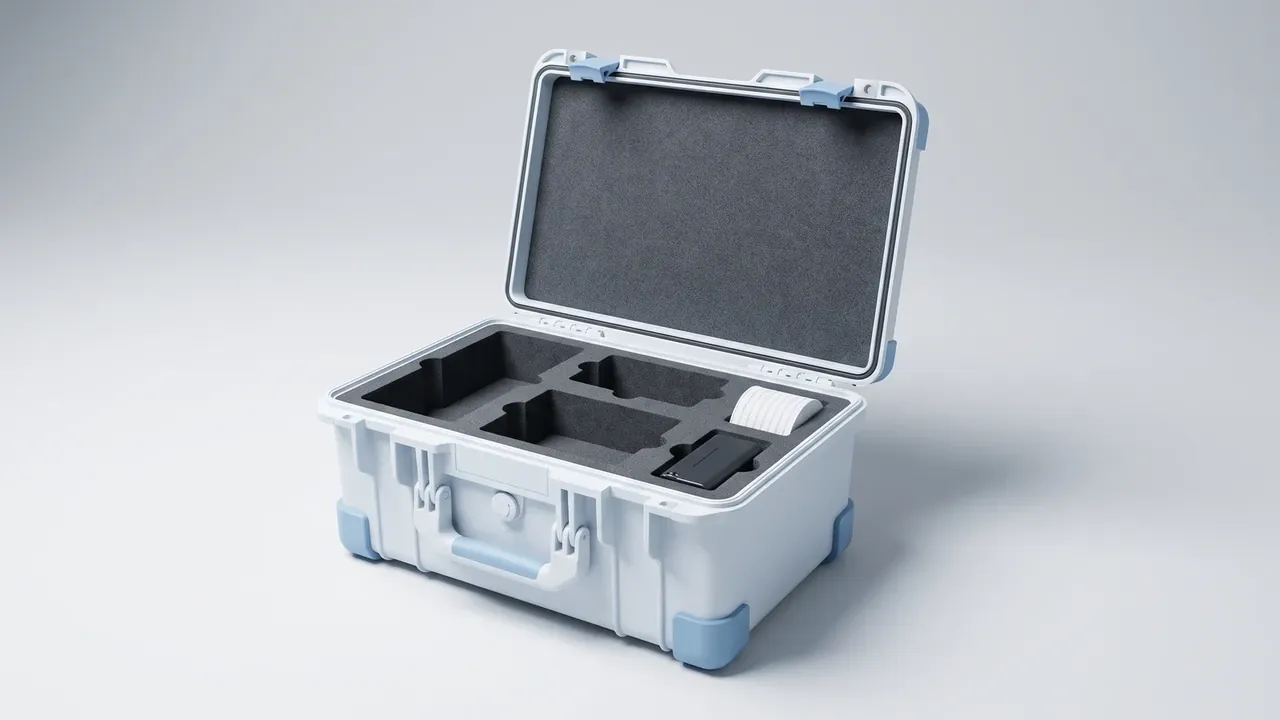
Quick answer: Buying an OEM plastic enclosure and case is not a unit price comparison. Whether the lid and base share one tool, whether ports are molded in or cut later, and who owns the tool decide most of the cost before the first quote line is read.
Table of contents
- First Choice: One Tool Set for Lid and Base
- Ports and Cutouts: On the Drawing or After Molding
- Tool Ownership: Who Pays, Who Holds It
- Quoting Secondary Work Line by Line
- Delivery Dates: Six Milestones from Steel to Stock
- Minimums, Terms and Three Quoting Traps
- FAQ
1. First Choice: One Tool Set for Lid and Base
The line most buyers skip is the tool count. One frame with two cavity sets, or two separate tools, sets unit cost, sample time and whether the lid can be revised alone.
| Arrangement | Tools | Unit cost | First sample | Volume |
|---|---|---|---|---|
| One frame, two cavity sets | 1 | 8% lower | 18 days | above 5000 |
| Separate tools | 2 | baseline | 14 days | 1000 to 5000 |
| Existing tool plus foam | 0 | lowest | 7 days | from 300 |
A shared tool ties the halves together: a rib on the lid shifts the base parting line and both halves return to trial. Two tools cost about thirty percent more up front, but an OEM plastic enclosure and case built that way lets a lid change leave the base untouched.
Three fit numbers settle the joint: a 4 mm rebate, 0.15 mm per side, a 0.2 mm step between rims. At 0.3 mm the case rocks; at 0.05 mm parts with release agent refuse to close.
2. Ports and Cutouts: On the Drawing or After Molding
A port takes one quote line but has two routes: molded in, or cut later.
A molded port keeps a 0.3 mm edge radius and one degree of draft, which a sealed design uses to press the gasket; it costs one pin per port, and moving a port over 5 mm means a new insert at 900 CNY. A machined port has square edges and holds plus or minus 0.1 mm, but no draft, so it needs a gasket and 3 CNY of machining.
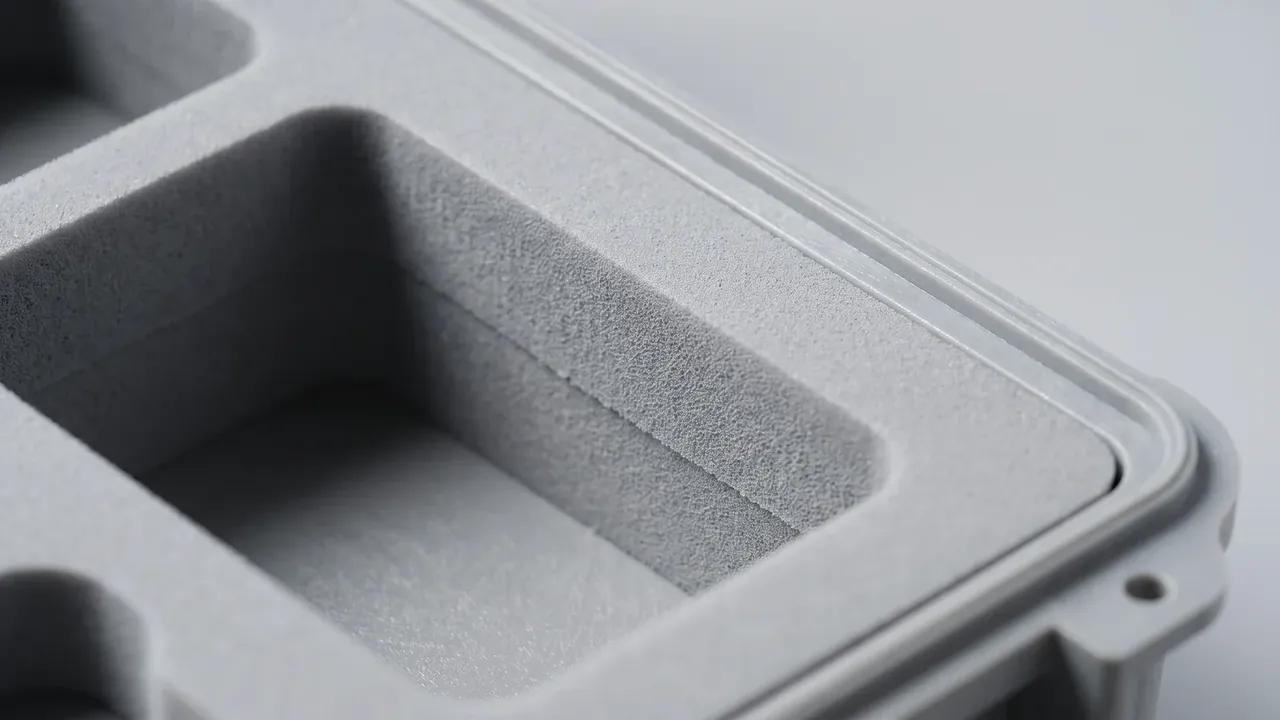
Ports on an OEM plastic enclosure and case must be dimensioned from the base or a locating boss, never from the rim, which carries 0.2 mm of fit tolerance. Keep 1.5 times the wall from port edge to side wall, 4.8 mm on a 3.2 mm wall, or the corner cracks. Reserve a 92 by 92 mm panel with a 6 mm screw land, so a connector swap never touches the tool.
3. Tool Ownership: Who Pays, Who Holds It
A lid and base tool usually quotes near 38000 CNY, rated for 300000 shots, and who pays decides who can leave later.
The default is buyer pays, buyer owns, but a default is not a contract. Three clauses carry weight: ownership and tool number, transfer terms, maintenance duty. Stamp the number on the frame, hang drawings and trial reports on it, state the cost of moving the tool (commonly 2000 CNY), and require waterway cleaning plus ejector replacement every 50000 shots.
Without those lines, tooling money buys rent. Every OEM plastic enclosure and case order that changed suppliers painfully skipped this clause.
4. Quoting Secondary Work Line by Line
Secondary work collapses into one post-processing line, making four quotes incomparable.
- Screen print: 320 CNY per screen per color, 0.8 CNY per unit.
- Labels: 200 CNY die, 0.3 CNY per unit, rolls 30% above sheets.
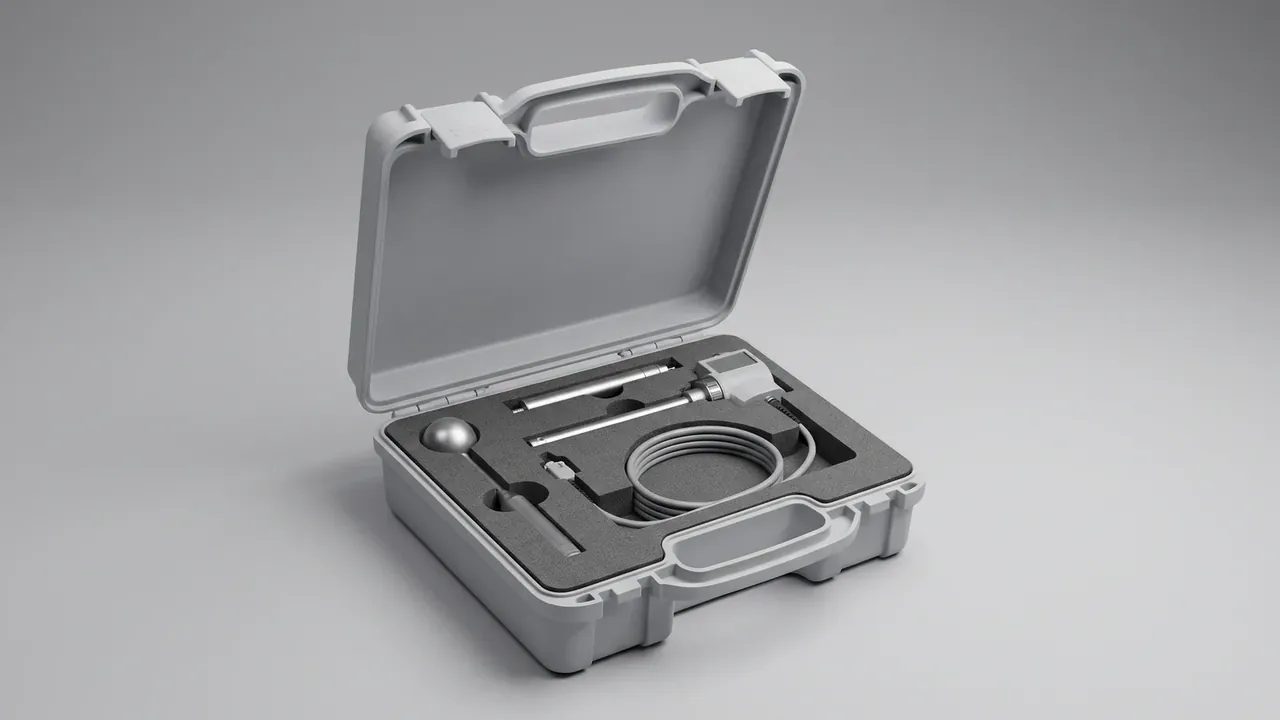
- Foam: 400 CNY die, 45 kg/m3 EVA at roughly 6 CNY per unit.
- Assembly: 90 seconds per case, 1.5 CNY at 60 CNY per hour.
Itemizing shows which line will not fall: screens and dies vanish after 300 units, while print and assembly follow the count and are the only two worth arguing. On an OEM plastic enclosure and case, that split separates a real discount from a reshuffled total.
5. Delivery Dates: Six Milestones from Steel to Stock
| Milestone | Content | Day |
|---|---|---|
| T0 | Drawing and DFM sign-off | D+3 |
| T1 | Frame roughing, cavity finishing | D+12 |
| T2 | First trial shot | D+18 |
| T3 | First article shipped | D+21 |
| T4 | Correction and 50 unit pilot | D+28 |
| T5 | 300 units in stock | D+35 |
Six dates beat one promise of 35 days, because each segment can be chased alone. The risky stretch is T2 to T3: a trial part needs 24 hours to settle before measuring, a problem there means insert work, and each extra round costs 7 days. Add 5 days of overseas sample shipping and T3 slides to D+26.
6. Minimums, Terms and Three Quoting Traps
The usual minimum is 300 units, with 30 percent on order and 70 percent against the bill of lading. Below 300 the tooling spreads over the same 300, so unit price rises.
Three traps, by frequency: tooling amortized at 12 CNY per unit for the first 3000 and never removed; trial material billed as a full 25 kg bag when 8 kg was used; crates and pallets quoted outside at 80 CNY a set. Ask for six lines: shell, foam, print, labels, assembly, packaging. A quote that will not split hides a line.
Conclusion
Procurement of an OEM plastic enclosure and case is arithmetic on structure: one tool set or two decides the cost of a generation change, molded or machined ports decide sealing cost, and tool ownership decides whether you can leave in three years. Pin those items and dates to paper and the quote splits into comparable lines. Most price spread between suppliers of an OEM plastic enclosure and case comes from these clauses, not the molding rate.
This article discusses only the container (case body) side of specifications and design intent, and does not cover any handling, loading or use of the contents.
Related Reading
- Choosing materials and seals for a corrosion resistant enclosure
- The OEM procurement route for custom molded plastic cases
- How specifications for a plastic enclosure and case are derived
- Installing an electrical enclosure on site
Related Products
- 8 Series — Gun Cases; Military Equipment Cases; Camera Equipment Cases; Drone Cases; Watch Cases; Knife Cases; First Aid Cases; Electronics Equipment Cases
- WL8-2812 PP Gun Case — model WL8-2812
- All protective cases and toolboxes: 7 series, 158 models