

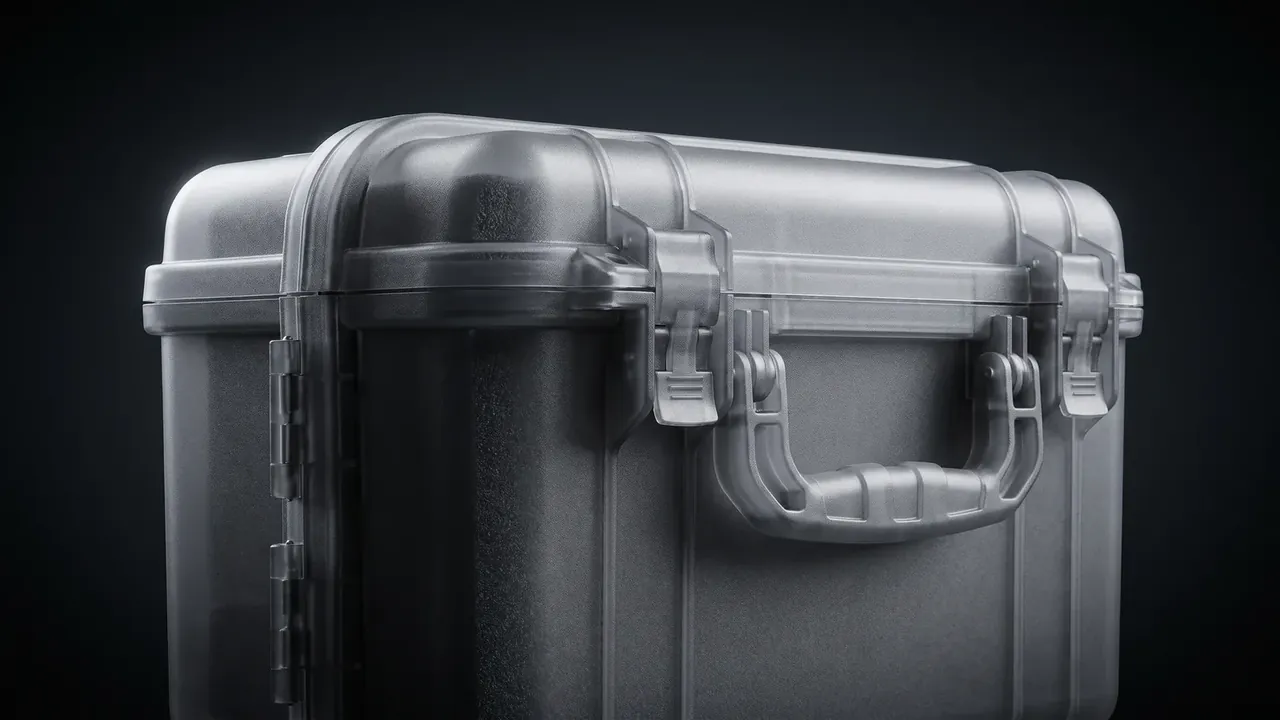
Quick answer: An Oscilloscope Transport Case sets a 285×175 mm bezel at R14 with a 9 mm foam bead; 24 cycles from −10 °C to 50 °C keep the diagonal gap under 0.38 mm.
Table of contents
- Bezel-Opening Corner Radii in the Oscilloscope Transport Case
- Spring-Back of the Lid Foam Bead
- Diagonal Gap After Twenty-Four Thermal Cycles
- Retained Bead Compression After Rewarming
- Fixing the Radius for the Instrument Batch
- FAQ
1. Bezel-Opening Corner Radii in the Oscilloscope Transport Case
Twenty-four swings between cold and heat tell whether the bezel corners loosen first or the lid bead gives way; a feeler gauge across the diagonal settles it. An Oscilloscope Transport Case reserves a 285×175 mm window, pulls four corners to R14, and carries a 560×400×230 mm body, a 495×340×170 mm cavity and a 4.5 mm wall. Sharper corners pile up stress as the shell contracts, so the trial moulds changed only the radii. One gauge runs both diagonals, the larger is logged, and gauge and body return to room temperature before reading; the Oscilloscope Transport Case writes that routine into the inspection card.
| Corner radius tier | Matched opening | Bead thickness | Trial ID |
|---|---|---|---|
| R14 tier | 285×175 mm | 9 mm | S1 |
| R18 tier | 291×181 mm | 9 mm | S2 |
| R22 tier | 297×187 mm | 9 mm | S3 |
Only the opening grows with the radius; the rest is shared.
2. Spring-Back of the Lid Foam Bead
The 9 mm foam bead circles the bezel back to spread the closed lid's rebound over four corners. Closed-cell foam is most compliant near 20 percent compression; push further and it densifies, collapsing at the cold end. The Oscilloscope Transport Case arrives at 9 mm by subtracting the bezel's rear allowance from the lid's clear depth. Spring-back is a thickness ratio: after a night inside the lid, a strip that fails to return to 87 percent of its original thickness is pulled. Durability is checked here too — 4200 open-close cycles leave the lid square, four latches press at 385 N each, two gasket rings take 20 percent apiece, and ballast is the shipped 5.4 kg empty and 12 kg loaded. What the Oscilloscope Transport Case wants is a gap born only of the bezel and bead pair.
3. Diagonal Gap After Twenty-Four Thermal Cycles
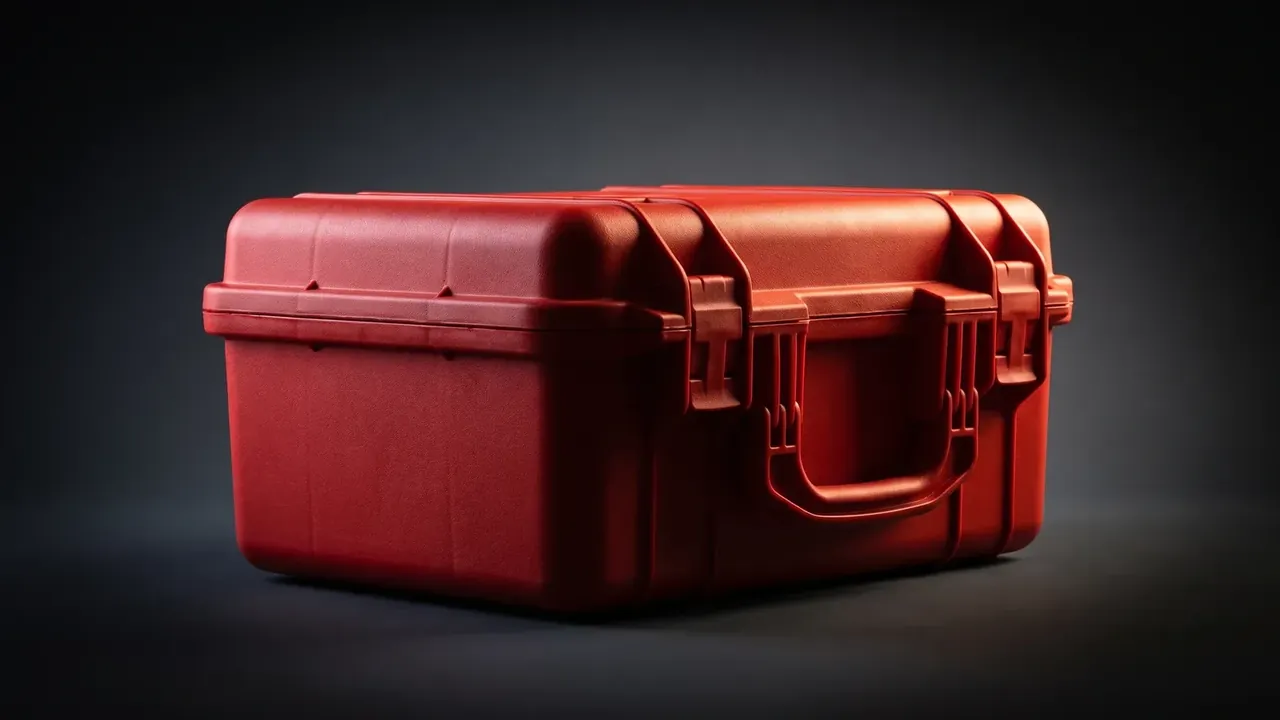
The chamber swings between −10 °C and 50 °C, one round per count, and stops at 24. What the Oscilloscope Transport Case tracks is the grip left along the bezel diagonal: each round lets a hairline open, the gauge climbs, and late in the run the climb flattens. Reading waits until the body is back at room temperature.
| Thermal cycle | Chamber span | R14 diagonal gap | Bead thickness |
|---|---|---|---|
| Cycle 1 | −10 °C → 50 °C | 0.12 mm | 9.0 mm |
| Cycle 12 | −10 °C → 50 °C | 0.23 mm | 8.4 mm |
| Cycle 24 | −10 °C → 50 °C | 0.31 mm | 7.9 mm |
At round one all three tiers sit near 0.12 mm; by the twelfth S3 has reached 0.35 mm; at twenty-four S1 closes at 0.31 mm, S2 at 0.36 mm and S3 passes 0.44 mm. The 0.38 mm ceiling is worked back from assembly tolerance — wider and it rattles. Observation is pinned to the twenty-fourth round because the early tiers still overlap.
4. Retained Bead Compression After Rewarming
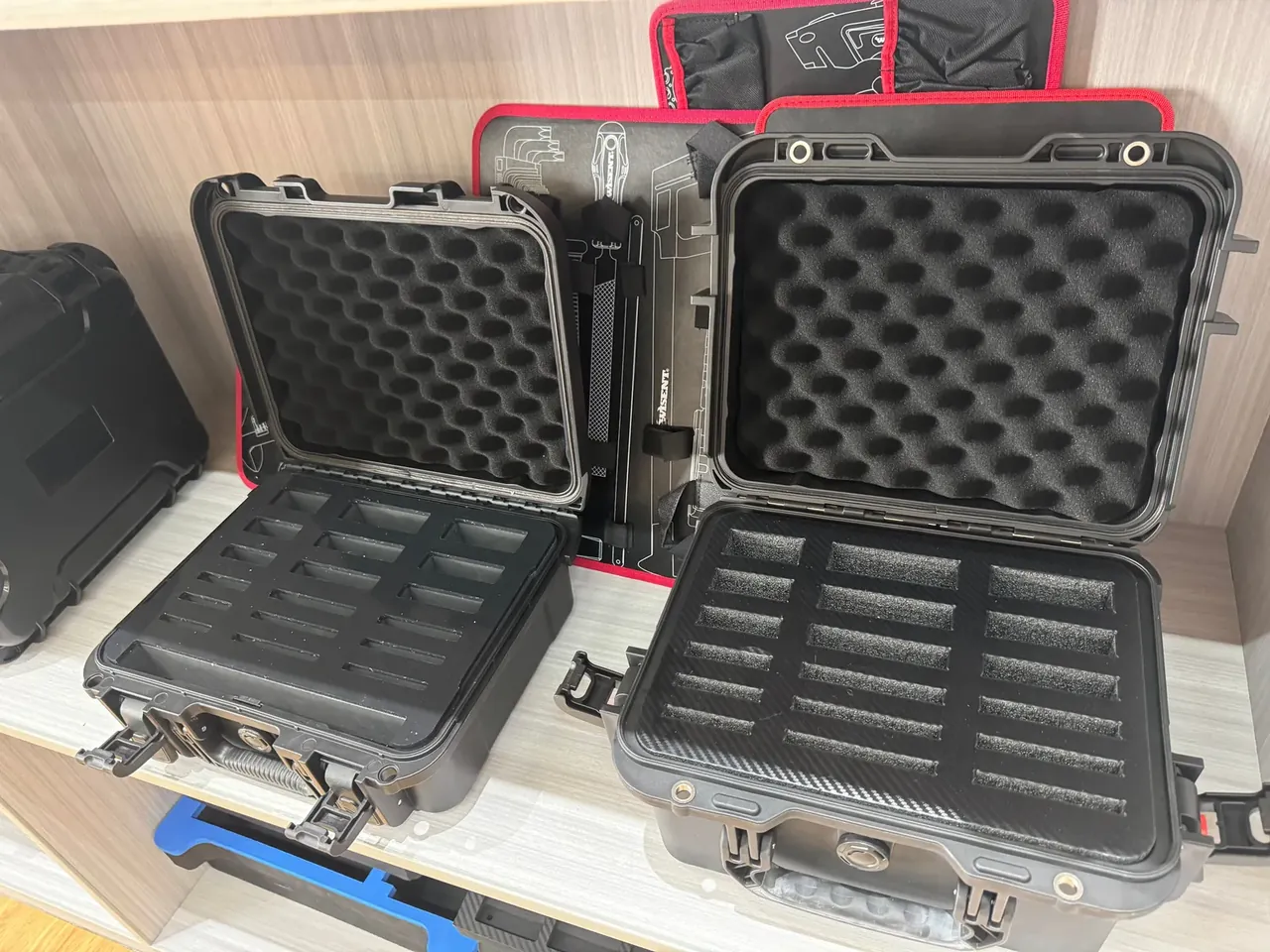
The case sits in ambient air before the lid is opened, then the bead is lifted and its retained compression measured after a full rub of freezing and swelling. Retained compression of at least 87 percent is the second half of the keep condition: a narrow gap means little if the bead cannot come back, because the cold end has set a permanent deformation. The Oscilloscope Transport Case treats gap and retention as one vote.
| Gap reading | Radius tier | Retained compression | Bezel disposition |
|---|---|---|---|
| 0.31 mm | R14 tier | 90% | Fixed as the radius |
| 0.36 mm | R18 tier | 87% | Held as reserve |
| 0.44 mm | R22 tier | 78% | Diverted to non-display lids |
Only the R14 tier clears both the 0.38 mm gap and the 87 percent line; S2 scrapes through while S3 falls below on both. R22 pushed its opening to 297×187 mm, so the diagonal loosened first and the bead collapsed after. The 5.4 kg empty and 12 kg loaded ballast is copied at the foot for a repeat batch.
5. Fixing the Radius for the Instrument Batch
The radius is fixed at the smallest tier whose twenty-fourth-cycle diagonal gap still stays under 0.38 mm, while wider bezel openings are diverted wholesale to non-display instrument lids. R14 and R18 both clear the line and the smaller R14 is taken, avoiding a second lid tool for the wide R22 window. From here the drawing, the bead cutting card and the cycling inspection sheet of the Oscilloscope Transport Case are written to that one tier. JUNZHIJIA files IP66 only as a typical sealing reference, checked against the test method and never written up as an obtained certification; two gasket rings at 20 percent and four latches at 385 N each are re-measured against a card carrying no certificate number. The 4200 cycles, 24 rounds and 87 percent retention belong to three separate rigs.
Conclusion
A small change at four corners splits one cavity into three diagonal curves of different tightness, and the Oscilloscope Transport Case accepts only the R14 tier that stays inside 0.38 mm and returns to 87 percent retention. A 0.31 mm gap matches 90 percent retained compression, so the 9 mm bead's rebound is not a number from thin air. S2 held as reserve and S3 diverted to non-display lids are written on the twenty-fourth-round sheet, with no destination reserved in advance. JUNZHIJIA puts R14 into the batch drawing, and bezel moulding, gasket compression and bead cutting are filed tier by tier. When the foam changes the fabricator walks the twenty-four rounds from −10 °C to 50 °C again; an old curve never vouches for a new batch.
Related Reading
- Electronic Equipment Case: Vibration and ESD Protection
- Instrument Case Specifications: Cavity, Hardness, Latches
- Case Volume Calculation: Cavity, Corners, Usable Ratio
- Microscope Equipment Transport Case
- Calibration Equipment Transport Case
Related Products
- 8 Series — Gun Cases; Military Equipment Cases; Camera Equipment Cases; Drone Cases; Watch Cases; Knife Cases; First Aid Cases; Electronics Equipment Cases
- WL8-2812 PP Gun Case — model WL8-2812
- All protective cases and toolboxes: 7 series, 158 models