

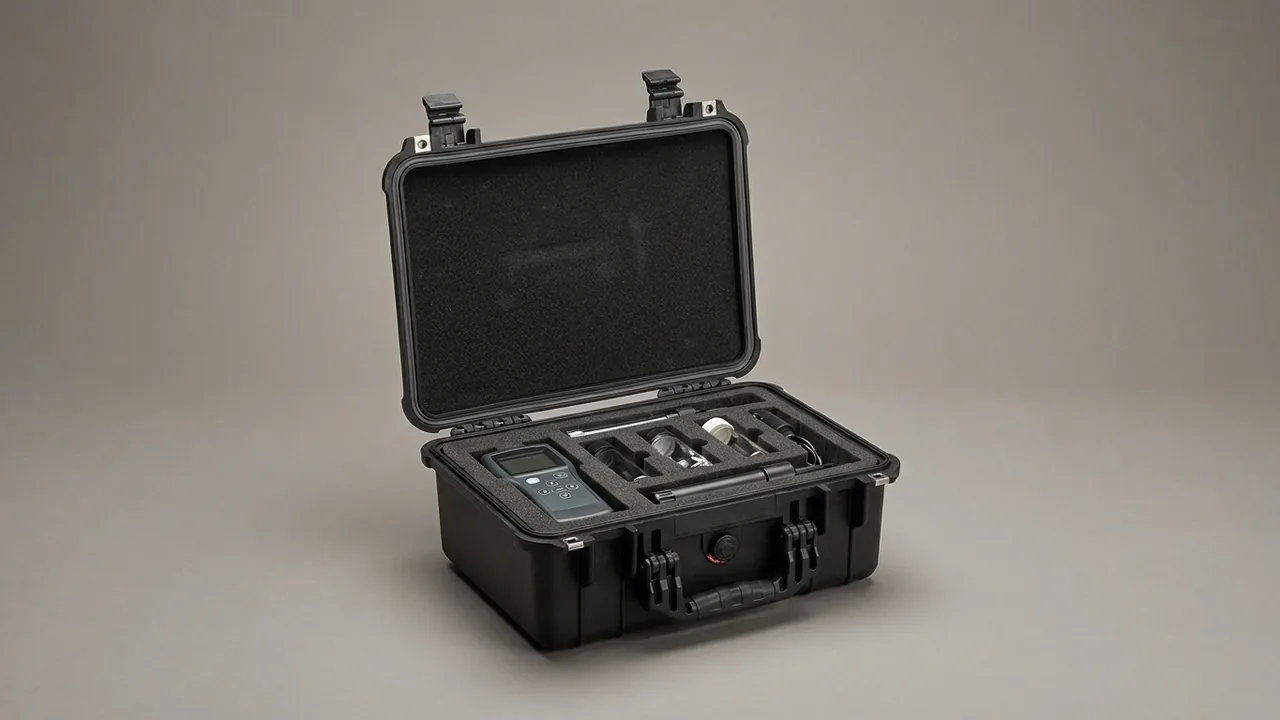
A pistol is the smallest and most compact class of firearm, yet the demands on its case are not small: the slide-to-barrel fit is precise, the grip and trigger guard fear compression, magazines and spares are easily lost, and optics or lights are damaged by both knock and abrasion. A sound pistol case must achieve compact storage, compartment fixing, sealed moisture resistance and compliant locking within a limited volume, rather than wrapping the pistol in a soft holster. JUNZHIJIA's protection principle for pistol cases is organised along four lines: body-hugging pockets, separate compartments, sealed moisture resistance, and a tidy portable form. Use shaped pockets cut to the grip and slide contours to restrain the pistol, separate cells for magazines and spares, a sealing structure against the moisture and dust of daily carry, and a compact regular outline that serves both storage and carry, instead of dropping the pistol into a soft holster.
Pistols are damaged in daily carry and transport in ways users often do not expect. Someone finishes at the range, slips the pistol into a soft holster and then into a backpack, and the trigger guard is pressed by keys and tools while the red-dot is scratched by hard objects. Someone puts the pistol alone into a hard case, but the magazine rolls freely inside and strikes the pistol and lens. Someone stores the pistol in a damp place for a long time and fine rust spots appear on the slide and barrel. These share one trait: overlooked in daily use, exposed only after long accumulation, and once the coating or precision fit is damaged, it can hardly be restored locally. This article addresses licensed case holders, shooting-sport and range practitioners, law enforcement and security personnel, and the case manufacturers and export packaging engineers serving them. It works through compact storage, compartment fixing, sealing, compliant locking, carry design and acceptance criteria, with a configuration table and FAQ.
Table of Contents
- Protection Priorities and Common Misconceptions in Pistol Storage
- Body-Hugging Pockets: Profile-Shaped Liner Design
- Separate Compartments: The Logic of Storing Magazines, Spares and Accessories
- Sealing and Moisture Control: The Key to Daily Carry and Long Storage
- Locking and Compliance: The Hard Constraint in Transport
- Portable Design: Outline, Handle and the Quick-Access Trade-off
- Protecting Red-Dot Sights and Tactical Accessories
- Transport Test Basis: ISTA, GB/T 4857 and ASTM D4169
- Packing Marks, Traceability and Receiving Inspection
- Configuration Checklist and Selection Table
- Turnaround Maintenance and Long-Term Storage Management
- OEM/ODM Customisation and Branded Delivery
- Frequently Asked Questions FAQ
- Conclusion and Related Reading
Protection Priorities and Common Misconceptions in Pistol Storage
A pistol's protection priorities follow its form. It is small, its centre of gravity is concentrated, and it has many protruding parts; what is most easily damaged is not the length direction but the slide-to-barrel fit, the trigger guard, the grip and the edges of optical accessories. Unlike a long gun's "anti-bend, anti-vibration", a pistol emphasises "anti-compression, anti-knock, anti-scatter". Understanding this difference is the premise of pistol case design.
There are four common misconceptions. The first is "a soft holster is protection". A soft holster only guards against dust and light abrasion; it cannot resist compression and knock, so a pistol thrown into a backpack with keys and tools easily damages the trigger guard and lens. The second is "a hard case solves everything". If the liner is not shaped, the pistol still moves and strikes the wall; if magazines are not fixed, they roll inside and become a damage source. The third is "ignoring accessories". If a red-dot, light and spare magazines are not in separate compartments, they press against the pistol. The fourth is "ignoring humidity". In daily carry the pistol meets sweat, rain and temperature swings; without a sealed case, metal parts stay damp and rust risk rises sharply.
The table below lists protection points by part as a pre-selection checklist.
| Part | Vulnerability | Typical Damage | Protection Measure |
|---|---|---|---|
| --- | --- | --- | --- |
| Slide and barrel | Precise fit | Scratches, rust | Shaped pocket fixing, sealing, no hard contact |
| Trigger guard | Cantilever, fears compression | Deformation, cracks | Soft surround, no tool compression |
| Grip | Texture and backstrap | Coating loss, scratches | Profile pocket fit, soft edges |
| Red-dot sight | Body and lens | Scratches, zero drift | Separate relief, foam wrap |
| Magazines and spares | Roll and scatter | Mutual impact, loss | Separate cells, matching the list |
| Surface coating | Fears abrasion and moisture | Polish marks, rust spots | Sealing, no direct metal friction |
Once this table is understood, the design logic is clear: the liner must be shaped to the grip and slide contours to restrain the pistol, magazines and accessories must have separate cells to avoid scatter and impact, the case needs a sealing structure against moisture, the lock must meet transport compliance, and the outline should be tidy to serve both storage and carry. None of the five can be omitted; any missing one shows up in daily use.
Body-Hugging Pockets: Profile-Shaped Liner Design
The liner is the core of a pistol case's protection. Unlike a soft holster that "pads a layer of foam", a pistol case liner should achieve body-hugging pockets, that is, shaped pockets cut to the pistol's real outline so the body cannot move freely up, down, left, right, forward or back once seated. The pocket depth is usually half to two thirds of the body section, restraining movement while leaving room to lift it out.
The fit of the pocket form decides the protection effect. A pistol outline is irregular: the slide front is bevelled, the grip is curved, the trigger guard protrudes, and the rail and sight base stand out. A simple rectangular channel leaves the pistol rocking inside. The sound approach is to cut along the real slide and grip outline so the contact surfaces are as continuous and the load as evenly spread as possible. For a configuration with a red-dot or light, add separate relief pockets at the body and light positions so the accessories do not become the highest point pressed by the lid.
Liner materials are usually closed-cell foam with low compression set, such as EVA, PE, IXPE or their composites. Closed-cell foam resists water absorption, holds up to compression set and rebounds stably, which suits repeated daily use and long storage. Where higher vibration absorption is needed, a layered structure can be used: softer near the pistol to fit the contour, firmer near the wall to spread the load. A layered design forms a soft-then-firm energy-absorption gradient in a drop, balancing fit and impact resistance.
Cushion thickness should be set from the permitted acceleration and allowable foam compression, not simply thicker. Overly thick soft foam rebounds strongly in a drop, loading the body a second time; too thin cannot absorb impact energy. The reasonable method is to estimate the required thickness from the possible drop height and the allowable acceleration of the body, then verify by test. In its whole-case fixation of pistols and accessories, JUNZHIJIA uses shaped-pocket and cell methods consistent with the modular idea of the removable divider system.
Separate Compartments: The Logic of Storing Magazines, Spares and Accessories
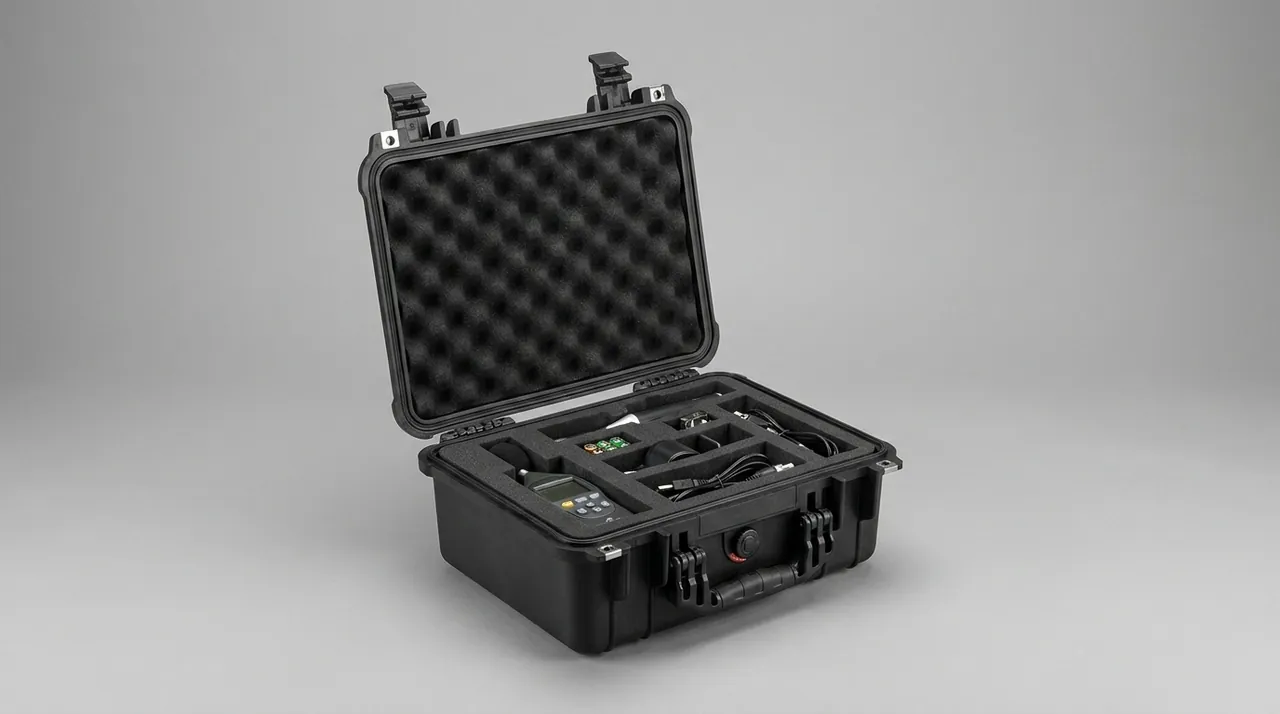
A pistol in carry and transport is often accompanied by several magazines, cleaning tools, spare batteries and red-dot spares; if these share a cavity with the pistol, they strike one another in movement. The sound approach gives each category its own cell, separated by solid material, not pushing everything into one common void.
Magazines are the first compartment subject. If a magazine rolls freely inside, it strikes other items during handling and hits the pistol and lens; several stacked magazines also risk deforming the feed lips. Magazines should each occupy a separate cell and stay fixed upright or flat, meeting transport compliance. For whole-kit transport by law enforcement and security units, magazine cells should correspond to the shipping list so opening, counting and packing records match one to one.
Cleaning tools and long accessories should have their own slots along or across the case so they do not lie parallel against the pistol and scratch it. Spare batteries for the red-dot are small and easily lost, so a dedicated small cell with foam compression is advisable. Every accessory cell should correspond to the shipping list to raise counting efficiency. Where a pistol and other equipment must travel together, a general-purpose equipment cell can be reserved on one side, with layout adjusted through replaceable dividers. The figure below shows a pistol, magazines and accessories fixed in separate cells.
Sealing and Moisture Control: The Key to Daily Carry and Long Storage
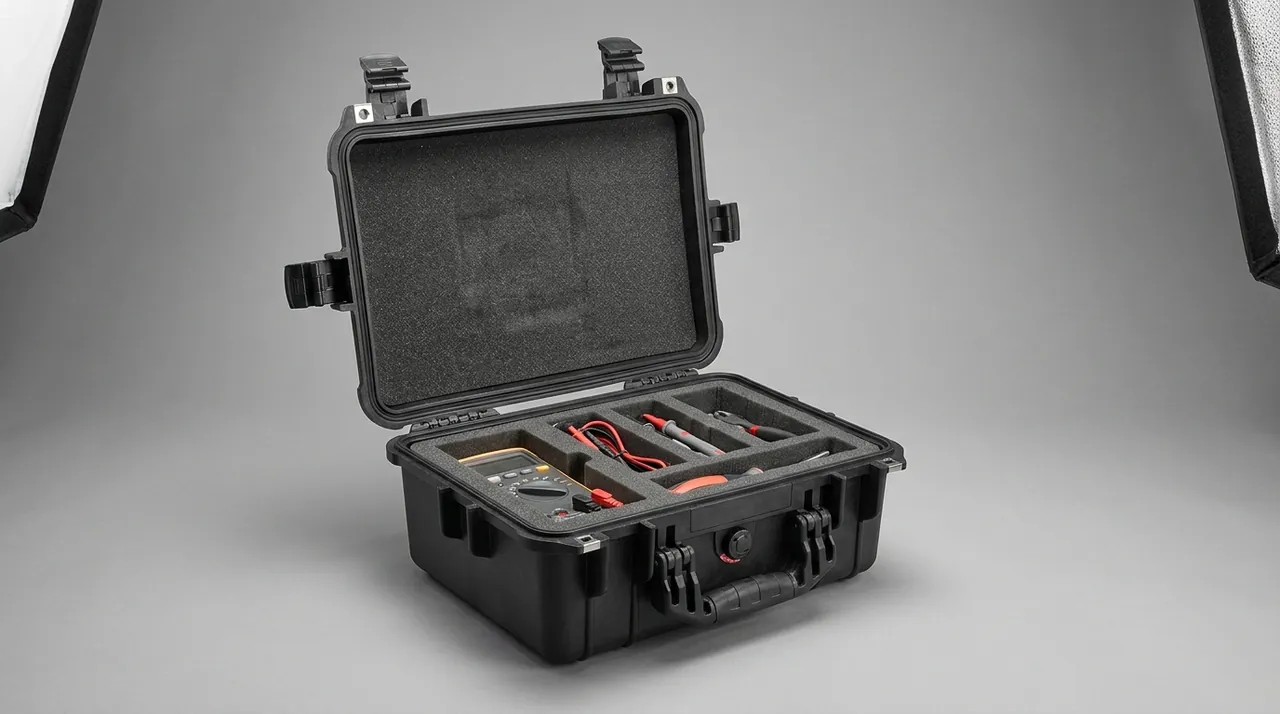
A pistol is a metal-dense item, especially sensitive to hand sweat, rain and humidity. In daily carry the pistol repeatedly cycles between body temperature and ambient temperature, so metal surfaces condense moisture; in damp long-term storage the slide, barrel and magazines show rust spots. Pistol case sealing serves both carry and storage.
The sealing rating decides how well the case resists dust and water penetration, described by the IP code of IEC 60529 and GB/T 4208. IP65 means dust-tight and protected against water jets, suited to rain, splash and dust; IP67 means dust-tight and protected against short immersion, suited to possible immersion or long-term high humidity. Because pistol cases are often used at outdoor ranges, in law enforcement duty and in humid regions, IP67 is recommended, with a pressure-equalisation valve for temperature swings and air-travel low pressure.
The first element of sealing design is matching groove and gasket. The gasket needs stable compression and rebound, and the ratio of groove depth to gasket diameter must ensure reliable contact after closure without over-compression into permanent set. Over long use the gasket ages and loses rebound, the most common cause of seal failure, so it should be a periodic check item. The second element is the pressure-equalisation valve, using a waterproof breathable membrane to equalise pressure slowly while blocking liquid water and dust. The third is the coordination of sealing and locking, since only sufficient and even latch clamping compresses the gasket to its working set.
Internal humidity control uses desiccant, humidity indication and structural ventilation together. At packing, add enough desiccant for the cavity volume and expected storage period, and place a humidity indicator card. Structurally, avoid closed dead corners so moisture is adsorbed by the desiccant rather than lingering. JUNZHIJIA's pressure-equalisation approach in pistol cases follows the selection points for the case pressure-equalisation valve.
Locking and Compliance: The Hard Constraint in Transport
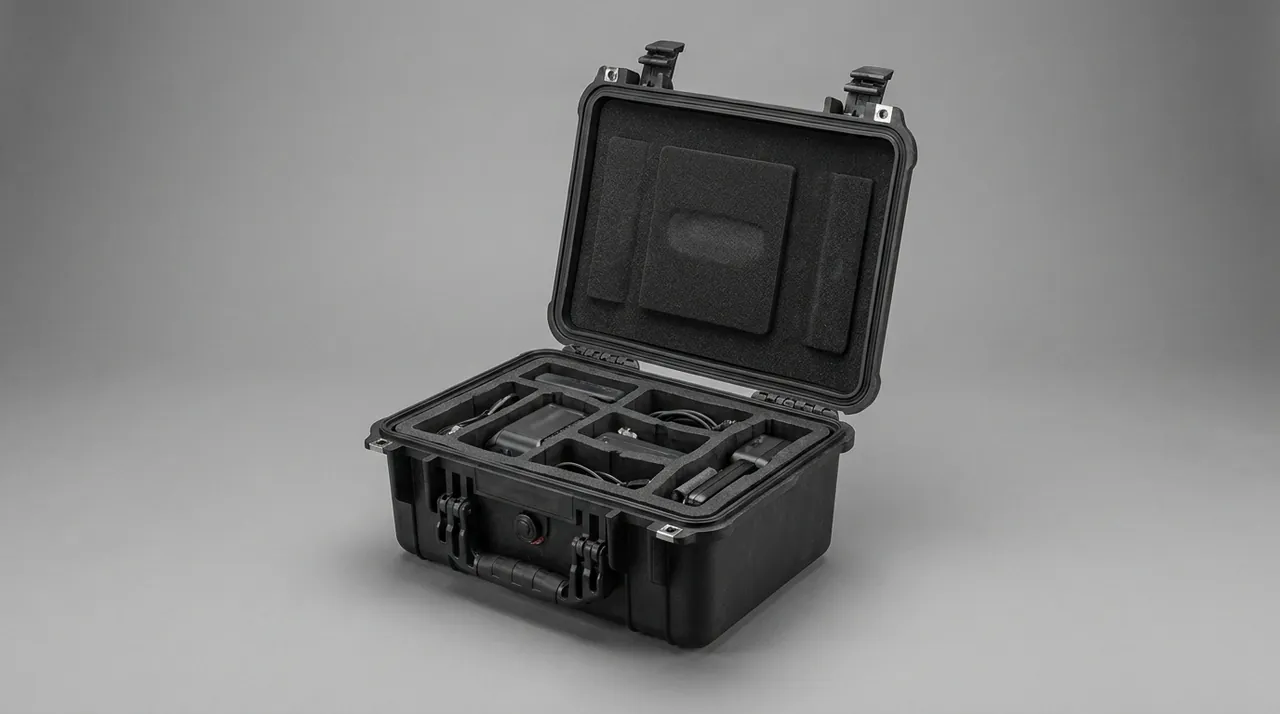
Pistol transport and storage are strictly regulated, and the case lock must satisfy both safety and compliance. The compliance core is three points: the container must be hard and lockable by design, it cannot be opened without authorisation once locked, and only the holder holds the means to unlock. Against these three points, lock design balances anti-pry strength, closure reliability and the uniqueness of key or code.
Because a pistol case is small, common lock schemes include an integrated latch lock, an integral anti-pry padlock and a small combination lock. Constrained by case size, some products use a single latch with reinforcement, in which case the latch pocket must join rigidly to the main structure rather than relying on a single wall thickness. Where reliable closure must be demonstrated in transport, two or more closure points are recommended so the lid is loaded evenly and no gap opens on the side away from the latch.
It must be specially stressed that the transport and possession of pistol-type equipment must strictly comply with the laws and regulations of each jurisdiction. The case product design serves only safety, compliance and protection, and does not involve the use or performance of firearms. For air checking or inter-region transport, confirm the carrier's and destination's specific interpretation of a lockable hard container, so the case is not blocked by a non-compliant lock. During selection, keep the lock specification and test records for explanation at check-in or customs.
Portable Design: Outline, Handle and the Quick-Access Trade-off
Portability and quick-access experience are distinguishing features of a pistol case versus a long gun case. Because a pistol is small, the case outline should be as tidy as possible for a backpack, equipment bag or vehicle compartment, avoiding protruding parts that snag. A tidy outline also raises stacking efficiency, letting several equipment cases line up neatly in storage and transport.
Handle and carry design involve a trade-off. For personal carry, the case can be sized for one hand with a carry handle or sling; for batch equipment in law enforcement and security units, stacking and marking consistency matter more. The conflict between carry design and quick access is this: the more quick access is emphasised, the simpler closure and locking tend to be; the more compliant transport is emphasised, the more rigid the closure and the slower the opening. The reasonable approach is to define the main use: personal daily carry can balance quick access and compliance, while transport-focused use should put compliance and protection first.
The corners and edges should also be rounded, reducing knocks to the user and wear to other equipment. For vehicle carry, the case size should consider the actual compartment dimensions to avoid the awkward case of a compliant case that will not fit. Portable design is not simply chasing small; it is finding the balance among size, rigidity, sealing and quick access that matches the intended use.
Protecting Red-Dot Sights and Tactical Accessories
The optical accessory is the most precise and shock-sensitive part of a pistol. The red-dot's internal optics and adjustment mechanism fear vibration, the lens fears scratches and breakage, and the body and mount fear hard contact. Tactical lights and laser designators, though simpler, also fear knock and moisture. Protecting optical accessories is a key capability that distinguishes a pistol case from an ordinary hard box.
Red-dot protection has three points. First, separate relief: the body's position should have a dedicated shaped pocket and top relief space so the lid does not press on the lens when closed and loaded. Second, foam wrap: the body should be wrapped in soft foam or flocked material to avoid hard contact with the pistol and magazines. Third, avoid load points: the body and mount should not be the highest point in the case or be pressed by other items.
Tactical lights and laser designators should have separate cells away from direct contact with magazines and tools; their tail caps and lens positions should not be compressed. For accessories with charging ports or battery compartments, confirm battery state at storage and avoid leaving batteries in for long periods, which risks leakage and corrosion. Accessory cell layout should correspond to the shipping list for counting and maintenance. In its whole-case fixation of optical accessories, JUNZHIJIA uses cell and cushion methods consistent with the modular liner paired with the removable divider system.
Transport Test Basis: ISTA, GB/T 4857 and ASTM D4169
A pistol case's protection capability should ultimately be verified by transport testing rather than claimed by parameters. By test object and purpose, the basis falls into three groups. The first is whole-case performance testing, represented by the ISTA series, evaluating a packaged case in real logistics through combined vibration, impact, drop and stacking. The second is domestic transport package test methods, represented by the GB/T 4857 series, covering vibration, impact, stacking and drop. The third is distribution cycle testing, represented by ASTM D4169, combining multi-stage sequences per the expected transport cycle.
For a pistol case, three load classes matter most. The first is drop, simulating manual handling and daily slips, the most direct way to check the combined cushioning of shell, latch and liner. The second is vibration, simulating continuous vehicle and cargo-hold vibration, checking liner shift, accessory loading and structural fatigue. The third is stacking, checking the case's compression resistance under upper loads in storage and transport. Air transport also needs attention to low pressure on the sealed cavity, so the pressure-equalisation valve should work normally under pressure change.
When setting a test plan, first define the case's actual transport route and expected loads, then choose the corresponding sequence. Test conditions should be written into the purchase technical agreement, defining items, severity levels and criteria. The criteria are not only "the case does not break" but also "the pistol has no displacement, the red-dot has no displacement, locking functions normally, no seal leakage". It should be stated honestly that transport testing verifies the packaged case under given conditions and cannot be converted directly into an absolute guarantee for any real logistics.
Packing Marks, Traceability and Receiving Inspection
The marking and traceability design of a pistol case directly relates to traceability in the event of misrouting, loss or dispute. The exterior should carry clear, durable markings that are hard to change without damaging the case, usually including the case number, the owning unit or holder information, a content list note and necessary handling marks. For law enforcement and security equipment, the numbering rule should connect with the stock system to form a complete chain from packing through transport to warehousing.
The internal list is an important feature of a pistol case. The list should correspond to the internal cell layout, itemising pistol model, red-dot model, accessory category and quantity, so opening, counting and packing records can be cross-checked one to one. Receiving inspection should follow a fixed sequence: first check the case exterior and lock state, then check the gasket and pressure-equalisation valve, then open and check the list against the physical contents. The opening sequence matters, because a wrong order can load or lose the firearm during removal.
Problems found at acceptance should be recorded on the spot and photographed, compared with the packing record, to judge whether damage occurred in transport or at packing. Any nonconformance should be recorded and notified to the sender rather than absorbed on site. For pistol cases that turn around many times, acceptance is not only arrival inspection but also return inspection, checking latch springs, gasket compression set, liner pocket shape and hardware rust on each return.
Configuration Checklist and Selection Table
Selection should proceed through three layers of "use — environment — load". The first layer defines use: personal daily carry, range practice, or batch equipment for law enforcement and security. The second defines environment: immersion, long-term high humidity, or air checking. The third defines load: frequent handling or sharing a case with other equipment. Once the three layers are set, case size, lock count, sealing rating, liner type and carry method converge accordingly.
The table below gives configuration suggestions for three typical scenarios as a starting point to be fine-tuned to actual needs.
| Item | Personal carry | Range and sport shooting | Law enforcement equipment |
|---|---|---|---|
| --- | --- | --- | --- |
| Case size | Single pistol + 2 magazines | Single pistol + several magazines + tools | Multiple pistols + accessories + list |
| Liner | Profile pocket + sight relief | Profile pocket + accessory cells | Modular cells + numbering correspondence |
| Sealing | IP67 | IP67 | IP67 + pressure-equalisation valve |
| Lock | Two-point integral lock | Two-point anti-pry lock | Two-point anti-pry lock + lock records |
| Carry | Handle / sling | Handle | Stacking + numbered marking |
| Traceability | Case number | Number + list | Number + list + stock records |
A common misconception in selection is "compare only price and size". The value of a pistol case lies mainly in liner fit, accessory cells, sealing reliability and lock compliance, none of which is easy to judge from appearance. At the procurement stage, ask for the liner configuration plan, lock specification and sealing rating statement, and verify them against the actual use.
Turnaround Maintenance and Long-Term Storage Management
In long-term use, wear concentrates on the latch, gasket, hinge and liner pockets. Latch springs under long compression lose elasticity, showing as loose closure or hard opening; aging gaskets lose rebound, showing as reduced protection rating; worn hinge pins loosen the lid and affect seal compression; liner pockets worn by repeated use deform, letting the pistol rock in the pocket. Maintenance should build a periodic inspection system around these four, with intervals based on use frequency.
Long-term storage management is a step many users overlook. The humidity and temperature of the storage environment directly affect the internal state, so place the pistol case in a dry, ventilated and sun-protected environment, check the humidity card periodically and replace desiccant as needed. For a pistol with optical accessories, confirm the battery is removed or in a safe state for long storage to avoid leakage corrosion. Metal rust prevention can combine internal desiccant with surface anti-rust treatment; deal with any rust promptly and find the humidity source.
Another meaning of turnaround maintenance is the retirement decision. When the shell cracks, the latch pocket breaks, or the seal groove deforms, the case cannot return to its original protection level even with part replacement, so it should be retired rather than patched. A faulty case entering transport carries far more risk than its residual value. The maintenance system should define retirement criteria so that "use it while it works" does not cause firearm damage or compliance risk.
OEM/ODM Customisation and Branded Delivery
For firearm dealers, shooting-sport brand owners and security equipment suppliers, pistol cases often need customisation for their own product line and brand image. Common dimensions include: tooling the case size and internal layout for specific pistol models and accessory lists; choosing the lock type for the target market's compliance requirements; making colour, silk-screen and packaging marks to the brand standard; shaping the liner to the customer's markings and body profile; and compiling the documents to the customer's template.
The customisation process should proceed as "requirement confirmation — structural design — sample verification — volume delivery". Requirement confirmation should define the target market's transport compliance; structural design sets case size, lock positions and liner layout; sample verification confirms the design boundary through drop, vibration and sealing tests; volume delivery ensures batch consistency and complete documents. JUNZHIJIA provides firearm dealers and security equipment suppliers with an integrated plan from structural tooling to liner moulding, lock selection and branded delivery, bringing compliance and protection requirements forward into design. KeXin New Materials (Guangdong) Co., Ltd. acts as the manufacturer providing production and quality assurance for that customisation.
For export projects, packing marks and traceability numbers should also be unified so the customer can count and warehouse by one numbering logic at destination. The case file should contain lock specification, sealing rating statement, liner configuration table and transport test records so the customer can provide a compliance basis at customs and check-in. It must again be stressed that the application and transport of pistol-type equipment must comply strictly with the laws of each jurisdiction, and the content above concerns the structure, protection and transport management of case products, not the use or performance of firearms.
Frequently Asked Questions FAQ
Q: How should I choose between a soft holster and a hard pistol case?
A: They serve different purposes. A soft holster suits short-term dust protection and light abrasion but cannot resist compression and knock, so a pistol thrown into a backpack with keys and tools easily damages the trigger guard and lens. A hard pistol case fixes the body with a shaped liner, fixes magazines and accessories in cells, and resists moisture with a sealed structure, which suits daily carry, range trips and transport. If the main need is anti-knock, anti-moisture and anti-scatter with transport compliance, choose a hard case; if it is only brief home storage with no transport, a soft holster works as a supplement. In practice the two can combine: the hard case handles transport and storage, the holster handles brief range movement. The deciding factor is usually how the pistol is carried: a holster that stays on the body is chosen for access, while a hard case is chosen when the pistol must survive a vehicle, a range bag or a checked flight, and the two roles rarely overlap in the same trip.
Q: Why must the pistol case liner be profile-shaped?
A: A pistol outline is irregular: the slide front is bevelled, the grip is curved, the trigger guard protrudes, and the rail and sight base stand out. A simple rectangular channel leaves the pistol rocking and striking the wall; only a shaped pocket cut to the real outline, making the contact surfaces as continuous and the load as evenly spread as possible, restrains the body in six directions during drop and vibration. A well-cut pocket also holds the pistol so the sights and the magazine release do not bear weight, which protects the small parts that are hardest to replace and keeps the firearm in the same orientation every time it is packed. For a pistol carried daily, the pocket should also hold the grip in the same position every time, because a liner that lets the frame shift will let the sights rub against the surrounding foam and mark both surfaces. Q: Why should several magazines not be stored in one cell?
A: If magazines are collected in one cell, they strike one another in movement, which over time can deform the feed lips and knock the surfaces; they also hit the pistol and lens, adding a damage source. The sound approach is for each magazine to occupy a separate cell in a fixed posture, separated by solid material. The storage posture should avoid compressing the feed lips, and for long storage the spring tension can be slightly relaxed to extend magazine life and keep feeding reliable. Keeping magazines in fixed cells also stops them wearing the pistol's finish during a long drive, and it lets a quick visual check confirm that the carried load matches the intended one before the case is closed. Separate cells also keep spring pressure from being shared between magazines, so a full magazine left in the case for months is not gradually compressed by the weight of the ones stacked against it. Q: Why is IP67 recommended for a pistol case rather than IP65?
A: IP65 means dust-tight and protected against water jets; IP67 means dust-tight and protected against short immersion. Because a pistol is often used at outdoor ranges, in law enforcement duty and in humid regions, it may meet rain, immersion or long-term high humidity, so IP67 gives more margin. More importantly, the IP rating is decided by the whole case system: gasket material, groove dimensions, latch clamping force and pressure-equalisation valve sealing together decide the result, and any single poor fit defeats the rating. So when comparing options, do not look only at the rating number; check the sealing design, latch count and the valve's waterproof breathable performance as concrete parameters. For a case that is carried on the body, the sealing grade also decides how often the interior needs attention, because a well-sealed case holds a stable microclimate that a desiccant can manage, while a leaking case lets damp air in faster than the desiccant can absorb it.
Q: How should a red-dot sight be placed inside a pistol case?
A: The red-dot is the most precise and shock-sensitive accessory on a pistol, so protect it in three ways. For a red-dot with a battery, confirm battery state for long storage to avoid leakage corroding the internal circuit. Because the sight sits high on the slide, it is often the first part to meet the lid in a drop, so the relief pocket should be deep enough that the case can be closed with light pressure and no sense of the sight being compressed. The window should be covered by a soft, non-shedding layer so the lens is not abraded by foam dust during transport, and the battery compartment should be reachable without lifting the sight out of its pocket. A spare battery is best kept in a small marked cell beside the magazine slots so the sight is ready without unpacking the whole case. A marked cell for the adjustment tool also keeps it from pressing against the lens while the case is closed. Q: How often should a pistol case gasket be checked or replaced?
A: The gasket is one of the parts most prone to aging and failure; long compression produces permanent set and loss of rebound, the most common cause of seal failure. The interval should follow use frequency and environment: cases with frequent carry or use in humid and salt-spray conditions should be checked more often, and stored cases periodically. Check whether the gasket still has stable rebound, whether the surface has cracked or hardened, and whether it contacts the groove continuously. When replacing, choose the same specification, same material and compatible gasket, and reassemble to the groove's compression set, avoiding insufficient clamping force from wrong diameter or material. A quick way to judge gasket health is to close the case and feel for even resistance around the whole rim; a section that closes with no resistance usually marks a gasket that has taken a permanent set and no longer seals. Keeping a spare gasket with the case avoids a rushed substitute that does not match the groove section. Q: What transport tests should a pistol case pass, and what are the criteria?
A: Three groups of basis can be used: whole-case performance testing such as the ISTA series, evaluating a packaged case in real logistics through combined vibration, impact, drop and stacking; domestic transport package test methods such as GB/T 4857 covering vibration, impact, stacking and drop; and distribution cycle testing such as ASTM D4169, combining multi-stage sequences per the expected transport cycle. A pistol case mainly verifies drop, vibration and stacking, and air transport also needs attention to low pressure on the sealed cavity. Test conditions should be written into the purchase agreement. When a small case is used as carry-on, the test evidence should reflect the handling it will actually see, since a case that survives a courier conveyor may still be dropped from a vehicle seat, and the criteria should cover both. Where the case is carried rather than checked in, the criteria should also cover repeated low-height drops onto a hard surface, since that is the handling a small case actually sees in daily use. Q: How is humidity inside the case controlled during long-term pistol storage?
A: Control uses desiccant, humidity indication and structural ventilation together. At packing, add enough desiccant for the cavity volume and expected storage period, and place a humidity indicator card so the holder can judge internal humidity without opening; avoid closed dead corners so moisture is adsorbed by the desiccant rather than lingering. For humid regions or long storage, use a desiccant with greater capacity and shorten the replacement interval, and check metal parts for rust periodically, tracing the humidity source before treating any rust. For a pistol with optical accessories, confirm the battery is removed for long storage to avoid leakage.
Conclusion and Related Reading
The protection logic of a pistol case is essentially answering four questions within the smallest volume: how to fit the contour to.
Related Reading
- Gun Case vs Ammo
- Ammo Box Waterproof Rating
- Pre-Cut Foam Inserts: Stock For a case that is opened only occasionally, the indicator card should be read before the lid is closed again so a damp reading is not left unnoticed for months.