

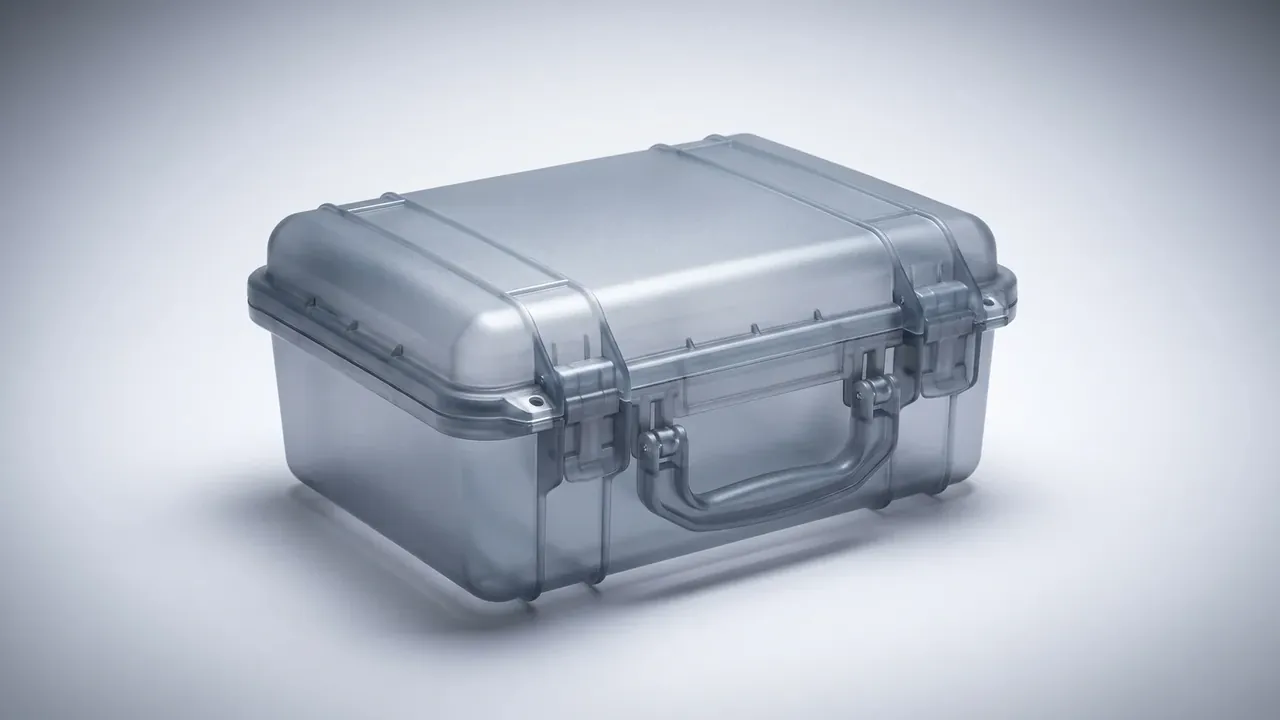
Quick answer: When plastic equipment case supplier quotes spread 30 percent on one drawing, the gap usually sits in three matching details rather than machining cost: cavity tolerance, foam density and how holes are cut. Match the drawing, verify a sample, then settle minimum order and mould ownership.
Table of contents
- Where the three differences sit
- Drawing match: cavity and hole positions first
- Six checks a sample must pass
- Minimum order and who owns the mould
- Delivery, payment and audit: three hard lines
- Five traps in the quote sheet
- FAQ
1. Where the three differences sit
Last month a client building inspection units needed a case with a 468 × 352 × 210 mm cavity for two probes and a harness, under 7.5 kg. Five replies came between 320 and 452 CNY, a 41 percent spread.
Same drawing, five prices.
| Source | Cheap route | Costlier route | Effect in use |
|---|---|---|---|
| Cavity tolerance | ±1.5 mm | ±0.5 mm | Brackets rattle |
| Foam insert | 18 kg/m³ sponge | 25 kg/m³ high density | Collapses in months |
| Holes | Punched, burr left | CNC milled, chamfered | Jacket cut |
| Latches | Bought-in generic | Dedicated mould | Grip fades at 2000 cycles |
| Wall | 3.0 mm uniform | 4.5 mm plus ribs | Lid sags |
Two of the five itemised foam and holes; the rest quoted one figure per case.
Cavity tolerance is the first hidden line: ±1.5 mm to ±0.5 mm adds 8 to 12 percent and decides whether the probe sits still.
Foam and holes are the other two. An 18 kg/m³ sponge under 7.2 kg prints within three months; a punched hole burr wears a jacket through.
2. Drawing match: cavity and hole positions first
Matching is not sending a drawing and waiting. The plastic equipment case supplier checks cavity size, rib intrusion and hole-centre distance against your unit.
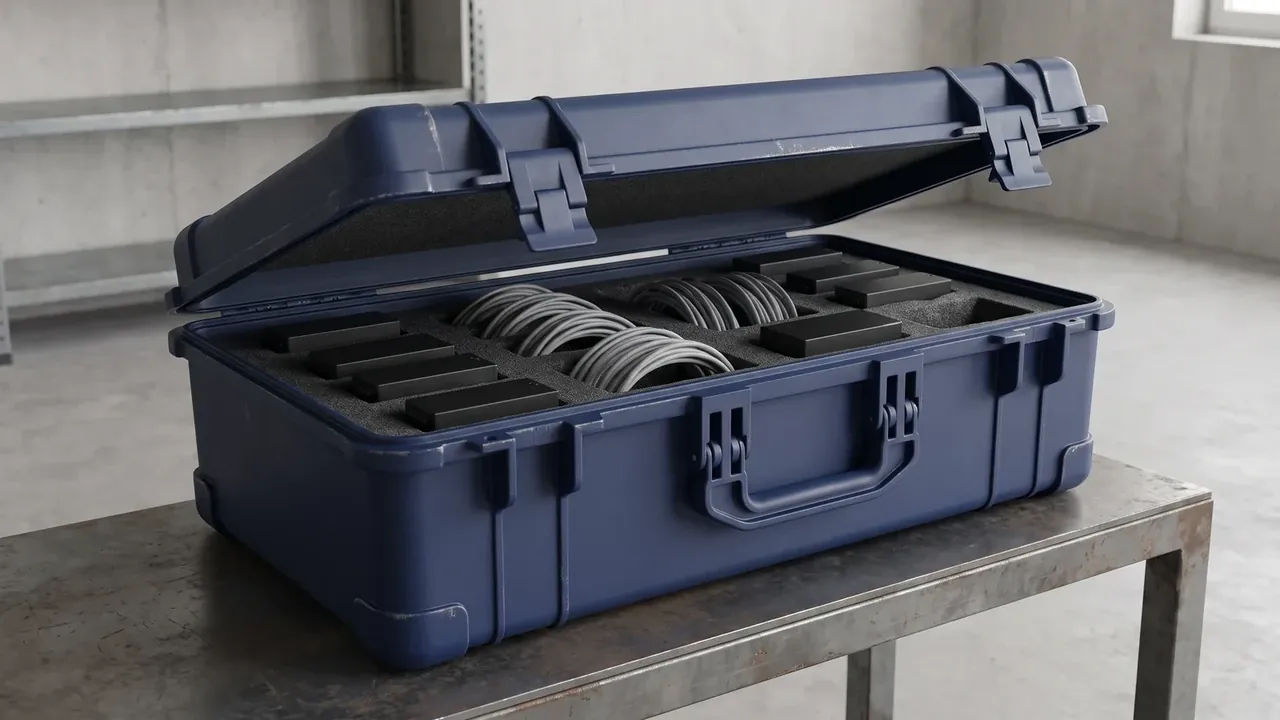
Start with a match sheet: allowance on three cavity axes, rib clearance, coordinates of every hole, and which side the harness exits. On a 4.5 mm wall, rib roots thicken to 6 mm and take 3 to 5 mm of clearance; unmarked, the unit hits them at trial fit. Holes closer than 12 mm to a corner sink, so the plant shifts them or adds a pad. Both sides sign, then quoting starts.
3. Six checks a sample must pass
Sampling takes 7 days and yields three cases that a plastic equipment case supplier puts through the checks below.
- Drop: 1.2 m, once per face, three corners, no cracks.
- Rain: 30 minutes on a 15° incline, no pooling.
- Temperature: 4 hours at -20 ℃, 4 hours at 60 ℃, two cycles.
- Stack: five units for 24 hours, set under 2 mm.
- Latch life: 2000 cycles, grip loss under 20 percent.
- Airtightness: -20 kPa held 60 seconds, drop under 5 percent.
Repeat orders take drop, stack and airtightness; a new mould takes all six, logged in the first-article report. Sample 5 percent per batch, counting destructive units into the order.
Airtightness is the check most often skipped, and one unsealed seam grows mould inside a case within two weeks.
4. Minimum order and who owns the mould
Three hundred pieces is the usual minimum; below that, the plastic equipment case supplier applies a 1.4 multiplier.
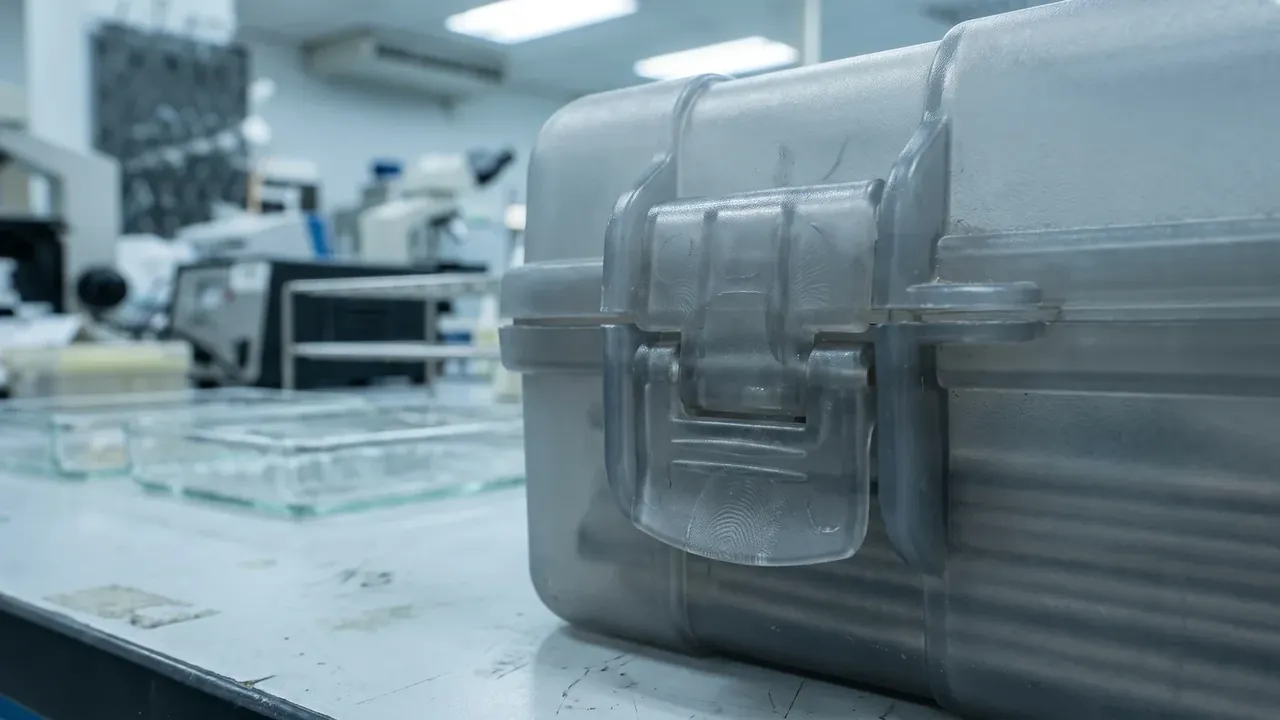
A 468 mm cavity needs a 2.4-tonne mould on a 550-tonne machine, costing 52,000 CNY, or 17.3 CNY per case across 3,000 units. Ask whether the mould number, storage address and collection notice appear in the contract.
The tool is rated near 120,000 shots, after which venting carbon builds up. A written maintenance interval beats arguing over 2 percent.
5. Delivery, payment and audit: three hard lines
A delivery date becomes enforceable only once it is split.
| Stage | Days | Deliverable | Payment |
|---|---|---|---|
| Match and sign-off | 6 | Signed sheet, model return | 20% |
| Sampling | 7 | 3 samples, six records | 0 |
| Production | 11 | 300 pieces, batch sheet | 70% |
| Inspection | 4 | Inspection record, packing list | 10% |
The stages total 28 days. The clock starts when the signed sample returns, not at order placement.
Payment runs in three parts: 20 percent after matching, 70 percent against dispatch notice, 10 percent 15 days after acceptance. A supplier demanding full prepayment is short of capital, so raise the risk.
Audit two rooms of the plastic equipment case supplier: the foam shop and the hole-cutting cell. A punch press, not a mill, tells you what the hole edges will look like.
6. Five traps in the quote sheet
One: the set price. Foam and dividers billed separately, 20 percent above quote.
Two: split tooling. Development and trial fees as two items, the second after you sign.
Three: paid revisions. Holes changed at 800 CNY each; three changes cost a fixture.
Four: the refund threshold. The sample fee is refundable at 500 pieces, not 300.
Five: a seven-day validity. Locking the price costs 3 percent, and deadlines kill comparison.
Conclusion
A 30 percent spread rarely comes from machining rates. It comes from a loose match sheet, a sample that never saw an airtightness check, and a mould whose ownership was never written down. Picking a plastic equipment case supplier starts with whoever fills in that sheet.
This article discusses only the container (case body) side of specifications and design intent, and does not cover any handling, loading or use of the contents.
Related Reading
- How to score case suppliers
- Rotomoulding versus injection moulding
- Equipment case configurations
- From first article to shipment
- Reviewing a showroom sample
Related Products
- 8 Series — Gun Cases; Military Equipment Cases; Camera Equipment Cases; Drone Cases; Watch Cases; Knife Cases; First Aid Cases; Electronics Equipment Cases
- WL8-2812 PP Gun Case — model WL8-2812
- All protective cases and toolboxes: 7 series, 158 models