

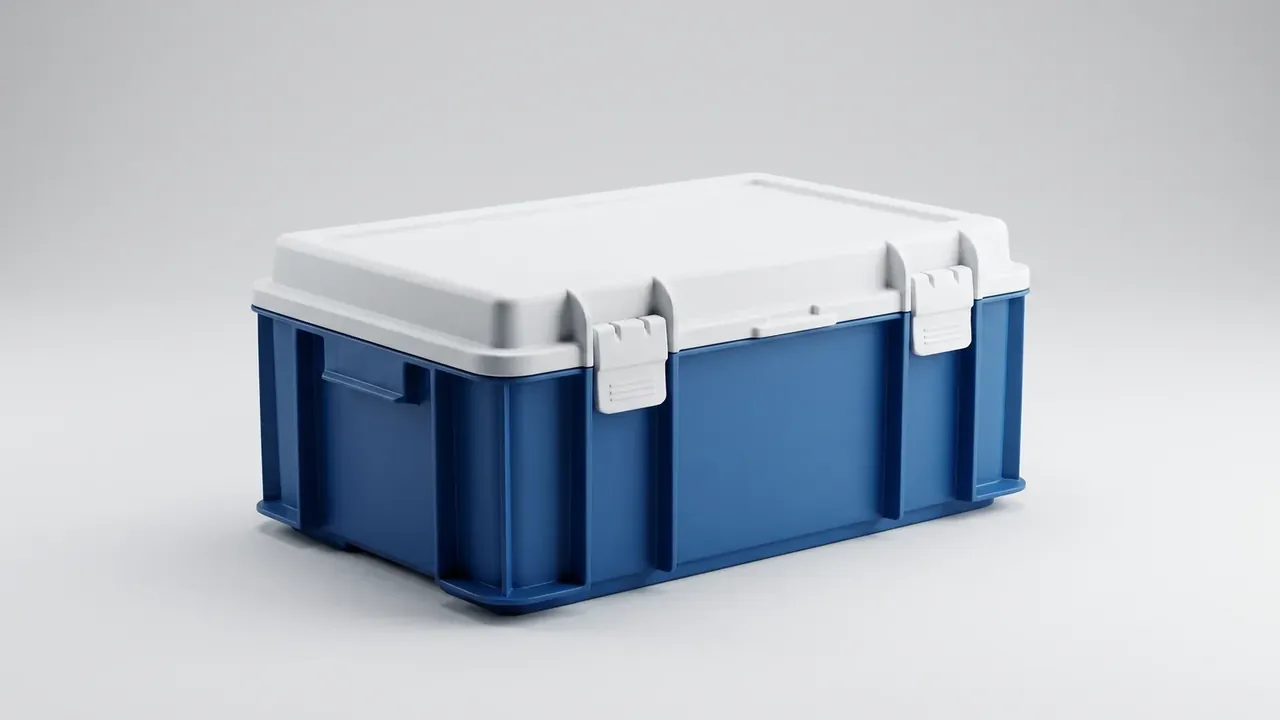
Quick answer: Under 15 kg, a plastic protective case with wheels replaces a backpack only if three numbers line up: empty weight, usable volume, and the ratio between them. Keep that ratio between 12 and 18 percent, or the effort saved on wheels is paid back on every staircase.
Table of contents
- Weight comes first
- Reading the volume-to-weight ratio
- Single, twin and removable wheels
- Case, backpack or trolley bag
- Four details you feel in the hand
- Six checks before you order
- FAQ
1. Weight comes first
Light load, here, means three conditions at once: no more than 15 kg inside, 200 to 800 m per trip, and stairs somewhere on the route. Meet all three and a case deserves comparison with a backpack.
Empty weight is the gate. Under 2.4 kg one hand carries the case up three floors; at 3.5 kg, towing becomes the only option.
A test-equipment client had 3.6 kg cases holding 8 kg of probes. On the metro stair with no lift, staff carried 11.6 kg up twenty steps, which felt worse than the backpacks they had abandoned. We moved them to a 2.4 kg, 28 L plastic protective case with wheels: 10.4 kg in the hand, at the cost of volume, since two probes now need one bracket removed.
2. Reading the volume-to-weight ratio
Divide empty weight by payload. Between 12 and 18 percent the case stays comfortable; past 21 percent you borrow against yourself, because every lift gives back what the wheels saved.
| Volume | Empty weight | Typical load | Weight-to-load | Wheels | Use |
|---|---|---|---|---|---|
| 28 L | 2.4 kg | 12 kg | 20% | Single 50 mm | Commuting, service calls |
| 42 L | 3.1 kg | 15 kg | 21% | Twin 64 mm | Trade shows, short trips |
| 58 L | 4.2 kg | 18 kg | 23% | Twin 64 mm | Week-long site work |
The trap shows in the table: the bigger the volume, the worse the ratio. A 58 L case at 18 kg already sits past the comfort line, so either load it fuller or change material. Volume also means internal volume. A case measuring 520×380×230 mm outside often has 470×330×190 mm inside, and the wheel and handle bays take both ends, leaving under 26 L usable; the 28 L on a quote is a gross figure.
3. Single, twin and removable wheels
Single wheels sit on one axle and tow at a tilt. The turning circle is small, an 18 mm step goes over with a lift, and a narrow corridor is taken sideways. Twin wheels, four in total, let a plastic protective case with wheels stand upright: steady in a corridor, but on a floor sloping 3 degrees it rolls off on its own.
Removable wheels are held by a circlip: pinch, pull, three seconds each. Strip them before a flight and the body drops 40 mm in height, which fits smaller baggage gauges. The circlip sits exposed, so blow sand out after field use or it will not seat again.
4. Case, backpack or trolley bag
The three forms divide by route, not price. We ran a crude comparison: three people, three formats, one 1.2 km route from a metro platform to the twelfth floor, counting every hand change. A backpack at 9 kg pressed on the shoulders after 600 m; a case at 12 kg ran on one wrist for 800 m, then needed two lifts of eighteen steps; a trolley bag at 10 kg was easiest on flat ground but stopped at every speed bump. Times came back at 14:20, 15:05 and 16:40. The gaps are small; the hand changes are not, at 4, 7 and 11.
| Format | Empty weight | Hands | Stairs | Rain | Comfortable range | Load limit |
|---|---|---|---|---|---|---|
| Plastic protective case with wheels | 2.4–4.2 kg | One, towing | Must lift | Sealed body | 200–1200 m | 18 kg |
| Backpack | 0.8–1.4 kg | Both free | Walks up | Needs a cover | 0–600 m | 12 kg |
| Trolley bag | 1.9–2.6 kg | One, towing | Must lift | Fabric wets | 0–1500 m | 15 kg |
The rule: inside 600 m the backpack wins because nothing is lifted; from 600 to 1200 m the case wins because weight rides on wheels; beyond 1.2 km with frequent stairs, neither is ideal and the answer is a lift.
5. Four details you feel in the hand
The handle opening, 110×30 mm, is the lower limit for a gloved hand; narrower and the glove comes off outdoors in winter. Strap anchors matter more than the strap: a 25 mm webbing strap on a light plastic protective case with wheels frees both hands on stairs, and that stretch often decides whether the case is returned.
Handle length follows body height. A short light case wants 780 mm; pulled out to 900 mm, the grip catches the calf. Gasket compression is designed at 25 percent, since light cases get used as luggage and an under-compressed rim drinks water in rain.
6. Six checks before you order
All six can be measured on a sample:
- Weight: weigh the empty case, within 0.1 kg of the quote.
- Internal volume: measure length, width and depth, then subtract foam.
- Ratio: calculate against the intended load, change model above 21 percent.
- Wheels: check axial play, brakes on twin sets, and strip and refit a removable wheel three times.
- Handle and strap: push a gloved hand through the opening, pull the anchor to 150 N.
- Seal: feeler refused at the rim, ten minutes of water, tissue inside stays dry.
Conclusion
For light loads the order is weight, volume, ratio, and only then wheel format. A plastic protective case with wheels will not replace every backpack; it replaces the routes over 600 m where nobody wants weight on a shoulder. Hold on to 2.4 kg and 12 percent, then let the route decide.
This article discusses only the container (case body) side of specifications and design intent, and does not cover any handling, loading or use of the contents.
Related Reading
- How OEM protective cases are specified
- Sizing a protective case
- What to put in an inquiry reply
- Wheel sets and load ratings
- MOQ and lead times in wholesale
Related Products
- 8 Series — Gun Cases; Military Equipment Cases; Camera Equipment Cases; Drone Cases; Watch Cases; Knife Cases; First Aid Cases; Electronics Equipment Cases
- WL8-2812 PP Gun Case — model WL8-2812
- All protective cases and toolboxes: 7 series, 158 models