

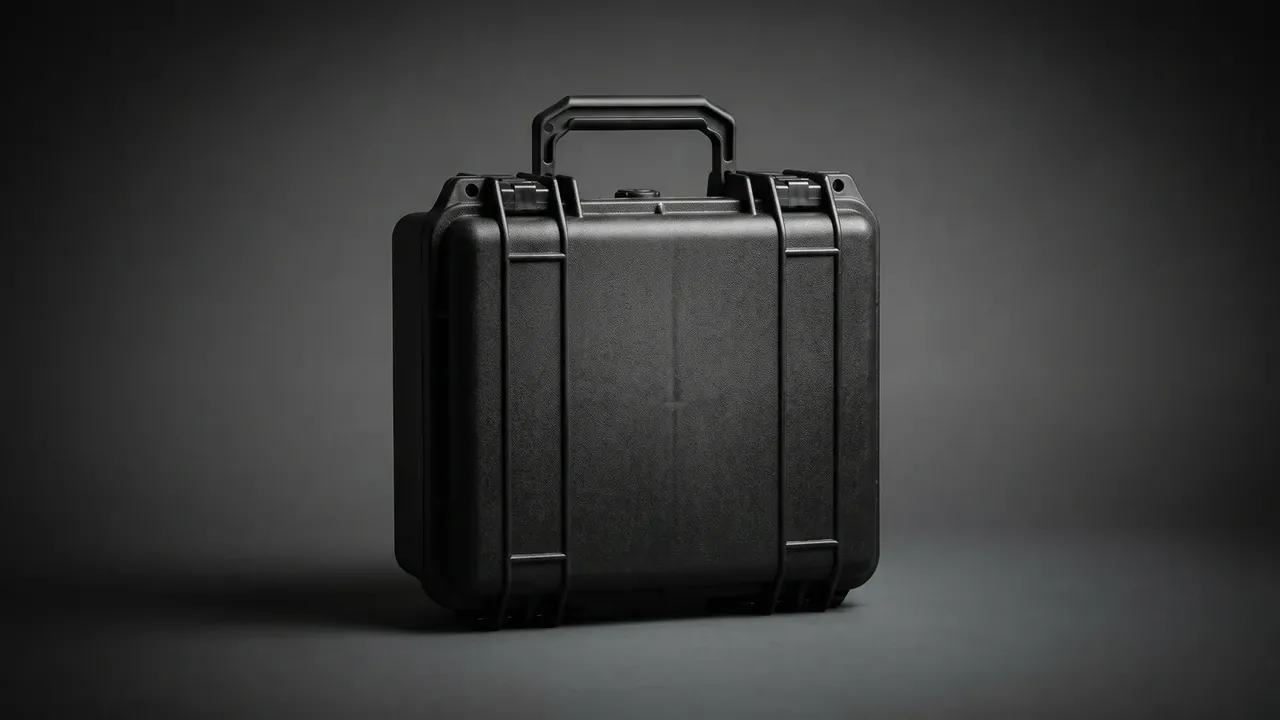
Quick answer: A plastic storage box for tools only works in a tool room when pitch, load per layer and stack height are decided together: a 350 mm pitch, 120 kg per shelf and no more than three boxes high.
Table of contents
- Four Storage Positions a Plastic Storage Box for Tools Occupies
- Shelf Pitch and Load per Layer
- Why Stacking Stops at Three
- Labels, Ledgers and the Count Route
- FAQ
1. Four Storage Positions a Plastic Storage Box for Tools Occupies
Tool rooms fall apart not from too few boxes but from four positions treated the same: pallet floor stacks, shelving bays, flow rack pick faces and lockable cabinets. Each has its own pitch and load ceiling, and where a plastic storage box for tools belongs depends on loaded weight and how often it is opened.
A 600 x 400 x 320 mm box weighs 2.4 kg empty and lands near 18 kg loaded. That rules out flow rack and forces the shelf to be checked as distributed load, not four point contacts.
| Position | Usual pitch | Load ceiling per box | Replenishment |
|---|---|---|---|
| Pallet floor stack | set by stack height | 54 kg at the bottom | weekly |
| Shelving bay | 350 mm | 18 kg per box, 120 kg per shelf | monthly |
| Flow rack pick face | 260 mm | 12 kg | daily |
| Lockable cabinet | 300 mm | 15 kg | per shift |
Flow rack is the position people overrate: at a 5 degree incline a loaded box hits the stop plate hard enough to crack it within three months, so a plastic storage box for tools opened every shift belongs on a bay shelf instead.
2. Shelf Pitch and Load per Layer
Pitch is box height plus hand clearance plus shelf thickness: 320 plus 70 plus 25 gives 415 mm. Run 350 mm and knuckles scrape the shelf above every time the box comes out.
A 2000 mm upright with a 100 mm foot leaves 1900 mm. Four pitches at 415 mm use 1660 mm and leave a transfer shelf; five at 350 mm reach 1750 mm and the top row needs a step.
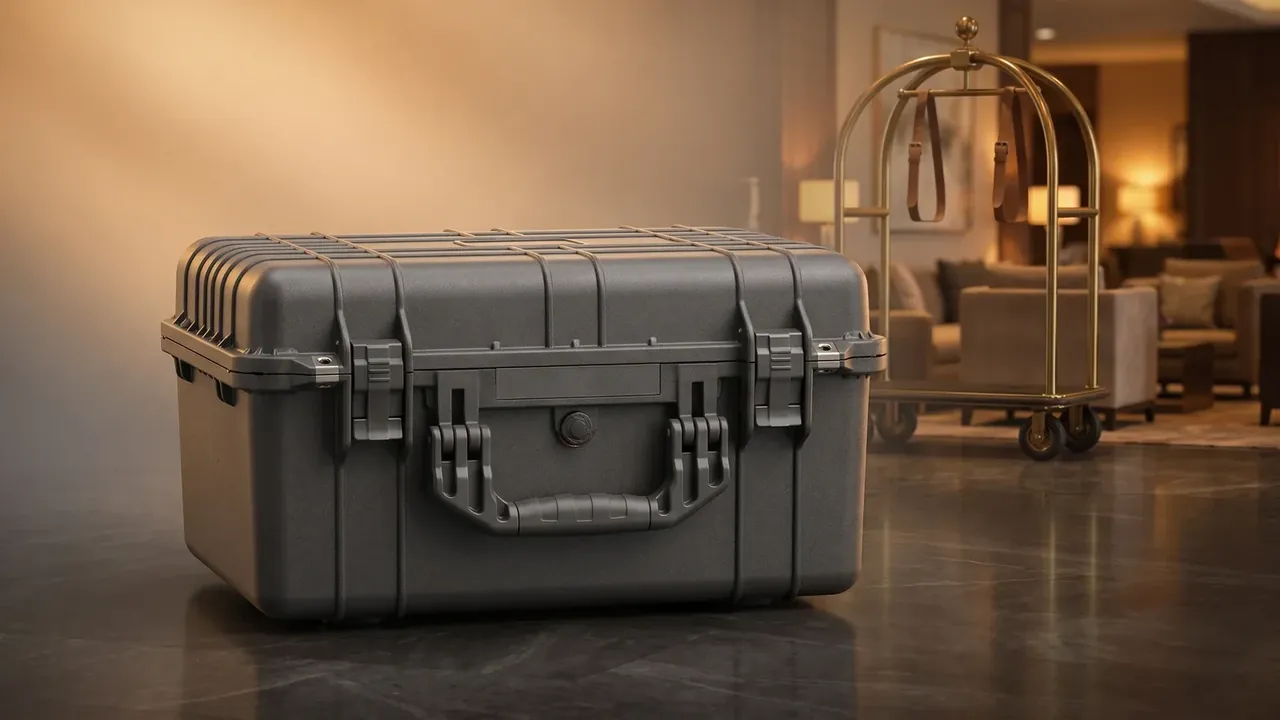
Load is per layer, not per box. A shelf rated 120 kg with six 18 kg boxes sits at 108 kg until all six crowd into 400 mm of one end, where deflection doubles and the shelf takes a permanent set within six months.
Bay fill belongs in the same decision: a 1200 mm shelf takes two 600 mm boxes edge to edge, a lone plastic storage box for tools needs a dunnage block, and anything opened ten times a day belongs between 700 and 1400 mm.
3. Why Stacking Stops at Three
On the floor, load passes through the base ribs and perimeter edge. Those ribs stand about 8 mm tall, so three high put 54 kg on the bottom base and near 30 kg per metre along four ribs.
Three is the practical ceiling for polypropylene at room temperature. At 40 C creep speeds up: three high for three months leaves a permanent dish, and past 3 mm the column leans.
| Stack height | Load on bottom base | At room temperature | At 40 C |
|---|---|---|---|
| 2 boxes | 18 kg | acceptable | acceptable |
| 3 boxes | 54 kg | acceptable, recheck quarterly | drop to 2 |
| 4 boxes | 72 kg | not advised | do not |
Flatness decides whether the stack slides. A crown over 1 mm leaves the box above resting on two points, and a forklift nudge walks it out of line; a 300 mm steel rule and a feeler gauge settle it.
Sidewall bulge is the quieter failure: at 18 kg three high the lower sidewall moves out, and past 4 mm the box will not leave a tight bay.
4. Labels, Ledgers and the Count Route
A label is a placement problem before a printing one. 60 x 40 mm at the top left of the front face, 5 mm below the edge, clears latch travel and the forklift clamp; lid labels get crushed one opening in three.
Location codes run area, row, level, slot, such as A-03-2-05. The serial travels with the box, the code stays with the rack, so one relocation changes a single ledger line.
Six fields are enough: serial, location, contents summary, loaded weight, last count date, owner. A seventh makes entries sloppy and the ledger drifts within a quarter.
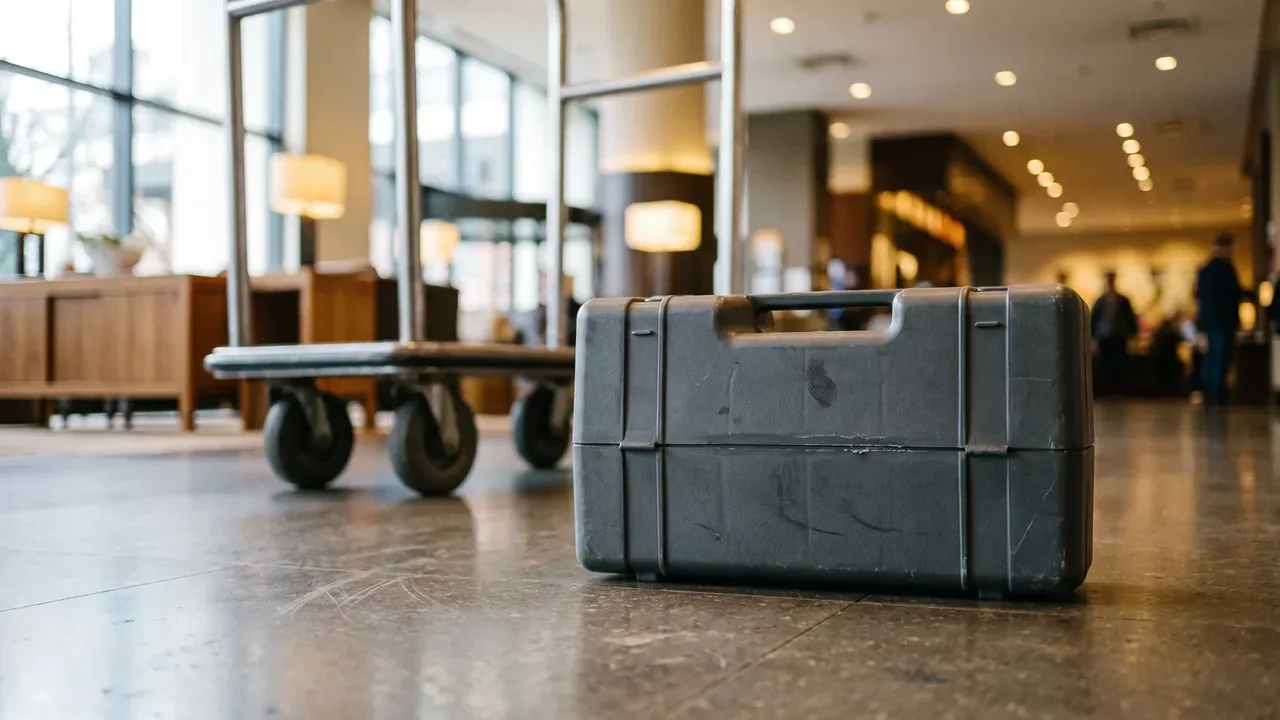
Count on a U route: first bay right of the door, along the wall, turn, back, no doubling. Forty locations take 60 minutes at 90 seconds each.
Dust and damp are one problem seen twice: a 1.5 mm lid gap silts up a box within three months, and above 60 percent humidity a 20 g desiccant sachet goes in, swapped monthly and dried for two more rounds.
Conclusion
Three numbers hold a tool room together: pitch, load per shelf, stack height. Pitch follows box height plus hand clearance, load is read as distributed, and stack height drops a level past 40 C. Write them on the rack drawing and in the ledger, and a plastic storage box for tools becomes inventory, not furniture.
This article discusses only the container (case body) side of specifications and design intent, and does not cover any handling, loading or use of the contents.
Related Reading
- Outdoor storage limits for ammo boxes
- Three sources of seal failure in sealed boxes
- A monthly maintenance list for field boxes
- Five checks when choosing a sealed box
- Archive case layout for a records room
Related Products
- 8 Series — Gun Cases; Military Equipment Cases; Camera Equipment Cases; Drone Cases; Watch Cases; Knife Cases; First Aid Cases; Electronics Equipment Cases
- WL8-2812 PP Gun Case — model WL8-2812
- All protective cases and toolboxes: 7 series, 158 models