

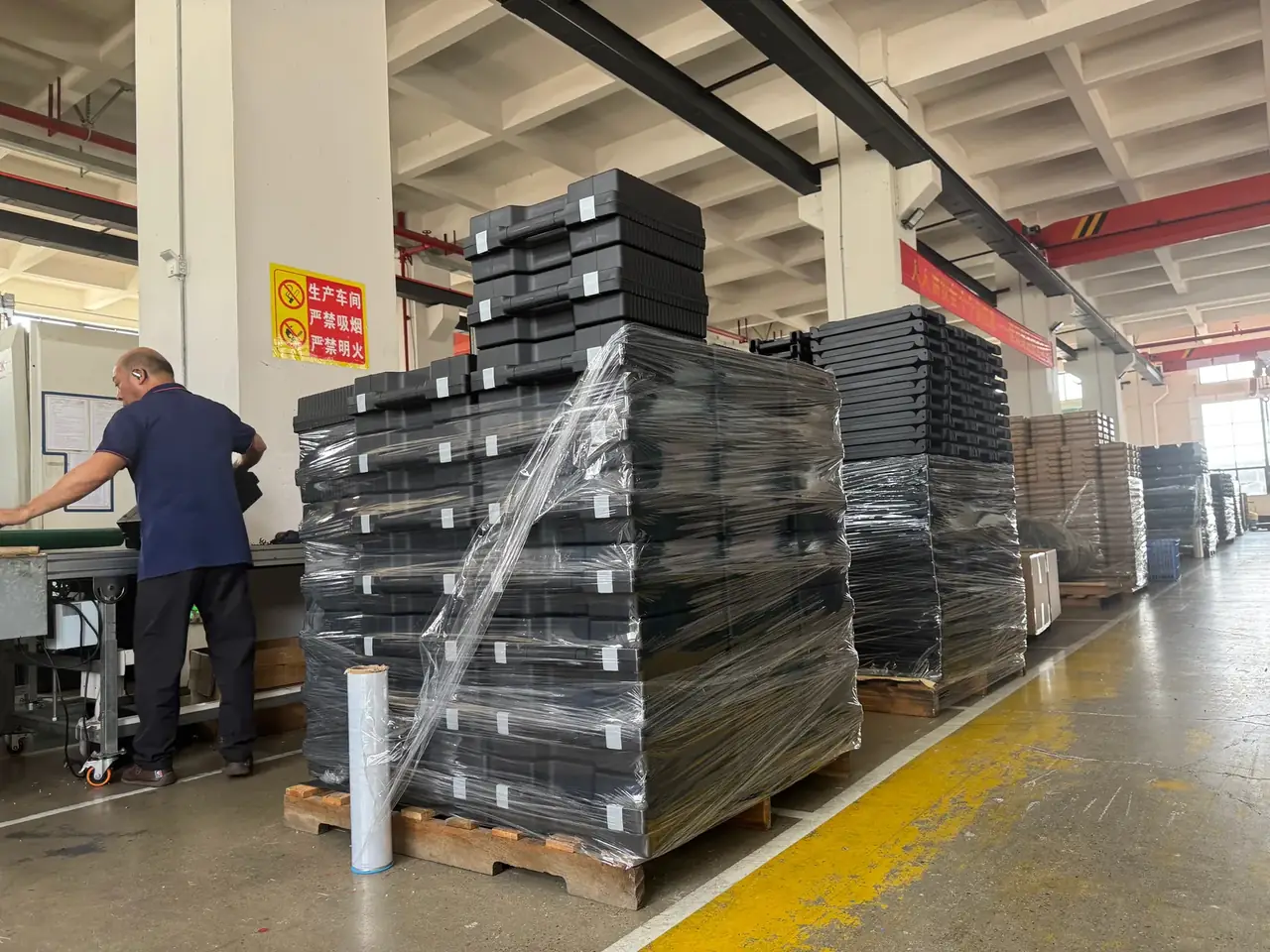
Quick answer: PP Resin Inbound starts with bag weight and batch code, then a 2 h hold at 80 ℃, and 20% regrind lifts melt index from 8 to 10.
Table of contents
- Bag weight and batch check
- Drying temperature and time curve
- Regrind ratio and melt index
- Grind size and dust control
- Blend uniformity and trial moulding
- FAQ
1. Bag weight and batch check
PP Resin Inbound is checked before a bag is slit, not after the hopper fills. Work in three layers: bag, batch, resin. Weigh every 25 kg sack and reweigh the pallet once a single sack is off by more than 0.2 kg. Match the inkjet code against the delivery note and pull 3 sacks from a 500 kg lot as retention samples. Read moisture and melt index, and seal the sample within 30 min.
| Item | Limit | How it is logged |
|---|---|---|
| Sack weight | 25 kg ± 0.2 kg | Every sack weighed, drift on the pallet sheet |
| Batch code | Matches delivery note | Photo filed with the retention bag |
| Moisture | Under 0.05% | Meter read within 30 min |
| Melt index | 8 g/10min, drift 1.5 | 2.16 kg load at 230 ℃ |
PP Resin Inbound lots that fail stay out of the drying room. Sacks above 0.05% moisture are stacked apart with a yellow tag; a lot drifting more than 1.5 from 8 g/10min is returned or downgraded to dividers. On a protective case, wall thickness and latch fit sit inside a window drawn by melt index, so once the resin drifts, machine adjustment only patches the symptom.
2. Drying temperature and time curve
PP Resin Inbound drying curves are set with bed depth, never copied from one temperature figure. PP Resin Inbound runs 2 h at 80 ℃ with the bed under 300 mm and −20 ℃ dew point air entering at the hopper base. Past 400 mm the core stays damp while the top reads dry, and the case wall shows silver streaks at the gate.
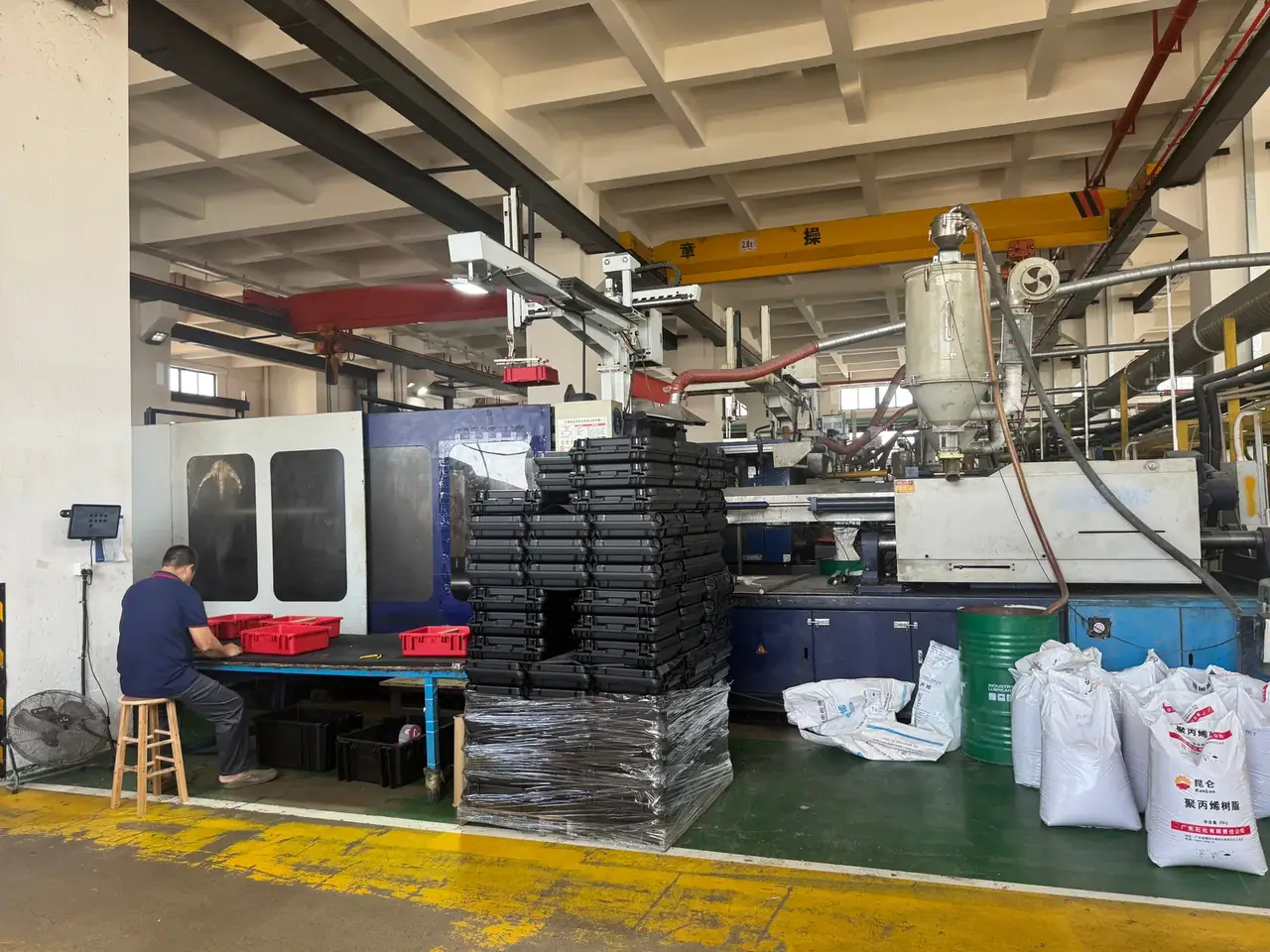
| Stage | Temperature | Time | Check |
|---|---|---|---|
| Pre-heat | 25 to 60 ℃ | 20 min | Hopper shell warm, resin even |
| Ramp | 60 to 80 ℃ | 20 min | Return air reaches 70 ℃ |
| Hold | 80 ℃ | 2 h | Dew point steady at −20 ℃ |
Climb in two steps, 25 to 60 ℃ in 20 min, hold 10 min, then 80 ℃. Hot air straight into a cold hopper cakes resin at the wall and bridges the outlet. Moisture is read every 2 h, with 0.05% releasing and 0.08% re-drying the hopper. PP Resin Inbound downtime counts too: past 2 h, hold is not enough; overnight, empty and dry again.
3. Regrind ratio and melt index
PP Resin Inbound regrind acts on melt index almost linearly, and 20% is the usual compromise. Virgin resin at 8 g/10min measures near 10 g/10min at 20% single-pass regrind and passes 12 at 30%. Higher melt index means better flow, a thinner wall, less latch interference and a looser feel at assembly.
| Regrind share | Melt index | Suitable parts | Main risk |
|---|---|---|---|
| 0% | 8 g/10min | Load-bearing body | Sprue wasted, cost high |
| 20% | 10 g/10min | Body and lid | Minimum wall rechecked |
| 30% | 12 g/10min | Dividers, inserts | Colour shift, visible sink |
Grade the regrind itself. Sprue and runner may run at 20%; a whole ground case stays under 10%, only for dividers and blocks. Weigh the two streams apart and split them by hopper label, never by memory. Measure melt index once per lot at 2.16 kg and 230 ℃, and when it sits 1.5 off the formula, look first at the real regrind share, then at over-drying, which lifts the number the same way.
PP Resin Inbound bins are split by colour, light, dark and black, with dividers at full height. Once mixed regrind enters a light case the shift never comes down, and the lot is downgraded or repelletised at a cost far above two extra partitions.
4. Grind size and dust control
PP Resin Inbound grind size decides whether regrind blends steadily. An 8 mm screen is common, holding most output between 4 and 8 mm and fines below 1 mm under 3%. Too many fines and feed bridges, dosing swings, and the outer wall picks up black spots.
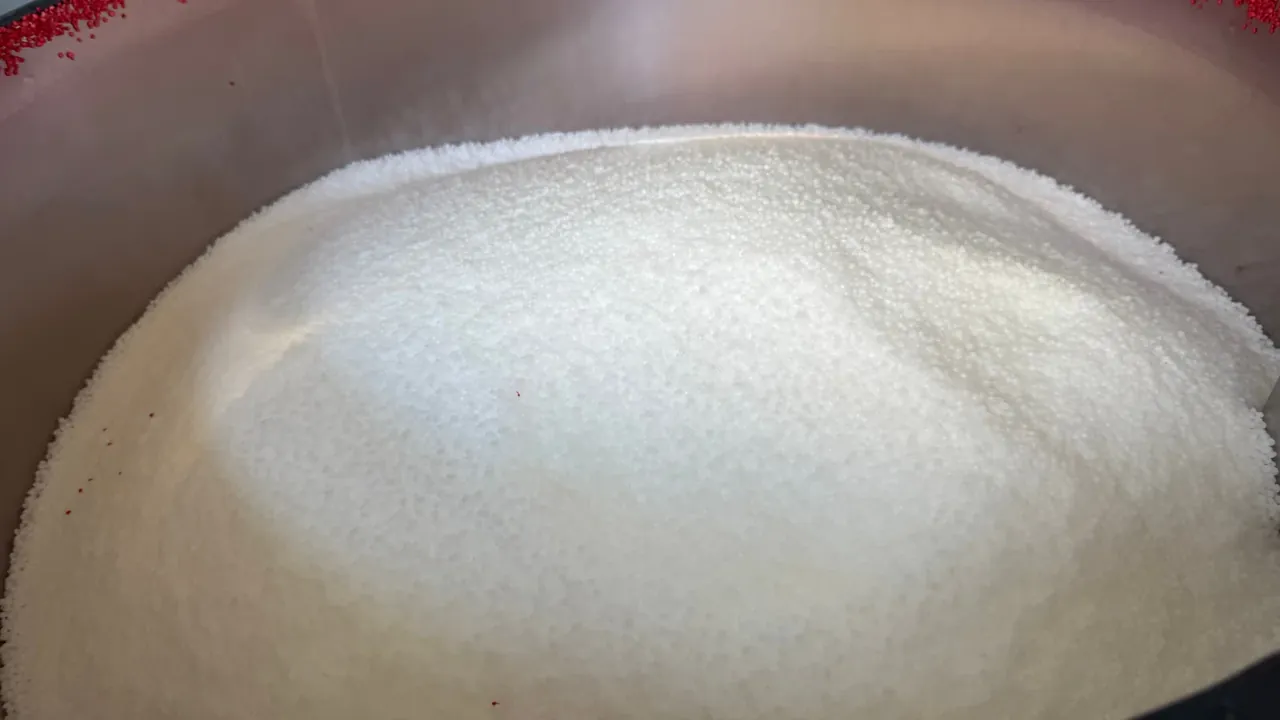
Blade condition shows in the particle curve. Inspect blades every 40 h and change them when output turns finer or ground resin leaves above 50 ℃; a dull blade crushes rather than shears and doubles the dust. Ground resin passes a magnet before the silo.
On PP Resin Inbound, keep the grinding room away from the dryer intake. Fine dust hangs in the air, and one shared space clogs the filter within a week, cutting airflow by a third while the operator reaches for temperature. Light-coloured protective cases show black spots first, so a dust rule saves more rework than another vacuum unit.
5. Blend uniformity and trial moulding
PP Resin Inbound blend uniformity is proved on a scale. A vertical blender runs 15 min per batch at 60% of drum volume, since past 80% nothing turns over and colour shift follows. Pull 200 g from top, middle and bottom, measure melt index, and accept a spread within 0.5.
PP Resin Inbound trial moulding follows the blend: 5 cases on the new formula, then three checks. Wall thickness at 4 points with calipers, spread under 0.15 mm; latch cycled 20 times without loosening; surface free of silver streaks. Two rejects out of 5 send you back to the blend and drying records, not to the process parameters, because a moved parameter erases the trail.
Keep 2 cases and 1 kg of blended resin after a passing trial, labelled with batch, melt index and date, for 3 months. When the next lot does not match, that jar is the only reference left: resin traceable, drying measurable, ratio calculable.
Related Reading
- Tracing odour back to resin or residue
- How ABS and PP cases feel different in hand
- Clear, frosted and solid PP storage bins compared
- Wall thickness against stacking load on a case
- Plastic cases against wooden crates in daily transfer
This article covers specifications and design implications on the case side only.
Related Products
- 8 Series — Gun Cases; Military Equipment Cases; Camera Equipment Cases; Drone Cases; Watch Cases; Knife Cases; First Aid Cases; Electronics Equipment Cases
- WL8-2812 PP Gun Case — model WL8-2812
- All protective cases and toolboxes: 7 series, 158 models