

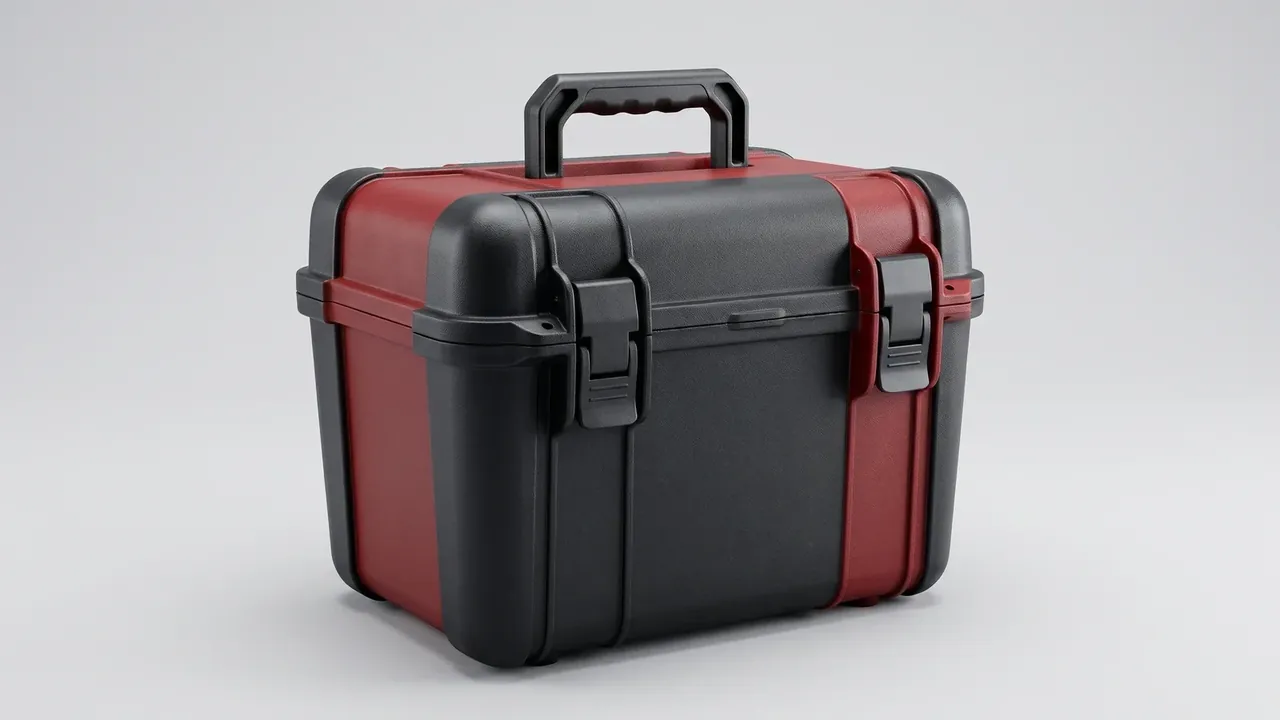
Quick answer: Vetting a private label plastic case manufacturer is not a price conversation. It is six items with an owner and a date: licence scope, carton and manual printing, barcode labels, packaging cost share, MOQ with mould ownership, and golden-sample sign-off.
Table of contents
- Start with trademark licence scope
- Carton, manual and barcode printing duties
- Packaging cost share has to be priced line by line
- MOQ, mould ownership and sampling fees
- Five actions for first-article approval
- Lead time, factory audit and payment terms
- FAQ
1. Start with trademark licence scope
Before anything else, a private label plastic case manufacturer needs the trademark licence on file. The letter states the registration number, the goods class and the term.
Scope is where programmes stall. Too broad, and the factory hesitates; tied to one model, every colour change needs another letter and two weeks.
Filing cannot be skipped: the factory keeps a scan, and export documents or marketplace review may ask for it.
| Private label element | Owner | Lead time |
|---|---|---|
| Licence and scope | Brand issues, factory files | 5 days |
| Carton and manual artwork | Brand designs, factory proofs | 7 days |
| Barcode and labels | Factory registers, brand confirms | 3 days |
| Golden sample | Both sides sign on site | 2 days |
| Shipment and documents | Factory | 10 days |
2. Carton, manual and barcode printing duties
For a private label plastic case manufacturer, cartons, manuals and barcodes are three print jobs with three owners, and lumping them together means each waits.
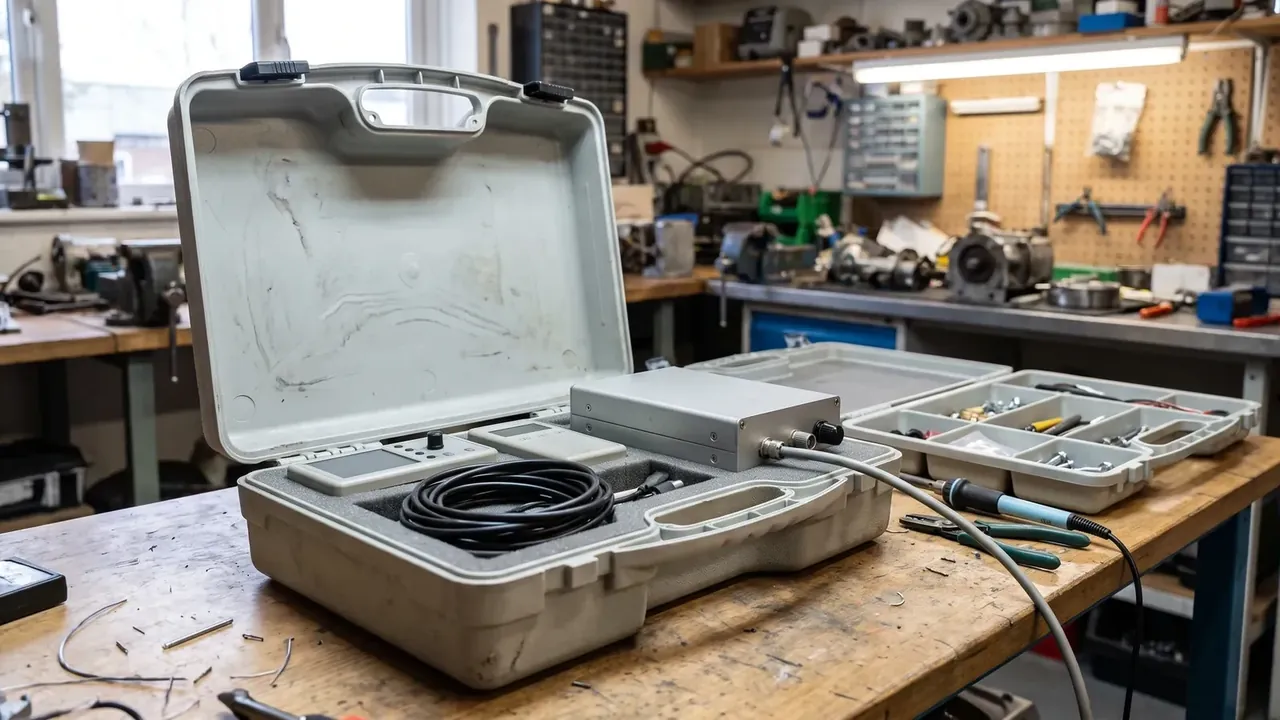
Cartons usually take five-ply corrugated board at 1300 kPa burst strength minimum. The shipping mark sits 50 mm above the bottom edge, and handling symbols must not cover it. Size the carton from the case plus 15 mm of cushioning, not from last year's drawing.
The manual is the item that gets reprinted. Four colours plus one spot, colour difference within Delta E 2.0, and fold order signed on the proof, or English pages turn up behind Chinese at mass production.
Barcodes are EAN-13 at 37.29 by 25.93 mm, magnification 0.8 to 2.0, with a 3.63 mm quiet zone on each side. Trim it and the scanner misses three reads in ten.
3. Packaging cost share has to be priced line by line
Packaging lands between 8 and 12 percent of unit cost, and it is the first thing a private label plastic case manufacturer folds into a single price so nobody sees where the money went. Breaking it out is simple: on a 620 by 420 by 260 mm case, carton 6.5, manual 0.8, labels 0.35, inserts 2.2, tape and straps 0.6, for 10.45 against a 96 case, or 9.8 percent. Itemising pays three ways: inflation lands on a known line, a packaging supplier can be swapped alone, and customs declarations match the invoice. A single total usually means cheapest stock carton and a two-colour manual. Both sit in plain sight on the shelf, and the savings return as rejects. Some quotes hide packaging as free, which also means no acceptance standard.
4. MOQ, mould ownership and sampling fees
A private label plastic case manufacturer usually sets a minimum of 300 to 500 pieces, below which setup and machine time cannot be absorbed.
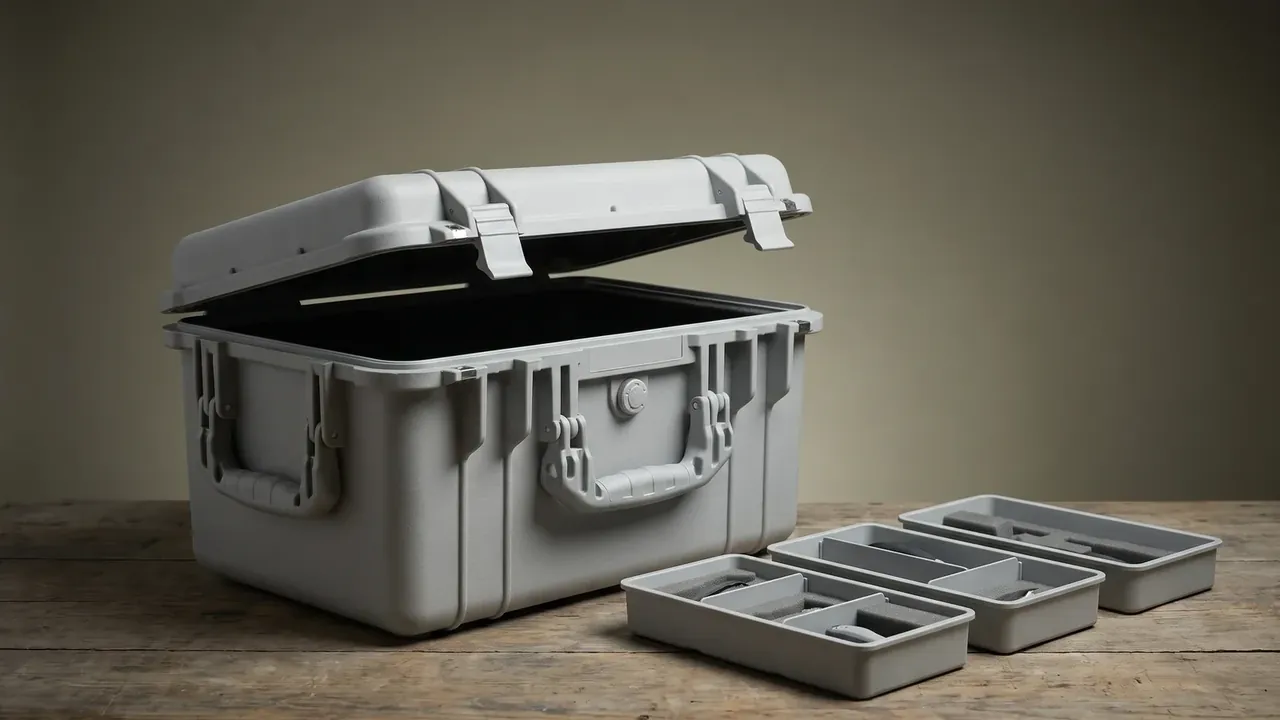
A mould at 80,000 can be owned three ways: the brand buys it outright and stores it on site, with a disposal clause; the factory holds it and grants two years of exclusivity with amortisation; or the factory holds a reusable tool at the lowest unit price, with the same shell free to appear in another catalogue.
| MOQ tier | Mould ownership | Unit price effect |
|---|---|---|
| 300 pcs | Brand buys outright | About 12 percent amortisation |
| 500 pcs | Factory holds, brand exclusive 2 years | About 7 percent amortisation |
| 1000 pcs | Factory holds, reusable | About 4 percent amortisation |
Sampling is billed separately, typically 3,000 to 5,000, refunded above 500 pieces. State whether the refund keys off quantity or payment value.
5. Five actions for first-article approval
A golden sample is not a photo in a folder. It is a physical part someone can compare against and blame later.
- Pull three first articles: brand, factory, and one travelling with the shipment
- Label each with model, colour code, date and both signatures
- Retain for 18 months, a full warranty cycle
- Compare seven items: colour, print position, barcode grade, latch force, gasket compression, insert fit, torque
- Re-sample after any change, including masterbatch or packaging supplier
The travelling sample earns its keep: nobody opens a carton to judge.
6. Lead time, factory audit and payment terms
A private label plastic case manufacturer typically quotes 45 days: fifteen for licence and sampling, twenty for production, ten for shipment. Squeeze one block and another absorbs the delay.
Audit the plant once. Look at injection tonnage and mould storage: too little tonnage starves a large shell, loose moulds mean re-alignment next run.
Terms are commonly 30 percent deposit and 70 percent against a bill of lading copy. Push the deposit below 20 percent and the order slides down the schedule.
Add one clause: remind the brand 60 days before the licence expires, and stop production with packaging sealed if not renewed. That clause saves a container stuck at the border.
Conclusion
A checklist tells you more about a private label plastic case manufacturer than a price list: licence clarity, print ownership, packaging in five lines, MOQ against mould ownership, who holds samples, lead time matching payment terms. Six answers, six owners, six dates, and quotes become comparable across private label plastic case manufacturer candidates.
This article discusses only the container (case body) side of specifications and design intent, and does not cover any handling, loading or use of the contents.
Related Reading
- Scoring items for a case supplier
- Running a gun case production audit
- How rotomoulded cases are made
- A checklist for factory tours
- Reviewing samples in a showroom
Related Products
- 8 Series — Gun Cases; Military Equipment Cases; Camera Equipment Cases; Drone Cases; Watch Cases; Knife Cases; First Aid Cases; Electronics Equipment Cases
- WL8-2812 PP Gun Case — model WL8-2812
- All protective cases and toolboxes: 7 series, 158 models