

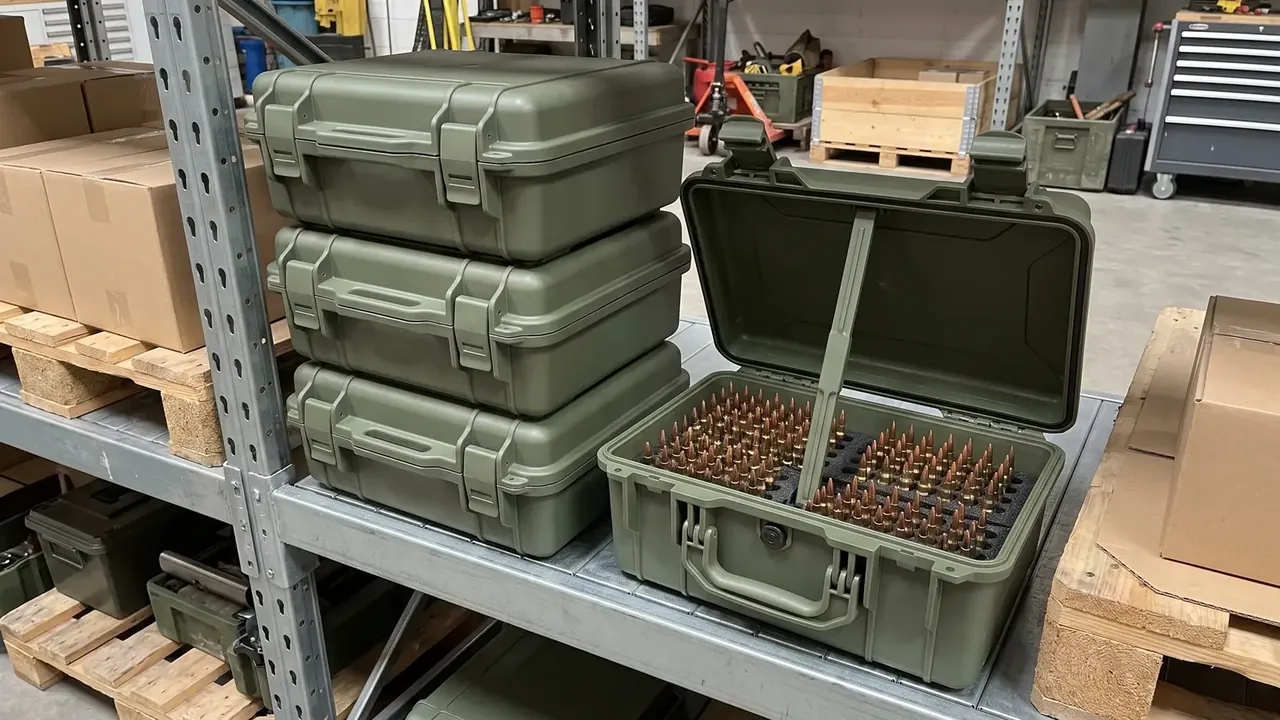
Quick answer: A projectile pallet is not saved by scrubbing harder but by a fixed inspection order and measurable limits. This piece follows 40 units back from a coastal depot and fixes the wash temperature, re-torque value, stop height and inspection interval from that batch.
Table of contents
- The Return Batch: How the First Inspection Opens
- Cleaning and Desalting: Wash Until the Damage Shows
- Torque Checks on Fasteners and Lifting Points
- The Replacement Line for Panels and Stops
- Extending Life: From Annual to Quarterly
- FAQ
1. The Return Batch: How the First Inspection Opens
In November 40 projectile pallets came back from a coastal depot, numbered 017 to 056, after three years. The first job was not washing but photographing each unit as it stood. Skip that and original damage vanishes under a wire brush.
Three passes follow: look finds where a crack starts, measure covers deflection and eye bore, load is one empty lift.
| Check | Tool | Limit |
|---|---|---|
| Panel deflection | Steel rule and feeler gauge | 2.4 mm at a 1,200 mm span, 6 mm forces replacement |
| Stop height | Vernier caliper | 35 mm as built, 28 mm is the line |
| Lifting-eye bore | Inside micrometer | Retire at 1.5 mm between perpendicular readings |
The tally: 19 needed cleaning only, 14 had stops at the limit, 5 ovalised eyes, 2 a 6 mm dip.
2. Cleaning and Desalting: Wash Until the Damage Shows
Salt is the enemy people underestimate on a projectile pallet. Humidity in a coastal depot sits above 80 percent most of the year, and a salt film pulls moisture through pinholes in the coating. When rust shows, the pit is often 0.3 mm deep.
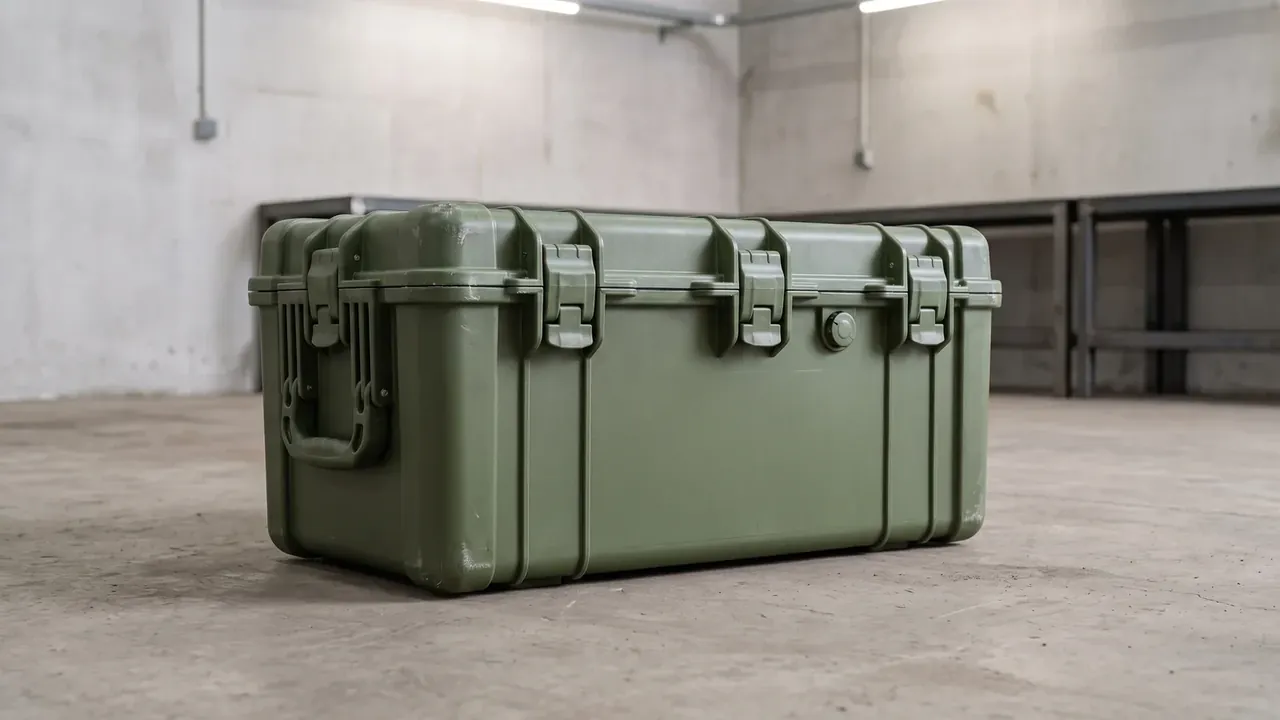
Wash water stays below 40°C, neutral detergent ten minutes, washer capped at 8 MPa, nozzle 30 cm off the panel. More pressure strips the passivation layer and drives rust into cracks.
Rinse with deionised water, final pass under 30 μS/cm, or a white bloom returns to the seams within a week.
Washing is not the goal. Seeing is.
Drying matters as much: four hours at 60°C, or 24 hours of moving air.
3. Torque Checks on Fasteners and Lifting Points
Torque work runs in a fixed order: loosen, clean, tighten, record, verify. Skip a step and the wrench reading means nothing.
- Loosen in two diagonal passes ten minutes apart, so the panel does not spring out of shape
- Clean threads with a brass brush; a grinder rounds the crest and ruins the reading
- Tighten in three stages to 42 N·m: 30 percent, 70 percent, full
- Record date, torque and operator on a card for each unit
- Verify after 24 hours; strip anything past 3 N·m to check washers
Wear in the eye is gradual, and a caliper will not reveal ovality; an inside micrometer read in two directions will. Past 1.5 mm the shackle tilts, the sling angle shifts, and a point sized for 45 degrees works at 60.
4. The Replacement Line for Panels and Stops
Two lines decide it: geometry for shape, spring-back for function.
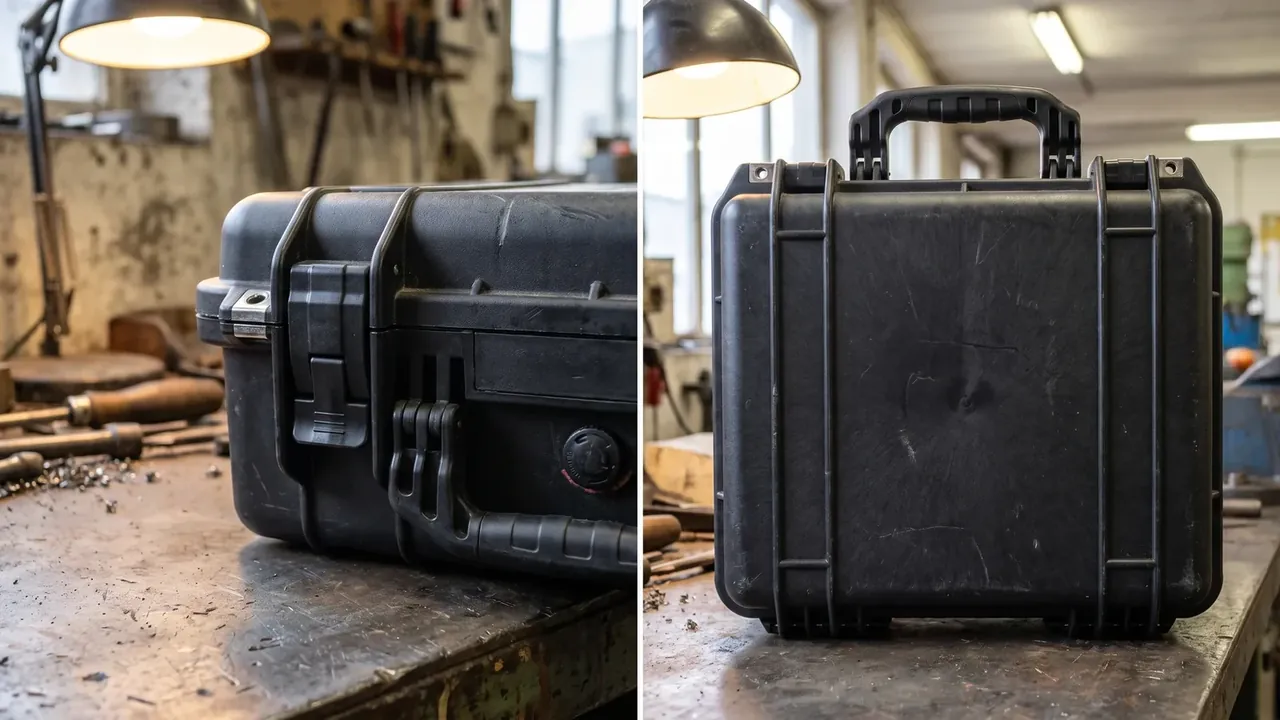
Geometrically, a projectile pallet leaves rotation at a 6 mm dip, a stop below 28 mm, or an eye past 1.5 mm.
The functional test is a load and a wait: 300 kg for 24 hours, 24 hours at rest, then a mid-point reading. Spring-back above 30 percent of the dip means the panel is still elastic; near zero means plastic deformation has set in. Stops wear fastest and are worth making removable: four M8 bolts, 20 minutes to swap. Wear lands on the load-facing side, so flipping a stop buys a second cycle once the old holes are plugged. The 3 to 5 mm gap is not a tolerance but room for thermal growth. A depot at 45°C stretches the rail and bows a stop with no clearance; at -20°C the gap opens again. So the reference temperature belongs on the drawing.
5. Extending Life: From Annual to Quarterly
| Change | Detail | Effect |
|---|---|---|
| Foot pads | 10 mm polyethylene under the four feet | Point contact becomes area contact, dip fell from 4.1 mm to 2.6 mm |
| Wear line | 28 mm line scribed on each stop | Caliper dropped from routine checks |
| Interval | Quarterly visual, annual load test | Rust pits caught before they spread |
Shorter intervals do not raise cost: a quarterly pass over 40 units takes two people half a day.
Conclusion
Maintenance is less about effort than about limits. How clean is clean, how loose is loose, how thin is scrap: leave those undefined and every inspection becomes an argument. Of the 40 units, 39 returned to service, not because of thicker steel but because inspection, cleaning and replacement got pinned to a number. Scribe those numbers on the part, and the life of a projectile pallet is set by design rather than luck.
This article discusses only the container (case body) side of specifications and design intent, and does not cover any handling, loading or use of the contents.
Related Reading
- How a projectile pallet carries and lifts a load
- Sizing and wall thickness for projectile pallets
- Annual maintenance list for reserve depot cases
- Rust and coating repair on metal ammunition boxes
Related Products
- 8 Series — Gun Cases; Military Equipment Cases; Camera Equipment Cases; Drone Cases; Watch Cases; Knife Cases; First Aid Cases; Electronics Equipment Cases
- WL8-2812 PP Gun Case — model WL8-2812
- All protective cases and toolboxes: 7 series, 158 models