

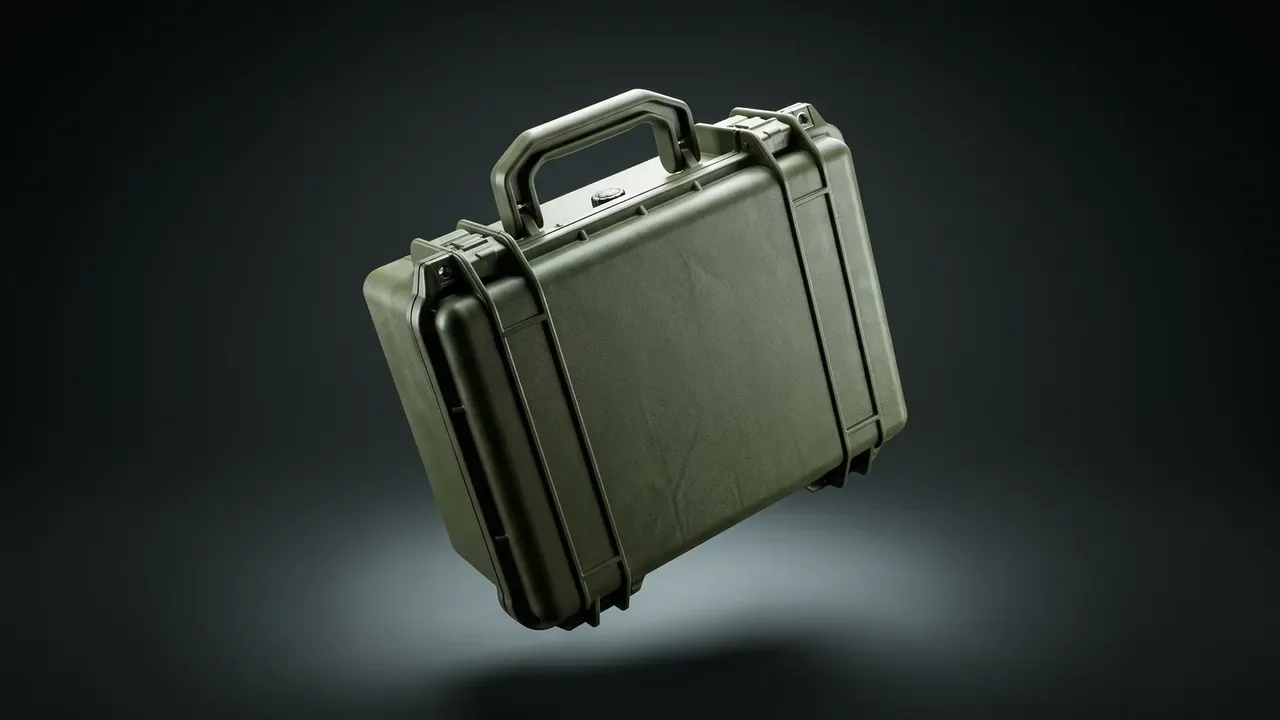
Quick answer: Set the interval by duty, not calendar: twelve months for a store case opened twice a month, 180 days for weekly access, 90 days on a vehicle. A gasket past thirty percent set or a latch under 120 N is at the line.
Table of contents
- Setting the Cycle by Duty
- Six Points on Every Walk-Through
- Cleaning and Drying
- Replacement Lines for Four Parts
- Three Things That Add Years
- Records: Card, Trace Code, Handover
- FAQ
1. Setting the Cycle by Duty
Calendar-driven inspection is a guess. A Prop Charge Container opened twice a year and one opened daily do not age alike.
| Duty | Interval | Tier adds |
|---|---|---|
| Dry store, under 2 a month | 12 months | Shell, gasket rebound, latch travel |
| Dry store, weekly | 180 days | Decay, hinge pin play |
| Vehicle or yard | 90 days | UV, corrosion, markings |
One exception overrides the table: after any drop, impact or long soak, run a full check.
Vehicle-tier cases fail first in the wet season: a fortnight above eighty-five percent humidity leaves an unseen film in the groove, and decay climbs from 0.6 to 1.9 kPa.
2. Six Points on Every Walk-Through
Six points, ordered by wear rate: gasket, latches, hinge pins, corners, valve, markings. The first two cause seventy percent of failures.
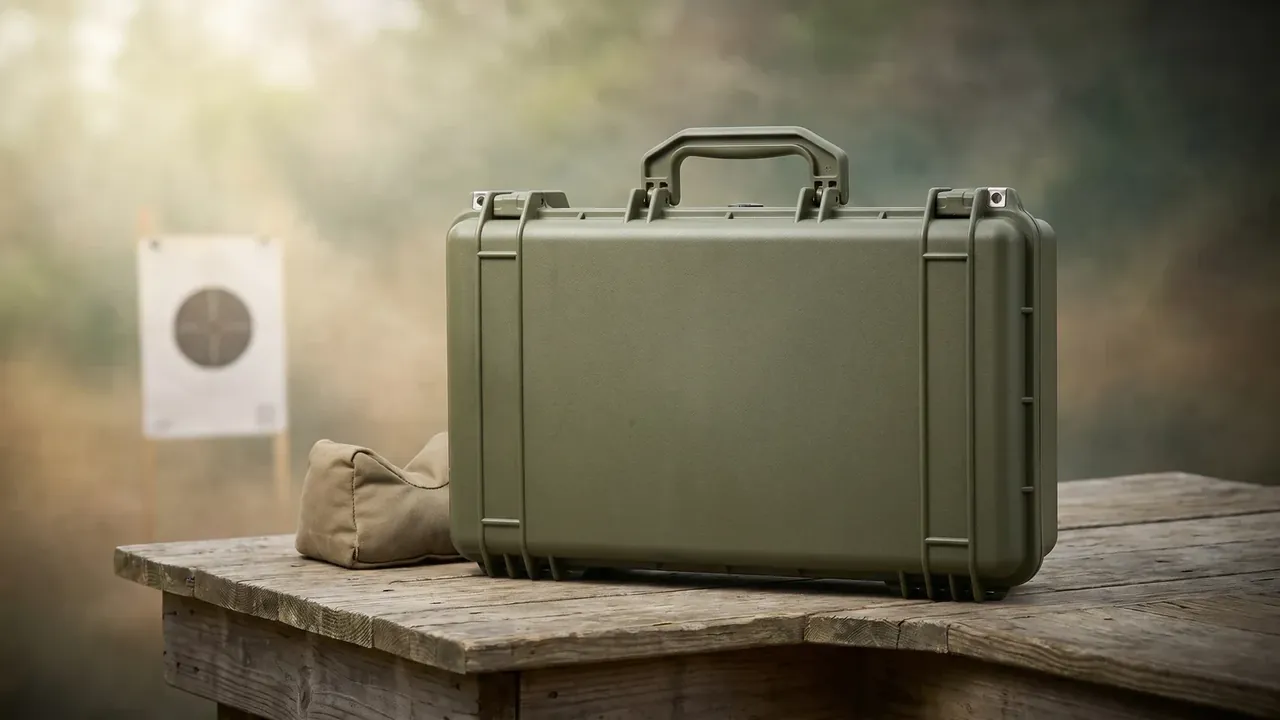
- Gasket: measure section height once pulled, replace past 30 percent set;
- Latches: gauge the closed latch, adjust or replace below 120 N;
- Hinge pins: past 0.3 mm of play, replace pin and boss;
- Corners: raking light for whitening, retire past 8 mm cracks;
- Valve: the plunger should snap back cleanly;
- Markings: re-label past a third of lost area.
3. Cleaning and Drying
Cleaning removes salt, dust and oil, not a polish. Polyolefin shrugs off acids but not every solvent, and one wrong wipe cannot be undone.
| Soil | Allowed | Never |
|---|---|---|
| Dust | Neutral detergent, pH 6 to 8 | Solvent cleaners |
| Oil | Ethanol spot wipe, dry at once | Immersion |
| Salt | Warm water, 2 hours at 40 C | Heat gun held close |
| Mould | Diluted wash, lid open | Pressure washer in groove |
Never spray into the groove: water drives soil to the bottom and pushes the gasket out of position, so it refits without compression.
Drying is skipped most often. Two hours at 40 C empties the groove and rib cavities; air drying at eighty-five percent humidity does almost nothing.
4. Replacement Lines for Four Parts
Write the call into the sheet; hand-feel drifts between people and a number does not.
A gasket goes at thirty percent set, at any through-crack, or when decay returns above 1.2 kPa. Latches go when clamp force stays under 120 N after adjustment. Pins go at 0.3 mm of play, and the case stays. The body is retired only for a crack through a rib root, a rim warped past 2 mm, or three repairs. Prices differ widely: gasket four percent of case cost, latch seven, pin under two. Explicit lines take a fleet from six years to ten on cheap parts changed on time.
5. Three Things That Add Years
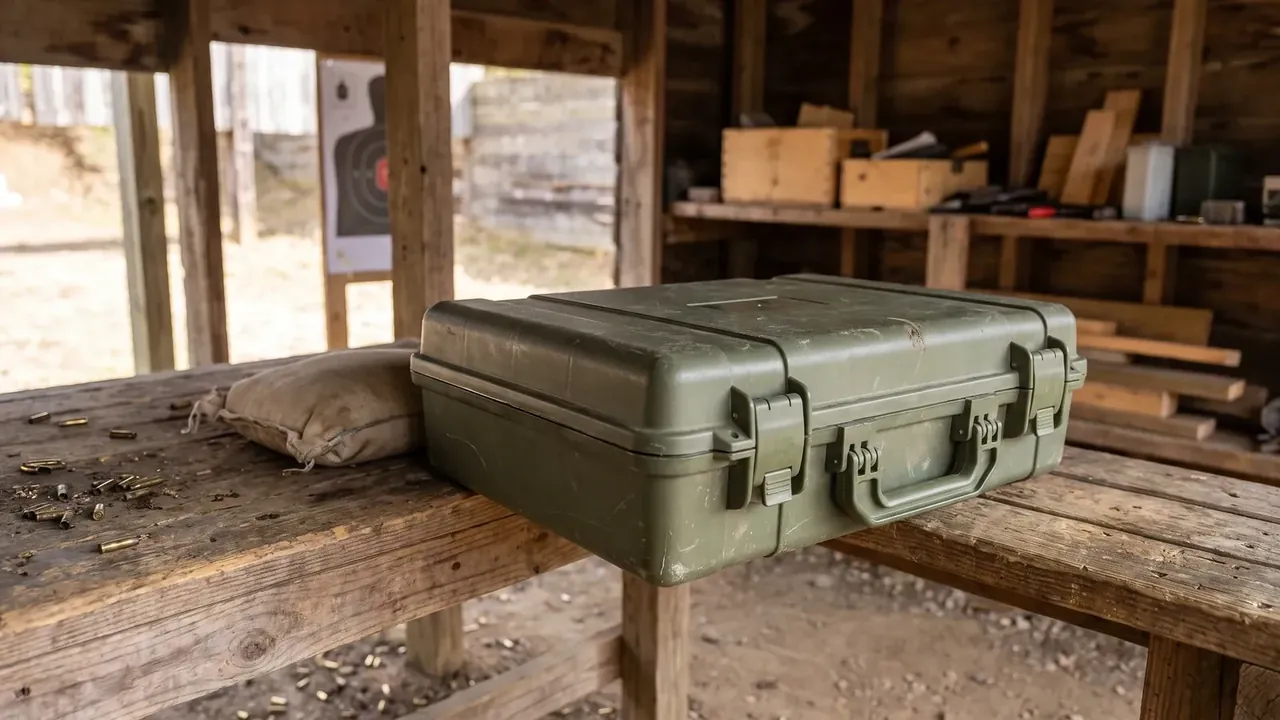
Posture beats material on a Prop Charge Container. Store upright, 100 mm off the floor on a pallet, so water drains from the rib channels; flat storage loads the lid for months.
Four high is the ceiling; past that the bottom rim creeps in and the lid stops seating within a year.
UV chalks the surface, and the chalk wipes off the rib roots with a little wall thickness each season.
A stored case left clamped keeps its gasket loaded; half-latch it with a 2 mm gap.
6. Records: Card, Trace Code, Handover
A box card answers three questions: last visit, parts replaced, next due.
Six columns: case number, in-service date, inspection date, parts replaced, decay reading, inspector.
Etch the trace code into a rib, not the panel, where a score line starts a crack.
Conclusion
Maintenance of a Prop Charge Container is not difficult; the discipline is writing the intervals and limits down. Three tiers, six check points and four replacement lines cover most decisions, and a fleet then lasts a decade on cheap parts changed on time rather than a bigger budget for a Prop Charge Container.
This article discusses only the container (case body) side of specifications and design intent, and does not cover any handling, loading or use of the contents.
Related Reading
- What a Prop Charge Container is
- Material and static control for a Prop Charge Container
- Inspection and seal replacement for grenade storage boxes
- Damp control and periodic checks for ammunition boxes
- Damp control, seals and inspection cycles for shell boxes
Related Products
- 8 Series — Gun Cases; Military Equipment Cases; Camera Equipment Cases; Drone Cases; Watch Cases; Knife Cases; First Aid Cases; Electronics Equipment Cases
- WL8-2812 PP Gun Case — model WL8-2812
- All protective cases and toolboxes: 7 series, 158 models