

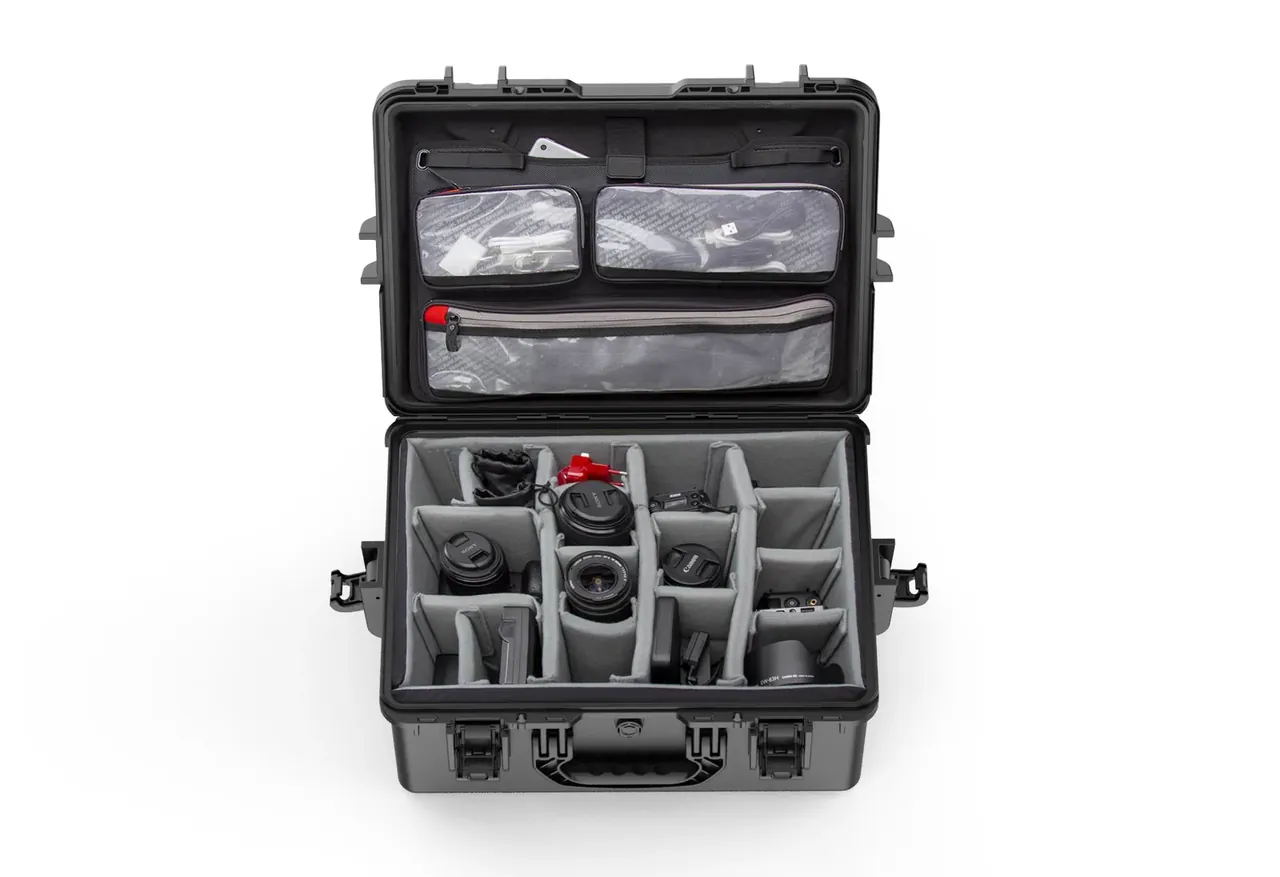
Quick answer: A quality agreement earns its keep by fixing three defect classes, five exemption triggers and the deadlines that decide who pays for rework.
Table of contents
- Three defect classes, written so two inspectors agree
- What AQL 0, 1.0 and 2.5 actually commit you to
- Three exits for a failed batch
- Exemptions: five situations and who proves what
- FAQ
1. Three defect classes, written so two inspectors agree
A shipment of 800 cases arrives and three have hairline cracks at the latch root. Whether those count as critical, major or minor decides whether all 800 go back, get sorted, or get accepted at a discount. The document's first job is to replace those three words with criteria an inspector can apply alone.
Critical means the case has lost its protective function or created a safety risk: a broken latch, a hinge that pulls out, a seal-face notch deeper than 0.5 mm. Critical findings are not accepted proportionally. The batch is quarantined and the supplier attends within 48 hours.
Major means function or assembly is affected but repairable: latch closing force outside the 60 N to 90 N band, lid-to-base offset beyond 2 mm, loose handle rivets. Minor covers appearance only: colour shift, flow marks, print offset within 1.5 mm.
Each class carries its own AQL value: 0 critical, 1.0 major, 2.5 minor. Lower is stricter, and 0 means no unit is acceptable, not that a clean sample releases the batch.
| Defect class | Example criterion | AQL | Action | Who decides |
|---|---|---|---|---|
| Critical | Broken latch, hinge pull-out, seal notch over 0.5 mm | 0 | Quarantine and return, supplier on site in 48 h | Buyer and supplier jointly |
| Major | Closing force outside 60 N to 90 N, offset over 2 mm | 1.0 | Sort and pay on good units, or return the batch | Supplier QC, buyer verifies |
| Minor | Colour shift, flow marks, print offset within 1.5 mm | 2.5 | Accept at 4% discount, or sort | Buyer incoming inspection |
| Mixed batch | Critical and minor findings in one lot | Strictest class | Whole lot handled as critical | Buyer quality manager |
2. What AQL 0, 1.0 and 2.5 actually commit you to
AQL is an acceptable quality level, not a permitted defect rate. Writing 2.5 against a minor item sets the batch quality the supply is designed around, not a licence to ship 2.5% bad cases, and not a reason to relax inspection.
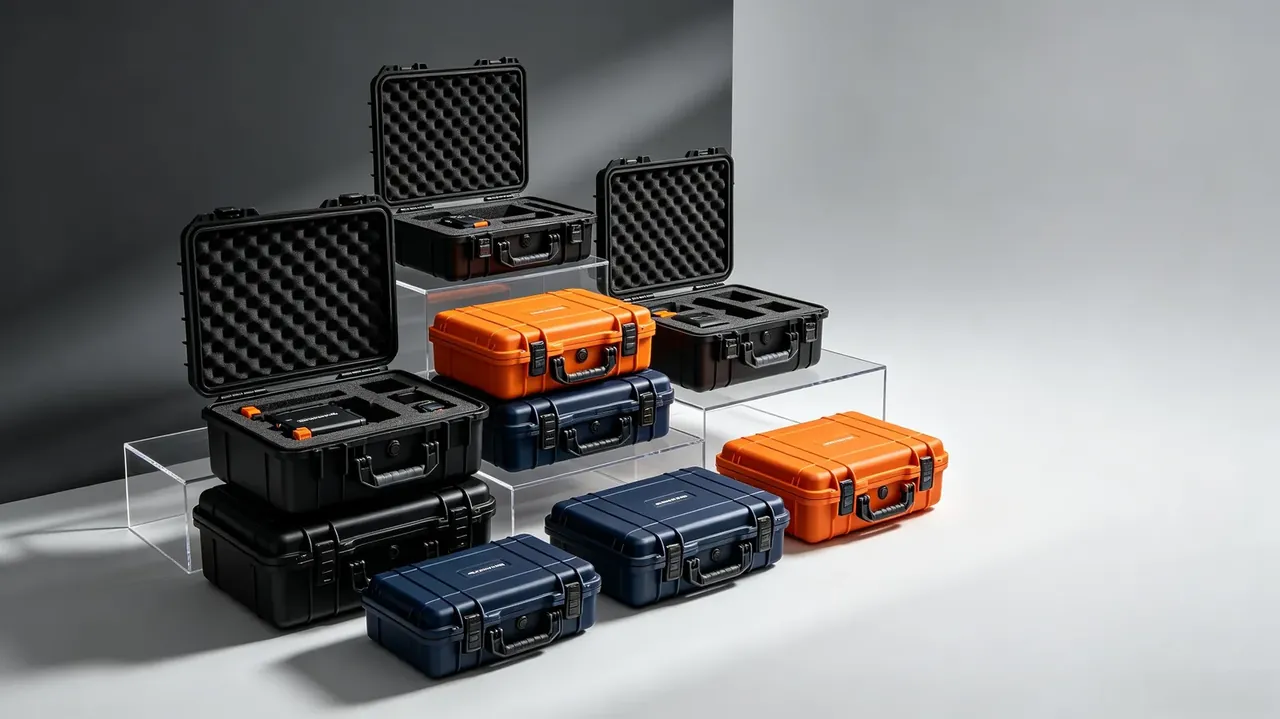
Sampling plans, meaning inspection level, sample size and acceptance numbers, belong in an annex under ISO 2859-1, not in the body. The body carries the criteria for each class, the AQL values, and what happens to a failed batch. Numbers hard-coded in the body force an amendment every time a standard is revised.
Switching rules need writing down. Five conforming batches may justify reduced inspection; one critical finding returns the supply to tightened level, and three conforming batches are needed to come back.
3. Three exits for a failed batch
A failed batch has three exits, and each one has to name who pays. Return is the cleanest: rework at the supplier's cost in full, freight shared, delivery dates extended without penalty.
Sorting suits a tight delivery. Full inspection at 38 s a case, charged at 1.8 per case to the supplier, rejects returned with the batch, and the buyer invoiced only on conforming units.
Acceptance with a discount is open to minor findings only: 4% off, a written concession, and cumulative concessions capped at 3% of annual volume. Critical and major findings have no route, and that line should be closed rather than left to goodwill.
Rework cost splits three ways: 100% to the supplier when the criteria were its own and were missed, 100% to the buyer when the criteria came from a drawing it supplied and the drawing was wrong, 50/50 when both contributed. When the split cannot be agreed, a third-party test decides.
4. Exemptions: five situations and who proves what
Exemption clauses are the easiest part of a quality agreement to write as decoration. "The supplier is not liable for problems caused by the customer" cannot be enforced by anyone. Split it into five situations, each with its own evidence.
| Exemption | Trigger | Evidence required | Outcome |
|---|---|---|---|
| Drawing error | Drawing supplied by the buyer, dimension chain faulty | Buyer's drawing number and revision | Supplier exempt, buyer pays rework |
| Over-storage | More than 12 months in the buyer's warehouse | Supplier's batch code plus buyer's goods-in record | Distortion and ageing excluded |
| Off-spec conditions | Outside -20 °C to 60 °C, or prolonged immersion | Service records and site photographs | Failure analysis, third-party split |
| Unauthorised modification | Buyer drills, adds hardware or swaps foam | Before and after photos, work order | All defects at that area exempt |
| Force majeure | Disaster, controls, power loss beyond 72 h | Official certificate and outage log | Dates extended, no claims either way |
In all five the cause sits with the buyer or outside both parties, which beats ten lines asking for good faith.
Evidence has to run both directions. Claiming over-storage requires the supplier's batch code and the buyer's goods-in record; claiming a drawing error requires the buyer's drawing number and revision. An exemption asserted without documents does not survive a dispute.
Exemption is not silence. Even inside the five situations, the supplier still owes a first assessment within 24 hours and a corrective plan within 48. Leaving that out invites the buyer to read exemption as avoidance.
Conclusion
The value of a quality agreement lies less in length than in three concrete places: criteria, evidence and deadlines. Three defect classes with three AQL values, three exits for a failed batch, and five exemptions each with its own proof give both sides something to argue against rather than around. Written that way, a quality agreement stops being an annex nobody opens.
This article covers case-side specifications only and does not address any handling, loading or use of the contents.
Related Reading
- Setting AQL sampling for case acceptance
- Quality clauses and remedies in case contracts
- Splitting liability in a damage claim
- Insurance claims for transit damage
Related Products
- 8 Series — Gun Cases; Military Equipment Cases; Camera Equipment Cases; Drone Cases; Watch Cases; Knife Cases; First Aid Cases; Electronics Equipment Cases
- WL8-2812 PP Gun Case — model WL8-2812
- All protective cases and toolboxes: 7 series, 158 models