

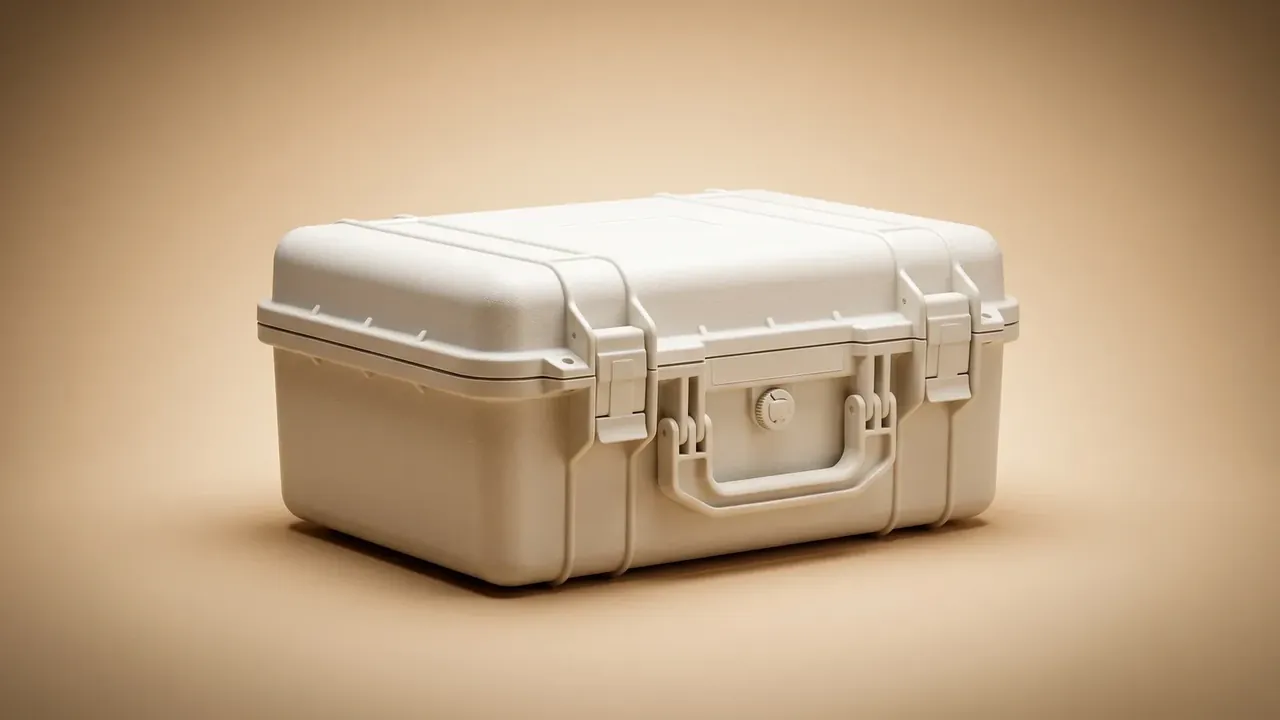
Quick answer: A rifle case is a bench at the range, luggage on an airport belt, a jig in the workshop and a tied-down load in a truck bed. The thresholds differ: 1.32 m of cavity, 18.5 kg per piece, a 105° lid, 55 cm of strap spacing.
Table of contents
- How the Four Settings Differ
- Workshop Pre-fit: Foam Cut and Latch Alignment
- Range Position: Lid Angle and Three Shims
- Air Freight: The Thirty-Five Minute Window
- Truck Bed: Three Strap Positions
- Three Rules That Hold Across All Four
- FAQ
1. How the Four Settings Differ
The shell does not change between sites; the handling does. At the range the lid becomes a work surface, in a truck bed the body becomes a tied-down load.
The third column is where decisions live.
| Setting | Setup action | Threshold | Typical mistake |
|---|---|---|---|
| Range | Shim base, lid up | 105° lid, 30 mm shim | Lid tips onto hinge |
| Workshop | Cut foam, align latches | 6 mm compression, coaxial seats | Foam glued off-centre |
| Air freight | Close, pin, label | 18.5 kg per piece | Latches, no pins |
| Truck bed | Strap body, anchor down | 55 cm spacing | One strap, load slides |
The numbers pull against each other. A 1.32 m cavity adds weight against the 18.5 kg limit; a thinner wall wins it back and the lid twists past 105°.
No part is at fault. The order is.
2. Workshop Pre-fit: Foam Cut and Latch Alignment
Foam arrives as a solid block, so the cavity is cut in the workshop and closed down on once under load. The target is 6 mm of compression: less and the stock walks, more and the latches sit preloaded.
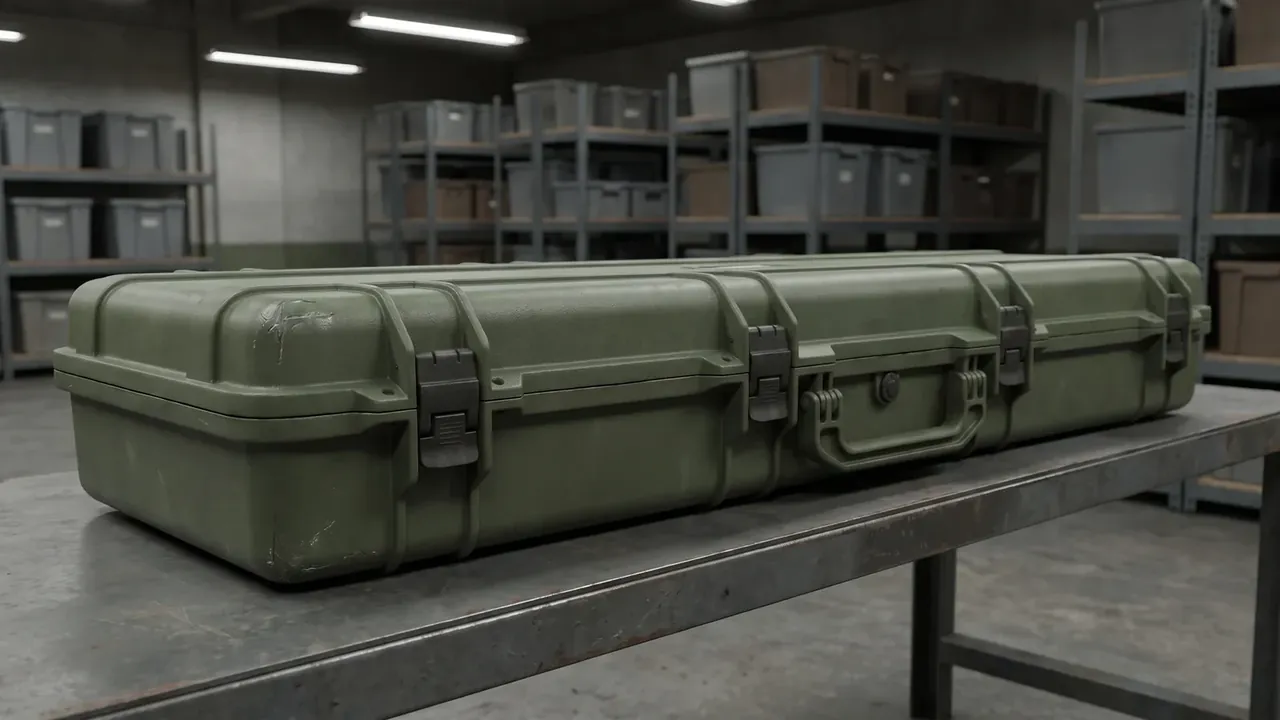
Seats more than 1 mm out of register make the tongue enter at an angle and halve its life. Sight along the seam, then feel each tongue root.
The label inside the lid carries case, cavity and foam batch numbers; the outside loses its own in months. When foam collapses, that batch replaces one insert, not the whole rifle case.
3. Range Position: Lid Angle and Three Shims
Three actions, order fixed.
- Shim the base 30 mm so the lid clears the ground and air moves under the shell;
- Open to 105° with a margin behind it, past which the centre of gravity crosses the hinge;
- Lay the long edge parallel to the firing line so nobody reaches across the body to lift a rifle out.
People skip the shim. The base sits on damp ground, moisture climbs the ribs, and a season later the insert edge crumbles.
Two offcuts of timber will do.
4. Air Freight: The Thirty-Five Minute Window
Air-side setup belongs to whoever packs the case. Check-in to security is often thirty-five minutes: close, pin, label, weigh.
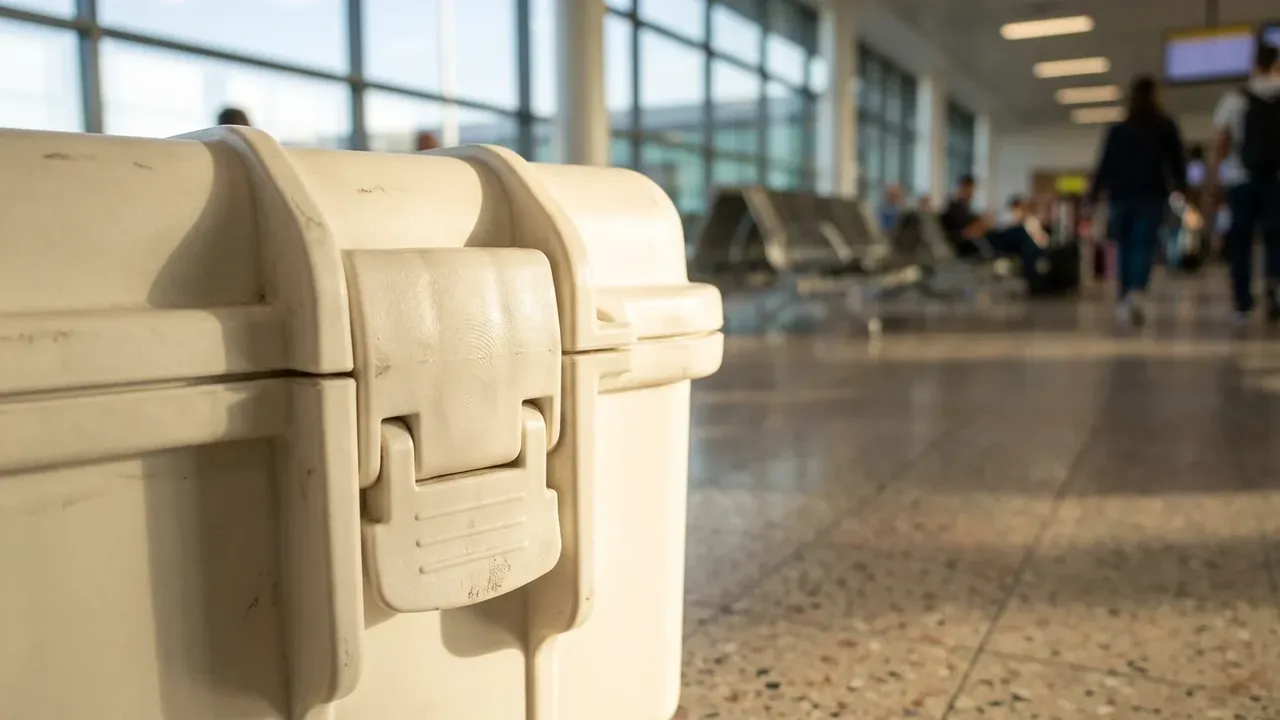
18.5 kg is the usual per-piece limit and the usual failure point. A 1.32 m cavity builds near 7 kg empty and foam adds 3 kg, leaving under 9 kg for rifle and optics.
Load direction on a belt is unpredictable. Latches pop open under a shove; pins do not.
Transfers open on the floor, not a bench.
5. Truck Bed: Three Strap Positions
One strap across each end over the ribs, one under the handle rather than over it, one at mid-body to kill rotation, spacing at or under 55 cm: anti-slide, anti-bounce, anti-twist.
Tighter is not better. Over-tensioned webbing dents the wall, the wall is thinner there, and the next impact opens a crack. The hand test is 10 mm of give.
6. Three Rules That Hold Across All Four
One case, one setting. A range case that rides in a truck weekly wears its hinge at twice the rate. Re-run the closure test after every change and log which case serves which environment.
| Setting | Build | Quarterly check |
|---|---|---|
| Range | Two latches, shallow foam | Hinge play, lid flatness |
| Workshop | Open-cell insert, full marking | Latch register, compression |
| Air freight | Four latches plus pins | Pin bore wear, gasket set |
| Truck bed | Reinforced handle, corner guards | Webbing fray, guard adhesion |
The air-freight row costs most and gets borrowed most; a pinned rifle case at the range doubles opening time, so the pins stop being fitted.
Conclusion
Four settings, four procedures, four numbers: 1.32 m of cavity sets empty weight, 18.5 kg decides whether the airline takes it, 105° decides whether the lid stands, 55 cm decides whether it shifts in a truck bed. Fix those four on the drawing and a rifle case behaves the same wherever it is opened.
This article discusses only the container (case body) side of specifications and design intent, and does not cover any handling, loading or use of the contents.
Related Reading
- Sniper rifle case setups for duty and transport
- Rifle case selection: length, foam and latches
- Rifle case versus a general-purpose long case
- How transit cases are secured during handling
- Blocking and stacking practice for missile boxes
Related Products
- 8 Series — Gun Cases; Military Equipment Cases; Camera Equipment Cases; Drone Cases; Watch Cases; Knife Cases; First Aid Cases; Electronics Equipment Cases
- WL8-2812 PP Gun Case — model WL8-2812
- All protective cases and toolboxes: 7 series, 158 models