

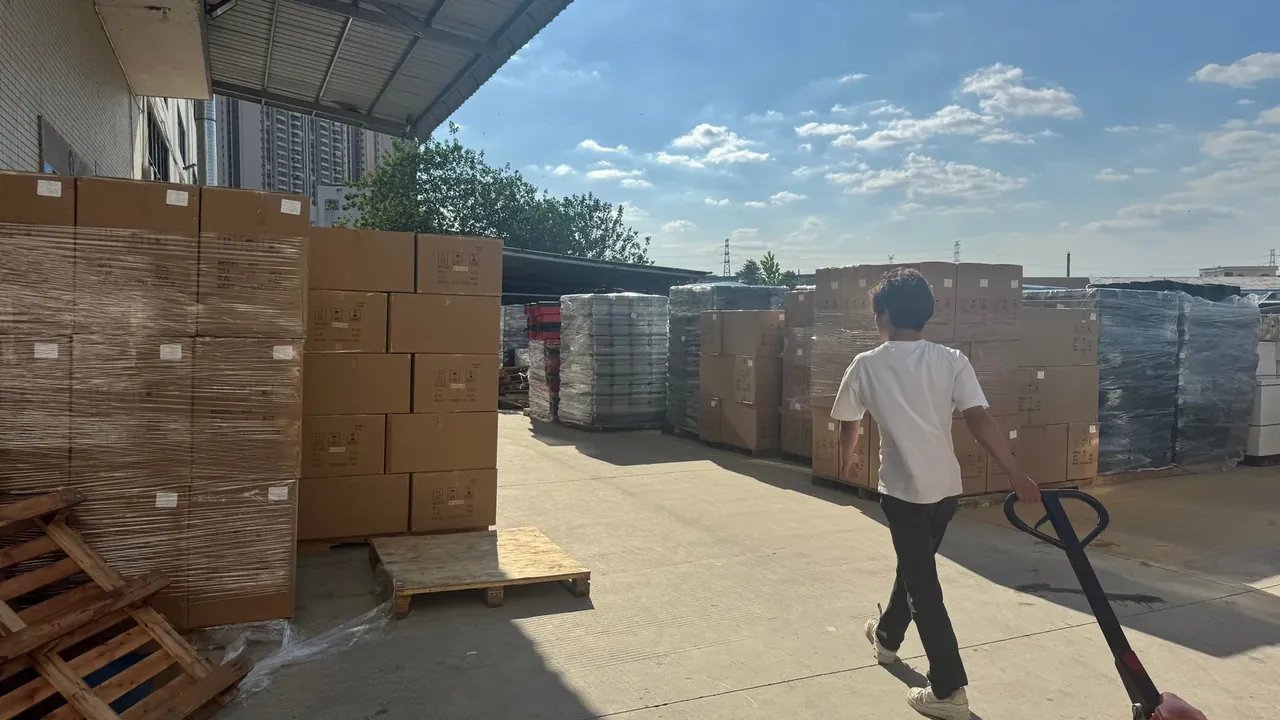
Quick answer: Small Case Shipping packs three units per carton at 14 kg gross, where a 0.05 mm bag and a 48 mm tape line matter more than board grade.
Table of contents
- Three-per-Carton Layout for Small Case Shipping
- Liner Bag Material and Bagging Order
- Board Strength and Stacking Height
- Where the Tape Line Goes
- Marks and Packing List Checks
- FAQ
1. Three-per-Carton Layout for Small Case Shipping
Three per carton is a weight decision before a volume one. Small Case Shipping settles at 14 kg gross: one case is 4.2 kg, three come to 12.6 kg, and a 1.4 kg five-ply carton closes the gap. At 14 kg a dockworker lifts for thirty trips; at 18 kg he drags by the tenth, and dragged loads land on a corner.
The case body measures 400×300×180 mm and lies flat in three tiers. Internal size is 420×320×600 mm with a 30 mm pad between tiers, so 180×3 plus 30×2 lands on 600 mm and the flaps close without a gap. Ten millimetres of clearance per side takes four corner strips.
| Layout item | Value | Floor check |
|---|---|---|
| Units per carton | 3 | Below 3, volume use drops under 70% |
| Case footprint | 400×300×180 mm | Flat, lids facing up |
| Interlayer pad | 30 mm single wall | Two pieces, both required |
| Carton inside | 420×320×600 mm | 10 mm per side |
| Gross weight | 14 kg | Above 15 kg, two-person lift |
| Strapping | 2 bands | 80 mm from each end |
Four per carton tempts buyers because freight per parcel falls about a tenth, yet 18.2 kg turns the lift into a hug and corners hit first. Across three transfers the repair log runs about 40% longer, so layout follows carrying posture, not volume use.
2. Liner Bag Material and Bagging Order
A 0.05 mm bag is the practical floor for low-density polyethylene in Small Case Shipping. At 0.03 mm the film splits on a corner and a 20 mm tear equals no bag; at 0.08 mm cost runs 40% higher and the fold springs open. A 700×500 mm bag covers a 400×300×180 mm case.
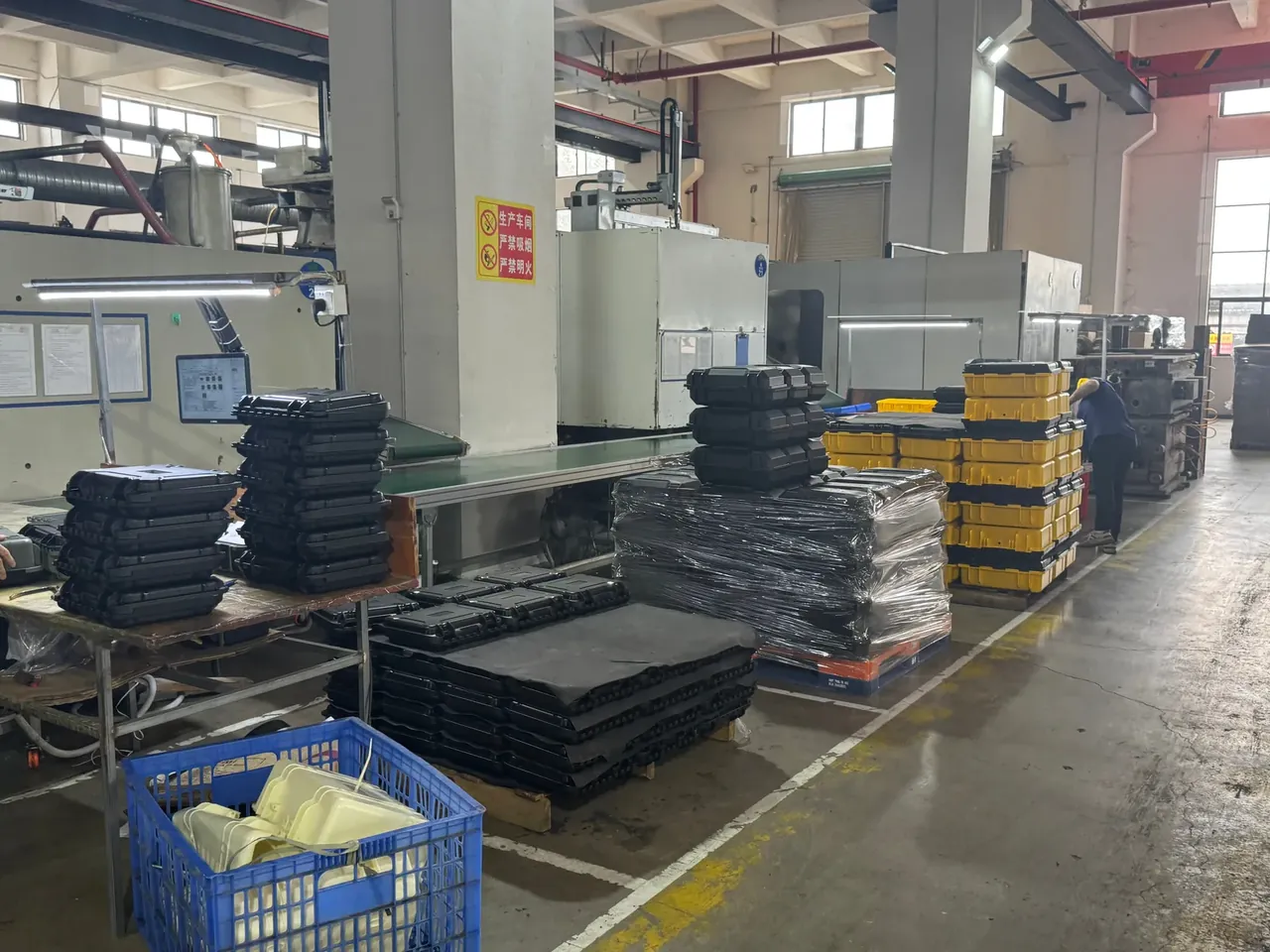
Bagging runs in four steps: one case into one bag, air pressed out, the mouth folded twice, three bagged cases into the carton. Trapped air turns the bag into a cushion that bursts at the fold, and folding toward the handle keeps tape off the film.
Dust and moisture are separate jobs. Two folds stop workshop dust; a 5 g desiccant sachet holds humidity under 50% across a 60-day voyage. An outer bag costs 0.6 yuan more and runs only on request.
| Bag type | Thickness | Size | Closure | Use |
|---|---|---|---|---|
| Flat bag | 0.05 mm | 700×500 mm | Two folds | Standard shipments |
| Zip bag | 0.06 mm | 720×520 mm | Zip strip | Small lots, repairs |
| Outer bag | 0.08 mm | 900×700 mm | Fold plus tape | Export barrier |
Thicker film is not safer in Small Case Shipping. At 0.08 mm the fold needs two passes with 48 mm tape, and the 0.08 yuan saved per bag at 0.03 mm returns after one repack.
3. Board Strength and Stacking Height
Small Case Shipping cartons run five-ply AB flute from 4.5 kN/m edge crush. At six high the bottom carton carries 70 kg, which looks generous until storage is priced in: corrugated loses about 40% of its strength after 30 days under load and another 30% at 60% relative humidity, so the base needs an initial 165 kg.
Stack height is also a pallet question. A 1200×1000 mm pallet takes eight cartons of 420×320 mm per tier, so six tiers carry 48 cartons at 672 kg, and with a 20 kg pallet the load nears the 800 kg rating of a manual pallet truck.
A 3 mm floor step becomes 15 mm of lean at the top of a six-high stack, loading the column nearest the wall, so bays are marked 100 mm off the wall.
Six high is normal, five is safer for sea freight: a 2.39 m container height leaves 3.2 m of stack at 600 mm per carton, while six tiers sag the top lid over a 40-day voyage.
4. Where the Tape Line Goes
The 48 mm roll in Small Case Shipping matches the common manual dispenser; 36 mm no longer bridges the flap seam and 60 mm forces a dispenser change. At 0.045 mm, a 100 m roll seals 40 cartons at 2.4 m each.
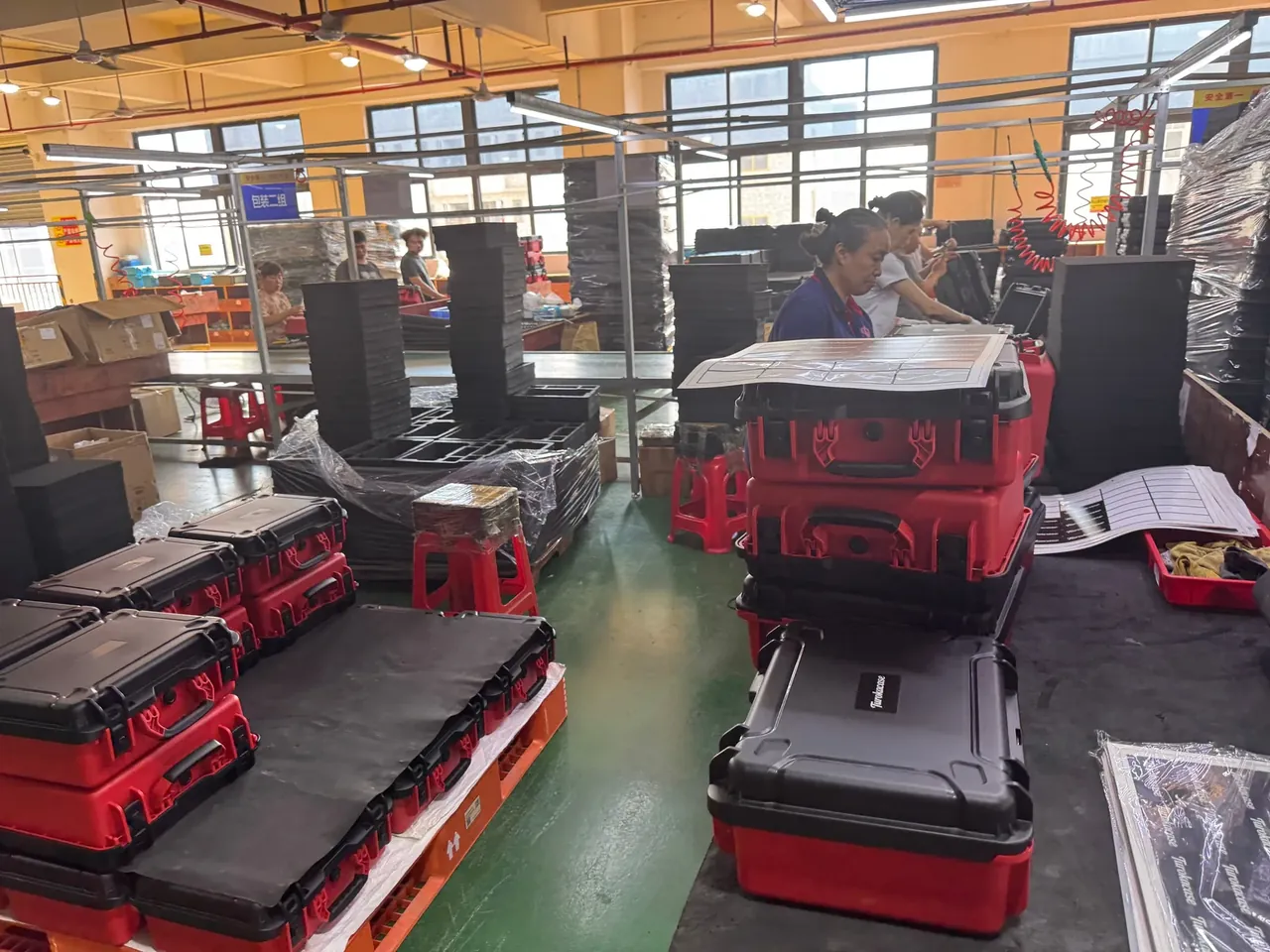
A single centre strip fails. Closed flaps leave a 4 mm gap and the strip covers only 22 mm each side, so a hooked finger lifts the tape and the run peels. The H pattern is the minimum: one strip over the seam, one per end face down 60 mm, 20 mm folded as a tab.
Flatten the flaps first. One standing 2 mm proud contacts only at the centre, loses half its tack and lifts within 24 h; the floor presses the seam outward, then runs the roller twice at 3 s per pass.
| Pattern | Tape used | Seam hold | Shipment type |
|---|---|---|---|
| Centre strip | 1.1 m | Weak | Same-city delivery |
| H pattern | 2.4 m | Medium | Standard shipments |
| H plus cross strip | 3.6 m | Strong | Export, three transfers |
The cross strip adds 1.2 m, under 0.15 yuan per carton, so two transfers or fewer take the H pattern and three or more get the cross.
5. Marks and Packing List Checks
A Small Case Shipping mark is a 100×80 mm thermal label at the upper right, 20 mm below the top edge, carrying six fields: name, specification, quantity, gross weight, carton number, destination. Miss one and the receiver opens the carton at three times the labelling labour.
Packing lists run in triplicate. Cartons number from 001, so a 48-carton pallet carries 48 numbers that a scanner sweeps in 40 s without skipping the carton pulled from the sixth tier.
Wrong marks come from mixed pallets, where one pallet carries two specifications: the line goes bold and ranges split, 001 to 024 and 025 to 048. Those pallets run 2.6 times the mislabel rate, and ranges bring it under 0.3%.
First-piece checks cover the first three cartons, photographed onto the station board; the run follows the photo and does not drift by carton 20.
Related Reading
- Dock loading sequence and stack order
- Moisture barriers and reinforcement in export packing
- Case orientation on the cartoning line
- Hard case or carton for e-commerce shipping
- Plastic cases against wooden crates on export lines
Related Products
- 8 Series — Gun Cases; Military Equipment Cases; Camera Equipment Cases; Drone Cases; Watch Cases; Knife Cases; First Aid Cases; Electronics Equipment Cases
- WL8-2812 PP Gun Case — model WL8-2812
- All protective cases and toolboxes: 7 series, 158 models