

Quick answer: Accepting a Special Forces Case is a translation job. Use conditions become test items, items resolve to a method and procedure number, and the procedure supplies the severity and pass line. Below: a condition-to-clause table, IP6X and IPX7 on a case body, drop cycles by weight band, and disposition routes.
Table of contents
- Acceptance evidence chain
- Enclosure and sealing: running IP clauses
- Mechanical strength: drop heights and cycles
- Materials and corrosion: salt spray, UV, cold impact
- In-house screening versus outsourced testing
- Disposition of nonconforming units
- FAQ
1. Acceptance evidence chain
Before asking whether a Special Forces Case passes, ask which clause judges it. The chain runs from use condition to test item, then to method, procedure number and a written pass line.
| Condition | Test item | Clause family | Pass line |
|---|---|---|---|
| Temperature swing | Cycling, storage | MIL-STD-810 501, 502 | 2 hours at -51 °C and 71 °C, function normal |
| Short immersion | Water ingress | IEC 60529 IPX7 | 1 m deep, 30 minutes, no standing water |
| Transit drop | Mechanical | MIL-STD-810 516 | 1.2 m, 26 drops, no through-wall crack |
| Coastal storage | Salt spray | ISO 9227 | 96 hours, red rust under five percent |
Quote down to the procedure number: method 516.8, procedure one, 1.2 m, 26 drops.
2. Enclosure and sealing: running IP clauses
The first IP digit covers solids, the second liquids, with no conversion between them. On a Special Forces Case most sealing failures are not aged gaskets but a compression gap too small from the first shot.
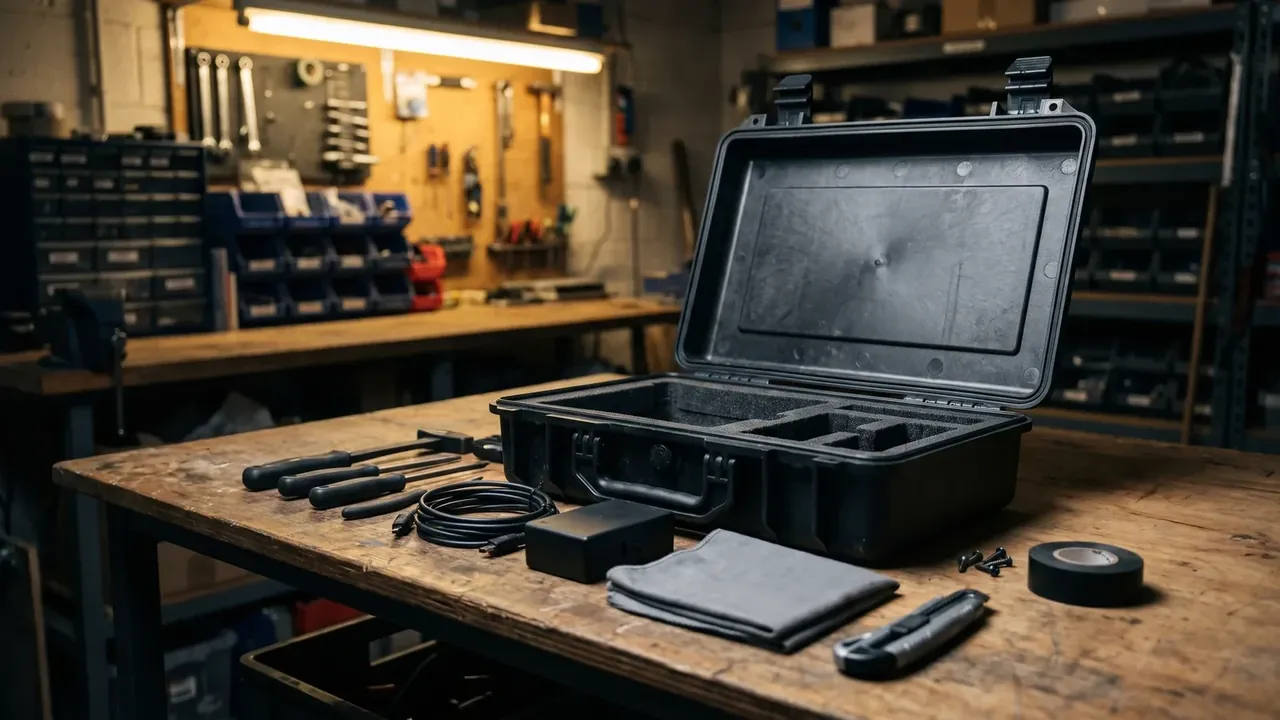
IPX7: body 1 m below the surface, lid within 150 mm of it, 30 minutes. Beads in the groove pass; standing water in the cavity fails.
- Valve state: a membrane vent must stay breathable, or cooling draws the gasket inward.
- Latch preload: a 0.5 mm feeler gauge every 200 mm along the rim must not enter.
- Groove depth: 15 to 25 percent shallower than the gasket section, or dust enters.
IP6X: 2 kg/m³ talc, 2 kPa vacuum, 8 hours; with dividers, turn the case 90 degrees before opening.
3. Mechanical strength: drop heights and cycles
Method 516 walks corners, edges and faces in that order; the corner drop is harshest because energy lands on a small patch. A square-cornered Special Forces Case shows a white stress mark inside the corner on the first hit.
| Gross weight | Drop height | Cycles | Targets |
|---|---|---|---|
| Up to 9 kg | 1.2 m | 26 | Corners, edges, faces |
| 9 to 18 kg | 1.0 m | 26 | As above plus 2 |
| 18 to 27 kg | 0.9 m | 22 | Corners and edges |
| Above 27 kg | 0.6 m | Per test plan | Lifting, tipping |
Height and cycle count belong together; change one alone and you have specified a different test. A 6 mm wall only dents at 1.2 m, while a 3 mm case of the same layout splits at an edge, so continuity of thick sections matters more than thickness.
4. Materials and corrosion: salt spray, UV, cold impact
Neutral salt spray to ISO 9227 for 96 hours needs three verdicts: red rust under five percent, no crazing on plastic, no hardened gasket. With mixed metals, add a galvanic check.
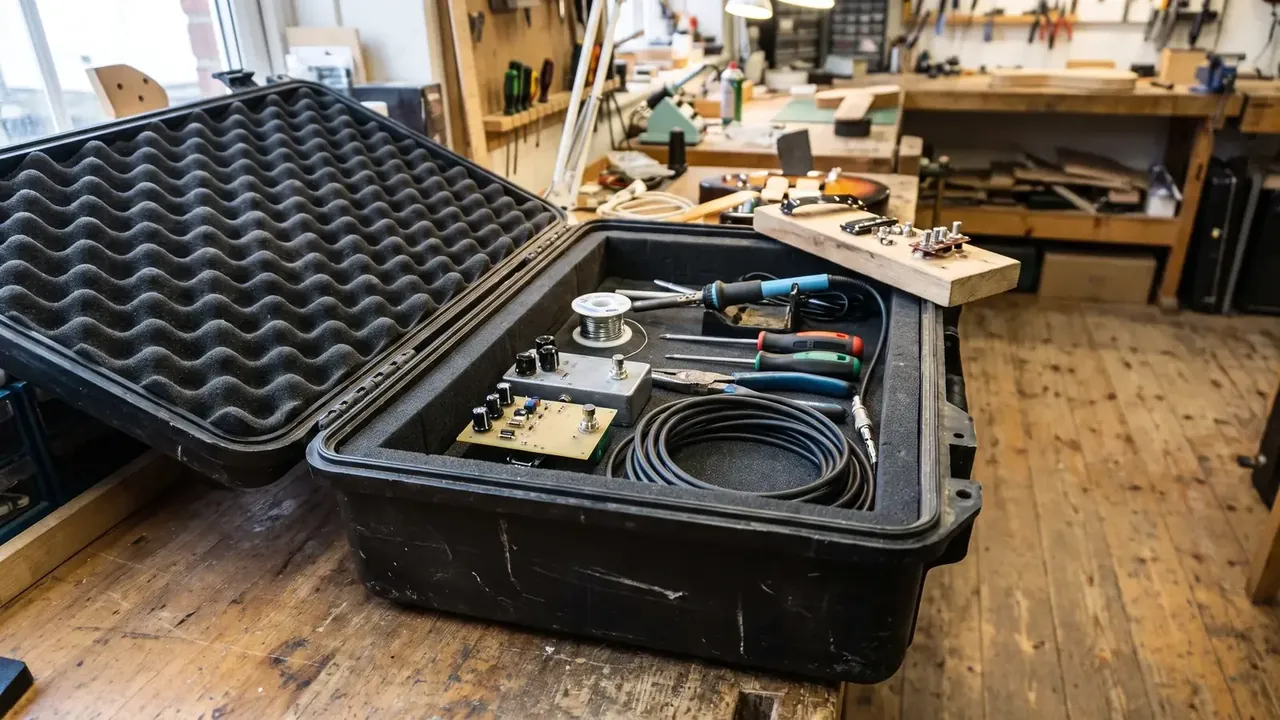
UV ageing runs 1,000 hours with spray, judged on colour shift and chalking since the case carries load through structure. Cold impact exposes material faster: 4 hours at -40 °C, then a 1 kg tup from 1 m within 10 seconds, notch not penetrated. All three lines must pass together.
5. In-house screening versus outsourced testing
Incoming inspection of a Special Forces Case covers three items on site; the other three go out.
- Water check: 300 mm of water for 10 minutes, then look for standing water;
- Hardware cycling: 500 closures, no axial play at the hinge pin;
- Dimensions: three points per internal dimension, six ultrasonic readings, wall within plus or minus 0.5 mm.
Outsource temperature cycling, the dust chamber, and salt spray with UV. Equipment cost and lead time rule out self-declaration, so require an accredited third-party report on random samples. Site checks screen obvious failures; they never replace type testing, and a change of resin grade or mould voids the earlier result.
6. Disposition of nonconforming units
Without a rule, every lot is settled by whoever is standing there. Three routes cover it.
| Defect | Class | Disposition | Record |
|---|---|---|---|
| Water in cavity or groove | Major | Replace gasket, retest, then reject | Photos, lot number |
| Through-wall crack | Critical | Reject, double the sample | Fracture photos |
| Latch tension down 20 percent | Major | Replace hardware, rework allowed | Measured tension |
| Flow marks, colour variation | Minor | Concession with price credit | Written confirmation |
Concession must never touch a protection item. Once ingress or drop cracking is conceded, every later lot inherits the looser line.
Conclusion
Accepting a Special Forces Case is mostly writing: conditions to items, items to procedure numbers, severity to a pass line. IP6X and IPX7 govern solids and liquids separately, drop height and cycles are a matched pair, and salt spray, UV and cold impact must pass together. Screen on site, outsource type testing, and never concede a protection item.
This article discusses only the container (case body) side of specifications and design intent, and does not cover any handling, loading or use of the contents.
Related Reading
- Special Forces case use in training and field camps
- A selection order for Special Forces cases
- Structural and cushioning design of airdrop cases
- Inspection items for artillery shell boxes
- Marking rules for pallets and cases
Related Products
- 8 Series — Gun Cases; Military Equipment Cases; Camera Equipment Cases; Drone Cases; Watch Cases; Knife Cases; First Aid Cases; Electronics Equipment Cases
- WL8-2812 PP Gun Case — model WL8-2812
- All protective cases and toolboxes: 7 series, 158 models