

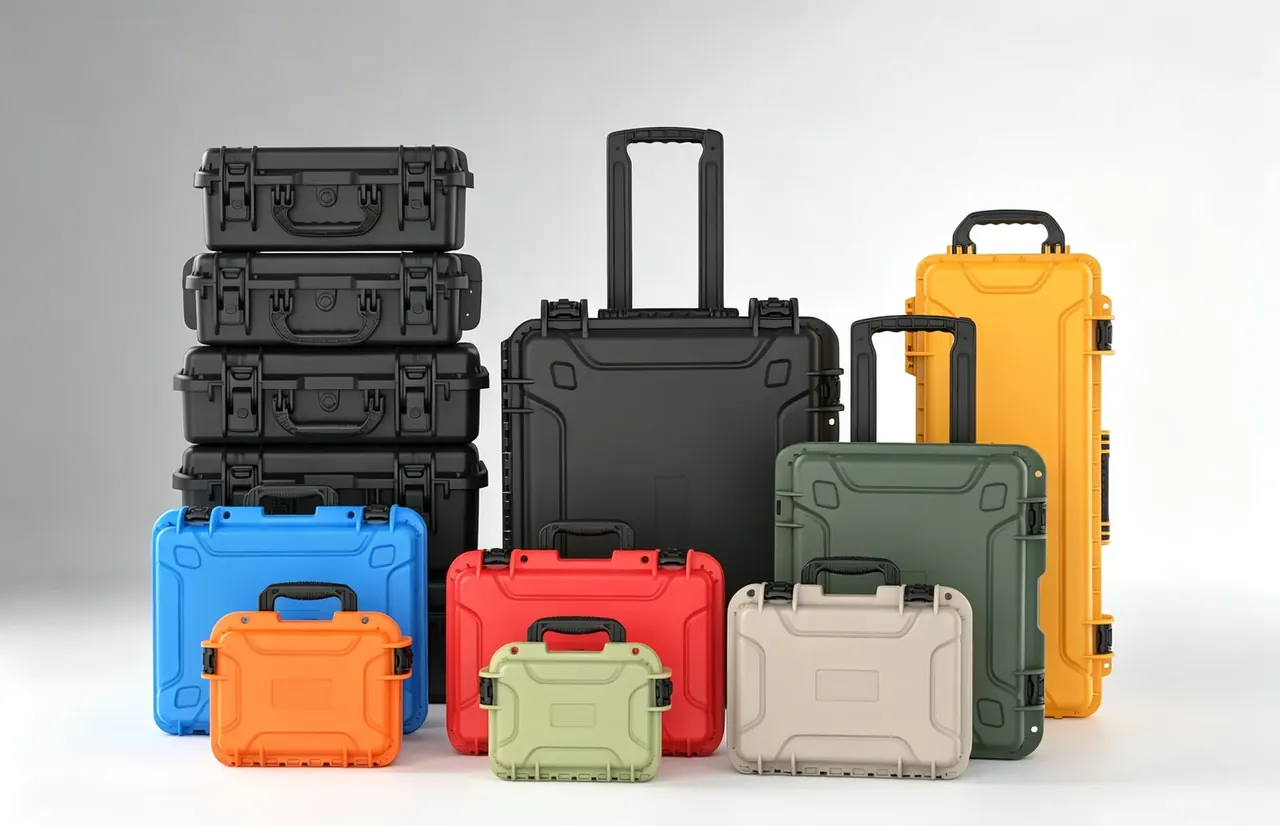
Quick answer: Case telescopic handle jamming is usually sand packing the 0.15 mm gap between three tubes, so the rod stops at 60 N or will not lock.
Table of contents
- Two failure modes: will not push, will not lock
- 22/25/28 mm tubes and the 0.15 mm gap
- The 8 mm ball and the 60 N pull line
- Where dust and moisture get in
- Strip-down order and parts not to open
- FAQ
1. Two failure modes: will not push, will not lock
The rod stops at 600 mm and 80 N changes nothing; push it back, and the next pull will not lock. Both symptoms share a rod but not a cause: a filled gap resists the push, a ball that never reaches its hole defeats the lock.
Position names the tube. Fully extended the rod measures 1020 mm with only 480 mm of middle tube showing, so overlap with the outer tube is 95 mm, and a jam starting between 550 and 650 mm points at the upper bushing.
Push resistance climbs in steps, from 18 N clean to 62 N by cycle 800, which is past the 60 N line. Locking failure is a step change instead, because mud glues the ball down and a 12 N spring cannot lift it.
| Check | Will not push | Will not lock |
|---|---|---|
| Feel | Resistance climbs | Smooth, collapses |
| Break-away | 34–95 N | 24–30 N |
| Cause | Sand ring, oxide | Mud-bound spring |
| Action | Clean, new bushing | New ball, dress bore |
2. 22/25/28 mm tubes and the 0.15 mm gap
The tubes run 22, 25 and 28 mm outside diameter with 1.0, 1.1 and 1.2 mm walls, leaving 0.15 mm per side. The ball is 8 mm across and the hole 8.2 mm, and it must stand 1.2 mm proud of the inner wall, exactly the gap plus the wall allowance.
Open the gap to 0.3 mm and the rod rattles, the ball sits 0.15 mm shallower and locking force falls from 240 N to 150 N; close it to 0.08 mm and the first grit locks the rod solid.
Temperature moves it too: at 1.1×10⁻⁴ per ℃, a 35 ℃ drop to −10 ℃ shrinks a 28 mm tube by 0.11 mm and leaves 0.04 mm, which is why the same rod pulls at 26 N warm and 71 N cold.
| Tube | OD (mm) | Wall (mm) | Gap (mm) | Overlap (mm) | Fault |
|---|---|---|---|---|---|
| Inner | 22 | 1.0 | 0.15 | 380 | End cap splits |
| Middle | 25 | 1.1 | 0.15 | 95 | Bushing wears |
| Outer | 28 | 1.2 | — | — | Sand, oxide inside |
A thicker ball is not the answer, since 0.2 mm more forces the hole to 8.4 mm and grit grinds into the seat faster. Check the gap with a feeler gauge; if the 0.2 mm blade enters, the next jam is three months away.
3. The 8 mm ball and the 60 N pull line
Sixty newtons is a repeatable limit: a sound rod pulls smoothly for 5 s at any extension, so anything needing more than 60 N counts as jammed. Hang a 50 kg spring gauge on the handle bar and test 0 mm, 510 mm and 1020 mm, where 24 N, 28 N and 31 N are normal.
A spread above 8 N means one joint is tight, and 12 N above the closed reading points at the bushing.
The ball must come out to be judged: 8 mm at ±0.01 mm and HRC 58–62 in an 8.2 mm bore with a 0.3 mm by 45° chamfer. Once the bore wears oval by 0.4 mm, the ball wedges sideways and washing will not help.
Grease is 0.1 g of silicone: 0.04 g in the seat, 0.04 g on the bushing, 0.02 g at the mouth. It works from −40 ℃ to 200 ℃, while lithium grease traps grit. Wear comes in two stages: 0.02 mm polishes the ball, and only past 0.05 mm does locking force fall from 240 N to 190 N.
4. Where dust and moisture get in
Dust enters at the outer tube mouth, where a 0.15 mm annular gap opens when the rod is extended. Airborne powder compacts there into a 0.2 mm abrasive ring that scores the bore.
Moisture enters through the vent hole at the top of the middle tube and condenses on the inner tube wall. In a humid summer a case left in a pickup bed collects 2–3 mL and shows white oxide powder within two weeks, swelling until the rod pulls but will not lock.
Cold stacks both failures: below −10 ℃ trapped water freezes and expands 9%, turning a 0.1 mm film into an ice wedge, and a rod left 8 h at −10 ℃ goes from 28 N to 95 N.
Three field checks cover it: a sandy rasp, white powder, a 60 N pull. Two hits and you stop, because every stroke drives abrasive into the seat.
5. Strip-down order and parts not to open
Only three things come apart: the four ST4.2×16 screws on the base plate, the upper bushing turned a quarter turn anticlockwise, and the two 3 mm pins in the locking block. The order is fixed: extend, remove the base cover, draw out the middle tube, drift out the pins, then slide out the inner tube.
Three parts stay closed: the staked ball seat, the heat-staked end cap and the snap features on the outer tube. Pry any of them and the mouth goes out of round by 0.2–0.3 mm, so a rod that would not push becomes one that will not lock.
Wash in 40 ℃ water with neutral detergent and a 300-grit soft brush, dry at 60 ℃ for 2 h and keep residual water under 0.05 g. Reassemble with 0.1 g of silicone, tighten to 1.2 N·m and cycle each position 10 times.
The repairable line is a mouth out of round up to 0.3 mm, dents up to 1 mm and bore ovality up to 0.4 mm; inside it, cleaning restores the rod in 40 min for about 35% of a new assembly. Beyond it, replace.
Conclusion
Diagnose case telescopic handle jamming by mode first, then by number: a rod that will not push is judged at 60 N, and a rod that will not lock is judged by whether 20 N of push-back collapses it. If it still moves and only feels rough, a clean, a new ball and 0.1 g of silicone fix it in 40 min for roughly 35% of a new assembly. If 60 N will not move it and the mouth shows circular scoring, measure roundness and replace once it is out by more than 0.3 mm.
| Symptom on site | Verdict | Action | Time |
|---|---|---|---|
| 60 N will not move it, sandy rasp | Abrasive ring in the gap | Strip, clean, 0.1 g silicone | 40 min |
| Collapses at 20 N push-back | Ball not seated | New 8 mm ball, clean seat | 25 min |
| Jams only below −10 ℃ | Gap shrink plus ice | Warm 2 h, cold grease | 15 min |
| Mouth out of round over 0.3 mm | Structural damage | Replace the assembly | 60 min |
This article discusses container-side specifications and design implications only, and does not cover any handling, loading or use of the contents.
Related Reading
- Wheels and trolley handle fit on cases
- Choosing a plastic case with a pull handle
- Case repair: what is worth fixing
- Handle ergonomics for carried cases
Related Products
- 8 Series — Gun Cases; Military Equipment Cases; Camera Equipment Cases; Drone Cases; Watch Cases; Knife Cases; First Aid Cases; Electronics Equipment Cases
- WL8-2812 PP Gun Case — model WL8-2812
- All protective cases and toolboxes: 7 series, 158 models