

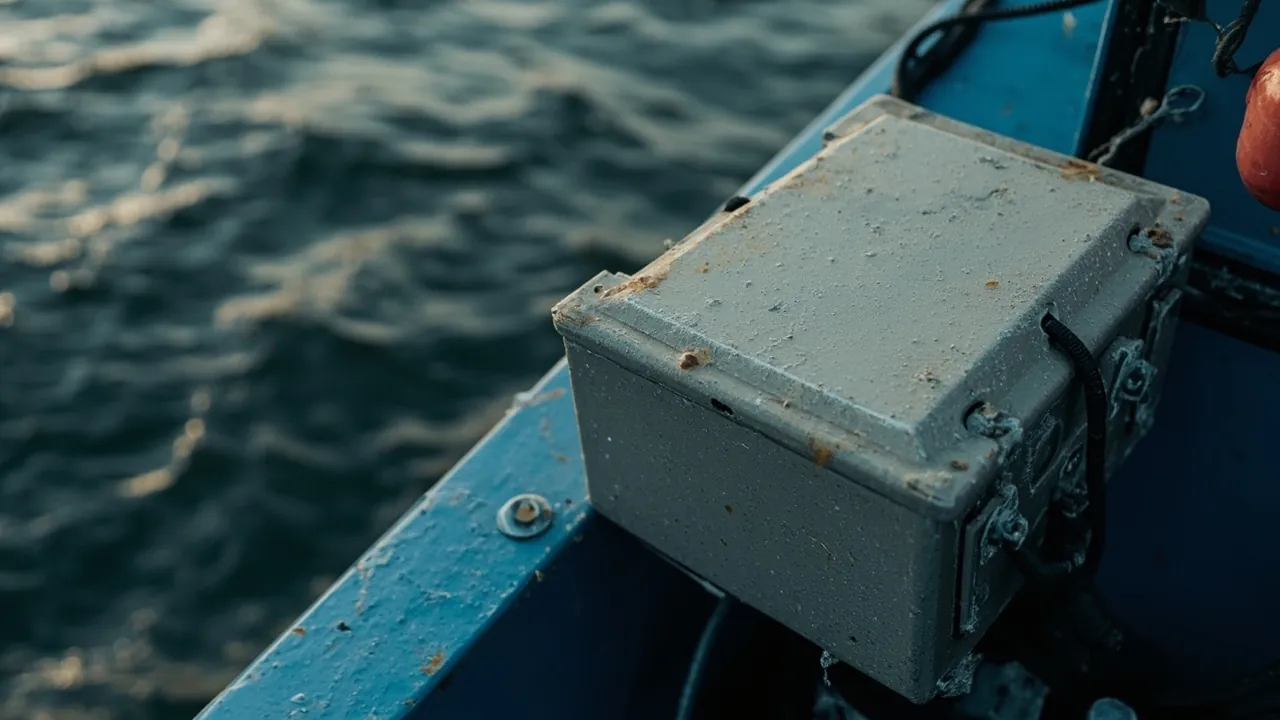
The waterproof junction box is the least conspicuous part of any outdoor electrical installation, and very often the part that decides whether the whole link survives its first rainy season. A splitter box feeding tower crane lighting, a fibre termination chamber at the base of a smart lighting pole, a feeder terminal enclosure beneath a 5G remote radio unit: what these have in common is that they are small, cheap, badly sited and impossible to lose. Experience across several maintenance organisations suggests that a substantial share of outdoor low-voltage faults begin not in the main equipment but at the termination itself, through water, dust or terminal corrosion triggering cascading failure.
This article works through eight representative environments: construction sites, municipal roads and smart poles, 5G sites, surveillance and traffic enforcement, solar wind and storage, agriculture aquaculture and water treatment, industrial and chemical plants, and finally ports, shipping and vessels. For each it identifies the genuine water, dust, temperature and corrosion loads, then gives the matching protection level, materials, entry arrangement and installation practice, closing with configuration tables and recommended parts lists. The reasoning follows IEC 60529 together with field practice, and the figures quoted can be used directly.
Contents
- Overview Table for Eight Environments
- Environment One: Temporary Power on Construction Sites
- Environment Two: Municipal Roads and Smart Poles
- Environment Three: 5G Sites and Access Points
- Environment Four: Surveillance and Traffic Enforcement
- Environment Five: Solar, Wind and Storage
- Environment Six: Agriculture, Aquaculture and Water Treatment
- Environment Seven: Industrial Plants and Chemical Duty
- Environment Eight: Ports, Shipping and Vessels
- Configuration Comparison Table by Environment
- Volume, Entries and Mounting Essentials
- Recommended Parts List for Each Environment
- Frequently Asked Questions (FAQ)
- Closing Notes and Further Reading
Overview Table for Eight Environments
Start with the whole picture. The table below maps each environment to its dominant loads and gives a first indication of level and material, so you can find your row and then read the section.
| Environment | Dominant water risk | Dominant non-water risk | Recommended code | Recommended shell |
|---|---|---|---|---|
| --- | --- | --- | --- | --- |
| Construction site | Curing spray, muddy ponding | Impact, dust, frequent relocation | IP65 up to IP67 at key points | Impact PP |
| Municipal roads, smart poles | Standing road water, splash | UV, exhaust film, vibration | IP67 | UV-stabilised ABS or PC |
| 5G sites | Storms, ponding | Heat, EMC, tight outage windows | IP67 | PC or UV-stabilised ABS |
| Surveillance, ITS | Side spray, condensation | Constant sun, induced lightning | IP67 | UV-stabilised ABS |
| Solar, wind, storage | Panel washing, snowmelt ponding | Thermal cycling, extreme UV, DC arc risk | IP67 | PC or weather-resistant PP |
| Agriculture, water | Constant humidity, irrigation spray, immersion | Fertilisers, biocides, algae | IP67 to IP68 near water | Chemical-resistant PP |
| Industrial, chemical | Washdown, chemical splash | Corrosive vapour, static, explosion risk | IP66/IP67 plus chemical resistance | PP or chemical-grade PC |
| Ports, shipping | Wave splash, spray | Salt mist, mould, vibration | IP67 plus 480 h salt spray | PC or PP with 316 hardware |
Read this table in a specific way: water risk drives the IP code, non-water risk drives the material. Plenty of buyers look only at the second numeral and end up with enclosures embrittled by process vapour within a year in a chemical plant, or chalked away by ultraviolet at a north-western solar farm. Code and material must be settled together.
Environment One: Temporary Power on Construction Sites
Site conditions can be summarised in four words: dirty, wet, chaotic and mobile.
Water risk includes water spray used for dust suppression from tower cranes, curing water for concrete, monsoon ponding in excavations, and muddy spray thrown by vehicles. The most underestimated of these is dust suppression. Although it is low pressure, it often runs all night and covers everything continuously, which amounts to an extremely long exposure at roughly code 4 severity.
Non-water risks are equally serious. Mechanical impact comes first: falling objects, vehicle contact and formwork strikes are routine, which is why large site enclosures are usually moulded in impact-modified polypropylene rather than a harder and more brittle material. Dust comes second; cement dust becomes alkaline once damp and attacks terminals, reducing insulation. Frequent relocation is third, so latches, handles and seals see far more cycles than a fixed installation ever would.
Configuration notes. In wet regions or where dust suppression runs often, main distribution points should be IP67 while ordinary branch lighting spurs can stay at IP65, provided every termination enters from below. Prefer polypropylene shells for impact strength and alkali resistance. Choose latches with a secondary retaining feature so that they cannot spring open during carrying. Use high-visibility yellow or orange housings consistent with site safety marking.
Installation notes. The most common failure is simply placing the enclosure on the ground. Adopt a rule of fixing at least 300 millimetres clear of the floor, never sit boxes in low spots near excavations or channels, and recover glands and blanks together when striking the installation, since those small parts go missing on site faster than anything else.
Environment Two: Municipal Roads and Smart Poles
The smart pole is the classic product of multi-function consolidation: lighting, video surveillance, environmental sensing, small cells, information displays and charging points all end up in a single base compartment, and that compartment sits exactly where water collects.
Water risk operates at three levels. Ordinary spray from traffic first. Then brief ponding, because road gullies frequently cannot clear a cloudburst and ten to several tens of centimetres accumulate. And finally genuine flooding of low sections, which can reach half a metre. Consequently the base compartment should never be less than IP67, which by now is the broad consensus in local standards.
Non-water risk includes prolonged ultraviolet exposure, since poles are unshaded for eight hours or more daily; grime from exhaust and road dust; daily thermal cycling with internal temperatures reaching sixty degrees in summer; and a point often forgotten, theft and casual opening, which many municipalities address with dedicated locks or tamper-resistant fasteners.
Configuration notes. Specify IP67 for the compartment, ABS with UV stabiliser or polycarbonate according to budget, always fit a hydrophobic membrane breather vent mounted facing down, route every cable in through the base, and include a strain-relief feature for the cable bundle, because pulled cables working loose at their glands is one of the most frequent causes of leakage in base compartments. Reserve space for a surge protective device, since induced lightning on urban roads is not rare. Practice for persistently wet regions is covered in our humid climate guidance.
Environment Three: 5G Sites and Access Points
Compared with earlier generations, 5G brings far higher site density, many more active antenna units and radios up the mast, and a shift from centralised to distributed power. Two consequences follow directly: the number of outdoor terminations and power distribution points multiplies, and those points appear in heterogeneous locations - tower platforms, rooftop sites, lamp posts - which makes maintenance hard.
Typical distribution and fibre termination points fall into two groups. The first sits on equipment platforms on towers or rooftops, where they face permanent storm exposure and continuous wind-induced vibration even though ponding is unlikely. The second is the integrated service compartment at the base of a small-cell pole, whose water risk resembles that of a smart pole.
Three non-water risks stand out here. Heat first: active antenna units consume substantially more than earlier radios, so distribution, surge protection and fibre management often share a confined volume running between fifty and seventy degrees, making gasket life at temperature the binding constraint. Outage windows second, because operators measure interruption time harshly and therefore demand right-first-time installation rather than repeated opening. Electromagnetic and lightning environment third, since rooftop and tower equipment sees significantly higher induced surge and ground potential rise than indoor equipment and needs room for bonding and protection.
Configuration notes. IP67 as a minimum, ideally dual-rated IP66 and IP67 to handle wind-driven rain on towers. Choose polycarbonate or UV-stabilised ABS; where sustained high temperature is expected, specify silicone rather than standard EPDM for the seal. Reserve space for surge protection, typically 40 kiloamperes or better, and route every entry from below with a drip loop. On difficult access points, fit one or two spare gland positions at first installation to avoid a second climb.
Environment Four: Surveillance and Traffic Enforcement
This is among the largest volume applications. The power supply for a camera, its surge arrester and its media converter almost always end up together in a modest enclosure bolted to a mast or pole.
Water risk can be understood from three angles. First, an enclosure mounted on a pole is rained on far longer than one on a building facade, because there is no shielding of any kind. Second, water running off the camera mounting bracket and down the pole collects at the top face of whatever it lands on, and if that top face is flat and pierced by fasteners, those penetrations are the ideal inlet. Third, these enclosures are frequently installed slightly off-plumb when clamped to a pole, which turns a joint that was meant to shed water into one that holds it.
Non-water risks are constant sun exposure, induced lightning, which is common because camera sites are widely dispersed and often elevated, and low inspection frequency, meaning whatever was installed tends to stay untouched for years.
Configuration notes. Specify at least IP67. Use UV-stabilised ABS for value and printability. Choose a model with a genuine drip edge and a sloping top face. Where the enclosure is band-clamped, always fit a rubber liner inside the band to prevent scoring and stress concentration. Provide a small surge arrester inside, since lightning damage accounts for a great many camera site losses. Standardise on bottom entry with a drip loop on every cable, and keep mains, data and fibre in separate entries rather than sharing one gland, since mixed diameters make the seal unreliable.
Environment Five: Solar, Wind and Storage
Renewable applications often impose the harshest requirements, combining extreme ultraviolet, wide daily temperature swing and very long design lives, commonly twenty-five years.
In a solar plant the relevant points are the string combiner box on the DC side, the inverter AC connection enclosure, and the low-voltage compartment of the pad-mount transformer. The combiner box endures the worst conditions: permanently exposed among the array, internally above seventy degrees on summer afternoons, and required to maintain insulation safety at one thousand or even fifteen hundred volts DC, where any condensation or conductive dust invites arcing. Such boxes therefore usually carry IP65 or IP67 together with UL94 V-0 flammability, IK08 impact resistance and a wide operating temperature range.
Wind brings height, persistent vibration and very expensive access, since a single rope-access visit costs more than the hardware. Junction boxes inside or on the tower contend with salt mist offshore and temperatures down to minus thirty on northern sites, alongside continuous low-frequency vibration. A key material consequence: ABS embrittlement at low temperature must be taken seriously, so polycarbonate or low-temperature copolymer polypropylene is the safer choice.
Storage sites put high-value equipment and demanding thermal management together. Termination and communications enclosures outside a battery enclosure need to consider trace gases from electrolyte leakage, water ingress if the fire suppression system operates, and insulation integrity at high DC voltage. IP67 should be regarded as the floor, along with an explicit statement about chemical resistance of the enclosure material. Two practical details follow from these conditions. Because string voltages reach 1000 or 1500 volts DC, creepage and clearance distances inside a combiner box must be respected even when dry, which argues against filling the enclosure to the brim with terminals and makes the thirty to forty per cent volume margin discussed below a safety matter rather than a convenience. And because arcing risk rises with damp conductive dust, these enclosures benefit disproportionately from hydrophobic breathers that keep internal humidity down, since the combination of high DC voltage, high temperature and a sealed cold-shrinking volume produces condensation exactly where it does the most harm. Where budget allows, specify enclosures carrying both a flammability classification and an impact class, because a solar array is normally unmanned and a fault left undetected until the annual inspection can develop into a fire.
Sizing also interacts with temperature ratings here. A combiner box rated for service to plus seventy degrees but installed dark-coloured and unshaded in a northern desert climate routinely exceeds that figure internally, so material selection cannot be made from catalogue ambient limits alone. Derating for solar load, choosing light finishes and adding ventilated shading put the internal temperature back inside the band for which the gasket was specified, and the same reasoning applies to the low-temperature end on wind sites, where our extreme temperature reference gives the material comparisons in detail.
Environment Six: Agriculture, Aquaculture and Water Treatment
These three share permanent humidity, frequent spray and chemically active surroundings.
Agriculture puts enclosures at irrigation controllers in sprinkler zones, pump starters, and greenhouse sensing and lighting controls. Pressure arrives three ways: overhead irrigation itself, which equates to a continuous code 4 or 5 exposure; chemical attack from fertilisers and agrochemicals, particularly chlorinated or sulphured formulations; and vermin, since a surprising share of field failures involve gnawed cable, which makes gland compression and shell integrity matter as much as sealing.
Aquaculture places them at aerator controllers, feeder terminations and water-quality instrument heads. The defining condition is near-saturated humidity year round plus constant splash, so the enclosure is effectively never dry. Water often carries salt for marine operations or disinfectant residues, both aggressive to shells and fasteners.
Water treatment uses them at tank-side instrument boxes, terminations for submersible mixers and pumps, and dosing room controls. Alongside water and humidity there is hydrogen sulphide, which degrades plain copper terminals and zinc-plated parts within months and embrittles certain plastics.
Configuration notes. Start at IP67 for all three, and treat anything in a tank as IP68. Polypropylene leads on material choice because its chemical resistance is the best of the three mainstream families while its cost stays low and its impact behaviour is good, which suits bulk rural deployment. Upgrade all external metalwork to grade 304 stainless or better and avoid direct contact between dissimilar metals. Take three further measures: drip loops on every entry, hydrophobic breathers with desiccant, and a written instruction to wash sealing faces every six months, because fertiliser and salt residues accumulate and damage them continuously.
Environment Seven: Industrial Plants and Chemical Duty
Industry is characterised less by the volume of water than by its complexity. Many plants do not demand especially high IP codes, yet impose far stricter requirements on material compatibility, chemical resistance and certification.
Typical points include local control stations and field junction boxes on production lines, instrument termination boxes, branch boxes in filling and washdown areas, and terminal enclosures at sampling points in chemical units.
Water comes from three directions. High-pressure washdown first: food, beverage, pharmaceutical and meat plants routinely clean with water at seventy to eighty degrees and eight to ten megapascals, which enters code 9 territory and lies far beyond anything IP65 or IP67 promises. Process cooling water and steam condensate second. Floor wash drainage third, which can briefly submerge low-mounted terminal boxes.
Non-water factors dominate the specification. Chemical media - acid mist, alkali mist, solvent vapour - must be checked item by item against material compatibility; polypropylene and PVC generally perform well against acids and alkalis, whereas polycarbonate can suffer stress cracking with many solvents, a point frequently overlooked. Elevated ambient temperature comes next. And where an explosive atmosphere exists, the assembly needs its own certification entirely separate from ingress protection, which falls outside ordinary enclosure selection and must be handled as a dedicated topic.
Configuration notes. Standard plants should specify dual IP66 and IP67, covering both washdown and ponding. Areas using hot high-pressure cleaning need IPX9 selection specifically. Housing material must be verified against the actual process media, with polypropylene and chemical-grade polycarbonate the usual candidates. Seals should be EPDM at minimum and fluoroelastomer where solvents are present, since nothing substitutes for it in those conditions. External metalwork should be grade 316. Finally, make retightening to nominal torque after every maintenance opening a mandatory procedure, because these sites are opened often and latch relaxation is among the leading failure causes.
Environment Eight: Ports, Shipping and Vessels
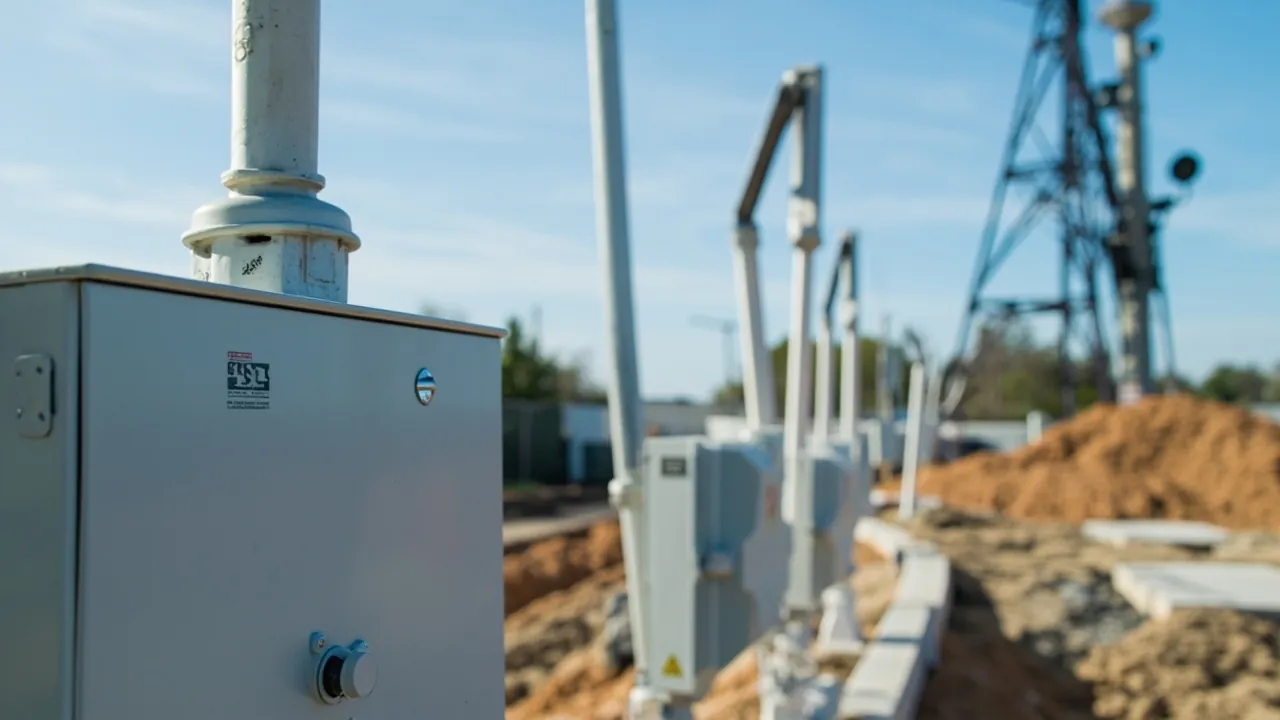
This group is the most corrosive ordinary category, summarised by three persistences: salt mist always present, vibration always present, and no convenient outage for maintenance.
Water risk covers wave spray, green water on deck, seasonal accumulation in holds and - most damaging - dry-wet cycling that crystallises salt in joints. Salt crystals expanding in a seam apply continuous mechanical wedging.
Non-water risks begin with corrosion: standard carbon steel, zinc plating and even grade 304 stainless suffer in marine atmospheres, so critical hardware should use grade 316. Mould and marine growth thrive in warm waters and colonise breathers and seal faces. Continuous vibration from main and auxiliary machinery plus wave-induced low-frequency motion loosens ordinary threaded fasteners, so locking washers or thread-locking compound are required. Finally, the hull is an enormous grounded body, and poor bonding practice readily produces stray-current corrosion.
Configuration notes. Specify IP67 as a floor and require evidence of 480 hours or more neutral salt spray for the housing. Use grade 316 stainless for every fastener, hinge and latch. Inspect breathers quarterly for blockage by salt crystals or growth. Below decks in areas likely to be washed by green water, move to IP68 with dedicated sealing. Evaluate every polymeric part for combined ultraviolet and salt exposure, since at sea both act together and the combined effect substantially exceeds either alone. JUNZHJIA can issue matching material and test documentation for specific trade routes and berth conditions.
Configuration Comparison Table by Environment
Everything above condensed into a table suitable for pasting into a purchase specification.
| Environment | Code | Shell | Seal | Metalwork | Mandatory accessories |
|---|---|---|---|---|---|
| --- | --- | --- | --- | --- | --- |
| Temporary site power | IP65/IP67 | Impact PP | EPDM | Zinc or 304 | High-visibility colour, strengthened latch |
| Smart pole compartment | IP67 | UV ABS or PC | EPDM | 304 | Hydrophobic breather, SPD space |
| 5G macro and small cell | IP66 plus IP67 | PC or UV ABS | Silicone for heat | 304 | Spare glands, surge arrester |
| Surveillance and ITS | IP67 | UV ABS | EPDM | 304 | Drip edge, compact SPD |
| Solar and storage | IP67 plus V-0 | PC or weather PP | EPDM or silicone | 304 | Flame rating, IK08, thermal margin |
| Agriculture and water | IP67/IP68 | Chemical PP | EPDM | 316 | Breather, desiccant |
| Industrial and chemical | IP66/IP67/IPX9 | PP or chemical PC | EPDM or FKM | 316 | Written media compatibility check |
| Ports and vessels | IP67/IP68 | PC or PP | EPDM | 316 | Salt spray evidence, locking provision |
Volume, Entries and Mounting Essentials
Several judgements apply regardless of industry.
Volume margin. Add thirty to forty per cent to the occupied volume. Three reasons: terminal crimping and cable dressing need working room, and an overfilled box forces installers to bend cables past their comfortable radius; heat-dissipating components need air volume, because too little raises internal temperature and accelerates seal ageing; and future additions such as surge arresters or extra terminals should not force replacement. Note especially that a sealed enclosure has markedly less usable space than an ordinary one of the same outline, owing to wall thickness and sealing structure, so size from internal dimensions rather than the silhouette.
Entry position and count. Apply three rules. Bottom preferred, side permitted, top only when unavoidable. Fix positions and sizes at the order stage, never on site, since site-made openings have poor edges and imprecise placement and rank among the principal causes of failure. And reserve one or two spare positions fitted with blanks so later expansion does not damage the protection.
Height and orientation. Wherever ponding is possible, raise first, avoid second, upgrade third. A practical municipal target is to keep the underside at least 300 millimetres above the historical flood level. Avoid unshaded west-facing elevations at midday, avoid positions beneath drain outlets, and avoid corners where leaves and silt accumulate.
Marking and maintainability. Two cheap measures repay themselves many times: external system identification and warnings, plus labelled terminals inside. Keep installation photographs, torque values and the responsible person on record. Two years later, during a fault investigation, those records will save hours.
Recommended Parts List for Each Environment
Here is a complete configuration for each case, ready for ordering.
Construction site: polypropylene IP67 enclosure, strengthened latch, four bottom entries with matching glands, blanks in all remaining positions, high-visibility yellow finish, riser bracket, quarterly retightening.
Smart pole: UV-stabilised ABS or polycarbonate IP67 compartment, hydrophobic membrane breather, bottom entry with drip loops, cable strain relief, reserved surge arrester space, tamper-resistant lock, inspection every six months.
5G site: polycarbonate or UV-stabilised ABS, dual IP66 and IP67, silicone seal, bottom entry, one or two spare gland positions, 40 kiloampere surge protection, installed once and left undisturbed where possible, annual inspection.
Surveillance: UV-stabilised ABS IP67 with drip edge, compact surge arrester, rubber liner under the band clamp, bottom entry with drip loops, separate entries per cable type, inspection every six months.
Solar, wind, storage: polycarbonate or weather-resistant polypropylene IP67, UL94 V-0, IK08, EPDM or silicone seal, generous thermal margin, grade 304 fasteners, annual check of seal recovery.
Agriculture, aquaculture, water: chemical-resistant polypropylene IP67, moving to IP68 for submerged service, grade 316 hardware, hydrophobic breather, desiccant, drip loops on bottom entries, sealing faces washed every six months.
Industrial and chemical: polypropylene or chemical-grade polycarbonate IP66/IP67, upgrading to IPX9 in washdown areas, written media compatibility confirmation, FKM or EPDM seals, grade 316 fasteners, mandatory retorque after every opening.
Ports and vessels: polycarbonate or polypropylene IP67/IP68, 480 hour salt spray documentation, all hardware in grade 316, locking washers, quarterly breather cleaning, quarterly inspection.
Frequently Asked Questions (FAQ)
Q: Can I use one enclosure specification across a whole project? A: Technically yes, but it is poor practice. Different positions face different exposures: on one residential estate, a rooftop camera spur box bakes in permanent sun yet will almost never pond, while a basement entrance cabinet may be submerged during a storm. Uniform specification gives you one of two outcomes: paying premium prices everywhere, or silently under-protecting the low points. Sort the site into two or three risk tiers and pick one model per tier; that optimises cost and keeps spares manageable. One caution: never interchange gaskets between models, since different cross-sections and hardness values alter the designed compression.
Q: Is IP67 necessary on a construction site, given everything is temporary? A: Judge by position, not by the temporary nature of the work. Ordinary lighting spurs and switches in dry areas manage well at IP65. Anything exposed to prolonged concrete curing spray, near ponding in excavations, or supplying critical plant such as tower cranes, hoists and welders should be IP67. There is also a second consideration specific to sites: enclosures get dropped, run over and stepped on, so impact resistance frequently matters more than an extra point of water protection. That is why impact-modified polypropylene rather than a harder, more brittle material is the customary site choice.
Q: Why does heat deserve special attention at 5G sites? A: Because these radios consume substantially more power than the previous generation, while the distribution, surge protection and fibre management often share the same confined and sealed volume. Internal temperatures of fifty to seventy degrees are ordinary, and elastomer ageing roughly doubles for every ten kelvin rise, meaning a seal at seventy degrees may last a quarter as long as one at room temperature. Two responses follow: specify silicone rather than standard EPDM for sustained high temperature, and write an annual rebound check plus preventive replacement every two to three years into the maintenance plan rather than waiting for a leak.
Q: Is a higher IP code always the right answer at coastal sites? A: The code is necessary but far from sufficient at the coast, where the real agent is salt mist. Many apparent leaks actually begin with corrosion of the fasteners, joints or breather destroying the water-tight structure, after which water follows. Beyond IP67 do three things: require neutral salt spray evidence of 480 hours or more for the housing; specify grade 316 stainless for every external metal part, since ordinary zinc plating fails within months in sea air; and wash the exterior and sealing faces with fresh water every six months to remove salt deposits. All three cost far less than the main equipment they protect.
Q: What matters most when selecting materials for a chemical plant? A: Item-by-item media compatibility, not a vague request for corrosion resistance. Different polymers behave very differently against different chemicals. Polypropylene performs well and cheaply against most acids and alkalis, yet degrades with certain organic solvents and strong oxidisers. Polycarbonate has excellent mechanical properties but stress-cracks with many solvents, particularly where clamped under load. The correct approach is to hand the supplier a list of every chemical present, including cleaning agents and occasional contact, obtain compatibility comments item by item, and record them in the agreement. It seems tedious; it prevents a whole batch turning brittle inside six months.
Q: What is special about the base compartment of a smart pole? A: Two things are routinely missed. The first is cable strain: after multi-function consolidation, many cables of very different diameters enter one compartment, and any residual tension transmits through the glands to seal faces, gradually producing displacement. That mechanism accounts for a large share of base compartment leakage. The second is breather orientation: membrane vents must face down or sideways, because upward-facing units collect water and dirt and fail quickly in salt-laden or dusty environments. Also reserve surge arrester space - induced lightning on urban roads is not unusual, and a very small device protects a very expensive pole.
Q: When should I skip past IP67 straight to IP68? A: Three tests. Equipment will remain permanently under water: pump wet wells, joints inside tanks, level transmitter chambers, bilge positions on vessels - which differs fundamentally from occasional flooding. Documented water levels can exceed one metre for extended periods. Or the equipment sits in permanently high-water environments such as utility tunnels, valve chambers or near intakes. Meeting any one means IP68, with the specific depth and duration written into the contract, because IEC 60529 assigns level 8 no fixed numbers, requiring only that it is more severe than level 7. IP68 without numbers carries essentially no enforceable meaning.
Closing Notes and Further Reading
Looking back across the eight environments reveals one repeating pattern. A waterproof junction box is never merely a box; it is the concrete answer to a set of environmental risks. Sites demand impact resistance and chemical tolerance, so impact-modified polypropylene leads. 5G sites present heat and narrow outage windows, so silicone seals and right-first-time installation matter. Renewables impose extreme ultraviolet and twenty-five-year expectations, so flame rating and weatherability decide. Chemical plants impose media attack, so compatibility must be checked first. Vessels impose salt and vibration, so grade 316 and locking provision apply.
Turning that into a sentence gives the selection formula this article offers: identify what actually destroys equipment at this location, then decide code, material, accessories, installation method and maintenance interval in that order. Working backwards - picking a code and hunting for somewhere to use it - tends to produce something both expensive and short-lived.
JUNZHJIA is manufactured by kexinMaterials in Zhongshan, Guangdong. The waterproof junction box, sealed electrical enclosure and outdoor protective case range covers IP65 to IP68 in ABS, polypropylene, polycarbonate and glass-filled variants, with machined entries to customer drawings, factory-fitted glands of specified brands, custom printing and colours, OEM and ODM support, and global volume supply, together with material certification and test documentation for each application.
- Further reading: What the IP67 rating really means
- Further reading: Choosing between IP67 and IP65 junction boxes
- Further reading: Performance limits of IP67 protective cases